
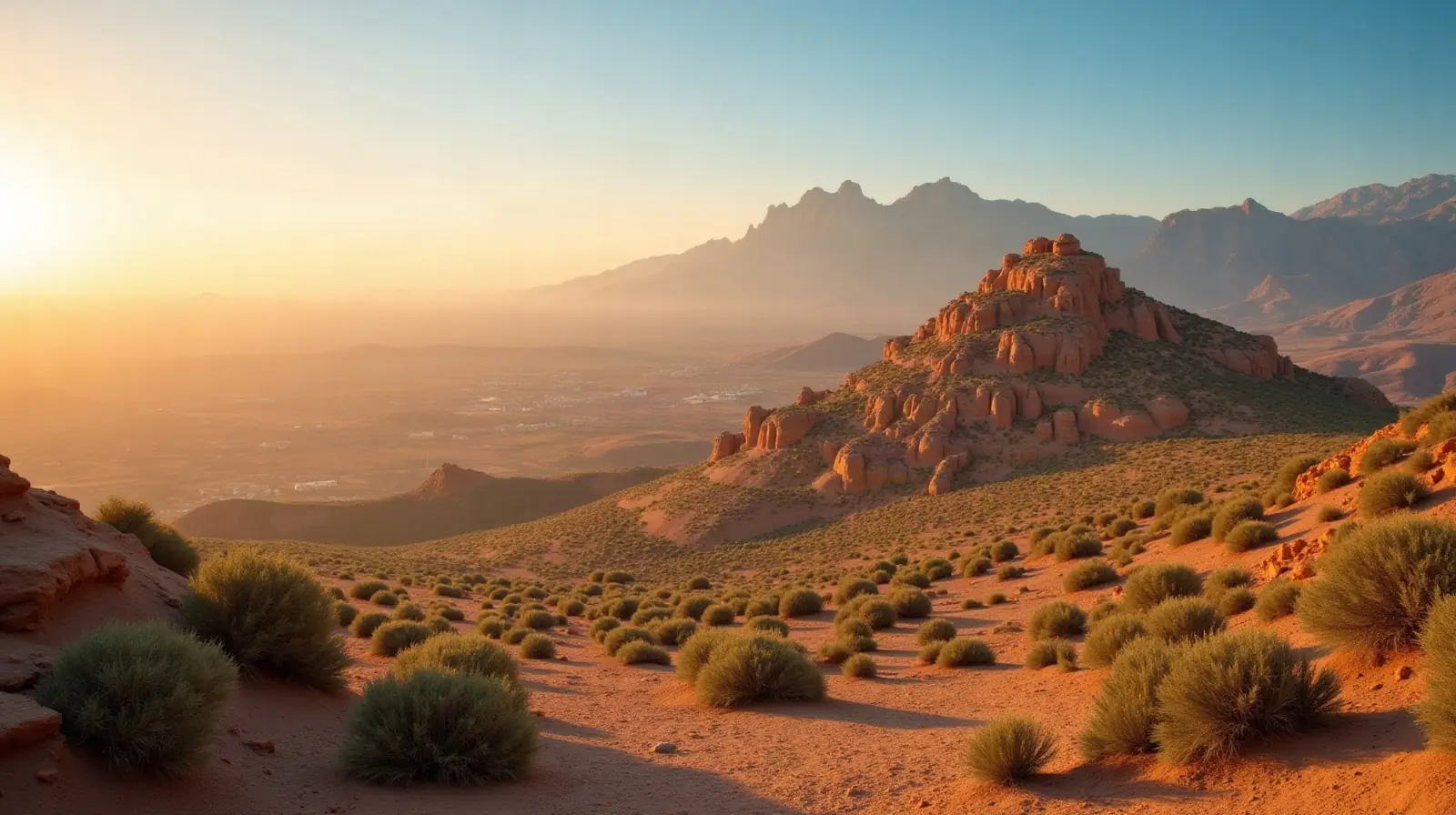
Northern Africa · UN member

Algeria: Travel Guide & Requirements
People's Democratic Republic of Algeria · الجمهورية الديمقراطية الشعبية الجزائرية
Algeria is a country in Northern Africa with its capital in Algiers. It has a population of 47.4 million (#33 in the world) and covers 2,381,740 km². The official language is Arabic. The currency is the Algerian dinar (DZD, د.ج).
Where is Algeria? Map of Algeria
Northern Africa, bordering the Mediterranean Sea, between Morocco and Tunisia.
- Region
- Northern Africa
- Coordinates
- 28° N, 3° E
- Neighbours
- 7 — see list
- Coastline
- 998 km
- Algeria
- Neighbours
- Capital
- Largest cities
Map of Algeria showing Algiers (capital) and the largest cities: Oran, Constantine, Annaba, Djelfa, Sétif, Sidi Bel Abbes, Biskra and Tébessa.
Travel requirements
What you need to travel to Algeria
- Passport
Algeria's Ministry of Foreign Affairs lists a passport 'valid for at least of six months' among the visa application documents.
- Visa or eTA
Depends on your passport: of 198 passports, 7 need no visa, 190 need a visa from an embassy. Check yours or see Algeria entry requirements for every passport.
- Return or onward ticket
No official requirement. For a tourist visa, Algeria's Ministry of Foreign Affairs asks for an accommodation certificate, a hotel booking or a travel-agency certificate.
- Proof of funds
No official requirement. Algeria's Ministry of Foreign Affairs asks for proof of resources with cultural and transit visa applications.
- Travel insurance
Algeria's Ministry of Foreign Affairs lists a travel insurance and repatriation assistance certificate among the documents to accompany a visa application.
- Vaccinations
WHO lists Algeria as requiring proof of yellow fever vaccination from travellers aged 9 months and over arriving from countries determined by WHO to be at risk of yellow fever transmission, including travellers who tran…
- Customs allowance
The UK FCDO says to declare cash at your point of entry and exit if you carry more than 5,000 euros or the equivalent in other currencies, and that failing to declare, or declaring falsely, is an offence that may lead t…
- Travel advice
High risk — US and UK advice.
Entry rules: TravelRequirements.info — Entry Requirements Dataset (CC BY 4.0), each rule cited to an official government source. Always confirm with the airline and the official source before you travel.
Before you go
10 things to know before you travel to Algeria
- Safety: Travel to Algeria carries a high risk: the US State Department rates Algeria Level 2 (“Exercise Increased Caution”), and the UK Foreign Office advises against all travel to parts of the country.
- Best time to go: June to September — when daytime highs in Algiers are around 24–28°C.
- Money: the Algerian dinar (DZD) — 1 US dollar is about 134.6948 DZD.
- Plugs: type C and F, 230 V, 50 Hz — standard 220–240 V: devices from the US or Japan (110–120 V) need a converter unless they are dual voltage (100–240 V).
- Emergency numbers: Police 1548, Ambulance 14, Fire 14.
- Language: Arabic is official.
- Driving: on the right.
- Time zone: UTC+1 in Algiers.
- Capital: Algiers. About 47.4 million people live in Algeria.
- Algeria is the 10th largest country in the world by area.
Key facts
Algeria at a glance
Languages spoken: Arabic (official), French (lingua franca), Tamazight (official) (dialects include Kabyle (Taqbaylit), Shawiya (Tacawit), Mzab, Tuareg (Tamahaq))
Geography & history
About Algeria
Algeria has known many empires and dynasties, including the ancient Numidians (3rd century B.C.), Phoenicians, Carthaginians, Romans, Vandals, Byzantines, over a dozen different Arab and Amazigh dynasties, Spaniards, and Ottoman Turks. Under the Turks, the Barbary pirates operated from North Africa and preyed on shipping, from about 1500 until the French captured Algiers in 1830. The French southward conquest of Algeria proceeded throughout the 19th century and was marked by many atrocities. A bloody eight-year struggle culminated in Algerian independence in 1962. Algeria's long-dominant political party, the National Liberation Front (FLN), was established in 1954 as part of the struggle fo…
Read the full history
Algeria has known many empires and dynasties, including the ancient Numidians (3rd century B.C.), Phoenicians, Carthaginians, Romans, Vandals, Byzantines, over a dozen different Arab and Amazigh dynasties, Spaniards, and Ottoman Turks. Under the Turks, the Barbary pirates operated from North Africa and preyed on shipping, from about 1500 until the French captured Algiers in 1830. The French southward conquest of Algeria proceeded throughout the 19th century and was marked by many atrocities. A bloody eight-year struggle culminated in Algerian independence in 1962. Algeria's long-dominant political party, the National Liberation Front (FLN), was established in 1954 as part of the struggle for independence and has since played a large role in politics, though it is falling out of favor with the youth and current President Abdelmadjid TEBBOUNE. The Government of Algeria in 1988 instituted a multi-party system in response to public unrest, but the surprising first-round success of the Islamic Salvation Front (FIS) in the 1991 legislative election led the Algerian military to intervene and postpone the second round of elections to prevent what the secular elite feared would be an extremist-led government from assuming power. An army crackdown on the FIS escalated into an FIS insurgency and intense violence from 1992-98 that resulted in over 100,000 deaths, many of which were attributed to extremist groups massacring villagers. The government gained the upper hand by the late 1990s, and FIS’s armed wing, the Islamic Salvation Army, disbanded in 2000. FIS membership is now illegal. In 1999, Abdelaziz BOUTEFLIKA won the presidency with the backing of the military, in an election that was boycotted by several candidates protesting alleged fraud. He won subsequent elections in 2004, 2009, and 2014. Widespread protests against his decision to seek a fifth term broke out in early 2019. BOUTEFLIKA resigned in April 2019, and in December 2019, Algerians elected former Prime Minister Abdelmadjid TEBBOUNE as the country’s new president. A longtime FLN member, TEBBOUNE ran for president as an independent. In 2020, Algeria held a constitutional referendum on governmental reforms, which TEBBOUNE enacted in 2021. Subsequent reforms to the national electoral law introduced open-list voting to curb corruption. The new law also eliminated gender quotas in Parliament, and the 2021 legislative elections saw female representation plummet. The referendum, parliamentary elections, and local elections saw record-low voter turnout.
Location
Northern Africa, bordering the Mediterranean Sea, between Morocco and Tunisia
Climate
arid to semiarid; mild, wet winters with hot, dry summers along coast; drier with cold winters and hot summers on high plateau; sirocco is a hot, dust/sand-laden wind especially common in summer
Terrain
mostly high plateau and desert; Atlas Mountains in the far north and Hoggar Mountains in the south; narrow, discontinuous coastal plain
Highest point
Tahat 2,908 m
Natural resources
petroleum, natural gas, iron ore, phosphates, uranium, lead, zinc
Natural hazards
mountainous areas subject to severe earthquakes; mudslides and floods in rainy season; droughts
National symbols
five-pointed star between the extended horns of a crescent moon; fennec fox
Safety
Is Algeria safe to visit?
Travel to Algeria carries a high risk: the US State Department rates Algeria Level 2 (“Exercise Increased Caution”), and the UK Foreign Office advises against all travel to parts of the country.
 US State Department
 UK Foreign Office (FCDO)
Latest update: Updated information about customs rules, terrorism in Algeria, political situation and personal ID (‘Entry requirements’ and ‘Safety and security’ pages).
Updated 25 Sep 2026 · Full travel advice
Sources: US Department of State travel advisories (public domain) and UK FCDO foreign travel advice (contains public sector information licensed under the Open Government Licence v3.0). Checked daily. Advice can change quickly — always read the official page before you travel.
Weather
Best time to visit Algeria
The best time to visit Algeria is June to September, when daytime highs in Algiers are around 24–28°C. October is also a good time to go. August is the warmest month (28°C by day), February the coldest (12°C at night), and November the wettest with about 107 mm of rain.
- Jan15°C12°C
- Feb15°C12°C
- Mar16°C13°C
- Apr18°C15°C
- May21°C17°C
- Jun24°C21°C
- Jul27°C24°C
- Aug28°C25°C
- Sep26°C23°C
- Oct23°C20°C
- Nov19°C16°C
- Dec16°C13°C
Best time Good Less ideal
Before you go
Plugs, voltage & emergency numbers in Algeria
Plugs & sockets
230 V, 50 Hz · Standard 220–240 V: devices from the US or Japan (110–120 V) need a converter unless they are dual voltage (100–240 V).
Emergency numbers
Save the local numbers before you travel — 112 or 911 may not connect here. All countries →
Sources: Wikipedia — Mains electricity by country and List of emergency telephone numbers (CC BY-SA 4.0).
National parks
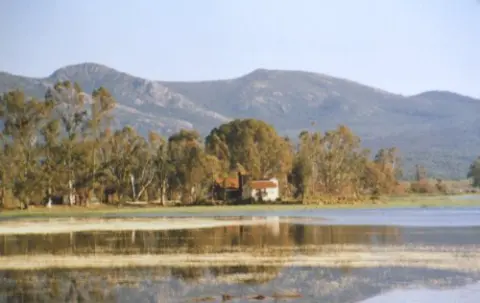
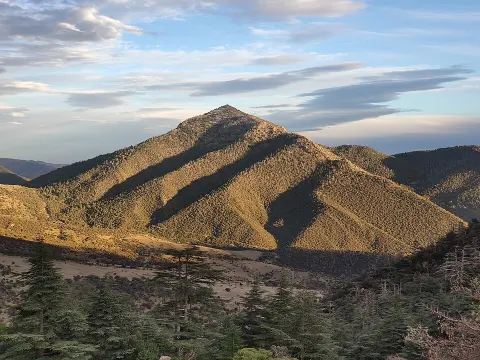
10 national parks in Algeria
- 1,824 km² protected
- oldest from 1983
Largest: El Kala National Park · Belezma National Park · Chrea National Park
Currency · 26 October 2026
Algerian dinar exchange rates today
Algeria uses the Algerian dinar (DZD, د.ج). One US dollar buys 134.6948 DZD; over the last 30 days the DZD has lost 0.7% against the dollar.
What other currencies cost in DZD
Currency converter
Daily reference rates from the open-source currency-api (CC0), 26 Oct 2026. Banks and exchange offices add a margin.
World rankings
Where Algeria ranks
How Algeria compares with the rest of the world — open any card for the full ranking.
Airports
Airports in Algeria
110 airports and airfields — 12 large, 27 medium and 59 small, plus 12 heliports. 31 have scheduled passenger flights.
Borders
Neighbouring countries
Algeria borders 7 countries along 6,734 km of land borders. Coastline: 998 km.


Military
Algerian armed forces
Algeria ranks #26 of 145 in the Global Firepower military strength ranking, with a defence budget of $25.4 billion (2025).
People
Population & society
Religion
Largest cities: Algiers (2.9 million), Oran (936,000)
Economy
Economy
Main industries
petroleum, natural gas, light industries, mining, electrical, petrochemical, food processing
Export partners
Italy 29%, France 14%, Spain 13%, USA 6%, Netherlands 4% (2023)
Top exports
natural gas, crude petroleum, refined petroleum, fertilizers, iron bars (2023)
Travel tools
Handy before every trip to Algeria
Next public holiday
Revolution Day — Sunday, 1 November 2026. Then New Year's Day (1 Jan).

Algerian passport
Ranked #165: 22 countries visa-free, 30 with visa on arrival, 3 with an eTA and 46 with an eVisa.
Algerian passport photo
Exact size, head position and background for Algeria's passport and visa photos — make one free with AI checks.
Calling Algeria
Dial +213 before the local number. Internet domain .dz.
Climate footprint
198.2 million tonnes of CO₂ in 2024 — 4.23 t per person.
Entry requirements
Visa rules for every passport visiting Algeria: visa-free stays, eVisas, visas on arrival and documents to bring.
News
Latest travel news about Algeria
Tunisia drops visas for Iranian travellers as land borders stay tough
Tunisia lifted visa requirements for Iranians entering the country after President Kais Saied's May 2024 visit to Tehran. Its land borders with Alger…
Algeria Sends Fighter Jets to Niger in First Overseas Deployment Since 1973
Algeria has sent fighter jets, a refuelling aircraft, helicopters and crews to Niger's Air Base 101 in Niamey, next to the international airport, its…
India Ranks 84th in Henley Passport Index, Tied with Algeria and Mauritania
India has moved to the 84th position in the Henley Passport Index, now tied with Algeria and Mauritania, allowing visa-free access to 55 countries.
Frequently asked questions about Algeria
What do I need to travel to Algeria?
How long must my passport be valid for Algeria?
Where is Algeria?
What is Algeria known for?
What is the capital of Algeria?
What language is spoken in Algeria?
What currency does Algeria use?
What is the calling code of Algeria?
Which countries border Algeria?
How strong is the Algerian passport?
Is Algeria safe to visit?
When is the best time to visit Algeria?
What plug type does Algeria use?
How many airports does Algeria have?
Sources: CIA World Factbook (public domain); World Bank Open Data (CC BY 4.0); names, languages and currencies: mledoze/countries (ODbL); flag: flag-icons (MIT); coat of arms: Wikimedia Commons (file page); exchange rates: Daily reference rates from the open-source currency-api (CC0); airports: OurAirports.