
Northern Europe · UN member

Norway: Travel Guide & Requirements
Kingdom of Norway · Kongeriket Noreg · Kongeriket Norge
Norway is a country in Northern Europe with its capital in Oslo. It has a population of 5.6 million (#118 in the world) and covers 323,802 km². The official languages are Norwegian Nynorsk, Norwegian Bokmål and Sami. The currency is the Norwegian krone (NOK, kr).
Where is Norway? Map of Norway
Northern Europe, bordering the North Sea and the North Atlantic Ocean, west of Sweden.
- Region
- Northern Europe
- Coordinates
- 62° N, 10° E
- Neighbours
- 3 — see list
- Coastline
- 25,148 km
- Norway
- Neighbours
- Capital
- Largest cities
Map of Norway showing Oslo (capital) and the largest cities: Bergen, Trondheim, Stavanger, Kristiansand, Fredrikstad, Ålesund, Skien and Tromsø.
Travel requirements
What you need to travel to Norway
- Passport
The UK government tells British nationals that Norway follows Schengen area rules: their passport must have a date of issue less than 10 years before the date they arrive and an expiry date at least 3 months after the d…
- Visa or eTA
Depends on your passport: of 198 passports, 93 need no visa, 105 need a visa from an embassy. Check yours or see Norway entry requirements for every passport.
- Return or onward ticket
No official requirement. The UK government tells British travellers that at Norwegian border control they may need to show a return or onward ticket, proof of accommodation and proof of travel insurance, and prove they have enough money for the…
- Proof of funds
The European Commission's table of reference amounts says Norway assesses sufficient means on a case-by-case basis: NOK 300 per day with hosted or prepaid accommodation, NOK 1,300 per day without proof of accommodation,…
- Travel insurance
Under the Schengen Visa Code, visa applicants must hold travel medical insurance valid throughout the territory of the Member States and covering the entire period of the intended stay; the minimum coverage is EUR 30,00…
- Arrival card
The UK Foreign Office says that when you travel into the Schengen area for short stays you may need to register your biometric details, such as fingerprints and a photo, that on your first visit you may be asked to do s…
- Customs allowance
Norwegian Customs says that if you are bringing currency with a value corresponding to more than NOK 25,000 to or from Norway, you must notify Norwegian Customs; the rule applies to Norwegian and foreign notes, coins an…
- Travel advice
Safe to visit — US and UK advice.
Entry rules: TravelRequirements.info — Entry Requirements Dataset (CC BY 4.0), each rule cited to an official government source. Always confirm with the airline and the official source before you travel.
Before you go
10 things to know before you travel to Norway
- Safety: Yes — Norway is generally safe to visit: the US State Department rates Norway Level 1 (“Exercise Normal Precautions”), and the UK Foreign Office has no warnings against travel there.
- Best time to go: June to August — when daytime highs in Oslo are around 18–20°C.
- Money: the Norwegian krone (NOK) — 1 US dollar is about 9.3243 NOK.
- Plugs: type C and F, 230 V, 50 Hz — standard 220–240 V: devices from the US or Japan (110–120 V) need a converter unless they are dual voltage (100–240 V).
- Emergency numbers: Police 112, Ambulance 113, Fire 110.
- Language: Norwegian Nynorsk, Norwegian Bokmål and Sami are official.
- Driving: on the right — speed limits are 50 km/h in built-up areas, 80 km/h outside built-up areas and 110 km/h on motorways.
- Time zone: UTC+1 in Oslo.
- Capital: Oslo. About 5.6 million people live in Norway.
- Outdoors: 48 national parks and 269 ski areas.
Key facts
Norway at a glance
Languages spoken: Bokmal Norwegian (official), Nynorsk Norwegian (official), small Sami- and Finnish-speaking minorities
Geography & history
About Norway
Two centuries of Viking raids into Europe tapered off after King Olav TRYGGVASON adopted Christianity in 994; conversion of the Norwegian kingdom occurred over the next several decades. In 1397, Norway was absorbed into a union with Denmark that lasted more than four centuries. In 1814, Norwegians resisted the cession of their country to Sweden and adopted a new constitution. Sweden then invaded Norway but agreed to let Norway keep its constitution in return for accepting the union under a Swedish king. Rising nationalism throughout the 19th century led to a 1905 referendum granting Norway independence. Norway remained neutral in World War I and proclaimed its neutrality at the outset of Wo…
Read the full history
Two centuries of Viking raids into Europe tapered off after King Olav TRYGGVASON adopted Christianity in 994; conversion of the Norwegian kingdom occurred over the next several decades. In 1397, Norway was absorbed into a union with Denmark that lasted more than four centuries. In 1814, Norwegians resisted the cession of their country to Sweden and adopted a new constitution. Sweden then invaded Norway but agreed to let Norway keep its constitution in return for accepting the union under a Swedish king. Rising nationalism throughout the 19th century led to a 1905 referendum granting Norway independence. Norway remained neutral in World War I and proclaimed its neutrality at the outset of World War II, but Nazi Germany nonetheless occupied the country for five years (1940-45). In 1949, Norway abandoned neutrality and became a member of NATO. Discovery of oil and gas in adjacent waters in the late 1960s boosted Norway's economic fortunes. In referenda held in 1972 and 1994, Norway rejected joining the EU. Key domestic issues include immigration and integration of ethnic minorities, maintaining the country's extensive social safety net with an aging population, and preserving economic competitiveness.
Location
Northern Europe, bordering the North Sea and the North Atlantic Ocean, west of Sweden
Climate
temperate along coast, modified by North Atlantic Current; colder interior with increased precipitation and colder summers; rainy year-round on west coast
Terrain
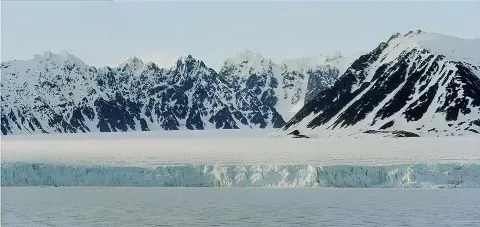
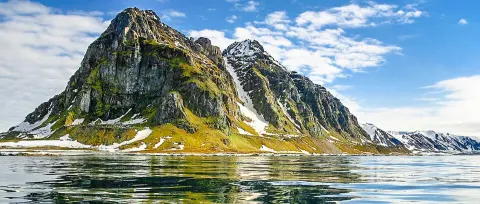
glaciated; mostly high plateaus and rugged mountains broken by fertile valleys; small, scattered plains; coastline deeply indented by fjords; arctic tundra in north
Highest point
Galdhopiggen 2,469 m
Natural resources
petroleum, natural gas, iron ore, copper, lead, zinc, titanium, pyrites, nickel, fish, timber, hydropower
Natural hazards
rockslides, avalanches volcanism: Beerenberg (2,227 m) on Jan Mayen Island in the Norwegian Sea is the country's only active volcano
National symbols
lion
Driving
Speed limits & road rules in Norway
The default speed limits in Norway are 50 km/h in built-up areas, 80 km/h outside built-up areas and 110 km/h on motorways. The legal alcohol limit for drivers is 0.2‰. Posted signs always take priority over these defaults.
- 5050 km/hBuilt-up areasTowns and citiesWith a trailer: 80 km/h
- 8080 km/hOutside built-up areasCountry roads
- 110110 km/hMotorwaysMotorways / freewaysWith a trailer: 80 km/h
- International Driving PermitRecognised: 1968 Vienna, 1949 GenevaCarry the IDP together with your national licence
- Driving sideDrive on the rightOvertake on the left
- Alcohol limit0.2‰ blood alcohol (0.02% BAC)
- Seat beltsRequired by law
- Child seatsRequired by law
- Motorcycle helmetsRequired for riders
- Road deaths (2021)1.5 per 100,000 peopleSafer than most countries (median 12.4)
Speed limits: OpenStreetMap wiki — Default speed limits (CC BY-SA 2.0). Road-safety laws: WHO Global Health Observatory. Compare speed limits and alcohol limits by country. Defaults for cars; local signs, weather and vehicle type can lower them.
Safety
Is Norway safe to visit?
Yes — Norway is generally safe to visit: the US State Department rates Norway Level 1 (“Exercise Normal Precautions”), and the UK Foreign Office has no warnings against travel there.
 US State Department
 UK Foreign Office (FCDO)
Latest update: Removal of information about an ongoing air traffic controllers' strike ('Warnings and insurance' page).
Updated 25 Aug 2026 · Full travel advice
Sources: US Department of State travel advisories (public domain) and UK FCDO foreign travel advice (contains public sector information licensed under the Open Government Licence v3.0). Checked daily. Advice can change quickly — always read the official page before you travel.
Weather
Best time to visit Norway
The best time to visit Norway is June to August, when daytime highs in Oslo are around 18–20°C. July is the warmest month (20°C by day), January the coldest (-8°C at night), and August the wettest with about 122 mm of rain.
- Jan-4°C-8°C
- Feb-2°C-8°C
- Mar2°C-5°C
- Apr8°C-0°C
- May14°C5°C
- Jun18°C9°C
- Jul20°C12°C
- Aug19°C11°C
- Sep14°C7°C
- Oct7°C2°C
- Nov2°C-3°C
- Dec-3°C-7°C
Best time Good Less ideal
Before you go
Plugs, voltage & emergency numbers in Norway
Plugs & sockets
230 V, 50 Hz · Standard 220–240 V: devices from the US or Japan (110–120 V) need a converter unless they are dual voltage (100–240 V).
Emergency numbers
112 works from any mobile phone, even without a SIM card in most networks. All countries →
Sources: Wikipedia — Mains electricity by country and List of emergency telephone numbers (CC BY-SA 4.0).
Ski resorts
269 ski resorts in Norway
- 1,083 km of slopes
- 622 lifts
- up to 2,179 m
Biggest: Trysil · Hemsedal skisenter · Oppdal Skisenter
National parks
48 national parks in Norway
- 70,287 km² protected
- oldest from 1962
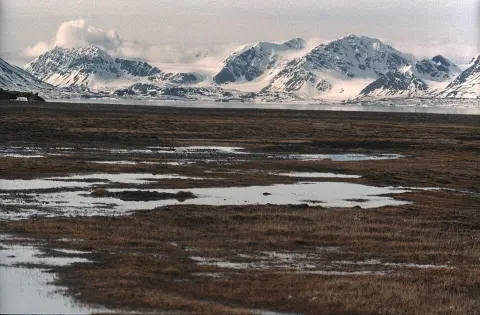
Largest: Sør-Spitsbergen National Park · Nordvest-Spitsbergen National Park · Forlandet National Park
Currency · 26 October 2026
Norwegian krone exchange rates today
Norway uses the Norwegian krone (NOK, kr). One US dollar buys 9.3243 NOK; over the last 30 days the NOK has gained 2.0% against the dollar.
What other currencies cost in NOK
Currency converter
Daily reference rates from the open-source currency-api (CC0), 26 Oct 2026. Banks and exchange offices add a margin.
World rankings
Where Norway ranks
How Norway compares with the rest of the world — open any card for the full ranking.
Airports
Airports in Norway
271 airports and airfields — 10 large, 33 medium and 104 small, plus 117 heliports. 47 have scheduled passenger flights.
Borders
Neighbouring countries
Norway borders 3 countries along 2,566 km of land borders. Coastline: 25,148 km.


Military
Norwegian armed forces
Norway ranks #35 of 145 in the Global Firepower military strength ranking, with a defence budget of $17.0 billion (2025).
People
Population & society
Religion
Largest cities: Oslo (1.1 million)
Economy
Economy
Main industries
petroleum and gas, shipping, fishing, aquaculture, food processing, shipbuilding, pulp and paper products, metals, chemicals, timber, mining, textiles
Export partners
Germany 18%, UK 17%, Sweden 9%, Denmark 7%, Netherlands 6% (2023)
Top exports
natural gas, crude petroleum, fish, refined petroleum, aluminum (2023)
Travel tools
Handy before every trip to Norway
Next public holiday
Christmas Day — Friday, 25 December 2026. Then St. Stephen's Day (26 Dec).

Norwegian passport
Ranked #17: 122 countries visa-free, 35 with visa on arrival, 9 with an eTA and 18 with an eVisa.
Norwegian passport photo
Exact size, head position and background for Norway's passport and visa photos — make one free with AI checks.
Calling Norway
Dial +47 before the local number. Internet domain .no.
Climate footprint
37.2 million tonnes of CO₂ in 2024 — 6.67 t per person.
Entry requirements
Visa rules for every passport visiting Norway: visa-free stays, eVisas, visas on arrival and documents to bring.
News
Latest travel news about Norway

Vietnam–Scandinavia Travel Ties Grow, but No New Routes or Dates Announced
Vietnam Airlines has signed agreements with Copenhagen Airport, SAS and the Confederation of Danish Industry to strengthen its Scandinavian connectiv…
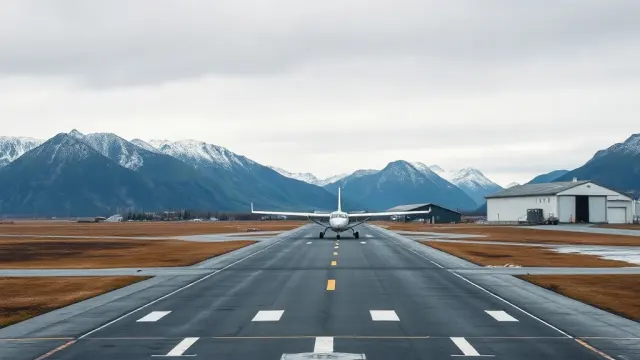
Norway to host hybrid-electric aircraft test flights at five sites from Q3 2027
Bristow Group, Electra, Avinor and the Civil Aviation Authority of Norway will run hybrid-electric EL2 demonstration flights at five Norwegian locati…
Mpox in South Africa: 26 confirmed cases, 18 in the Western Cape
South Africa's National Institute for Communicable Diseases has confirmed 26 mpox cases as of 17 October 2026, with 18 in the Western Cape. Only two …
Frequently asked questions about Norway
What do I need to travel to Norway?
How long must my passport be valid for Norway?
Where is Norway?
What is Norway known for?
What is the capital of Norway?
What language is spoken in Norway?
What currency does Norway use?
What is the calling code of Norway?
Which countries border Norway?
How strong is the Norwegian passport?
What is the speed limit in Norway?
Is Norway safe to visit?
When is the best time to visit Norway?
What plug type does Norway use?
How many airports does Norway have?
Sources: CIA World Factbook (public domain); World Bank Open Data (CC BY 4.0); names, languages and currencies: mledoze/countries (ODbL); flag: flag-icons (MIT); coat of arms: Wikimedia Commons (file page); exchange rates: Daily reference rates from the open-source currency-api (CC0); airports: OurAirports.