
South-Eastern Asia · UN member

Philippines: Travel Guide & Requirements
Republic of the Philippines · Republika ng Pilipinas
The Philippines is a country in South-Eastern Asia with its capital in Manila. It has a population of 116.8 million (#14 in the world) and covers 300,000 km². The official languages are English and Filipino. The currency is the Philippine peso (PHP, ₱).
Where is the Philippines? Map of the Philippines
Southeastern Asia, archipelago between the Philippine Sea and the South China Sea, east of Vietnam.
- Region
- South-Eastern Asia
- Coordinates
- 13° N, 122° E
- Neighbours
- none (no land borders)
- Coastline
- 36,289 km
- Philippines
- Capital
- Largest cities
Map of the Philippines showing Manila (capital) and the largest cities: Davao, Budta, Zamboanga, Cebu City, Cagayan de Oro, General Santos, Calamba and Angeles City.
Travel requirements
What you need to travel to the Philippines
- Passport
The Department of Foreign Affairs says visa-free nationals must hold passports valid for at least six months beyond the contemplated period of stay.
- Visa or eTA
Depends on your passport: of 198 passports, 161 need no visa, 1 needs an eVisa, 36 need a visa from an embassy. Check yours or see The Philippines entry requirements for every passport.
- Return or onward ticket
The Department of Foreign Affairs' visa policy says visa-free nationals must possess return tickets to their country of origin or outward-bound tickets to their next country of destination.
- Proof of funds
The Department of Foreign Affairs' visa policy lists proof of financial capacity (any of the following: bank statements for the latest six months or tax payments, an employment certificate with remuneration, proof of bu…
- Travel insurance
No official requirement. The UK Foreign Office advises checking before you travel that you have appropriate travel insurance for local treatment or unexpected medical evacuation.
- Vaccinations
WHO's country list says proof of vaccination against yellow fever is required for travellers aged 9 months or over arriving from countries with risk of yellow fever transmission, and for travellers who transited for mor…
- Arrival card
The eTravel FAQ says arriving passengers, foreign and Filipino, must register on eTravel, except foreign diplomats and their dependants, foreign dignitaries, 9(e) visa holders and holders of diplomatic and official or s…
- Customs allowance
The Bureau of Customs says anyone bringing into or taking out of the Philippines foreign currency in excess of USD 10,000 or its equivalent must declare the whole amount in the e-CDF, and that more than PHP 50,000 in Ph…
- Travel advice
High risk — US and UK advice.
Entry rules: TravelRequirements.info — Entry Requirements Dataset (CC BY 4.0), each rule cited to an official government source. Always confirm with the airline and the official source before you travel.
Before you go
10 things to know before you travel to the Philippines
- Safety: Travel to the Philippines carries a high risk: the US State Department rates the Philippines Level 2 (“Exercise Increased Caution”), and the UK Foreign Office advises against all travel to parts of the country.
- Best time to go: January to March — when daytime highs in Manila are around 27–30°C.
- Money: the Philippine peso (PHP) — 1 US dollar is about 63.9007 PHP.
- Plugs: type A, B and C, 230 V, 60 Hz — standard 220–240 V: devices from the US or Japan (110–120 V) need a converter unless they are dual voltage (100–240 V).
- Emergency numbers: Police 911, Ambulance 911, Fire 911.
- Language: English and Filipino are official.
- Driving: on the right — speed limits are 30 km/h in built-up areas, 40 km/h outside built-up areas and 100 km/h on motorways.
- Time zone: UTC+8 in Manila.
- Capital: Manila. About 116.8 million people live in the Philippines.
- Outdoors: 41 national parks.
Key facts
Philippines at a glance
Languages spoken: Tagalog 39.9%, Bisaya/Binisaya 16%, Hiligaynon/Ilonggo 7.3%, Ilocano 7.1%, Cebuano 6.5%, Bikol/Bicol 3.9%, Waray 2.6%, Kapampangan 2.4%, Maguindanao 1.4%, Pangasinan/Panggalato 1.3%, other languages/dialects 11.2%, unspecified 0.4% (2020 est.)
Geography & history
About the Philippines
The Philippine Islands became a Spanish colony during the 16th century; they were ceded to the US in 1898 following the Spanish-American War. Led by Emilio AGUINALDO, the Filipinos conducted an insurgency against US rule from 1899-1902, although some fighting continued in outlying islands as late as 1913. In 1935, the Philippines became a self-governing commonwealth. Manuel QUEZON was elected president and was tasked with preparing the country for independence after a 10-year transition. The islands fell under Japanese occupation during World War II, and US forces and Filipinos fought together during 1944-45 to regain control. On 4 July 1946 the Republic of the Philippines attained its inde…
Read the full history
The Philippine Islands became a Spanish colony during the 16th century; they were ceded to the US in 1898 following the Spanish-American War. Led by Emilio AGUINALDO, the Filipinos conducted an insurgency against US rule from 1899-1902, although some fighting continued in outlying islands as late as 1913. In 1935, the Philippines became a self-governing commonwealth. Manuel QUEZON was elected president and was tasked with preparing the country for independence after a 10-year transition. The islands fell under Japanese occupation during World War II, and US forces and Filipinos fought together during 1944-45 to regain control. On 4 July 1946 the Republic of the Philippines attained its independence. Twenty-one years of authoritarian rule under Ferdinand MARCOS ended in 1986, when a "people power" movement in Manila ("EDSA 1") forced him into exile and installed Corazon AQUINO as president. Several coup attempts hampered her presidency, and progress on political stability and economic development faltered until Fidel RAMOS was elected president in 1992. The US closed its last military bases on the islands the same year. Joseph ESTRADA was elected president in 1998. His vice-president, Gloria MACAPAGAL-ARROYO, succeded him in 2001 after ESTRADA's stormy impeachment trial on corruption charges broke down and another "people power" movement ("EDSA 2") demanded his resignation. MACAPAGAL-ARROYO was elected president in 2004. Corruption allegations marred her presidency, but the Philippine economy was one of the few to avoid contraction after the 2008 global financial crisis. Benigno AQUINO III was elected as president in 2010, followed by Rodrigo DUTERTE in 2016. During his term, DUTERTE pursued a controversial drug war that garnered international criticism for alleged human rights abuses. Ferdinand MARCOS, Jr. was elected president in 2022 with the largest popular vote in a presidential election since his father's ouster. For decades, the country has been challenged by armed ethnic separatists, communist rebels, and Islamic terrorist groups, particularly in the southern islands and remote areas of Luzon.
Location
Southeastern Asia, archipelago between the Philippine Sea and the South China Sea, east of Vietnam
Climate
tropical marine; northeast monsoon (November to April); southwest monsoon (May to October)
Terrain
mostly mountains with narrow to extensive coastal lowlands
Highest point
Mount Apo 2,954 m
Natural resources
timber, petroleum, nickel, cobalt, silver, gold, salt, copper
Natural hazards
astride typhoon belt, usually affected by several cyclonic storms each year; landslides; active volcanoes; destructive earthquakes; tsunamis volcanism: significant volcanic activity; Taal (311 m) has been deemed a Decade Volcano by the International Associati…
National symbols
three stars and sun, Philippine eagle
Driving
Speed limits & road rules in the Philippines
The default speed limits in the Philippines are 30 km/h in built-up areas, 40 km/h outside built-up areas and 100 km/h on motorways. The legal alcohol limit for drivers is 0.5‰. Posted signs always take priority over these defaults.
- 3030 km/hBuilt-up areasTowns and cities
- 4040 km/hOutside built-up areasCountry roads
- 100100 km/hMotorwaysMotorways / freeways
- International Driving PermitRecognised: 1968 Vienna, 1949 GenevaCarry the IDP together with your national licence
- Driving sideDrive on the rightOvertake on the left
- Alcohol limit0.5‰ blood alcohol (0.05% BAC)
- Seat beltsRequired by law
- Child seatsNo national child-restraint law
- Motorcycle helmetsRequired for riders
- Road deaths (2021)9.7 per 100,000 peopleSafer than most countries (median 12.4)
Speed limits: OpenStreetMap wiki — Default speed limits (CC BY-SA 2.0). Road-safety laws: WHO Global Health Observatory. Compare speed limits and alcohol limits by country. Defaults for cars; local signs, weather and vehicle type can lower them.
Safety
Is the Philippines safe to visit?
Travel to the Philippines carries a high risk: the US State Department rates the Philippines Level 2 (“Exercise Increased Caution”), and the UK Foreign Office advises against all travel to parts of the country.
 US State Department
 UK Foreign Office (FCDO)
Latest update: Information about typhoon season (‘Warnings and insurance’ page).
Updated 15 Jul 2026 · Full travel advice
Sources: US Department of State travel advisories (public domain) and UK FCDO foreign travel advice (contains public sector information licensed under the Open Government Licence v3.0). Checked daily. Advice can change quickly — always read the official page before you travel.
Weather
Best time to visit the Philippines
The best time to visit the Philippines is January to March, when daytime highs in Manila are around 27–30°C. April and November to December are also a good time to go. April is the warmest month (32°C by day), February the coldest (20°C at night), and December the wettest with about 393 mm of rain.
- Jan27°C21°C
- Feb28°C20°C
- Mar30°C21°C
- Apr32°C23°C
- May32°C24°C
- Jun30°C24°C
- Jul29°C24°C
- Aug29°C24°C
- Sep29°C24°C
- Oct29°C23°C
- Nov28°C23°C
- Dec27°C22°C
Best time Good Less ideal
Before you go
Plugs, voltage & emergency numbers in the Philippines
Plugs & sockets
- Type Atwo flat parallel pins
- Type Btwo flat parallel pins and a round earth pin
- Type C (Europlug)two round pins
230 V, 60 Hz · Standard 220–240 V: devices from the US or Japan (110–120 V) need a converter unless they are dual voltage (100–240 V).
Emergency numbers
Save the local numbers before you travel — 112 or 911 may not connect here. All countries →
Sources: Wikipedia — Mains electricity by country and List of emergency telephone numbers (CC BY-SA 4.0).
National parks
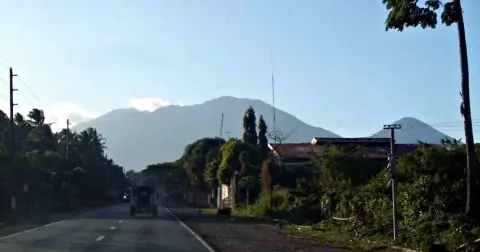
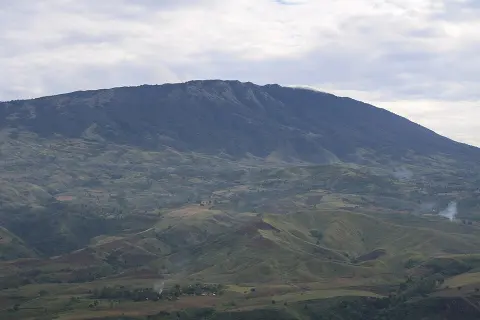
41 national parks in the Philippines
- 57,250 km² protected
- oldest from 1904
Largest: Lake Naujan National Park · Mounts-Banahaw-San-Cristobal-Nationalpark · Mount Balatukan Range Natural Park
Currency · 26 October 2026
Philippine peso exchange rates today
The Philippines uses the Philippine peso (PHP, ₱). One US dollar buys 63.9007 PHP; over the last 30 days the PHP has lost 2.3% against the dollar.
What other currencies cost in PHP
Currency converter
Daily reference rates from the open-source currency-api (CC0), 26 Oct 2026. Banks and exchange offices add a margin.
World rankings
Where the Philippines ranks
How the Philippines compares with the rest of the world — open any card for the full ranking.
Airports
Airports in the Philippines
676 airports and airfields — 15 large, 42 medium and 187 small, plus 425 heliports. 45 have scheduled passenger flights.
Borders
No land borders
The Philippines has no land borders with other countries. Coastline: 36,289 km.
Military
Philippine armed forces
The Philippines ranks #32 of 145 in the Global Firepower military strength ranking, with a defence budget of $6.4 billion (2025).
People
Population & society
Religion
Largest cities: Manila (14.7 million), Davao (1.9 million), Cebu City (1.0 million), Zamboanga (931,000), Antipolo (960,000)
Economy
Economy
Main industries
semiconductors and electronics assembly, business process outsourcing, food and beverage manufacturing, construction, electric/gas/water supply, chemical products, radio/television/communications equipment and apparatus…
Export partners
China 19%, USA 13%, Hong Kong 12%, Japan 11%, Germany 5% (2023)
Top exports
integrated circuits, machine parts, gold, insulated wire, semiconductors (2023)
Travel tools
Handy before every trip to the Philippines
Next public holiday
All Saints' Day Eve — Saturday, 31 October 2026. Then All Saints' Day (1 Nov).

Philippine passport
Ranked #135: 35 countries visa-free, 27 with visa on arrival, 4 with an eTA and 41 with an eVisa.
Philippine passport photo
Exact size, head position and background for the Philippines's passport and visa photos — make one free with AI checks.
Calling the Philippines
Dial +63 before the local number. Internet domain .ph.
Climate footprint
174.9 million tonnes of CO₂ in 2024 — 1.51 t per person.
Entry requirements
Visa rules for every passport visiting the Philippines: visa-free stays, eVisas, visas on arrival and documents to bring.
News
Latest travel news about the Philippines
Azerbaijani passport ranks 76th for visa-free travel worldwide
Azerbaijan shares 76th place with the Philippines in a global passport ranking by Swiss company Henley & Partners, with Azerbaijani citizens able to …
US Employment Visa Filing Dates Hold for Mexican Applicants; EB-3 Other Workers Advance
The U.S. State Department's November 2026 Visa Bulletin leaves employment-based filing dates unchanged except a one-month advance in EB-3 Other Worke…
US Visa Bulletin November 2026: India EB-3 Dates Move, Family Cutoffs Jump a Year
The November 2026 U.S. Visa Bulletin advances several employment and family cutoff dates. Indian applicants gain only in EB-3, while F1, F2B and F3 f…
Frequently asked questions about the Philippines
What do I need to travel to the Philippines?
How long must my passport be valid for the Philippines?
Where is the Philippines?
What is the Philippines known for?
What is the capital of the Philippines?
What language is spoken in the Philippines?
What currency does the Philippines use?
What is the calling code of the Philippines?
Does the Philippines have land borders?
How strong is the Philippine passport?
What is the speed limit in the Philippines?
Is the Philippines safe to visit?
When is the best time to visit the Philippines?
What plug type does the Philippines use?
How many airports does the Philippines have?
Sources: CIA World Factbook (public domain); World Bank Open Data (CC BY 4.0); names, languages and currencies: mledoze/countries (ODbL); flag: flag-icons (MIT); coat of arms: Wikimedia Commons (file page); exchange rates: Daily reference rates from the open-source currency-api (CC0); airports: OurAirports.