
Central America · UN member

Costa Rica: Travel Guide & Requirements
Republic of Costa Rica
Costa Rica is a country in Central America with its capital in San José. It has a population of 5.2 million (#126 in the world) and covers 51,100 km². The official language is Spanish. The currency is the Costa Rican colón (CRC, ₡).
Where is Costa Rica? Map of Costa Rica
Central America, bordering both the Caribbean Sea and the North Pacific Ocean, between Nicaragua and Panama.
- Region
- Central America
- Coordinates
- 10° N, 84° W
- Neighbours
- 2 — see list
- Coastline
- 1,290 km
- Costa Rica
- Neighbours
- Capital
- Largest cities
Map of Costa Rica showing San José (capital) and the largest cities: Limón, Liberia, Puntarenas, San Isidro and Quesada.
Travel requirements
What you need to travel to Costa Rica
- Passport
It depends on nationality.
- Visa or eTA
Depends on your passport: of 198 passports, 95 need no visa, 103 need a visa from an embassy. Check yours or see Costa Rica entry requirements for every passport.
- Return or onward ticket
Under article 42 of Costa Rica's General Migration Law, as set out in its visa directives, foreigners entering must provide a return ticket to their country of origin or an onward ticket, or a navigation plan showing th…
- Proof of funds
Costa Rica's visa directives list proof of economic means as an entry requirement: at least USD 100 for each month or part of a month of legal stay.
- Travel insurance
No official requirement. The entry requirements in Costa Rica's visa directives are a valid passport, a visa where required, proof of economic means, a return or onward ticket, and no entry ban.
- Vaccinations
Costa Rica's health ministry makes yellow fever vaccination mandatory at least 10 days before entry for anyone coming from a country on its list of countries with active transmission: in the Americas Bolivia, Brazil, Co…
- Customs allowance
The UK Foreign Office says cash, traveller's cheques or goods worth 10,000 US dollars or more must be declared, that you will get a certified declaration showing you brought them in, and that without it your money or go…
- Travel advice
Some caution needed — US and UK advice.
Entry rules: TravelRequirements.info — Entry Requirements Dataset (CC BY 4.0), each rule cited to an official government source. Always confirm with the airline and the official source before you travel.
Before you go
10 things to know before you travel to Costa Rica
- Safety: Costa Rica is generally safe for travellers, but some caution is needed: the US State Department rates Costa Rica Level 2 (“Exercise Increased Caution”), and the UK Foreign Office has no warnings against travel there.
- Best time to go: December to March — when daytime highs in San José are around 26–30°C.
- Money: the Costa Rican colón (CRC) — 1 US dollar is about 455.2289 CRC.
- Plugs: type A and B, 120 V, 60 Hz — low-voltage country: devices made only for 220–240 V need a voltage converter. Phone and laptop chargers (100–240 V) only need a plug adapter.
- Emergency numbers: Police 911, Ambulance 911, Fire 911.
- Language: Spanish is official; English is also spoken.
- Driving: on the right — speed limits are 50 km/h in built-up areas and 60 km/h outside built-up areas.
- Time zone: UTC-6 in San José.
- Capital: San José. About 5.2 million people live in Costa Rica.
- Outdoors: 27 national parks.
Key facts
Costa Rica at a glance
Languages spoken: Spanish (official), English
Geography & history
About Costa Rica
Although explored by the Spanish early in the 16th century, initial attempts at colonizing Costa Rica proved unsuccessful due to a combination of factors, including disease from mosquito-infested swamps, brutal heat, resistance from Indigenous populations, and pirate raids. It was not until 1563 that a permanent settlement of Cartago was established in the cooler, fertile central highlands. The area remained a colony for some two-and-a-half centuries. In 1821, Costa Rica was one of several Central American provinces that jointly declared independence from Spain. Two years later it joined the United Provinces of Central America, but this federation disintegrated in 1838, at which time Costa …
Read the full history
Although explored by the Spanish early in the 16th century, initial attempts at colonizing Costa Rica proved unsuccessful due to a combination of factors, including disease from mosquito-infested swamps, brutal heat, resistance from Indigenous populations, and pirate raids. It was not until 1563 that a permanent settlement of Cartago was established in the cooler, fertile central highlands. The area remained a colony for some two-and-a-half centuries. In 1821, Costa Rica was one of several Central American provinces that jointly declared independence from Spain. Two years later it joined the United Provinces of Central America, but this federation disintegrated in 1838, at which time Costa Rica proclaimed its sovereignty and independence. Since the late 19th century, only two brief periods of violence have marred the country's democratic development. General Federico TINOCO Granados led a coup in 1917, but the threat of US intervention pushed him to resign in 1919. In 1948, landowner Jose FIGUERES Ferrer raised his own army and rebelled against the government. The brief civil war ended with an agreement to allow FIGUERES to remain in power for 18 months, then step down in favor of the previously elected Otilio ULATE. FIGUERES was later elected twice in his own right, in 1953 and 1970. Costa Rica experienced destabilizing waves of refugees from Central American civil wars in the 1970s and 1980s, but peace in the region has since helped the economy rebound. Although it still maintains a large agricultural sector, Costa Rica has expanded its economy to include strong technology and tourism industries.
Location
Central America, bordering both the Caribbean Sea and the North Pacific Ocean, between Nicaragua and Panama
Climate
tropical and subtropical; dry season (December to April); rainy season (May to November); cooler in highlands
Terrain
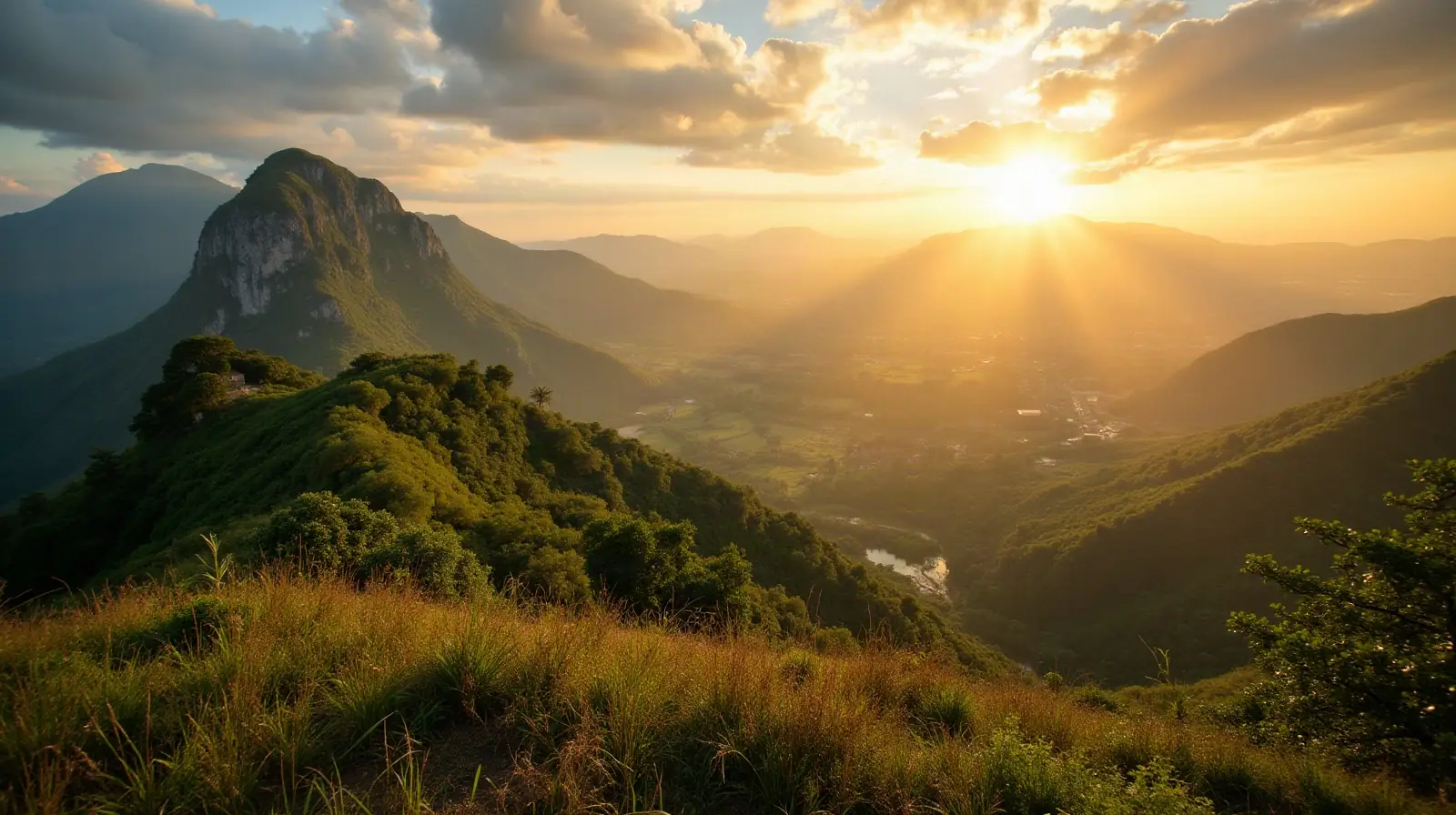
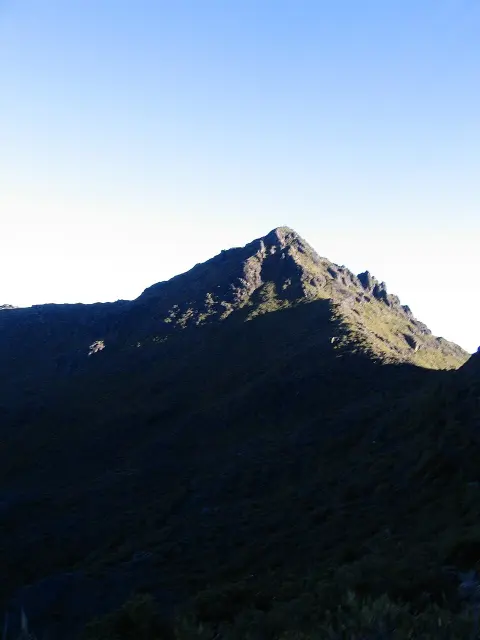
coastal plains separated by rugged mountains including over 100 volcanic cones, of which several are major active volcanoes
Highest point
Cerro Chirripo 3,819 m
Natural resources
hydropower
Natural hazards
occasional earthquakes, hurricanes along Atlantic coast; frequent flooding of lowlands at onset of rainy season and landslides; active volcanoes volcanism: Arenal (1,670 m) is the most active volcano in Costa Rica; a 1968 eruption destroyed the town of Tabaco…
National symbols
yiguirro (clay-colored thrush)
Driving
Speed limits & road rules in Costa Rica
The default speed limits in Costa Rica are 50 km/h in built-up areas and 60 km/h outside built-up areas. The legal alcohol limit for drivers is 0.5‰. Posted signs always take priority over these defaults.
- 5050 km/hBuilt-up areasTowns and cities
- 6060 km/hOutside built-up areasCountry roads
- International Driving PermitRecognised: 1968 ViennaCarry the IDP together with your national licence
- Driving sideDrive on the rightOvertake on the left
- Alcohol limit0.5‰ blood alcohol (0.05% BAC)0.2‰ for young / novice drivers
- Seat beltsRequired by law
- Child seatsRequired by law
- Motorcycle helmetsRequired for riders
- Road deaths (2021)15.5 per 100,000 peopleHigher than most countries (median 12.4)
Speed limits: OpenStreetMap wiki — Default speed limits (CC BY-SA 2.0). Road-safety laws: WHO Global Health Observatory. Compare speed limits and alcohol limits by country. Defaults for cars; local signs, weather and vehicle type can lower them.
Safety
Is Costa Rica safe to visit?
Costa Rica is generally safe for travellers, but some caution is needed: the US State Department rates Costa Rica Level 2 (“Exercise Increased Caution”), and the UK Foreign Office has no warnings against travel there.
 US State Department
 UK Foreign Office (FCDO)
Latest update: Updated information on customs rules; gang-related violence; fines for unauthorised entry into restricted conservation areas and earthquakes and recent volcanic activity ('Entry requirements' and 'Safety and security' pages).
Updated 19 May 2026 · Full travel advice
Sources: US Department of State travel advisories (public domain) and UK FCDO foreign travel advice (contains public sector information licensed under the Open Government Licence v3.0). Checked daily. Advice can change quickly — always read the official page before you travel.
Weather
Best time to visit Costa Rica
The best time to visit Costa Rica is December to March, when daytime highs in San José are around 26–30°C. April and November are also a good time to go. April is the warmest month (30°C by day), January the coldest (18°C at night), and October the wettest with about 301 mm of rain.
- Jan27°C18°C
- Feb28°C19°C
- Mar30°C19°C
- Apr30°C20°C
- May28°C21°C
- Jun26°C21°C
- Jul27°C20°C
- Aug27°C20°C
- Sep26°C20°C
- Oct25°C20°C
- Nov26°C19°C
- Dec26°C19°C
Best time Good Less ideal
Before you go
Plugs, voltage & emergency numbers in Costa Rica
Plugs & sockets
120 V, 60 Hz · Low-voltage country: devices made only for 220–240 V need a voltage converter. Phone and laptop chargers (100–240 V) only need a plug adapter.
Emergency numbers
Save the local numbers before you travel — 112 or 911 may not connect here. All countries →
Sources: Wikipedia — Mains electricity by country and List of emergency telephone numbers (CC BY-SA 4.0).
National parks
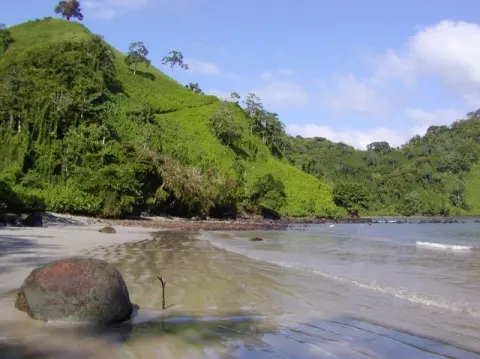
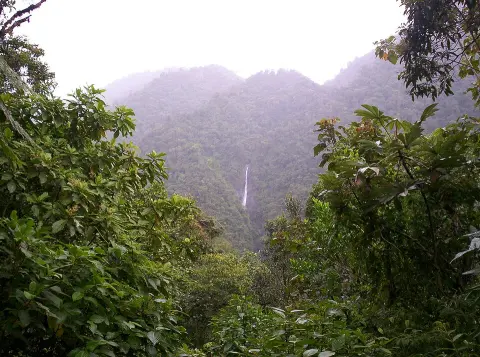
27 national parks in Costa Rica
- 6,333 km² protected
- oldest from 1955
Largest: Cocos Island National Park · Tapantí National Park · Chirripó National Park
Currency · 26 October 2026
Costa Rican colón exchange rates today
Costa Rica uses the Costa Rican colón (CRC, ₡). One US dollar buys 455.2289 CRC; over the last 30 days the CRC has lost 0.2% against the dollar.
What other currencies cost in CRC
Currency converter
Daily reference rates from the open-source currency-api (CC0), 26 Oct 2026. Banks and exchange offices add a margin.
World rankings
Where Costa Rica ranks
How Costa Rica compares with the rest of the world — open any card for the full ranking.
Airports
Airports in Costa Rica
140 airports and airfields — 2 large, 15 medium and 115 small, plus 8 heliports. 10 have scheduled passenger flights.
Borders
Neighbouring countries
Costa Rica borders 2 countries along 661 km of land borders. Coastline: 1,290 km.


People
Population & society
Religion
Largest cities: San Jose (1.5 million)
Economy
Economy
Main industries
medical equipment, food processing, textiles and clothing, construction materials, fertilizer, plastic products
Export partners
USA 40%, Netherlands 6%, China 5%, Guatemala 4%, Belgium 3% (2023)
Top exports
medical instruments, integrated circuits, orthopedic appliances, bananas, tropical fruits (2023)
Travel tools
Handy before every trip to Costa Rica
Next public holiday
Army Abolition Day — Tuesday, 1 December 2026. Then Christmas Day (25 Dec).

Costa Rican passport
Ranked #67: 91 countries visa-free, 33 with visa on arrival, 6 with an eTA and 35 with an eVisa.
Costa Rican passport photo
Exact size, head position and background for Costa Rica's passport and visa photos — make one free with AI checks.
Calling Costa Rica
Dial +506 before the local number. Internet domain .cr.
Climate footprint
8.8 million tonnes of CO₂ in 2024 — 1.71 t per person.
Entry requirements
Visa rules for every passport visiting Costa Rica: visa-free stays, eVisas, visas on arrival and documents to bring.
News
Latest travel news about Costa Rica

Southwest to open 11 tropical nonstop routes from US airports from November
Southwest Airlines is adding 11 nonstop international routes from US airports, starting 1 November with Las Vegas to Puerto Vallarta. Two of the new …
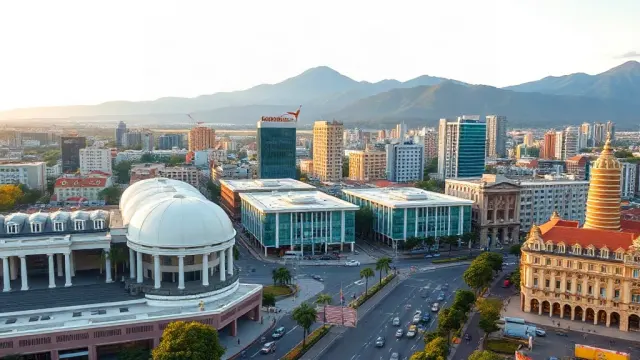
Business travellers to Guatemala face tight hotel supply and weak transport links
Guatemala is building large convention venues, including a 15,000-square-metre centre, but tourism figures say a shortage of hotel rooms, poor transp…
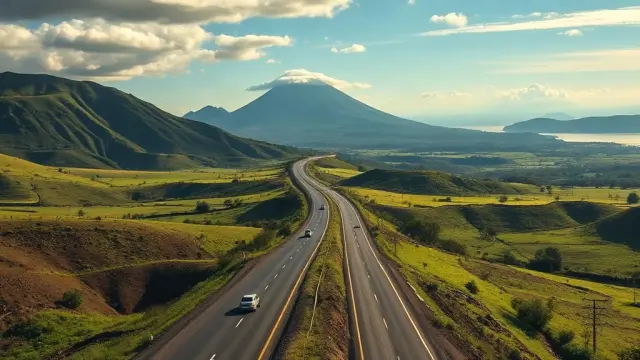
Nicaragua travel basics: western roads, rainy season and the airport near Managua
Nicaragua's transport links are concentrated in the west, and parts of the highway network become impassable in the rainy season. The main internatio…
Frequently asked questions about Costa Rica
What do I need to travel to Costa Rica?
How long must my passport be valid for Costa Rica?
Where is Costa Rica?
What is Costa Rica known for?
What is the capital of Costa Rica?
What language is spoken in Costa Rica?
What currency does Costa Rica use?
What is the calling code of Costa Rica?
Which countries border Costa Rica?
How strong is the Costa Rican passport?
What is the speed limit in Costa Rica?
Is Costa Rica safe to visit?
When is the best time to visit Costa Rica?
What plug type does Costa Rica use?
How many airports does Costa Rica have?
Sources: CIA World Factbook (public domain); World Bank Open Data (CC BY 4.0); names, languages and currencies: mledoze/countries (ODbL); flag: flag-icons (MIT); coat of arms: Wikimedia Commons (file page); exchange rates: Daily reference rates from the open-source currency-api (CC0); airports: OurAirports.