
Middle Africa · UN member

Equatorial Guinea: Travel Guide & Requirements
Republic of Equatorial Guinea · République de la Guinée Équatoriale · República da Guiné Equatorial
Equatorial Guinea is a country in Middle Africa with its capital in Malabo. It has a population of 1.9 million (#149 in the world) and covers 28,051 km². The official languages are French, Portuguese and Spanish. The currency is the Central African CFA franc (XAF, Fr).
Where is Equatorial Guinea? Map of Equatorial Guinea
Central Africa, bordering the Bight of Biafra, between Cameroon and Gabon.
- Region
- Middle Africa
- Coordinates
- 2° N, 10° E
- Neighbours
- 2 — see list
- Coastline
- 296 km
- Equatorial Guinea
- Neighbours
- Capital
- Largest cities
Map of Equatorial Guinea showing Malabo (capital) and the largest cities: Bata, Ebebiyin, Añisoc and Aconibe.
Travel requirements
What you need to travel to Equatorial Guinea
- Passport
The Embassy of Equatorial Guinea in Washington asks visa applicants for a passport with a minimum validity of 6 months and at least one empty page; the UK government says your passport must expire at least 6 months afte…
- Visa or eTA
Depends on your passport: of 198 passports, 1 needs no visa, 4 need an eVisa, 193 need a visa from an embassy. Check yours or see Equatorial Guinea entry requirements for every passport.
- Return or onward ticket
The Embassy of Equatorial Guinea in Washington lists a flight itinerary and proof of accommodation among the requirements for a visa from that Embassy.
- Proof of funds
The Embassy of Equatorial Guinea in Washington asks tourist visa applicants for proof of available funds of at least USD 1,000 for each month of their stay.
- Travel insurance
No official requirement. The UK Foreign Office says medical facilities are generally poor apart from the La Paz hospital in Malabo, that serious treatment is likely to mean evacuation to Europe, and advises adequate travel health insurance and …
- Vaccinations
The UK government says you must have a certificate proving yellow fever vaccination, due to a risk of yellow fever transmission.
- Travel advice
Some caution needed — US and UK advice.
Entry rules: TravelRequirements.info — Entry Requirements Dataset (CC BY 4.0), each rule cited to an official government source. Always confirm with the airline and the official source before you travel.
Before you go
10 things to know before you travel to Equatorial Guinea
- Safety: Equatorial Guinea is generally safe for travellers, but some caution is needed: the US State Department rates Equatorial Guinea Level 2 (“Exercise Increased Caution”), and the UK Foreign Office has no warnings against travel there.
- Best time to go: December to February — when daytime highs in Malabo are around 28°C.
- Money: the Central African CFA franc (XAF) — 1 US dollar is about 584.5354 XAF.
- Plugs: type C and E, 220 V, 50 Hz — standard 220–240 V: devices from the US or Japan (110–120 V) need a converter unless they are dual voltage (100–240 V).
- Emergency numbers: Police 114, Ambulance 115, Fire 112.
- Language: French, Portuguese and Spanish are official.
- Driving: on the right — speed limits are 60 km/h in built-up areas and 110 km/h outside built-up areas.
- Time zone: UTC+1 in Malabo.
- Capital: Malabo. About 1.9 million people live in Equatorial Guinea.
- Outdoors: 3 national parks.
Key facts
Equatorial Guinea at a glance
Languages spoken: Spanish (official) 67.6%, other (includes Fang, Bubi, Portuguese (official), French (official), Fa d'Ambo spoken in Annobon) 32.4% (1994 est.)
Geography & history
About Equatorial Guinea
Equatorial Guinea consists of a continental territory and five inhabited islands; it is one of the smallest countries by area and population in Africa. The mainland region was most likely predominantly inhabited by Pygmy ethnic groups prior to the migration of various Bantu-speaking ethnic groups around the second millennium BC. The island of Bioko, the largest of Equatorial Guinea’s five inhabited islands and the location of the country’s capital of Malabo, has been occupied since at least 1000 B.C. In the early 1470s, Portuguese explorers landed on Bioko Island, and Portugal soon after established control of the island and other areas of modern Equatorial Guinea. In 1778, Portugal ceded i…
Read the full history
Equatorial Guinea consists of a continental territory and five inhabited islands; it is one of the smallest countries by area and population in Africa. The mainland region was most likely predominantly inhabited by Pygmy ethnic groups prior to the migration of various Bantu-speaking ethnic groups around the second millennium BC. The island of Bioko, the largest of Equatorial Guinea’s five inhabited islands and the location of the country’s capital of Malabo, has been occupied since at least 1000 B.C. In the early 1470s, Portuguese explorers landed on Bioko Island, and Portugal soon after established control of the island and other areas of modern Equatorial Guinea. In 1778, Portugal ceded its colonial hold over present-day Equatorial Guinea to Spain in the Treaty of El Pardo. The borders of modern-day Equatorial Guinea would evolve between 1778 and 1968 as the area remained under European colonial rule. In 1968, Equatorial Guinea was granted independence from Spain and elected Francisco MACIAS NGUEMA as its first president. MACIAS consolidated power soon after his election and ruled brutally for over a decade. Under his regime, Equatorial Guinea experienced mass suppression, purges, and killings. Some estimates indicate that a third of the population either went into exile or was killed under MACIAS’ rule. In 1979, present-day President OBIANG Nguema Mbasogo, then a senior military officer, deposed MACIAS in a violent coup. OBIANG has ruled since and has been elected in non-competitive contests several times, most recently in 2022. The president exerts near-total control over the political system. Equatorial Guinea experienced rapid economic growth in the early years of the 21st century due to the discovery of large offshore oil reserves in 1996. Production peaked in 2004 and has declined since. The country's economic windfall from oil production resulted in massive increases in government revenue, a significant portion of which was earmarked for infrastructure development. Systemic corruption, however, has hindered socio-economic development, and the population has seen only limited improvements to living standards. Equatorial Guinea continues to seek to diversify its economy, increase foreign investment, and assume a greater role in regional and international affairs. 
Location
Central Africa, bordering the Bight of Biafra, between Cameroon and Gabon
Climate
tropical; always hot, humid
Terrain
coastal plains rise to interior hills; islands are volcanic
Highest point
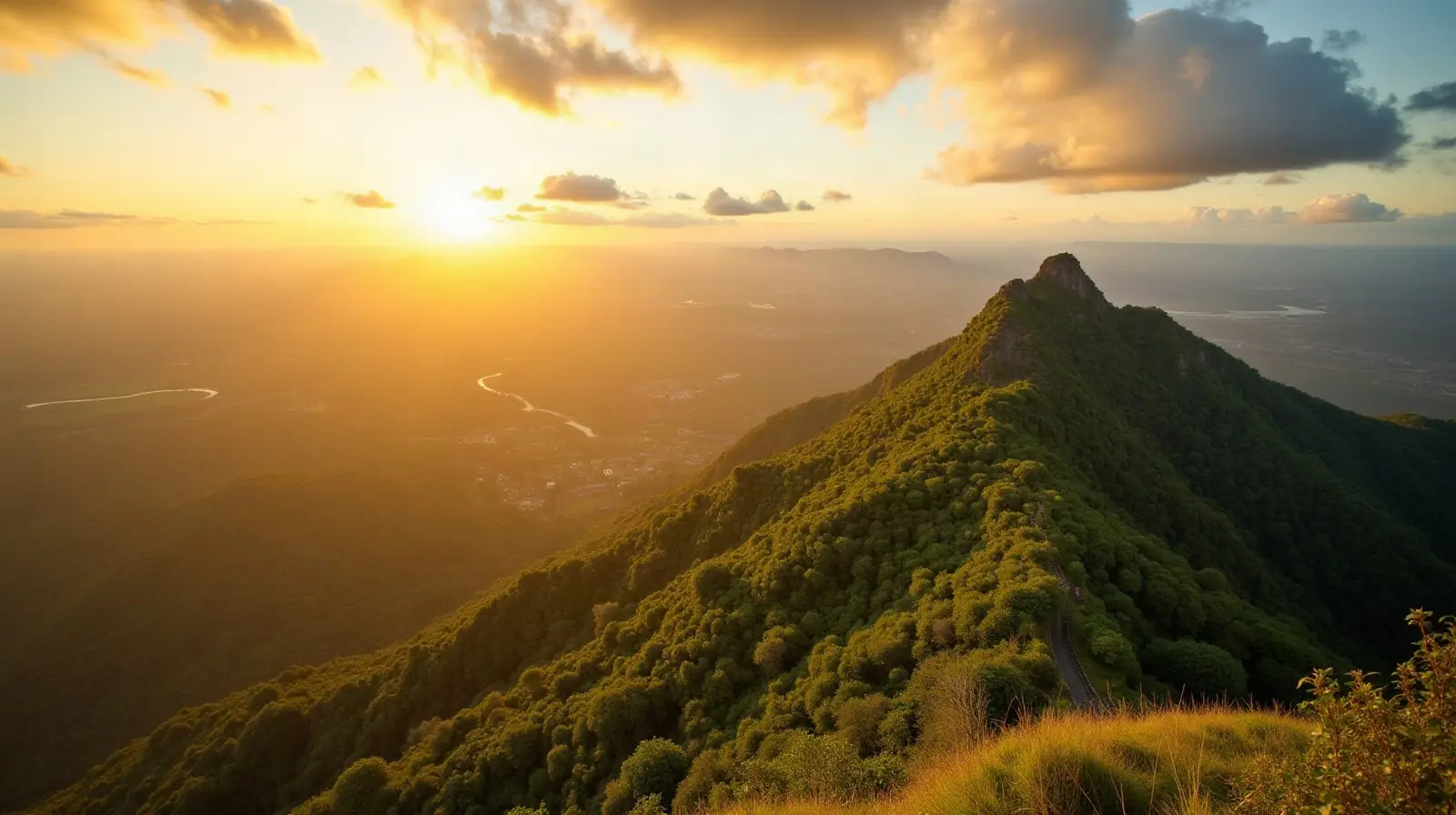
Pico Basile 3,008 m
Natural resources
petroleum, natural gas, timber, gold, bauxite, diamonds, tantalum, sand and gravel, clay
Natural hazards
violent windstorms; flash floods volcanism: Santa Isabel (3,007 m), which last erupted in 1923, is the country's only historically active volcano; Santa Isabel and two dormant volcanoes form Bioko Island in the Gulf of Guinea
National symbols
silk cotton tree
Driving
Speed limits & road rules in Equatorial Guinea
The default speed limits in Equatorial Guinea are 60 km/h in built-up areas and 110 km/h outside built-up areas. The legal alcohol limit for drivers is 0.8‰. Posted signs always take priority over these defaults.
- 6060 km/hBuilt-up areasTowns and cities
- 110110 km/hOutside built-up areasCountry roads
- International Driving PermitNot a party to the IDP conventionsCheck with the embassy whether your licence is accepted
- Driving sideDrive on the rightOvertake on the left
- Alcohol limit0.8‰ blood alcohol (0.08% BAC)
- Seat beltsRequired by law
- Child seatsNo national child-restraint law
- Motorcycle helmetsRequired for riders
- Road deaths (2021)11.7 per 100,000 peopleClose to the world median (12.4)
Speed limits: OpenStreetMap wiki — Default speed limits (CC BY-SA 2.0). Road-safety laws: WHO Global Health Observatory. Compare speed limits and alcohol limits by country. Defaults for cars; local signs, weather and vehicle type can lower them.
Safety
Is Equatorial Guinea safe to visit?
Equatorial Guinea is generally safe for travellers, but some caution is needed: the US State Department rates Equatorial Guinea Level 2 (“Exercise Increased Caution”), and the UK Foreign Office has no warnings against travel there.
 US State Department
 UK Foreign Office (FCDO)
Latest update: Updated information on commercial disputes (‘Safety and security’ page).
Updated 8 Jan 2026 · Full travel advice
Sources: US Department of State travel advisories (public domain) and UK FCDO foreign travel advice (contains public sector information licensed under the Open Government Licence v3.0). Checked daily. Advice can change quickly — always read the official page before you travel.
Weather
Best time to visit Equatorial Guinea
The best time to visit Equatorial Guinea is December to February, when daytime highs in Malabo are around 28°C. March, July to August and November are also a good time to go. March is the warmest month (29°C by day), August the coldest (25°C at night), and August the wettest with about 480 mm of rain.
- Jan28°C27°C
- Feb28°C27°C
- Mar29°C28°C
- Apr29°C28°C
- May28°C27°C
- Jun27°C27°C
- Jul26°C26°C
- Aug26°C25°C
- Sep26°C26°C
- Oct27°C26°C
- Nov28°C27°C
- Dec28°C27°C
Best time Good Less ideal
Before you go
Plugs, voltage & emergency numbers in Equatorial Guinea
Plugs & sockets
220 V, 50 Hz · Standard 220–240 V: devices from the US or Japan (110–120 V) need a converter unless they are dual voltage (100–240 V).
Emergency numbers
112 works from any mobile phone, even without a SIM card in most networks. All countries →
Sources: Wikipedia — Mains electricity by country and List of emergency telephone numbers (CC BY-SA 4.0).
National parks
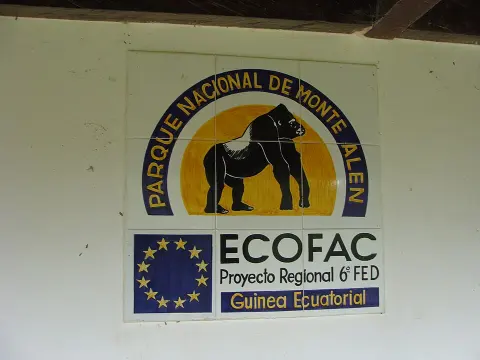
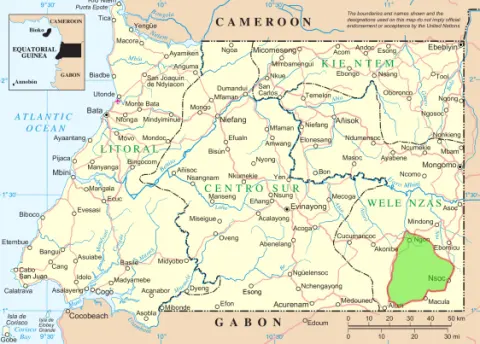
3 national parks in Equatorial Guinea
- 3,130 km² protected
- oldest from 1990
Largest: Monte Alén National Park · Altos de Nsork National Park · Pico Basilé National Park
Currency · 26 October 2026
Central African CFA franc exchange rates today
Equatorial Guinea uses the Central African CFA franc (XAF, Fr). One US dollar buys 584.5354 XAF; over the last 30 days the XAF has lost 1.5% against the dollar.
What other currencies cost in XAF
Currency converter
Daily reference rates from the open-source currency-api (CC0), 26 Oct 2026. Banks and exchange offices add a margin.
World rankings
Where Equatorial Guinea ranks
How Equatorial Guinea compares with the rest of the world — open any card for the full ranking.
Airports
Airports in Equatorial Guinea
8 airports and airfields — 3 large, 1 medium and 3 small, plus 1 heliports. 5 have scheduled passenger flights.
Borders
Neighbouring countries
Equatorial Guinea borders 2 countries along 528 km of land borders. Coastline: 296 km.


People
Population & society
Religion
Largest cities: Malabo (297,000)
Economy
Economy
Main industries
petroleum, natural gas, sawmilling
Export partners
China 27%, Netherlands 12%, Spain 10%, Italy 7%, Germany 6% (2023)
Top exports
crude petroleum, natural gas, alcohols, wood, scrap iron (2023)
Travel tools
Handy before every trip to Equatorial Guinea
Next public holiday
Immaculate Conception — Tuesday, 8 December 2026. Then Christmas Day (25 Dec).
Equatorial Guinean or Equatoguinean passport
Ranked #162: 23 countries visa-free, 31 with visa on arrival, 3 with an eTA and 39 with an eVisa.
Equatorial Guinean or Equatoguinean passport photo
Exact size, head position and background for Equatorial Guinea's passport and visa photos — make one free with AI checks.
Calling Equatorial Guinea
Dial +240 before the local number. Internet domain .gq.
Climate footprint
7.0 million tonnes of CO₂ in 2024 — 3.70 t per person.
Entry requirements
Visa rules for every passport visiting Equatorial Guinea: visa-free stays, eVisas, visas on arrival and documents to bring.
News
Latest travel news about Equatorial Guinea
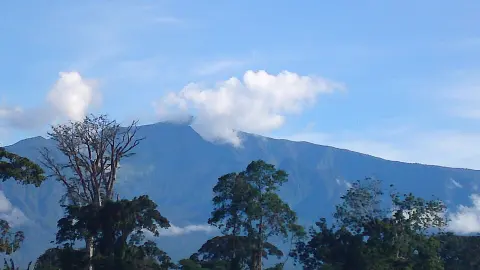
Cameroon Border Arrest: French Tourist Held in Equatorial Guinea on Spy Claims
Authorities in Equatorial Guinea have detained a Frenchman holding a tourist e-Visa, accusing him of espionage and links to an exiled opposition grou…
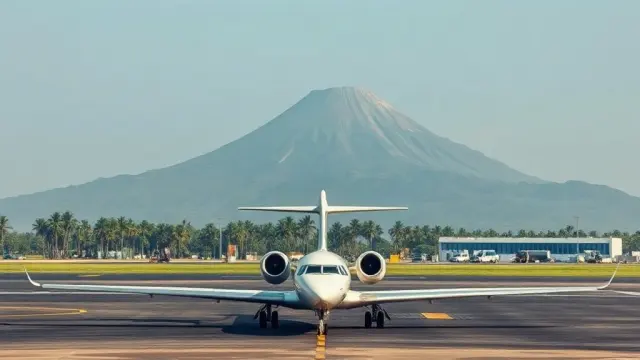
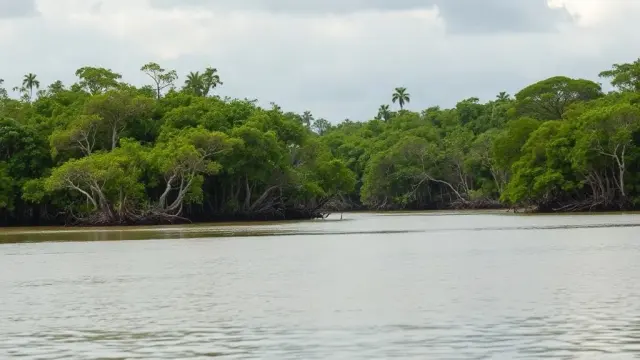
ICE Charter to Equatorial Guinea to Expel 25, Not Return Jailed Man
Documents show an ICE charter flight due in Equatorial Guinea on Thursday plans to expel 25 people there rather than retrieve Ahmed Soliman, an Egypt…
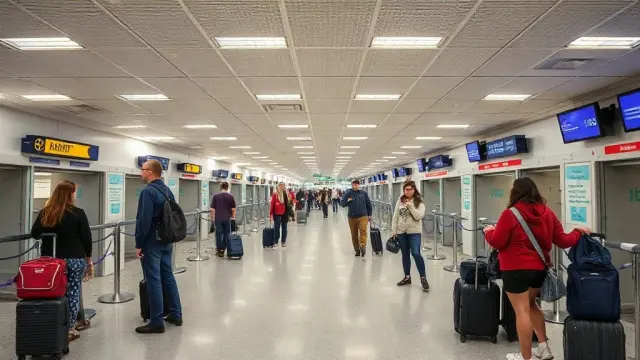
US immigrant visas halve in early 2026; Equatorial Guinea among banned states
The US Department of State issued 26,000 immigrant visas in February 2026, about half the pre-Trump monthly average. Nationals of 39 countries, inclu…
Frequently asked questions about Equatorial Guinea
What do I need to travel to Equatorial Guinea?
How long must my passport be valid for Equatorial Guinea?
Where is Equatorial Guinea?
What is Equatorial Guinea known for?
What is the capital of Equatorial Guinea?
What language is spoken in Equatorial Guinea?
What currency does Equatorial Guinea use?
What is the calling code of Equatorial Guinea?
Which countries border Equatorial Guinea?
How strong is the Equatorial Guinean or Equatoguinean passport?
What is the speed limit in Equatorial Guinea?
Is Equatorial Guinea safe to visit?
When is the best time to visit Equatorial Guinea?
What plug type does Equatorial Guinea use?
How many airports does Equatorial Guinea have?
Sources: CIA World Factbook (public domain); World Bank Open Data (CC BY 4.0); names, languages and currencies: mledoze/countries (ODbL); flag: flag-icons (MIT); coat of arms: Wikimedia Commons (file page); exchange rates: Daily reference rates from the open-source currency-api (CC0); airports: OurAirports.