
South America · UN member

Bolivia: Travel Guide & Requirements
Plurinational State of Bolivia · Wuliwya Suyu · Tetã Volívia
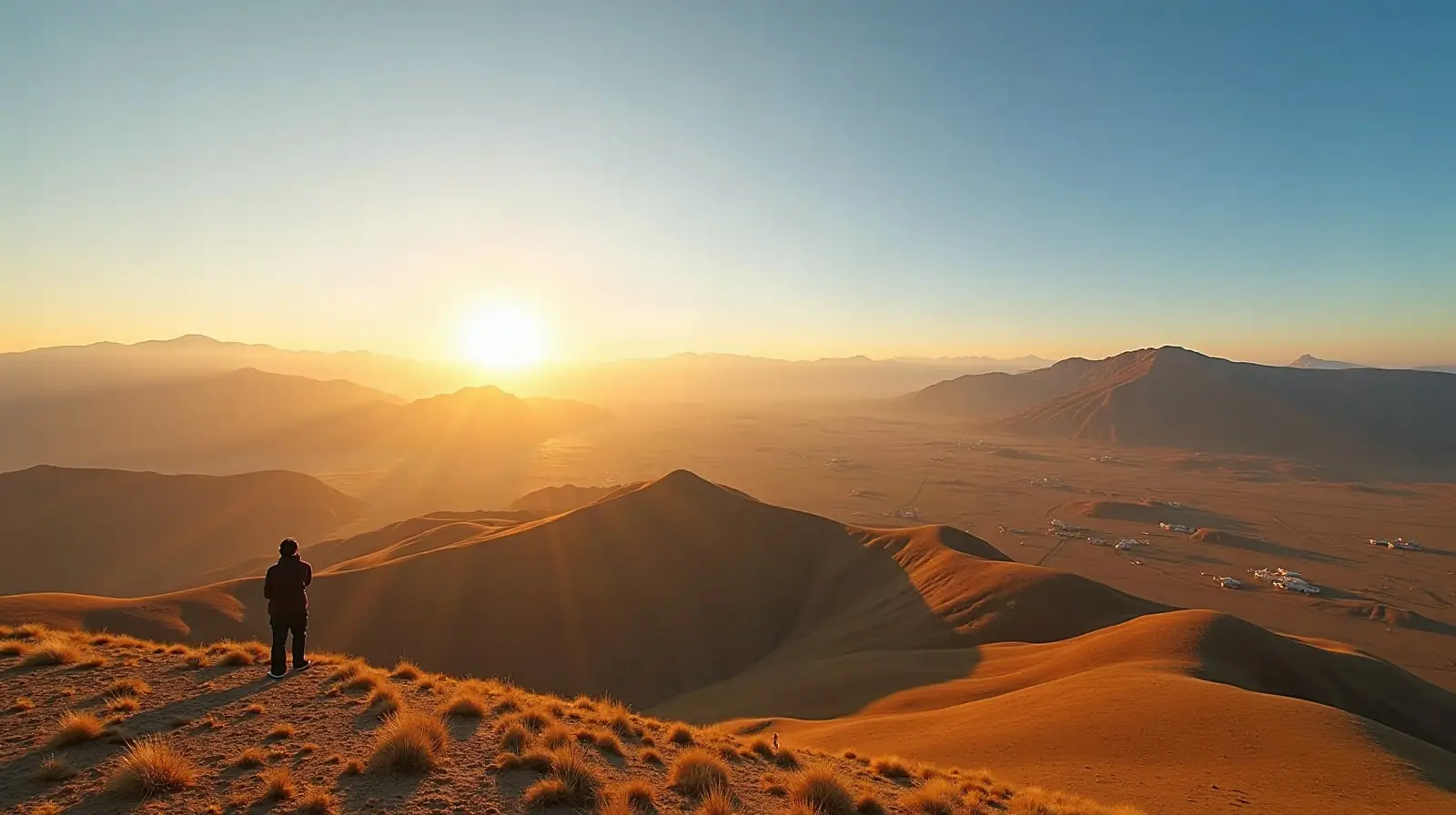
Bolivia is a country in South America with its capital in La Paz. It has a population of 12.6 million (#78 in the world) and covers 1,098,581 km². The official languages are Aymara, Guaraní, Quechua and Spanish. The currency is the Bolivian boliviano (BOB, Bs.).
Where is Bolivia? Map of Bolivia
Central South America, southwest of Brazil.
- Region
- South America
- Coordinates
- 17° S, 65° W
- Neighbours
- 5 — see list
- Coastline
- Landlocked
- Bolivia
- Neighbours
- Capital
- Largest cities
Map of Bolivia showing La Paz (capital) and the largest cities: Santa Cruz de la Sierra, Cochabamba, Sucre, Oruro, Tarija, Potosí, Riberalta and Montero.
Travel requirements
What you need to travel to Bolivia
- Passport
Bolivia's Migration Directorate asks for a passport valid for at least 6 months with a tourist stay application.
- Visa or eTA
Depends on your passport: of 198 passports, 64 need no visa, 6 need an eVisa, 1 gets a visa on arrival, 127 need a visa from an embassy. Check yours or see Bolivia entry requirements for every passport.
- Return or onward ticket
No official Bolivian source we could read states an onward-ticket requirement.
- Proof of funds
No official Bolivian source we could read states a proof-of-funds requirement or amount.
- Travel insurance
No official requirement. The UK Foreign Office says you may not be able to access the public health system as it is already overstretched, that private clinics in all main cities work with international insurance, and that it is very important …
- Vaccinations
The UK Foreign Office says you must have a yellow fever vaccination certificate to enter Bolivia if you are coming from a country listed as a transmission risk.
- Arrival card
Bolivia's customs service says that before entering or leaving Bolivia you fill in Form 250 for new goods (on entry) and currency (on entry and exit) carried in your accompanied baggage.
- Customs allowance
Bolivia's customs service says currency between USD 10,000 and USD 50,000 must be declared on entry, and between USD 10,000 and USD 20,000 on exit, and that larger amounts must be moved through financial institutions re…
- Travel advice
Some caution needed — US and UK advice.
Entry rules: TravelRequirements.info — Entry Requirements Dataset (CC BY 4.0), each rule cited to an official government source. Always confirm with the airline and the official source before you travel.
Before you go
10 things to know before you travel to Bolivia
- Safety: Bolivia is generally safe for travellers, but some caution is needed: the US State Department rates Bolivia Level 2 (“Exercise Increased Caution”), and the UK Foreign Office advises against all but essential travel to parts of the country.
- Best time to go: April to November — when daytime highs in La Paz are around 13–16°C.
- Money: the Bolivian boliviano (BOB) — 1 US dollar is about 11.8321 BOB.
- Plugs: type A, B and C, 230 V, 50 Hz — standard 220–240 V: devices from the US or Japan (110–120 V) need a converter unless they are dual voltage (100–240 V).
- Emergency numbers: Police 911, Ambulance 911, Fire 911.
- Language: Aymara, Guaraní, Quechua and Spanish are official.
- Driving: on the right — speed limits are 40 km/h in built-up areas and 80 km/h outside built-up areas.
- Time zone: UTC-4 in La Paz.
- Capital: La Paz. About 12.6 million people live in Bolivia.
- Bolivia is the 28th largest country in the world by area.
Key facts
Bolivia at a glance
Languages spoken: Spanish (official) 68.1%, Quechua (official) 17.2%, Aymara (official) 10.5%, Guarani (official) 0.6%, other 1.5%, unspecified 2.1%; note - Spanish and all Indigenous languages are official (2012 est.)
Geography & history
About Bolivia
Bolivia, named after independence fighter Simón BOLÍVAR, broke away from Spanish rule in 1825. Much of its subsequent history has consisted of a series of coups and countercoups, with the last coup occurring in 1980. Democratic civilian rule was established in 1982, but leaders have faced problems of deep-seated poverty, social unrest, and illegal drug production. In 2005, Bolivians elected Movement Toward Socialism leader Evo MORALES as president -- by the widest margin of any leader since 1982 -- after he ran on a promise to change the country's traditional political class and empower the poor and indigenous majority. In 2009 and 2014, MORALES easily won reelection, and his party maintain…
Read the full history
Bolivia, named after independence fighter Simón BOLÍVAR, broke away from Spanish rule in 1825. Much of its subsequent history has consisted of a series of coups and countercoups, with the last coup occurring in 1980. Democratic civilian rule was established in 1982, but leaders have faced problems of deep-seated poverty, social unrest, and illegal drug production. In 2005, Bolivians elected Movement Toward Socialism leader Evo MORALES as president -- by the widest margin of any leader since 1982 -- after he ran on a promise to change the country's traditional political class and empower the poor and indigenous majority. In 2009 and 2014, MORALES easily won reelection, and his party maintained control of the legislative branch. In 2016, MORALES narrowly lost a referendum to approve a constitutional amendment that would have allowed him to compete in the 2019 presidential election. A subsequent Supreme Court ruling stating that term limits violate human rights provided the justification for MORALES to run despite the referendum, but rising violence, pressure from the military, and widespread allegations of electoral fraud ultimately forced him to flee the country. An interim government, led by President Jeanine AÑEZ Chávez, held new elections in 2020, and Luis Alberto ARCE Catacora was elected president.
Location
Central South America, southwest of Brazil
Climate
varies with altitude; humid and tropical to cold and semiarid
Terrain
rugged Andes Mountains with a highland plateau (Altiplano), hills, lowland plains of the Amazon Basin
Highest point
Nevado Sajama 6,542 m
Natural resources
lithium, tin, natural gas, petroleum, zinc, tungsten, antimony, silver, iron, lead, gold, timber, hydropower
Natural hazards
flooding in the northeast (March to April) volcanism: volcanic activity in Andes Mountains on the border with Chile; historically active volcanoes in this region are Irruputuncu (5,163 m), which last erupted in 1995, and the Olca-Paruma volcanic complex (5,76…
National symbols
llama, Andean condor; two national flowers, the cantuta and the patuju
Driving
Speed limits & road rules in Bolivia
The default speed limits in Bolivia are 40 km/h in built-up areas and 80 km/h outside built-up areas. The legal alcohol limit for drivers is 0.5‰. Posted signs always take priority over these defaults.
- 4040 km/hBuilt-up areasTowns and cities
- 8080 km/hOutside built-up areasCountry roads
- International Driving PermitNot a party to the IDP conventionsCheck with the embassy whether your licence is accepted
- Driving sideDrive on the rightOvertake on the left
- Alcohol limit0.5‰ blood alcohol (0.05% BAC)
- Seat beltsRequired by law
- Child seatsNo national child-restraint law
- Motorcycle helmetsRequired for riders
- Road deaths (2021)17.6 per 100,000 peopleHigher than most countries (median 12.4)
Speed limits: OpenStreetMap wiki — Default speed limits (CC BY-SA 2.0). Road-safety laws: WHO Global Health Observatory. Compare speed limits and alcohol limits by country. Defaults for cars; local signs, weather and vehicle type can lower them.
Safety
Is Bolivia safe to visit?
Bolivia is generally safe for travellers, but some caution is needed: the US State Department rates Bolivia Level 2 (“Exercise Increased Caution”), and the UK Foreign Office advises against all but essential travel to parts of the country.
 US State Department
 UK Foreign Office (FCDO)
Latest update: Updated information about the State of Emergency ('Warnings and insurance' page).
Updated 22 Sep 2026 · Full travel advice
Sources: US Department of State travel advisories (public domain) and UK FCDO foreign travel advice (contains public sector information licensed under the Open Government Licence v3.0). Checked daily. Advice can change quickly — always read the official page before you travel.
Weather
Best time to visit Bolivia
The best time to visit Bolivia is April to November, when daytime highs in La Paz are around 13–16°C. November is the warmest month (16°C by day), July the coldest (-3°C at night), and January the wettest with about 136 mm of rain.
- Jan14°C3°C
- Feb14°C3°C
- Mar14°C3°C
- Apr14°C2°C
- May14°C-1°C
- Jun13°C-2°C
- Jul13°C-3°C
- Aug14°C-2°C
- Sep14°C0°C
- Oct15°C2°C
- Nov16°C3°C
- Dec15°C4°C
Best time Good Less ideal
Before you go
Plugs, voltage & emergency numbers in Bolivia
Plugs & sockets
- Type Atwo flat parallel pins
- Type Btwo flat parallel pins and a round earth pin
- Type C (Europlug)two round pins
230 V, 50 Hz · Standard 220–240 V: devices from the US or Japan (110–120 V) need a converter unless they are dual voltage (100–240 V).
Emergency numbers
Save the local numbers before you travel — 112 or 911 may not connect here. All countries →
Sources: Wikipedia — Mains electricity by country and List of emergency telephone numbers (CC BY-SA 4.0).
National parks
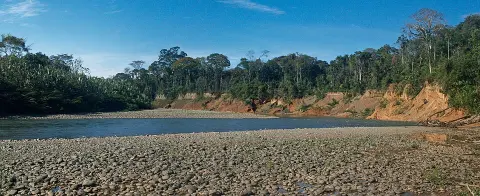
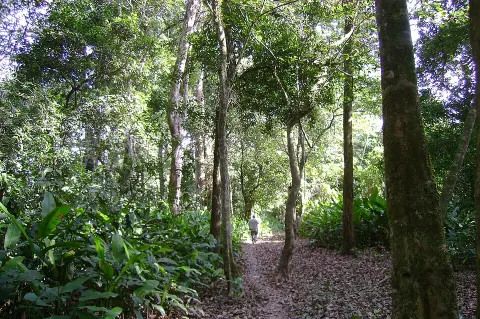
13 national parks in Bolivia
- 63,942 km² protected
- oldest from 1938
Largest: Madidi National Park and Integrated Management Natural Area · Isiboro Sécure National Park and Indigenous Territory · Otuquis National Park and Integrated Management Natural Area
Currency · 26 October 2026
Bolivian boliviano exchange rates today
Bolivia uses the Bolivian boliviano (BOB, Bs.). One US dollar buys 11.8321 BOB; over the last 30 days the BOB has gained 3.3% against the dollar.
What other currencies cost in BOB
Currency converter
Daily reference rates from the open-source currency-api (CC0), 26 Oct 2026. Banks and exchange offices add a margin.
World rankings
Where Bolivia ranks
How Bolivia compares with the rest of the world — open any card for the full ranking.
Airports
Airports in Bolivia
205 airports and airfields — 6 large, 14 medium and 182 small, plus 3 heliports. 16 have scheduled passenger flights.


Military
Bolivian armed forces
Bolivia ranks #77 of 145 in the Global Firepower military strength ranking, with a defence budget of $688 million (2025).
People
Population & society
Religion
Largest cities: La Paz (1.9 million), Santa Cruz (1.8 million), Cochabamba (1.4 million), Sucre (278,000)
Economy
Economy
Main industries
mining, smelting, electricity, petroleum, food and beverages, handicrafts, clothing, jewelry
Export partners
Brazil 15%, India 13%, China 11%, Argentina 11%, UAE 8% (2023)
Top exports
gold, natural gas, precious metal ore, zinc ore, soybean meal (2023)
Travel tools
Handy before every trip to Bolivia
Next public holiday
All Saints' Day — Monday, 2 November 2026. Then Christmas Day (25 Dec).

Bolivian passport
Ranked #135: 35 countries visa-free, 35 with visa on arrival, 3 with an eTA and 41 with an eVisa.
Bolivian passport photo
Exact size, head position and background for Bolivia's passport and visa photos — make one free with AI checks.
Calling Bolivia
Dial +591 before the local number. Internet domain .bo.
Climate footprint
28.7 million tonnes of CO₂ in 2024 — 2.31 t per person.
Entry requirements
Visa rules for every passport visiting Bolivia: visa-free stays, eVisas, visas on arrival and documents to bring.
News
Latest travel news about Bolivia
US Visa Restrictions Target Dozens of Colombians and Bolivians
The Trump administration has imposed US visa restrictions on dozens of people in Colombia and Bolivia, including former Ecopetrol chief executive Ric…
Bolivia travel: 40 people and their families denied U.S. visas over graft, drugs
The U.S. Department of State has imposed visa restrictions on 40 individuals in Bolivia, including 15 named Bolivian nationals and their immediate fa…
What F-1 students need to re-enter the U.S. after travelling abroad
F-1 students leaving the United States generally need a valid passport, a valid visa and a travel-endorsed Form I-20 to return, U.S. Immigration and …
Frequently asked questions about Bolivia
What do I need to travel to Bolivia?
How long must my passport be valid for Bolivia?
Where is Bolivia?
What is Bolivia known for?
What is the capital of Bolivia?
What language is spoken in Bolivia?
What currency does Bolivia use?
What is the calling code of Bolivia?
Which countries border Bolivia?
How strong is the Bolivian passport?
What is the speed limit in Bolivia?
Is Bolivia safe to visit?
When is the best time to visit Bolivia?
What plug type does Bolivia use?
How many airports does Bolivia have?
Sources: CIA World Factbook (public domain); World Bank Open Data (CC BY 4.0); names, languages and currencies: mledoze/countries (ODbL); flag: flag-icons (MIT); coat of arms: Wikimedia Commons (file page); exchange rates: Daily reference rates from the open-source currency-api (CC0); airports: OurAirports.