

North America · UN member

United States: Travel Guide & Requirements
United States of America
The United States is a country in North America with its capital in Washington, D.C.. It has a population of 341.8 million (#3 in the world) and covers 9,833,517 km². The official language is English. The currency is the United States dollar (USD, $).
Where is the United States? Map of the United States
North America, bordering both the North Atlantic Ocean and the North Pacific Ocean, between Canada and Mexico.
- Region
- North America
- Coordinates
- 38° N, 97° W
- Neighbours
- 2 — see list
- Coastline
- 19,924 km
- United States
- Neighbours
- Capital
- Largest cities
Map of the United States showing Washington, D.C. (capital) and the largest cities: New York City, Los Angeles, Chicago, Houston, Phoenix, Philadelphia, San Antonio and San Diego.
Travel requirements
What you need to travel to the United States
- Passport
CBP says visitors must have passports valid for six months beyond their intended stay, and that citizens of the countries on its exemption list need only a passport valid for their intended period of stay.
- Visa or eTA
Depends on your passport: of 198 passports, 5 need no visa, 42 need an eTA, 131 need a visa from an embassy. Check yours or see The United States entry requirements for every passport.
- Return or onward ticket
Under 8 CFR 217.2, Visa Waiver Program travellers arriving by air or sea must have a round-trip ticket out of the United States, one that ends in contiguous territory or an adjacent island only if they live there.
- Proof of funds
No official requirement. Under 8 CFR 217.2, Visa Waiver Program travellers arriving at a land border must show evidence of financial solvency and a home abroad to which they intend to return.
- Travel insurance
No official requirement. The UK government says medical treatment in the US is expensive and that some hospitals ask non-US residents to pay a deposit when admitted.
- Customs allowance
CBP says anyone who brings, sends or receives currency or monetary instruments totalling more than $10,000 at one time into or out of the United States must report it, on FinCEN Form 105.
- Travel advice
Safe to visit — US and UK advice.
Entry rules: TravelRequirements.info — Entry Requirements Dataset (CC BY 4.0), each rule cited to an official government source. Always confirm with the airline and the official source before you travel.
Before you go
10 things to know before you travel to the United States
- Safety: Yes — the United States is generally safe to visit: the UK Foreign Office has no warnings against travel there.
- Best time to go: May to June and September — when daytime highs in Washington, D.C.
- Money: the United States dollar (USD) — 1 euro is about 1.1222 USD.
- Plugs: type A and B, 120 V, 60 Hz — low-voltage country: devices made only for 220–240 V need a voltage converter. Phone and laptop chargers (100–240 V) only need a plug adapter.
- Emergency numbers: Police 911, Ambulance 911, Fire 911.
- Language: English is official.
- Driving: on the right — speed limits are 25 mph in built-up areas, 55 mph outside built-up areas, 65 mph on expressways and 70 mph on motorways.
- Time zone: UTC-5 in Washington, D.C..
- Capital: Washington, D.C.; the largest city is New York-Newark. About 341.8 million people live in the United States.
- The United States is the 3rd largest country in the world by area.
Key facts
United States at a glance
Languages spoken: English only (official) 78.2%, Spanish 13.4%, Chinese 1.1%, other 7.3% (2017 est.)
Geography & history
About the United States
Thirteen of Britain's American colonies broke with the mother country in 1776 and were recognized as the new nation of the United States of America following the Treaty of Paris in 1783. During the 19th and 20th centuries, 37 new states were added as the nation expanded across the North American continent and acquired a number of overseas possessions. Two of the most traumatic experiences in the nation's history were the Civil War (1861-65), in which a northern Union of states defeated a secessionist Confederacy of 11 southern slave states, and the Great Depression of the 1930s, an economic downturn during which about a quarter of the labor force lost its jobs. Buoyed by victories in World …
Read the full history
Thirteen of Britain's American colonies broke with the mother country in 1776 and were recognized as the new nation of the United States of America following the Treaty of Paris in 1783. During the 19th and 20th centuries, 37 new states were added as the nation expanded across the North American continent and acquired a number of overseas possessions. Two of the most traumatic experiences in the nation's history were the Civil War (1861-65), in which a northern Union of states defeated a secessionist Confederacy of 11 southern slave states, and the Great Depression of the 1930s, an economic downturn during which about a quarter of the labor force lost its jobs. Buoyed by victories in World Wars I and II and the end of the Cold War in 1991, the US remains the world's most powerful nation state. Since the end of World War II, the economy has achieved relatively steady growth, low unemployment, and rapid advances in technology.
Location
North America, bordering both the North Atlantic Ocean and the North Pacific Ocean, between Canada and Mexico
Climate
mostly temperate, but tropical in Hawaii and Florida, arctic in Alaska, semiarid in the great plains west of the Mississippi River, and arid in the Great Basin of the southwest; low winter temperatures in the northwest are ameliorated occasionally in January …
Terrain
vast central plain, mountains in west, hills and low mountains in east; rugged mountains and broad river valleys in Alaska; rugged, volcanic topography in Hawaii
Highest point
Mount McKinley 6,190 m (highest point in North America)
Natural resources
coal, copper, lead, molybdenum, phosphates, rare earth elements, uranium, bauxite, gold, iron, mercury, nickel, potash, silver, tungsten, zinc, petroleum, natural gas, timber, arable land
Natural hazards
tsunamis; volcanoes; earthquake activity around Pacific Basin; hurricanes along the Atlantic and Gulf of America coasts; tornadoes in the Midwest and Southeast; mud slides in California; forest fires in the west; flooding; permafrost in northern Alaska is a m…
National symbols
bald eagle
Driving
Speed limits & road rules in the United States
The default speed limits in the United States are 25 mph in built-up areas, 55 mph outside built-up areas, 65 mph on expressways and 70 mph on motorways. The legal alcohol limit for drivers is 0.8‰. Posted signs always take priority over these defaults.
- SPEED
LIMIT2525 mphBuilt-up areasTowns and citiesMost common · varies by state: 25–35 mph - SPEED
LIMIT5555 mphOutside built-up areasCountry roadsMost common · varies by state: 20–80 mph - SPEED
LIMIT6565 mphExpresswaysDual carriageways & expresswaysMost common · varies by state: 50–75 mph - SPEED
LIMIT7070 mphMotorwaysMotorways / freewaysMost common · varies by state: 55–80 mph
- International Driving PermitRecognised: 1949 GenevaCarry the IDP together with your national licence
- Driving sideDrive on the rightOvertake on the left
- Alcohol limit0.8‰ blood alcohol (0.08% BAC)
- Seat beltsRequired by law
- Child seatsRequired by law
- Motorcycle helmetsNo nationwide law — set by each state
- Road deaths (2021)14.2 per 100,000 peopleClose to the world median (12.4)
Speed limits: OpenStreetMap wiki — Default speed limits (CC BY-SA 2.0). Road-safety laws: WHO Global Health Observatory. Compare speed limits and alcohol limits by country. Defaults for cars; local signs, weather and vehicle type can lower them.
Safety
Is the United States safe to visit?
Yes — the United States is generally safe to visit: the UK Foreign Office has no warnings against travel there.
 UK Foreign Office (FCDO)
Latest update: Updated information about US Hurricane season predictions (‘Safety and security’ page).
Updated 18 Aug 2026 · Full travel advice
Sources: US Department of State travel advisories (public domain) and UK FCDO foreign travel advice (contains public sector information licensed under the Open Government Licence v3.0). Checked daily. Advice can change quickly — always read the official page before you travel.
Weather
Best time to visit the United States
The best time to visit the United States is May to June and September, when daytime highs in Washington, D.C. are around 23–28°C. July to August and October are also a good time to go. July is the warmest month (31°C by day), January the coldest (-4°C at night), and June the wettest with about 118 mm of rain.
- Jan4°C-4°C
- Feb6°C-3°C
- Mar11°C1°C
- Apr18°C7°C
- May23°C13°C
- Jun28°C18°C
- Jul31°C21°C
- Aug30°C20°C
- Sep27°C16°C
- Oct20°C9°C
- Nov13°C3°C
- Dec7°C-1°C
Best time Good Less ideal
Before you go
Plugs, voltage & emergency numbers in the United States
Plugs & sockets
120 V, 60 Hz · Low-voltage country: devices made only for 220–240 V need a voltage converter. Phone and laptop chargers (100–240 V) only need a plug adapter.
Emergency numbers
Save the local numbers before you travel — 112 or 911 may not connect here. All countries →
Sources: Wikipedia — Mains electricity by country and List of emergency telephone numbers (CC BY-SA 4.0).
Ski resorts
960 ski resorts in the United States
- 9,674 km of slopes
- 3,286 lifts
- up to 3,910 m
Biggest: Park City Mountain Resort · Big Sky Resort · Vail
National parks
77 national parks in the United States
- 186,515 km² protected
- oldest from 1861
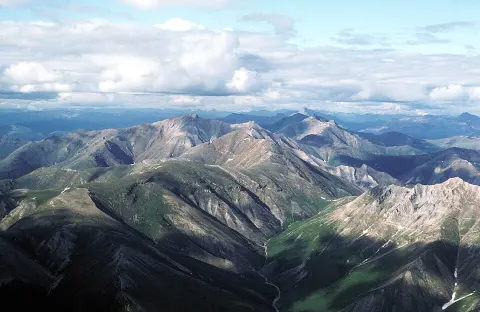
Largest: Gates of the Arctic National Park and Preserve · Wrangell–St. Elias National Park and Preserve · Katmai National Park and Preserve


Currency · 26 October 2026
United States dollar exchange rates today
The United States uses the United States dollar (USD, $).
What other currencies cost in USD
Currency converter
Daily reference rates from the open-source currency-api (CC0), 26 Oct 2026. Banks and exchange offices add a margin.
World rankings
Where the United States ranks
How the United States compares with the rest of the world — open any card for the full ranking.
Airports
Airports in the United States
25,084 airports and airfields — 95 large, 822 medium and 15228 small, plus 8227 heliports. 699 have scheduled passenger flights.
Borders
Neighbouring countries
The United States borders 2 countries along 12,002 km of land borders. Coastline: 19,924 km.


Military
American armed forces
The United States ranks #1 of 145 in the Global Firepower military strength ranking, with a defence budget of $954.4 billion (2025).
People
Population & society
Religion
Largest cities: New York-Newark (18.9 million), Los Angeles-Long Beach-Santa Ana (12.5 million), Chicago (8.9 million), Houston (6.7 million), Dallas-Fort Worth (6.6 million)
Economy
Economy
Main industries
highly diversified, world leading, high-technology innovator, second-largest industrial output in the world; petroleum, steel, motor vehicles, aerospace, telecommunications, chemicals, electronics, food processing, cons…
Export partners
Canada 14%, Mexico 13%, China 8%, Germany 5%, Japan 4% (2023)
Top exports
crude petroleum, refined petroleum, natural gas, gas turbines, cars (2023)
Travel tools
Handy before every trip to the United States
Next public holiday
Veterans Day — Wednesday, 11 November 2026. Then Thanksgiving Day (26 Nov).

American passport
Ranked #34: 116 countries visa-free, 37 with visa on arrival, 8 with an eTA and 19 with an eVisa.
American passport photo
Exact size, head position and background for the United States's passport and visa photos — make one free with AI checks.
Calling the United States
Dial +1 before the local number. Internet domain .us.
Climate footprint
4,904.1 million tonnes of CO₂ in 2024 — 14.20 t per person.
Entry requirements
Visa rules for every passport visiting the United States: visa-free stays, eVisas, visas on arrival and documents to bring.
News
Latest travel news about the United States

South Koreans Face the Highest U.S. Visitor Visa Refusal Rate Among Allies
One in four South Korean applications for U.S. B1/B2 visitor visas was refused in 2025, a rate of 24.73% that is higher than those of Japan, Germany,…

Indianapolis outreach lets Midwest Kenyans apply for passports and IDs closer to home
The Kenyan Embassy in Washington, D.C. ran a three-day consular outreach in Indianapolis from 22 to 24 October 2026, helping Kenyans in Indiana and n…

Southwest to open 11 tropical nonstop routes from US airports from November
Southwest Airlines is adding 11 nonstop international routes from US airports, starting 1 November with Las Vegas to Puerto Vallarta. Two of the new …
Frequently asked questions about the United States
What do I need to travel to the United States?
How long must my passport be valid for the United States?
Where is the United States?
What is the United States known for?
What is the capital of the United States?
What language is spoken in the United States?
What currency does the United States use?
What is the calling code of the United States?
Which countries border the United States?
How strong is the American passport?
What is the speed limit in the United States?
Is the United States safe to visit?
When is the best time to visit the United States?
What plug type does the United States use?
How many airports does the United States have?
Sources: CIA World Factbook (public domain); World Bank Open Data (CC BY 4.0); names, languages and currencies: mledoze/countries (ODbL); flag: flag-icons (MIT); coat of arms: Wikimedia Commons (file page); exchange rates: Daily reference rates from the open-source currency-api (CC0); airports: OurAirports.