
 United StatesVisas
South Koreans Face the Highest U.S. Visitor Visa Refusal Rate Among Allies
One in four South Korean applications for U.S. B1/B2 visitor visas was refused in 2025, a rate of 24.73% that is higher than those of Japan, Germany, France and China. Visitor visas issued to South Koreans fell to 12,226.
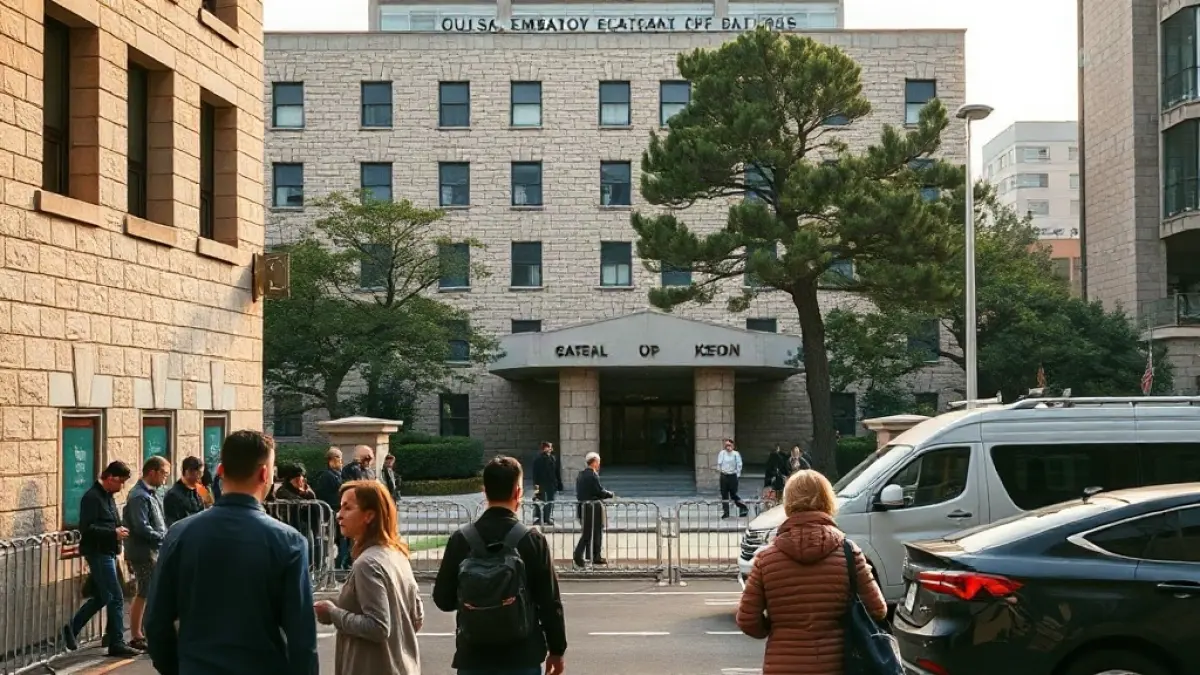
U.S. B1/B2 visitor visa refusals for South Korean applicants reached 24.73% in 2025 — roughly one in four applications — the highest rate among the United States' allies, according to data from South Korea's Ministry of Foreign Affairs and U.S. Department of State consular statistics.
The figure is a jump of 9.76 percentage points from 14.97% in 2024, ending a period in which the rate had stayed in the 14–18% range. The number of U.S. visitor visas issued to South Koreans also dropped, from 15,508 in 2024 to 12,226 last year.
Key facts
- 24.73% of South Korean B1/B2 applications were refused in 2025, up from 14.97% in 2024.
- The 2025 rate is the highest among U.S. allies surveyed, and above China, India and Vietnam.
- 12,226 U.S. visitor visas were issued to South Koreans last year, down from 15,508 in 2024.
- Data was submitted by the Ministry of Foreign Affairs to the office of People Power Party Representative Kim Dai-sik, alongside U.S. Department of State statistics.
- U.S. figures cover the fiscal year from October to September.
Who needs a B1/B2 visa?
B1 visas cover short-term business trips such as trade negotiations, equipment maintenance and training connected to exported goods. B2 visas cover tourism, medical treatment and family visits.
They are mainly sought by people who need to stay longer than 90 days, or who cannot use the U.S. Visa Waiver Program (ESTA) because of previous travel to Iran, Cuba or North Korea.
How does South Korea compare with other countries?
Refusal rates for other U.S. allies with ESTA programmes were well below South Korea's: Japan 5.68%, France 9.67%, Germany 12.22% and the United Kingdom 20.44%. The UK rate rose by 2.41 percentage points from 2024, France's by 1.17 points and Taiwan's by 4.23 points to 9.45%, while Japan, New Zealand and Norway recorded small decreases.
Among countries without visa waiver agreements with the U.S., China stood at 20.21% (down 5.16 points from 2024), Vietnam at 22.08% and India at 22.04% — all below South Korea. The Ministry of Foreign Affairs said the U.S. does not publish refusal reasons, making exact causes hard to establish, and suggested that heightened domestic political tension over immigration in the U.S. may have led to stricter screening.
Why is this happening?
Political circles and experts cited in the report point to strained relations between Seoul and Washington. Prolonged tariff and security negotiations took place last year, and disagreements arose over a Coupang personal data leak. Since early this year, the U.S. has restricted intelligence sharing after Unification Minister Chung Dong-young's remarks about what the report calls "Korean uranium enrichment facilities", and visa issuance was delayed for National Intelligence Service staff sent to Washington and for former Democratic Party of Korea leader Jung Chung-rae.
A U.S. immigration crackdown on South Korean firms' dispatched workers may also have played a role. On 4 September 2025, U.S. immigration authorities raided Hyundai Motor and LG Energy Solution battery plant construction sites in Georgia, arresting and detaining more than 300 South Korean workers, amid suspicion that B1/B2 visas were being used to dispatch labour. An unannounced search of Osan Air Base in July 2025, which drew protests from the U.S. military, is also mentioned. The report cautions that the fiscal-year data cannot be attributed to the Georgia raid alone.
What this means for travellers
U.S. immigration attorney Nam Jong-beom said corporate employees face few problems but ordinary applicants increasingly encounter refusals. "The required documentation has expanded," he said, adding that reapplying after a refusal rarely succeeds.
South Koreans planning travel to the U.S. should therefore check whether their trip qualifies for ESTA or requires a B1/B2 visa before booking, and prepare the documentation the application asks for.
Representative Kim Dai-sik called for a thorough review of whether shifts in South Korea's diplomatic and defence policies toward the U.S. have influenced the refusals. No change to U.S. visa rules has been announced, and the U.S. has not published refusal reasons.
Also about:  South Korea
 Japan
 China
 United Kingdom
 Germany
 France
 Taiwan