
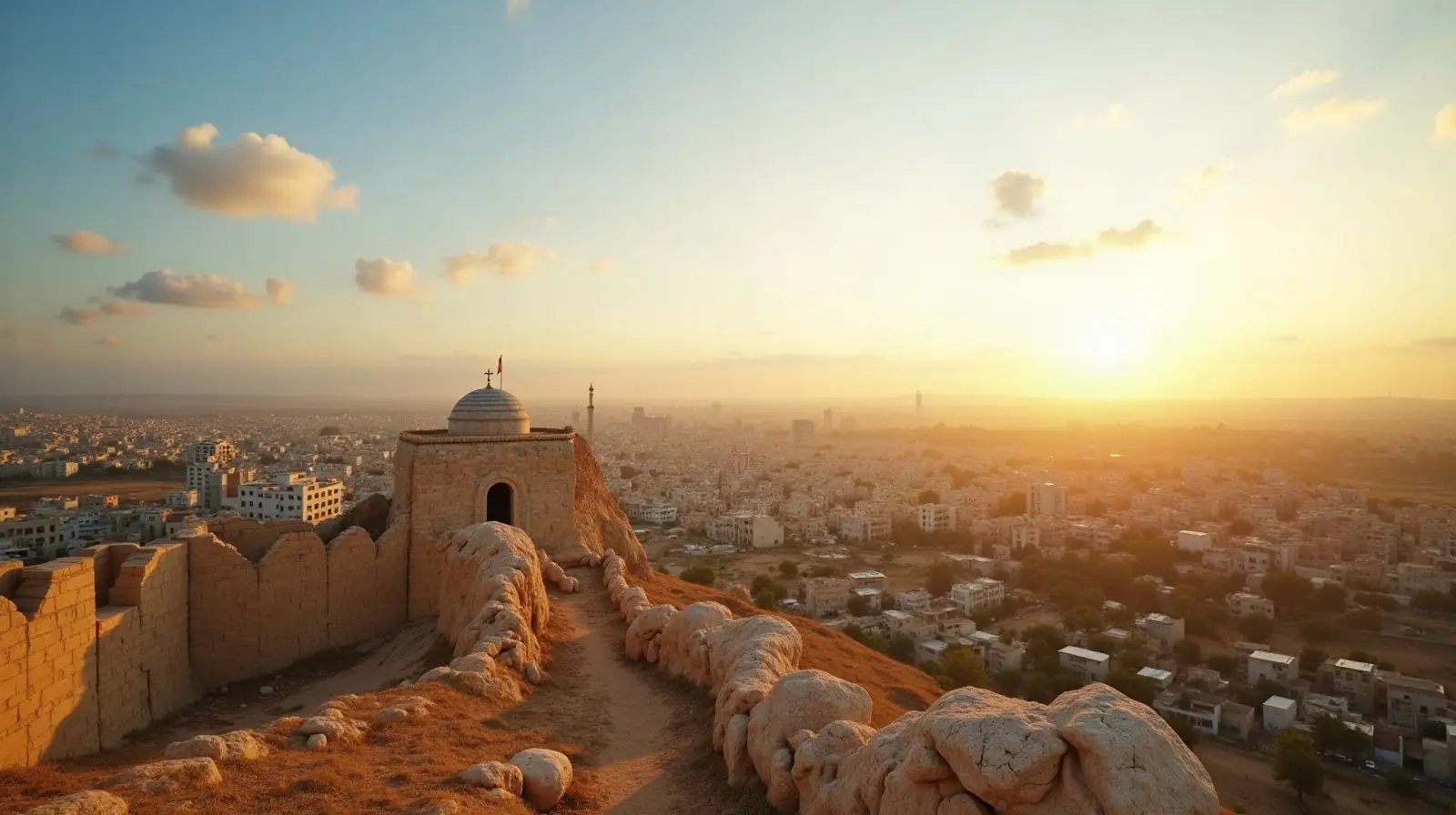
Western Asia

Palestine: Travel Guide & Requirements
State of Palestine · دولة فلسطين
Palestine is a country in Western Asia. It has a population of 5.4 million (#123 in the world) and covers 360 km². The official language is Arabic. The currency is the Egyptian pound (EGP, E£).
Where is Palestine? Map of Palestine
Middle East, bordering the Mediterranean Sea, between Egypt and Israel.
- Region
- Western Asia
- Coordinates
- 31.9° N, 35.2° E
- Neighbours
- 3 — see list
- Coastline
- 40 km
- Palestine
- Neighbours
- Largest cities
Map of Palestine showing the largest cities: Hebron and Nablus.
Travel requirements
What you need to travel to Palestine
- Passport
The UK government says the Israeli authorities control entry to Palestine, and that to enter Israel or Palestine your passport must have an expiry date at least 90 days after the date you arrive.
- Visa or eTA
Depends on your passport: of 198 passports, 3 need no visa, 2 need an eVisa, 102 get a visa on arrival, 91 need a visa from an embassy. Check yours or see Palestine entry requirements for every passport.
- Return or onward ticket
Israel's Population and Immigration Authority lists round-trip tickets to Israel among the required documents for the eVisa-B2 tourist visa.
- Proof of funds
Israel's Population and Immigration Authority lists, for the eVisa-B2 tourist visa, proof of monetary means: bank account statements for the last three months, approval from the bank of financial feasibility, or a docum…
- Travel insurance
No official requirement. Israel's Population and Immigration Authority lists, for the eVisa-B2 tourist visa, health insurance valid for the entire period of the visit in Israel.
- Customs allowance
Israel's Tax Authority says anyone entering or leaving Israel must declare the funds in their possession.
- Travel advice
High risk — US and UK advice.
Entry rules: TravelRequirements.info — Entry Requirements Dataset (CC BY 4.0), each rule cited to an official government source. Always confirm with the airline and the official source before you travel.
Before you go
9 things to know before you travel to Palestine
- Safety: Travel to Palestine carries a high risk: the UK Foreign Office advises against all travel to parts of the country.
- Best time to go: April to May and October to November — when daytime highs in the capital are around 23–28°C.
- Money: the Egyptian pound (EGP) — 1 US dollar is about 54.9893 EGP.
- Plugs: type C and H, 230 V, 50 Hz — standard 220–240 V: devices from the US or Japan (110–120 V) need a converter unless they are dual voltage (100–240 V).
- Emergency numbers: Police 100, Ambulance 101, Fire 102.
- Language: Arabic is official; English is also spoken.
- Driving: on the right — speed limits are 50 km/h in built-up areas, 80 km/h outside built-up areas and 110 km/h on motorways.
- Time zone: Asia/Hebron.
- Outdoors: 2 national parks.
Key facts
Palestine at a glance
Languages spoken: Arabic, Hebrew (spoken by many Palestinians), English (widely understood)
Geography & history
About Palestine
The Gaza Strip has been under the de facto governing authority of the Islamic Resistance Movement (HAMAS) since 2007 and has faced years of conflict, poverty, and humanitarian crises. Inhabited since at least the 15th century B.C., the Gaza Strip area has been dominated by many different peoples and empires throughout its history; it was incorporated into the Ottoman Empire in the early 16th century. The Gaza Strip fell to British forces during World War I, becoming a part of the British Mandate of Palestine. Following the 1948 Arab-Israeli War, Egypt administered the newly formed Gaza Strip; Israel captured it in the Six-Day War in 1967. Under a series of agreements known as the Oslo Accor…
Read the full history
The Gaza Strip has been under the de facto governing authority of the Islamic Resistance Movement (HAMAS) since 2007 and has faced years of conflict, poverty, and humanitarian crises. Inhabited since at least the 15th century B.C., the Gaza Strip area has been dominated by many different peoples and empires throughout its history; it was incorporated into the Ottoman Empire in the early 16th century. The Gaza Strip fell to British forces during World War I, becoming a part of the British Mandate of Palestine. Following the 1948 Arab-Israeli War, Egypt administered the newly formed Gaza Strip; Israel captured it in the Six-Day War in 1967. Under a series of agreements known as the Oslo Accords signed between 1993 and 1999, Israel transferred to the newly-created Palestinian Authority (PA) security and civilian responsibility for many Palestinian-populated areas of the Gaza Strip, as well as the West Bank. In 2000, a violent intifada or uprising began in response to perceived Israeli provocations, and in 2001, negotiations to determine the permanent status of the West Bank, East Jerusalem, and Gaza Strip stalled. Subsequent attempts to re-start negotiations have not resulted in progress toward determining final status and resolving the Israeli-Palestinian conflict. Israel in 2005 unilaterally withdrew all of its settlers and soldiers and dismantled its military facilities in the Gaza Strip, but it continues to control the Gaza Strip’s land borders, maritime territorial waters, cyberspace, telecommunications, and airspace. In 2006, HAMAS won a majority in the Palestinian Legislative Council election. Fatah, the dominant Palestinian political faction in the West Bank, and HAMAS failed to maintain a unity government, leading to violent clashes between their respective supporters and HAMAS's violent seizure of all PA military and governmental institutions in the Gaza Strip in 2007. Since HAMAS's takeover, Israel and Egypt have enforced tight restrictions on movement and access of goods and individuals into and out of the territory. Fatah and HAMAS have since negotiated a series of agreements aimed at restoring political unity between the Gaza Strip and the West Bank but have struggled to enact them. Palestinian militants in the Gaza Strip and the Israel Defense Forces periodically exchange projectiles and air strikes, respectively, threatening broader conflict. In 2021, HAMAS launched rockets into Israel, sparking an 11-day conflict that also involved other Gaza-based militant groups. Egypt, Qatar, and the UN Special Coordinator for the Middle East Peace Process negotiated ceasefires, averting a broader conflict. Since 2018, HAMAS has coordinated demonstrations along the Gaza-Israel security fence. HAMAS has also stood by while other militant groups, such as Palestinian Islamic Jihad, fought brief conflicts with Israel, most recently in August 2022 and May 2023. On 7 October 2023, HAMAS militants inside the Gaza Strip launched a combined unguided rocket and ground attack into Israel. The attack began with a barrage of more than 3,000 rockets fired toward Israel from Gaza, and included thousands of terrorists infiltrating Israel by land, sea, and air via paragliders. Militants attacked military bases, clashed with security forces mostly in southern Israel, and simultaneously infiltrated civilian communities. During the attack, terrorists carried out massacres and murdered civilians, including torture, acts of abuse and rape, a massacre at the Supernova music festival near Kibbutz Re'im, as well as kidnapping approximately 240 civilians, including men, women, children, and soldiers. These attacks were followed soon after by Israeli Defense Forces (IDF) air strikes inside Gaza. The next day, Israeli Prime Minister NETANYAHU formally declared war on Gaza. The IDF on 28 October launched a large-scale ground assault inside Gaza that is ongoing as of April 2024.
Location
Middle East, bordering the Mediterranean Sea, between Egypt and Israel
Climate
temperate, mild winters, dry and warm to hot summers
Terrain
flat to rolling, sand- and dune-covered coastal plain
Highest point
Abu 'Awdah (Joz Abu 'Awdah) 105 m
Natural resources
arable land, natural gas
Natural hazards
droughts
Driving
Speed limits & road rules in Palestine
The default speed limits in Palestine are 50 km/h in built-up areas, 80 km/h outside built-up areas and 110 km/h on motorways. Posted signs always take priority over these defaults.
- 5050 km/hBuilt-up areasTowns and cities
- 8080 km/hOutside built-up areasCountry roads
- 110110 km/hMotorwaysMotorways / freeways
- International Driving PermitNot a party to the IDP conventionsCheck with the embassy whether your licence is accepted
- Driving sideDrive on the rightOvertake on the left
- Seat beltsRequired by law
- Child seatsRequired by law
- Motorcycle helmetsRequired for riders
- Road deaths (2021)4.7 per 100,000 peopleSafer than most countries (median 12.4)
Speed limits: OpenStreetMap wiki — Default speed limits (CC BY-SA 2.0). Road-safety laws: WHO Global Health Observatory. Compare speed limits and alcohol limits by country. Defaults for cars; local signs, weather and vehicle type can lower them.
Safety
Is Palestine safe to visit?
Travel to Palestine carries a high risk: the UK Foreign Office advises against all travel to parts of the country.
 UK Foreign Office (FCDO)
Latest update: Updated information about regional tensions, including information about recent strikes and retaliatory attacks by Iran ('Warnings insurance') page.
Updated 22 Jul 2026 · Full travel advice
Sources: US Department of State travel advisories (public domain) and UK FCDO foreign travel advice (contains public sector information licensed under the Open Government Licence v3.0). Checked daily. Advice can change quickly — always read the official page before you travel.
Weather
Best time to visit Palestine
The best time to visit Palestine is April to May and October to November, when daytime highs in the capital are around 23–28°C. March, June and September are also a good time to go. July is the warmest month (33°C by day), January the coldest (7°C at night), and January the wettest with about 88 mm of rain.
- Jan16°C7°C
- Feb17°C8°C
- Mar20°C9°C
- Apr24°C12°C
- May28°C15°C
- Jun31°C18°C
- Jul33°C20°C
- Aug33°C21°C
- Sep31°C20°C
- Oct28°C17°C
- Nov23°C13°C
- Dec18°C9°C
Best time Good Less ideal
Before you go
Plugs, voltage & emergency numbers in Palestine
Plugs & sockets
230 V, 50 Hz · Standard 220–240 V: devices from the US or Japan (110–120 V) need a converter unless they are dual voltage (100–240 V).
Emergency numbers
Save the local numbers before you travel — 112 or 911 may not connect here. All countries →
Sources: Wikipedia — Mains electricity by country and List of emergency telephone numbers (CC BY-SA 4.0).
National parks
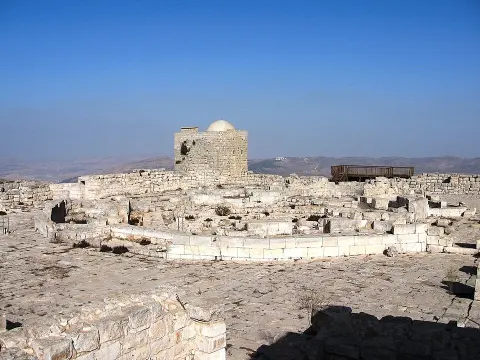
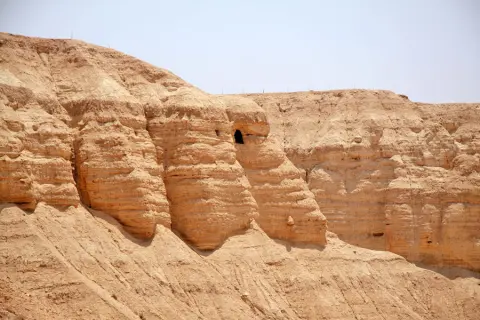
2 national parks in Palestine
- oldest from 103
Largest: Mount Gerizim · Qumran
Currency · 26 October 2026
Egyptian pound exchange rates today
Palestine uses the Egyptian pound (EGP, E£). One US dollar buys 54.9893 EGP; over the last 30 days the EGP has lost 5.8% against the dollar.
What other currencies cost in EGP
Currency converter
Daily reference rates from the open-source currency-api (CC0), 26 Oct 2026. Banks and exchange offices add a margin.
World rankings
Where Palestine ranks
How Palestine compares with the rest of the world — open any card for the full ranking.
Airports
Airports in Palestine
2 airports and airfields — 0 large, 0 medium and 0 small, plus 2 heliports. 0 have scheduled passenger flights.
Borders
Neighbouring countries
Palestine borders 3 countries along 72 km of land borders. Coastline: 40 km.


People
Population & society
Religion
Largest cities: Gaza (778,000)
Economy
Economy
Main industries
textiles, food processing, furniture
Export partners
Jordan 51%, Turkey 12%, UAE 8%, Saudi Arabia 5%, UK 4% (2023)
Top exports
scrap iron, tropical fruits, olive oil, building stone, prepared meat (2023)
Travel tools
Handy before every trip to Palestine
Next public holiday
Independence Day — Sunday, 15 November 2026. Then Catholic Christmas Day (25 Dec).

Palestinian passport
Ranked #193: 11 countries visa-free, 23 with visa on arrival, 3 with an eTA and 46 with an eVisa.
Palestinian passport photo
Exact size, head position and background for Palestine's passport and visa photos — make one free with AI checks.
Calling Palestine
Dial +970 before the local number. Internet domain .ps.
Climate footprint
4.8 million tonnes of CO₂ in 2024 — 0.87 t per person.
Entry requirements
Visa rules for every passport visiting Palestine: visa-free stays, eVisas, visas on arrival and documents to bring.
News
Latest travel news about Palestine

Peers urge UK to cancel Macklemore's travel authorisation before Wembley gig
Fifty members of the House of Lords have written to Home Secretary Shabana Mahmood asking her to revoke US rapper Macklemore's electronic travel auth…
Travellers to Palestine: Four Foreign Reporters Denied Entry in One Week
Israeli authorities barred four foreign journalists from entering Israel and the Palestinian territories in one week, including a French reporter who…
US photographer hospitalised with broken vertebrae, passport stolen in West Bank attack
US Ambassador Mike Huckabee has called for arrests and prison sentences over an attack on American photographer Heidi Levine in a West Bank village o…
Frequently asked questions about Palestine
What do I need to travel to Palestine?
How long must my passport be valid for Palestine?
Where is Palestine?
What is Palestine known for?
What language is spoken in Palestine?
What currency does Palestine use?
What is the calling code of Palestine?
Which countries border Palestine?
How strong is the Palestinian passport?
What is the speed limit in Palestine?
Is Palestine safe to visit?
When is the best time to visit Palestine?
What plug type does Palestine use?
How many airports does Palestine have?
Sources: CIA World Factbook (public domain); World Bank Open Data (CC BY 4.0); names, languages and currencies: mledoze/countries (ODbL); flag: flag-icons (MIT); coat of arms: Wikimedia Commons (file page); exchange rates: Daily reference rates from the open-source currency-api (CC0); airports: OurAirports.