
Eastern Africa · UN member

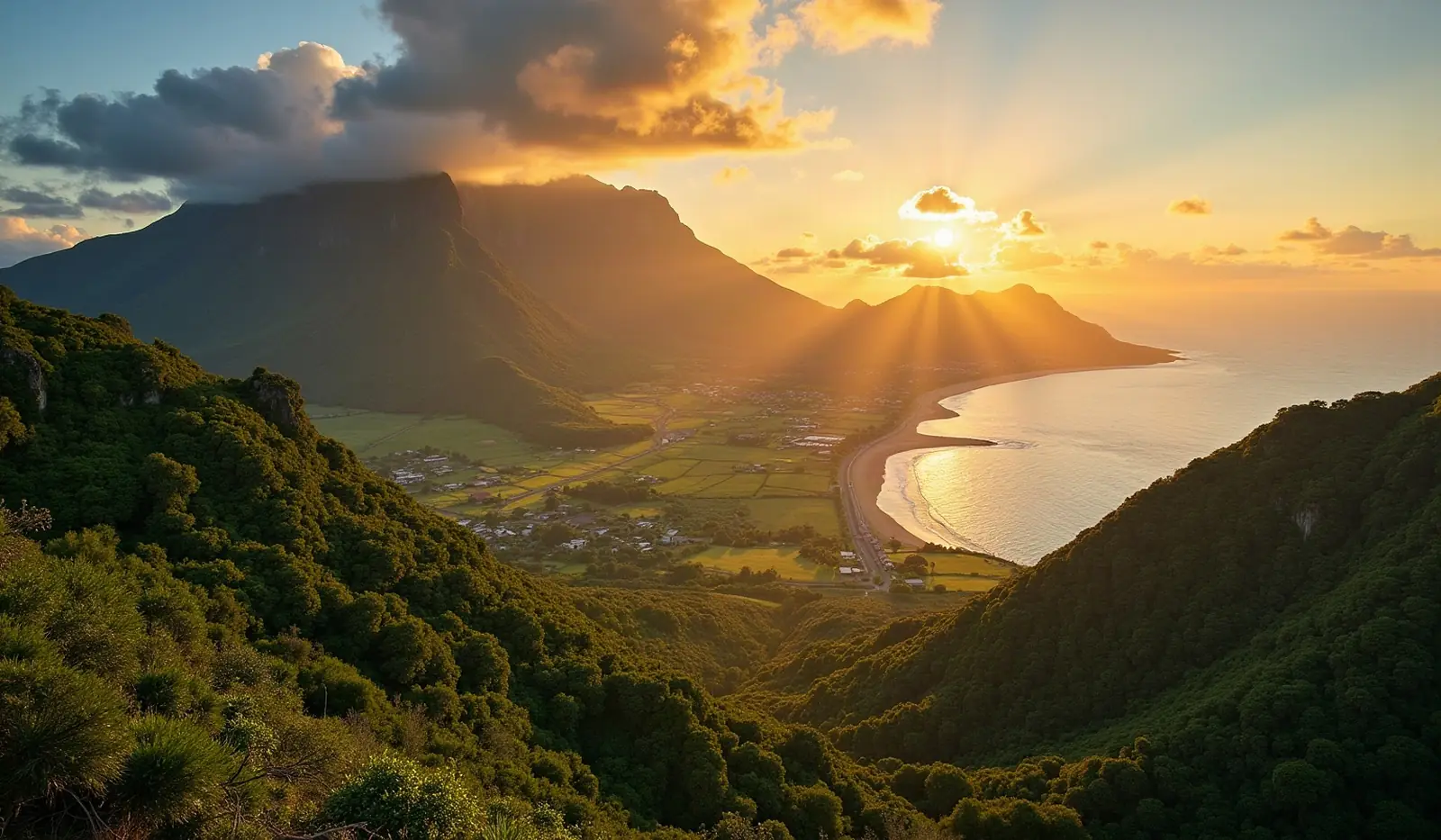
Mauritius: Travel Guide & Requirements
Republic of Mauritius · République de Maurice · Republik Moris
Mauritius is a country in Eastern Africa with its capital in Port Louis. It has a population of 1.2 million (#159 in the world) and covers 2,040 km². The official languages are English, French and Mauritian Creole. The currency is the Mauritian rupee (MUR, ₨).
Where is Mauritius? Map of Mauritius
Southern Africa, island in the Indian Ocean, about 800 km (500 mi) east of Madagascar.
- Region
- Eastern Africa
- Coordinates
- 20.2833° S, 57.55° E
- Neighbours
- none (no land borders)
- Coastline
- 177 km
- Mauritius
- Capital
Travel requirements
What you need to travel to Mauritius
- Passport
Mauritius's Passport and Immigration Office requires a passport or other recognized travel document valid beyond the intended period of stay.
- Visa or eTA
Depends on your passport: of 198 passports, 114 need no visa, 69 get a visa on arrival, 15 need a visa from an embassy. Check yours or see Mauritius entry requirements for every passport.
- Return or onward ticket
Mauritius's Passport and Immigration Office says every person entering Mauritius must hold a valid return ticket to their country of origin or residence.
- Proof of funds
The Passport and Immigration Office says every person entering Mauritius must have adequate funds to meet the cost of the stay and a confirmed hotel booking or sponsorship for accommodation.
- Travel insurance
No official requirement. The Economic Development Board's Premium Visa page says applicants for the Premium Visa should produce sufficient travel and health insurance for the initial period of stay.
- Arrival card
The Ministry of Health's Mauritius All-in-One Travel Digital Form says travellers must complete the Health Declaration Form before travelling to Mauritius and that proof of completion is required at boarding.
- Customs allowance
The Mauritius Revenue Authority's customs pages say arriving passengers with currency or bearer negotiable instruments, precious stones and metals or other high-value goods exceeding Rs 500,000 in value use the Red Chan…
- Travel advice
Some caution needed — US and UK advice.
Entry rules: TravelRequirements.info — Entry Requirements Dataset (CC BY 4.0), each rule cited to an official government source. Always confirm with the airline and the official source before you travel.
Before you go
10 things to know before you travel to Mauritius
- Safety: Mauritius is generally safe for travellers, but some caution is needed: the US State Department rates Mauritius Level 2 (“Exercise Increased Caution”), and the UK Foreign Office has no warnings against travel there.
- Best time to go: May to November — when daytime highs in Port Louis are around 24–26°C.
- Money: the Mauritian rupee (MUR) — 1 US dollar is about 47.1466 MUR.
- Plugs: type C, E and G, 230 V, 50 Hz — standard 220–240 V: devices from the US or Japan (110–120 V) need a converter unless they are dual voltage (100–240 V).
- Emergency numbers: Police 112, Ambulance 114, Fire 115.
- Language: English, French and Mauritian Creole are official.
- Driving: on the left — speed limits are 90 km/h in built-up areas and 60 km/h outside built-up areas.
- Time zone: UTC+4 in Port Louis.
- Capital: Port Louis. About 1.2 million people live in Mauritius.
- Outdoors: 3 national parks.
Key facts
Mauritius at a glance
Languages spoken: Creole 86.5%, Bhojpuri 5.3%, French 4.1%, two languages 1.4%, other 2.6% (includes English, one of the two official languages of the National Assembly, which is spoken by less than 1% of the population), unspecified 0.1% (2011 est.)
Geography & history
About Mauritius
Although known to Arab and European sailors since at least the early 1500s, the island of Mauritius was uninhabited until 1638 when the Dutch established a settlement named in honor of Prince Maurits van NASSAU. Their presence led to the rapid disappearance of the flightless dodo bird that has since become one of the most well-known examples of extinction in modern times. The Dutch abandoned their financially distressed settlement in 1710, although a number of formerly enslaved people remained. In 1722, the French established what would become a highly profitable settlement focused on sugar cane plantations that were reliant on the labor of enslaved people brought to Mauritius from other pa…
Read the full history
Although known to Arab and European sailors since at least the early 1500s, the island of Mauritius was uninhabited until 1638 when the Dutch established a settlement named in honor of Prince Maurits van NASSAU. Their presence led to the rapid disappearance of the flightless dodo bird that has since become one of the most well-known examples of extinction in modern times. The Dutch abandoned their financially distressed settlement in 1710, although a number of formerly enslaved people remained. In 1722, the French established what would become a highly profitable settlement focused on sugar cane plantations that were reliant on the labor of enslaved people brought to Mauritius from other parts of Africa. In the 1790s, the island had a brief period of autonomous rule when plantation owners rejected French control because of laws ending slavery that were temporarily in effect during the French Revolution. Britain captured the island in 1810 as part of the Napoleonic Wars but kept most of the French administrative structure, which remains to this day in the form of the country’s legal codes and widespread use of the French Creole language. The abolition of slavery in 1835 -- later than most other British colonies -- led to increased reliance on contracted laborers from the Indian subcontinent to work on plantations. Today their descendants form the majority of the population. Mauritius remained a strategically important British naval base and later an air station, and it played a role during World War II in anti-submarine and convoy operations, as well as in the collection of signals intelligence. Mauritius gained independence from the UK in 1968 as a Parliamentary Republic and has remained a stable democracy with regular free elections and a positive human rights record. The country also attracted considerable foreign investment and now has one of Africa's highest per capita incomes. Mauritius’ often-fractious coalition politics has been dominated by two prominent families, each of which has had father-son pairs who have been prime minister over multiple, often nonconsecutive, terms. Seewoosagur RAMGOOLAM (1968-76) was Mauritius’ first prime minister, and he was succeeded by Anerood JUGNAUTH (1982-95, 2000-03, 2014-17); his son Navin RAMGOOLAM (1995-2000, 2005-14); and Paul Raymond BERENGER (2003-05), the only non-Hindu prime minister of post-independence Mauritius. In 2017, Pravind JUGNAUTH became prime minister after his father stepped down short of completing his term, and he was elected in his own right in 2019. Mauritius claims the French island of Tromelin and the British Chagos Archipelago (British Indian Ocean Territory). Since 2017, Mauritius has secured favorable UN General Assembly resolutions and an International Court of Justice advisory opinion relating to its sovereignty dispute with the UK.
Location
Southern Africa, island in the Indian Ocean, about 800 km (500 mi) east of Madagascar
Climate
tropical, modified by southeast trade winds; warm, dry winter (May to November); hot, wet, humid summer (November to May)
Terrain
small coastal plain rising to discontinuous mountains encircling central plateau
Highest point
Mont Piton 828 m
Natural resources
arable land, fish
Natural hazards
cyclones (November to April); almost completely surrounded by reefs that may pose maritime hazards
National symbols
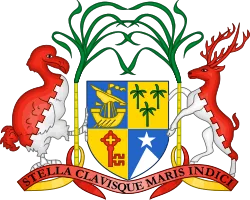
dodo bird, earring tree flower (Trochetia boutoniana)
Driving
Speed limits & road rules in Mauritius
The default speed limits in Mauritius are 90 km/h in built-up areas and 60 km/h outside built-up areas. The legal alcohol limit for drivers is 0.5‰. Posted signs always take priority over these defaults.
- 9090 km/hBuilt-up areasTowns and citiesWHO data (2017)
- 6060 km/hOutside built-up areasCountry roads
- International Driving PermitNot a party to the IDP conventionsCheck with the embassy whether your licence is accepted
- Driving sideDrive on the leftOvertake on the right
- Alcohol limit0.5‰ blood alcohol (0.05% BAC)
- Seat beltsRequired by law
- Child seatsNo national child-restraint law
- Motorcycle helmetsRequired for riders
- Road deaths (2021)9.7 per 100,000 peopleSafer than most countries (median 12.4)
Speed limits: OpenStreetMap wiki — Default speed limits (CC BY-SA 2.0) and WHO. Road-safety laws: WHO Global Health Observatory. Compare speed limits and alcohol limits by country. Defaults for cars; local signs, weather and vehicle type can lower them.
Safety
Is Mauritius safe to visit?
Mauritius is generally safe for travellers, but some caution is needed: the US State Department rates Mauritius Level 2 (“Exercise Increased Caution”), and the UK Foreign Office has no warnings against travel there.
 US State Department
 UK Foreign Office (FCDO)
Latest update: Updated information about local demonstrations and community unrest ('Safety and security' page).
Updated 19 Oct 2026 · Full travel advice
Sources: US Department of State travel advisories (public domain) and UK FCDO foreign travel advice (contains public sector information licensed under the Open Government Licence v3.0). Checked daily. Advice can change quickly — always read the official page before you travel.
Weather
Best time to visit Mauritius
The best time to visit Mauritius is May to November, when daytime highs in Port Louis are around 24–26°C. April and December are also a good time to go. February is the warmest month (28°C by day), August the coldest (22°C at night), and January the wettest with about 128 mm of rain.
- Jan28°C26°C
- Feb28°C27°C
- Mar28°C27°C
- Apr27°C26°C
- May26°C25°C
- Jun25°C23°C
- Jul24°C22°C
- Aug24°C22°C
- Sep24°C22°C
- Oct25°C23°C
- Nov26°C24°C
- Dec27°C26°C
Best time Good Less ideal
Before you go
Plugs, voltage & emergency numbers in Mauritius
Plugs & sockets
- Type C (Europlug)two round pins
- Type Etwo round pins and a hole for the socket's earth pin
- Type Gthree rectangular pins in a triangle
230 V, 50 Hz · Standard 220–240 V: devices from the US or Japan (110–120 V) need a converter unless they are dual voltage (100–240 V).
Emergency numbers
112 works from any mobile phone, even without a SIM card in most networks. All countries →
Sources: Wikipedia — Mains electricity by country and List of emergency telephone numbers (CC BY-SA 4.0).
National parks
3 national parks in Mauritius
- 71 km² protected
- oldest from 1994
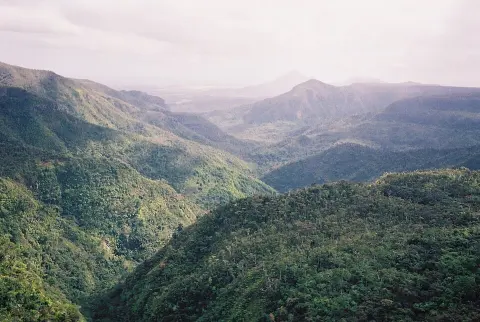
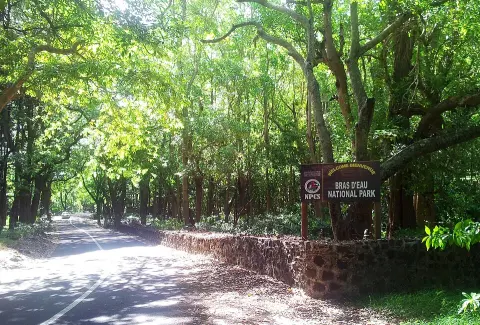
Largest: Black River Gorges National Park · Bras d'Eau National Park · Islets National Park
Currency · 26 October 2026
Mauritian rupee exchange rates today
Mauritius uses the Mauritian rupee (MUR, ₨). One US dollar buys 47.1466 MUR; over the last 30 days the MUR has gained 0.8% against the dollar.
What other currencies cost in MUR
Currency converter
Daily reference rates from the open-source currency-api (CC0), 26 Oct 2026. Banks and exchange offices add a margin.
World rankings
Where Mauritius ranks
How Mauritius compares with the rest of the world — open any card for the full ranking.
Airports
Airports in Mauritius
8 airports and airfields — 1 large, 2 medium and 2 small, plus 2 heliports. 2 have scheduled passenger flights.
Borders
No land borders
Mauritius has no land borders with other countries. Coastline: 177 km.
People
Population & society
Religion
Largest cities: Port Louis (149,000)
Economy
Economy
Main industries
food processing (largely sugar milling), textiles, clothing, mining, chemicals, metal products, transport equipment, nonelectrical machinery, tourism
Export partners
USA 11%, France 11%, Zimbabwe 10%, South Africa 7%, Zambia 7% (2023)
Top exports
fish, garments, raw sugar, fertilizers, diamonds (2023)
Travel tools
Handy before every trip to Mauritius
Next public holiday
Arrival of Indentured Laborers — Monday, 2 November 2026. Then Diwali (8 Nov).
Mauritian passport
Ranked #60: 96 countries visa-free, 27 with visa on arrival, 7 with an eTA and 29 with an eVisa.
Mauritian passport photo
Exact size, head position and background for Mauritius's passport and visa photos — make one free with AI checks.
Calling Mauritius
Dial +230 before the local number. Internet domain .mu.
Climate footprint
4.7 million tonnes of CO₂ in 2024 — 3.68 t per person.
Entry requirements
Visa rules for every passport visiting Mauritius: visa-free stays, eVisas, visas on arrival and documents to bring.
News
Latest travel news about Mauritius
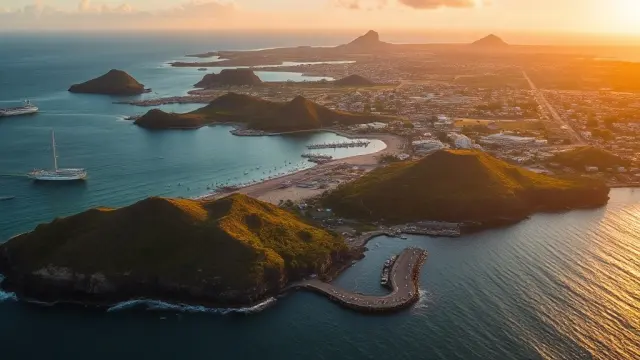
Nigerians Arriving in Comoros Can Get Visas on Arrival for Stays Up to 45 Days
Nigerian passport holders can obtain visas on arrival in 14 countries in 2026, including Comoros, where Passport Index lists stays of up to 45 days. …
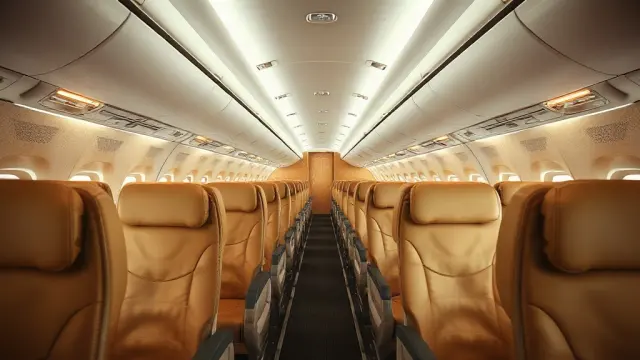
Mauritius flyers get Emirates' new Business, Premium Economy on one flight in Nov 2026
Emirates will swap the Boeing 777 for its Airbus A350 on one of its three daily Dubai–Mauritius flights from 1 November 2026. The change brings the a…
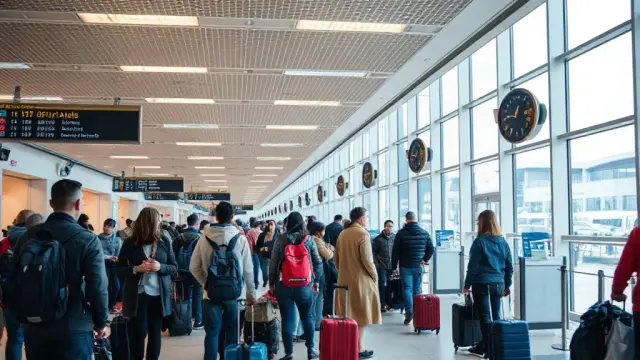
Japan drops visa application fees for travellers from 63 countries
Japan has published a list of 63 countries and regions whose nationals do not pay the visa application fee. Honduras is among the American countries …
Frequently asked questions about Mauritius
What do I need to travel to Mauritius?
How long must my passport be valid for Mauritius?
Where is Mauritius?
What is Mauritius known for?
What is the capital of Mauritius?
What language is spoken in Mauritius?
What currency does Mauritius use?
What is the calling code of Mauritius?
Does Mauritius have land borders?
How strong is the Mauritian passport?
What is the speed limit in Mauritius?
Is Mauritius safe to visit?
When is the best time to visit Mauritius?
What plug type does Mauritius use?
How many airports does Mauritius have?
Sources: CIA World Factbook (public domain); World Bank Open Data (CC BY 4.0); names, languages and currencies: mledoze/countries (ODbL); flag: flag-icons (MIT); coat of arms: Wikimedia Commons (file page); exchange rates: Daily reference rates from the open-source currency-api (CC0); airports: OurAirports.