
Eastern Africa · UN member

Rwanda: Travel Guide & Requirements
Republic of Rwanda
Rwanda is a country in Eastern Africa with its capital in Kigali. It has a population of 14.6 million (#76 in the world) and covers 26,338 km². The official languages are English, French and Kinyarwanda. The currency is the Rwandan franc (RWF, Fr).
Where is Rwanda? Map of Rwanda
Central Africa, east of the Democratic Republic of the Congo, north of Burundi.
- Region
- Eastern Africa
- Coordinates
- 2° S, 30° E
- Neighbours
- 4 — see list
- Coastline
- Landlocked
- Rwanda
- Neighbours
- Capital
- Largest cities
Map of Rwanda showing Kigali (capital) and the largest cities: Gisenyi, Musanze, Butare, Kibungo, Cyangugu and Gihombo.
Travel requirements
What you need to travel to Rwanda
- Passport
Rwanda's immigration directorate says an applicant should hold a genuine acceptable travel document valid for not less than 6 months.
- Visa or eTA
Depends on your passport: of 198 passports, 6 need no visa, 192 get a visa on arrival. Check yours or see Rwanda entry requirements for every passport.
- Return or onward ticket
No official requirement.
- Proof of funds
Rwanda's immigration directorate says an applicant must have sufficient funds to cover the costs of their stay in Rwanda, and that evidence may be requested online, at the Rwandan foreign mission or at the entry point.
- Travel insurance
No official requirement. The UK Foreign Office says to check before you travel that you have appropriate travel insurance for local treatment or unexpected medical evacuation.
- Vaccinations
The UK Foreign Office says that if you're coming from a country listed as a transmission risk, you must have a certificate to prove you've had a yellow fever vaccination.
- Customs allowance
No Rwandan source we could read states a cash declaration threshold.
- Travel advice
High risk — US and UK advice.
Entry rules: TravelRequirements.info — Entry Requirements Dataset (CC BY 4.0), each rule cited to an official government source. Always confirm with the airline and the official source before you travel.
Before you go
10 things to know before you travel to Rwanda
- Safety: Travel to Rwanda carries a high risk: the US State Department rates Rwanda Level 3 (“Reconsider Travel”), and the UK Foreign Office advises against all but essential travel to parts of the country.
- Best time to go: June to August — when daytime highs in Kigali are around 24–26°C.
- Money: the Rwandan franc (RWF) — 1 US dollar is about 1,474.9 RWF.
- Plugs: type C, E and G, 230 V, 50 Hz — standard 220–240 V: devices from the US or Japan (110–120 V) need a converter unless they are dual voltage (100–240 V).
- Emergency numbers: Police 112, Ambulance 912, Fire 112.
- Language: English, French and Kinyarwanda are official.
- Driving: on the right — speed limits are 40 km/h in built-up areas and 80 km/h outside built-up areas.
- Time zone: UTC+2 in Kigali.
- Capital: Kigali. About 14.6 million people live in Rwanda.
- Outdoors: 4 national parks.
Key facts
Rwanda at a glance
Languages spoken: Kinyarwanda (official, universal Bantu vernacular) 93.2%, French (official) <0.1%, English (official) <0.1%, Swahili/Kiswahili (official, used in commercial centers) <0.1%, more than one language, other 6.3%, unspecified 0.3% (2002 est.)
Geography & history
About Rwanda
Rwanda -- a small and centralized country dominated by rugged hills and fertile volcanic soil -- has exerted disproportionate influence over the African Great Lakes region for centuries. A Rwandan kingdom increasingly dominated the region from the mid-18th century onward, with the Tutsi monarchs gradually extending the power of the royal court into peripheral areas and expanding their borders through military conquest. While the current ethnic labels Hutu and Tutsi predate colonial rule, their flexibility and importance have varied significantly over time and often manifested more as a hierarchical class distinction than an ethnic or cultural distinction. The majority Hutu and minority Tuts…
Read the full history
Rwanda -- a small and centralized country dominated by rugged hills and fertile volcanic soil -- has exerted disproportionate influence over the African Great Lakes region for centuries. A Rwandan kingdom increasingly dominated the region from the mid-18th century onward, with the Tutsi monarchs gradually extending the power of the royal court into peripheral areas and expanding their borders through military conquest. While the current ethnic labels Hutu and Tutsi predate colonial rule, their flexibility and importance have varied significantly over time and often manifested more as a hierarchical class distinction than an ethnic or cultural distinction. The majority Hutu and minority Tutsi have long shared a common language and culture, and intermarriage was frequent. The Rwandan royal court centered on the Tutsi king (mwami), who relied on an extensive network of political, cultural, and economic relationships. Social categories became more rigid during the reign of RWABUGIRI (1860-1895), who focused on aggressive expansion and solidifying Rwanda’s bureaucratic structures. German colonial conquest began in the late 1890s, but the territory was ceded to Belgian forces in 1916 during World War I. Both European nations quickly realized the benefits of ruling through the already centralized Rwandan Tutsi kingdom. Colonial rule reinforced existing trends toward autocratic and exclusionary rule, leading to the elimination of traditional positions of authority for Hutus. Belgian administrators significantly increased requirements for communal labor and instituted harsh taxes, which fed the population's frustration. Changing political attitudes in Belgium contributed to colonial and Catholic officials shifting their support from Tutsi to Hutu leaders in the years leading up to independence. Simmering resentment of minority rule exploded in 1959, three years before independence from Belgium, when Hutus overthrew the Tutsi king. Thousands of Tutsis were killed over the next several years, and some 150,000 were driven into exile in neighboring countries. Army Chief of Staff Juvenal HABYARIMANA seized power in a coup in 1973 and ruled Rwanda as a single-party state for two decades. HABYARIMANA increasingly discriminated against Tutsis, and extremist Hutu factions gained prominence after multiple parties were introduced in the early 1990s. The children of Tutsi exiles later formed a rebel group, the Rwandan Patriotic Front (RPF) and began a civil war in 1990. The civil war exacerbated ethnic tensions and culminated in the shooting down of HABYARIMANA’s private jet in 1994. The event sparked a state-orchestrated genocide in which Rwandans killed more than 800,000 of their fellow citizens, including approximately three-quarters of the Tutsi population. The genocide ended later the same year when the predominantly Tutsi RPF, operating out of Uganda and northern Rwanda, defeated the national army and Hutu militias and established an RPF-led government of national unity. Rwanda held its first local elections in 1999 and its first post-genocide presidential and legislative elections in 2003, formalizing President Paul KAGAME’s de facto role as head of government. KAGAME was formally elected in 2010, and again in 2017 after changing the constitution to allow him to run for a third term.
Location
Central Africa, east of the Democratic Republic of the Congo, north of Burundi
Climate
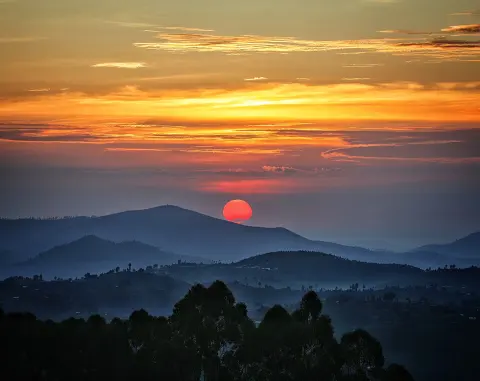
temperate; two rainy seasons (February to April, November to January); mild in mountains with frost and snow possible
Terrain
mostly grassy uplands and hills; relief is mountainous with altitude declining from west to east
Highest point
Volcan Karisimbi 4,519 m
Natural resources
gold, cassiterite (tin ore), wolframite (tungsten ore), methane, hydropower, arable land
Natural hazards
periodic droughts; the volcanic Virunga Mountains are in the northwest along the border with Democratic Republic of the Congo volcanism: Visoke (3,711 m), on the border with the Democratic Republic of the Congo, is the country's only historically active volca…
National symbols
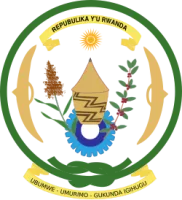
traditional woven basket with peaked lid
Driving
Speed limits & road rules in Rwanda
The default speed limits in Rwanda are 40 km/h in built-up areas and 80 km/h outside built-up areas. The legal alcohol limit for drivers is 0.8‰. Posted signs always take priority over these defaults.
- 4040 km/hBuilt-up areasTowns and cities
- 8080 km/hOutside built-up areasCountry roads
- International Driving PermitRecognised: 1949 GenevaCarry the IDP together with your national licence
- Driving sideDrive on the rightOvertake on the left
- Alcohol limit0.8‰ blood alcohol (0.08% BAC)
- Seat beltsRequired by law
- Child seatsNo national child-restraint law
- Motorcycle helmetsRequired for riders
- Road deaths (2021)11.6 per 100,000 peopleClose to the world median (12.4)
Speed limits: OpenStreetMap wiki — Default speed limits (CC BY-SA 2.0). Road-safety laws: WHO Global Health Observatory. Compare speed limits and alcohol limits by country. Defaults for cars; local signs, weather and vehicle type can lower them.
Safety
Is Rwanda safe to visit?
Travel to Rwanda carries a high risk: the US State Department rates Rwanda Level 3 (“Reconsider Travel”), and the UK Foreign Office advises against all but essential travel to parts of the country.
 US State Department
 UK Foreign Office (FCDO)
Latest update: New information about vapes and e-cigarette bans in Rwanda and updated information about border measures introduced by the Rwandan Government in response to the Ebola outbreak in the Democratic Republic of Congo ('Entry requirements' and 'Safety and security' pages).
Updated 4 Sep 2026 · Full travel advice
Sources: US Department of State travel advisories (public domain) and UK FCDO foreign travel advice (contains public sector information licensed under the Open Government Licence v3.0). Checked daily. Advice can change quickly — always read the official page before you travel.
Weather
Best time to visit Rwanda
The best time to visit Rwanda is June to August, when daytime highs in Kigali are around 24–26°C. December to February and September to October are also a good time to go. February is the warmest month (27°C by day), July the coldest (13°C at night), and April the wettest with about 178 mm of rain.
- Jan26°C15°C
- Feb27°C15°C
- Mar26°C15°C
- Apr24°C15°C
- May24°C15°C
- Jun24°C13°C
- Jul25°C13°C
- Aug26°C14°C
- Sep26°C15°C
- Oct25°C15°C
- Nov24°C15°C
- Dec25°C14°C
Best time Good Less ideal
Before you go
Plugs, voltage & emergency numbers in Rwanda
Plugs & sockets
- Type C (Europlug)two round pins
- Type Etwo round pins and a hole for the socket's earth pin
- Type Gthree rectangular pins in a triangle
230 V, 50 Hz · Standard 220–240 V: devices from the US or Japan (110–120 V) need a converter unless they are dual voltage (100–240 V).
Emergency numbers
112 works from any mobile phone, even without a SIM card in most networks. All countries →
Sources: Wikipedia — Mains electricity by country and List of emergency telephone numbers (CC BY-SA 4.0).
National parks
4 national parks in Rwanda
- 2,240 km² protected
- oldest from 1934
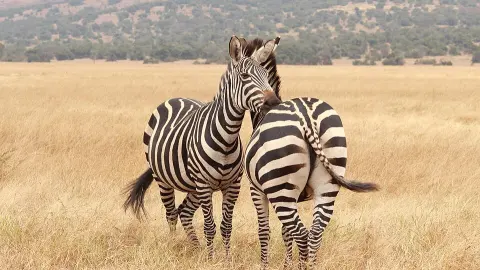
Largest: Akagera National Park · Nyungwe Forest · Volcanoes National Park
Currency · 26 October 2026
Rwandan franc exchange rates today
Rwanda uses the Rwandan franc (RWF, Fr). One US dollar buys 1,474.9 RWF; over the last 30 days the RWF has gained 0.0% against the dollar.
What other currencies cost in RWF
Currency converter
Daily reference rates from the open-source currency-api (CC0), 26 Oct 2026. Banks and exchange offices add a margin.
World rankings
Where Rwanda ranks
How Rwanda compares with the rest of the world — open any card for the full ranking.
Airports
Airports in Rwanda
8 airports and airfields — 1 large, 2 medium and 5 small, plus 0 heliports. 2 have scheduled passenger flights.
Borders
Neighbouring countries
Rwanda borders 4 countries along 930 km of land borders. It is landlocked.


People
Population & society
Religion
Largest cities: Kigali (1.2 million)
Economy
Economy
Main industries
cement, agricultural products, small-scale beverages, soap, furniture, shoes, plastic goods, textiles, cigarettes
Export partners
UAE 66%, China 10%, USA 3%, Kenya 3%, Thailand 2% (2023)
Top exports
gold, rare earth ores, coffee, tea, tin ores (2023)
Travel tools
Handy before every trip to Rwanda
Next public holiday
Christmas Day — Friday, 25 December 2026. Then St. Stephen's Day (26 Dec).

Rwandan passport
Ranked #145: 29 countries visa-free, 33 with visa on arrival, 4 with an eTA and 34 with an eVisa.
Rwandan passport photo
Exact size, head position and background for Rwanda's passport and visa photos — make one free with AI checks.
Calling Rwanda
Dial +250 before the local number. Internet domain .rw.
Climate footprint
2.0 million tonnes of CO₂ in 2024 — 0.14 t per person.
Entry requirements
Visa rules for every passport visiting Rwanda: visa-free stays, eVisas, visas on arrival and documents to bring.
News
Latest travel news about Rwanda
More intra-African flights, but visas and fares still deter travellers
Seats on intra-African tourism routes rose 10.5% year-on-year in August 2026, yet visas, high fares and indirect connections still hold back regional…
Ethiopian passport places 169th worldwide in Passport Reports mobility index
Passport Reports' 18 October 2026 update ranks the Ethiopian passport 169th globally, with a mobility score of 39. Ethiopia places 50th of 199 destin…
South Africa moves to resume visas for Rwandan passport holders within 12 months
South Africa has begun technical work to resume issuing visas to holders of ordinary Rwandan passports, restricted since 2014. The two countries' for…
Frequently asked questions about Rwanda
What do I need to travel to Rwanda?
How long must my passport be valid for Rwanda?
Where is Rwanda?
What is Rwanda known for?
What is the capital of Rwanda?
What language is spoken in Rwanda?
What currency does Rwanda use?
What is the calling code of Rwanda?
Which countries border Rwanda?
How strong is the Rwandan passport?
What is the speed limit in Rwanda?
Is Rwanda safe to visit?
When is the best time to visit Rwanda?
What plug type does Rwanda use?
How many airports does Rwanda have?
Sources: CIA World Factbook (public domain); World Bank Open Data (CC BY 4.0); names, languages and currencies: mledoze/countries (ODbL); flag: flag-icons (MIT); coat of arms: Wikimedia Commons (file page); exchange rates: Daily reference rates from the open-source currency-api (CC0); airports: OurAirports.