
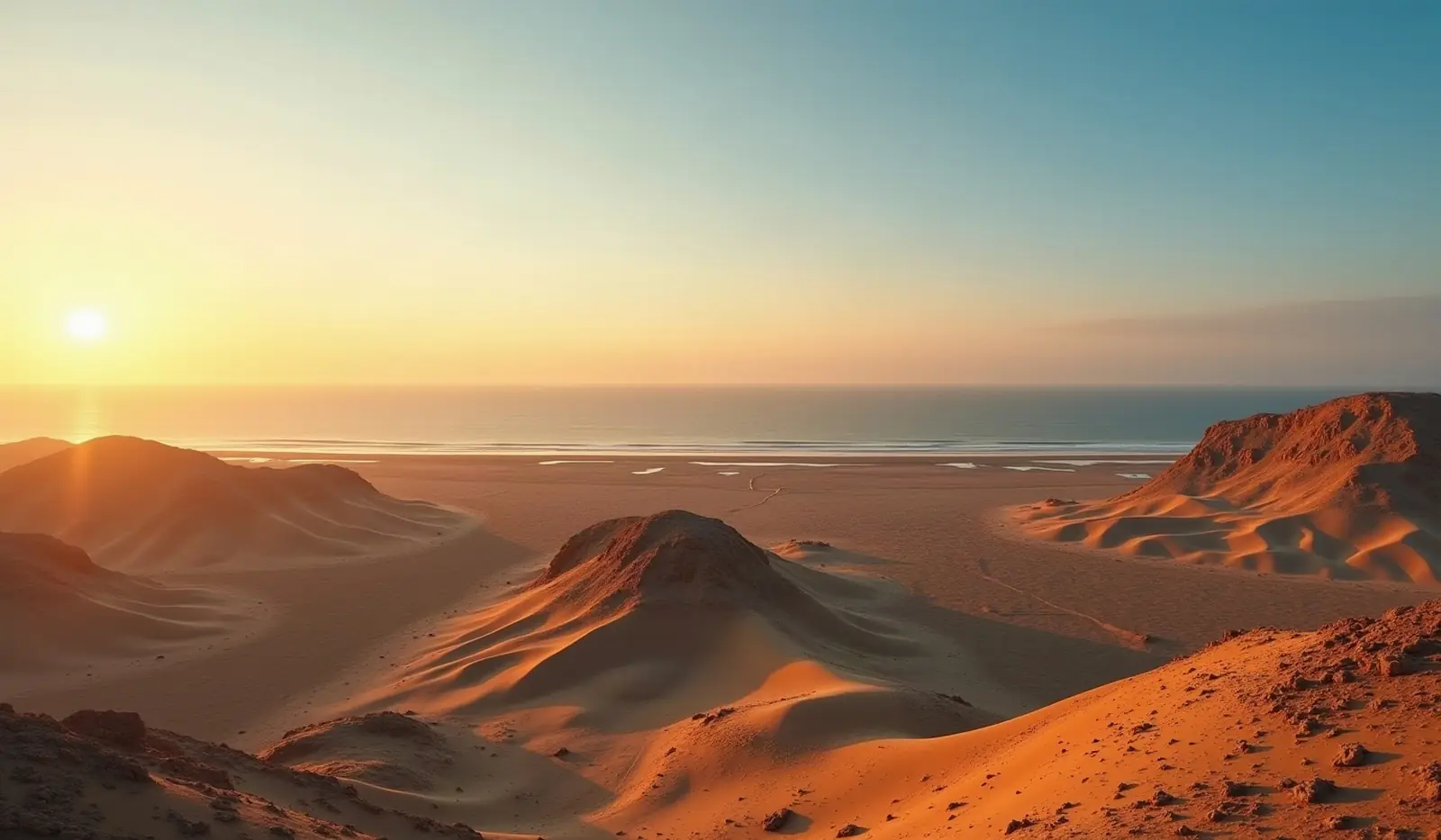
Eastern Africa · UN member

Djibouti: Travel Guide & Requirements
Republic of Djibouti · جمهورية جيبوتي
Djibouti is a country in Eastern Africa with its capital in Djibouti. It has a population of 1.2 million (#160 in the world) and covers 23,200 km². The official languages are Arabic and French. The currency is the Djiboutian franc (DJF, Fr).
Where is Djibouti? Map of Djibouti
Eastern Africa, bordering the Gulf of Aden and the Red Sea, between Eritrea and Somalia.
- Region
- Eastern Africa
- Coordinates
- 11.5° N, 43° E
- Neighbours
- 3 — see list
- Coastline
- 314 km
- Djibouti
- Neighbours
- Capital
- Largest cities
Map of Djibouti showing Djibouti (capital) and the largest cities: Ali Sabih and Obock.
Travel requirements
What you need to travel to Djibouti
- Passport
The eVisa portal asks for a passport valid for at least 6 months.
- Visa or eTA
Depends on your passport: of 198 passports, 1 needs no visa, 25 need an eVisa, 171 get a visa on arrival, 1 needs a visa from an embassy. Check yours or see Djibouti entry requirements for every passport.
- Return or onward ticket
The eVisa portal says that to apply for an electronic visa you need a flight reservation (or any other possible means of transport), an accommodation address (hotel or at your host's) and an invitation letter.
- Proof of funds
No official requirement.
- Travel insurance
No official source we could find states whether travel insurance is required to enter Djibouti.
- Vaccinations
The UK government says that to enter Djibouti you must have a certificate to prove you've had a yellow fever vaccination if you're coming from a country listed as a transmission risk.
- Travel advice
High risk — US and UK advice.
Entry rules: TravelRequirements.info — Entry Requirements Dataset (CC BY 4.0), each rule cited to an official government source. Always confirm with the airline and the official source before you travel.
Before you go
10 things to know before you travel to Djibouti
- Safety: Travel to Djibouti carries a high risk: the US State Department rates Djibouti Level 2 (“Exercise Increased Caution”), and the UK Foreign Office advises against all travel to parts of the country.
- Best time to go: December to February — when daytime highs in Djibouti are around 27–28°C.
- Money: the Djiboutian franc (DJF) — 1 US dollar is about 177.8649 DJF.
- Plugs: type C and E, 220 V, 50 Hz — standard 220–240 V: devices from the US or Japan (110–120 V) need a converter unless they are dual voltage (100–240 V).
- Emergency numbers: Police 17, Ambulance 19, Fire 18.
- Language: Arabic and French are official.
- Driving: on the right.
- Time zone: UTC+3 in Djibouti.
- Capital: Djibouti. About 1.2 million people live in Djibouti.
- Outdoors: 3 national parks.
Key facts
Djibouti at a glance
Languages spoken: French (official), Arabic (official), Somali, Afar
Geography & history
About Djibouti
Present-day Djibouti was the site of the medieval Ifat and Adal Sultanates. In the late 19th century, the Afar sultans signed treaties with the French that allowed the latter to establish the colony of French Somaliland in 1862. The French signed additional treaties with the ethnic Somali in 1885. Tension between the ethnic Afar and Somali populations increased over time, as the ethnic Somalis perceived that the French unfairly favored the Afar and gave them disproportionate influence in local governance. In 1958, the French held a referendum that provided residents of French Somaliland the option to either continue their association with France or to join neighboring Somalia as it establis…
Read the full history
Present-day Djibouti was the site of the medieval Ifat and Adal Sultanates. In the late 19th century, the Afar sultans signed treaties with the French that allowed the latter to establish the colony of French Somaliland in 1862. The French signed additional treaties with the ethnic Somali in 1885. Tension between the ethnic Afar and Somali populations increased over time, as the ethnic Somalis perceived that the French unfairly favored the Afar and gave them disproportionate influence in local governance. In 1958, the French held a referendum that provided residents of French Somaliland the option to either continue their association with France or to join neighboring Somalia as it established its independence. Ethnic Somali protested the vote, because French colonial leaders did not recognize many Somali as residents, which gave the Afar outsized influence in the decision to uphold ties with France. After a second referendum in 1967, the French changed the territory’s name to the French Territory of the Afars and the Issas, in part to underscore their relationship with the ethnic Afar and downplay the significance of the ethnic Somalis. A final referendum in 1977 established Djibouti as an independent nation and granted ethnic Somalis Djiboutian nationality, formally resetting the balance of power between the majority ethnic Somalis and minority ethnic Afar residents. Upon independence, the country was named after its capital city of Djibouti. Hassan Gouled APTIDON, an ethnic Somali leader, installed an authoritarian one-party state and served as president until 1999. Unrest between the Afar minority and Somali majority culminated in a civil war during the 1990s that ended in 2001 with a peace accord between Afar rebels and the Somali Issa-dominated government. In 1999, Djibouti's first multiparty presidential election resulted in the election of Ismail Omar GUELLEH as president; he was reelected to a second term in 2005 and extended his tenure in office via a constitutional amendment, which allowed him to serve his third and fourth terms, and to begin a fifth term in 2021. Djibouti occupies a strategic geographic location at the intersection of the Red Sea and the Gulf of Aden. Its ports handle 95% of Ethiopia’s trade. Djibouti’s ports also service transshipments between Europe, the Middle East, and Asia. The government has longstanding ties to France, which maintains a military presence in the country, as do the US, Japan, Italy, Germany, Spain, and China.
Location
Eastern Africa, bordering the Gulf of Aden and the Red Sea, between Eritrea and Somalia
Climate
desert; torrid, dry
Terrain
coastal plain and plateau separated by central mountains
Highest point
Moussa Ali 2,021 m
Natural resources
potential geothermal power, gold, clay, granite, limestone, marble, salt, diatomite, gypsum, pumice, petroleum
Natural hazards
earthquakes; droughts; occasional cyclonic disturbances from the Indian Ocean bring heavy rains and flash floods volcanism: experiences limited volcanic activity; Ardoukoba (298 m) last erupted in 1978; Manda-Inakir, located along the Ethiopian border, is als…
National symbols
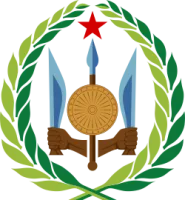
red star
Safety
Is Djibouti safe to visit?
Travel to Djibouti carries a high risk: the US State Department rates Djibouti Level 2 (“Exercise Increased Caution”), and the UK Foreign Office advises against all travel to parts of the country.
 US State Department
 UK Foreign Office (FCDO)
Latest update: New information about military activity in the Red Sea area ('Regional risks’ page).
Updated 27 Jul 2026 · Full travel advice
Sources: US Department of State travel advisories (public domain) and UK FCDO foreign travel advice (contains public sector information licensed under the Open Government Licence v3.0). Checked daily. Advice can change quickly — always read the official page before you travel.
Weather
Best time to visit Djibouti
The best time to visit Djibouti is December to February, when daytime highs in Djibouti are around 27–28°C. March and November are also a good time to go. June is the warmest month (39°C by day), January the coldest (21°C at night).
- Jan27°C21°C
- Feb28°C22°C
- Mar30°C23°C
- Apr32°C25°C
- May35°C27°C
- Jun39°C30°C
- Jul39°C30°C
- Aug38°C30°C
- Sep37°C29°C
- Oct33°C26°C
- Nov30°C24°C
- Dec28°C22°C
Best time Good Less ideal
Before you go
Plugs, voltage & emergency numbers in Djibouti
Plugs & sockets
220 V, 50 Hz · Standard 220–240 V: devices from the US or Japan (110–120 V) need a converter unless they are dual voltage (100–240 V).
Emergency numbers
Save the local numbers before you travel — 112 or 911 may not connect here. All countries →
Sources: Wikipedia — Mains electricity by country and List of emergency telephone numbers (CC BY-SA 4.0).
National parks
3 national parks in Djibouti
- 14 km² protected
- oldest from 1939
Largest: Day Forest National Park · Djibouti National Park · Yoboki National Park
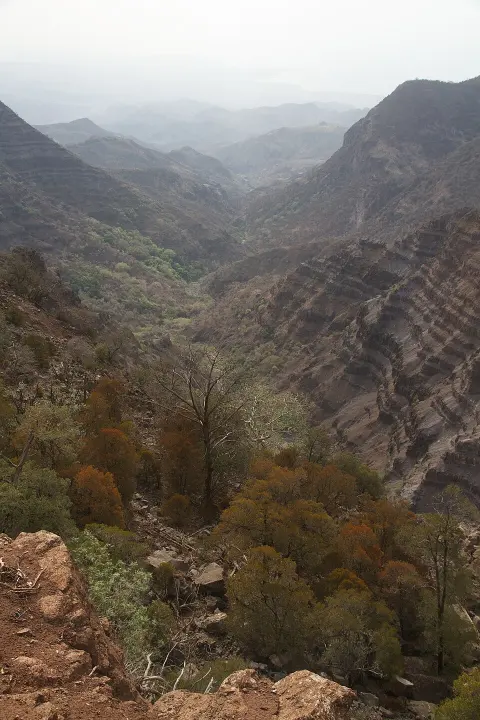
Currency · 26 October 2026
Djiboutian franc exchange rates today
Djibouti uses the Djiboutian franc (DJF, Fr). One US dollar buys 177.8649 DJF; over the last 30 days the DJF has gained 0.2% against the dollar.
What other currencies cost in DJF
Currency converter
Daily reference rates from the open-source currency-api (CC0), 26 Oct 2026. Banks and exchange offices add a margin.
World rankings
Where Djibouti ranks
How Djibouti compares with the rest of the world — open any card for the full ranking.
Airports
Airports in Djibouti
16 airports and airfields — 1 large, 0 medium and 9 small, plus 6 heliports. 1 have scheduled passenger flights.
Borders
Neighbouring countries
Djibouti borders 3 countries along 528 km of land borders. Coastline: 314 km.


People
Population & society
Religion
Largest cities: Djibouti (600,000)
Economy
Economy
Main industries
construction, agricultural processing, shipping
Export partners
Ethiopia 77%, UAE 5%, China 3%, Singapore 2%, France 2% (2023)
Top exports
raw sugar, seed oils, cars, palm oil, rice (2023)
Travel tools
Handy before every trip to Djibouti
Next public holiday
New Year's Day — Friday, 1 January 2027. Then Labour Day (1 May).

Djiboutian passport
Ranked #181: 16 countries visa-free, 29 with visa on arrival, 3 with an eTA and 46 with an eVisa.
Djiboutian passport photo
Exact size, head position and background for Djibouti's passport and visa photos — make one free with AI checks.
Calling Djibouti
Dial +253 before the local number. Internet domain .dj.
Climate footprint
0.6 million tonnes of CO₂ in 2024 — 0.48 t per person.
Entry requirements
Visa rules for every passport visiting Djibouti: visa-free stays, eVisas, visas on arrival and documents to bring.
News
Latest travel news about Djibouti
Nigerians Arriving in Comoros Can Get Visas on Arrival for Stays Up to 45 Days
Nigerian passport holders can obtain visas on arrival in 14 countries in 2026, including Comoros, where Passport Index lists stays of up to 45 days. …
Suriname-based Nigerians face wider visa needs as passport slides to 181st place
Nigeria has dropped to 181st of 196 countries in the Izi Visas Passport Ranking Index, losing visa-free access to 20 destinations. Nigerian passport …
UK Considers Visa Ban for Eritreans Amid Asylum Dispute
The UK government is contemplating a visa ban on Eritrean nationals due to Eritrea's refusal to accept returned asylum seekers. This decision follows…
Frequently asked questions about Djibouti
What do I need to travel to Djibouti?
How long must my passport be valid for Djibouti?
Where is Djibouti?
What is Djibouti known for?
What is the capital of Djibouti?
What language is spoken in Djibouti?
What currency does Djibouti use?
What is the calling code of Djibouti?
Which countries border Djibouti?
How strong is the Djiboutian passport?
Is Djibouti safe to visit?
When is the best time to visit Djibouti?
What plug type does Djibouti use?
How many airports does Djibouti have?
Sources: CIA World Factbook (public domain); World Bank Open Data (CC BY 4.0); names, languages and currencies: mledoze/countries (ODbL); flag: flag-icons (MIT); coat of arms: Wikimedia Commons (file page); exchange rates: Daily reference rates from the open-source currency-api (CC0); airports: OurAirports.