
Western Asia · UN member

Kuwait: Travel Guide & Requirements
State of Kuwait · دولة الكويت
Kuwait is a country in Western Asia with its capital in Kuwait City. It has a population of 4.9 million (#127 in the world) and covers 17,818 km². The official language is Arabic. The currency is the Kuwaiti dinar (KWD, د.ك).
Where is Kuwait? Map of Kuwait
Middle East, bordering the Persian Gulf, between Iraq and Saudi Arabia.
- Region
- Western Asia
- Coordinates
- 29.5° N, 45.75° E
- Neighbours
- 2 — see list
- Coastline
- 499 km
- Kuwait
- Neighbours
- Capital
Travel requirements
What you need to travel to Kuwait
- Passport
Kuwait's Ministry of Interior says your passport must be valid for at least 6 months from the date of entry into Kuwait.
- Visa or eTA
Depends on your passport: of 198 passports, 5 need no visa, 54 need an eVisa, 138 need a visa from an embassy. Check yours or see Kuwait entry requirements for every passport.
- Return or onward ticket
The Ministry of Interior's tourist visa instructions list a confirmed travel ticket among the required documents.
- Proof of funds
The Ministry of Interior's tourist visa instructions list the required documents (a copy of the passport, a confirmed travel ticket, a hotel reservation and a recent photo) and do not include proof of funds.
- Travel insurance
No official requirement. The UK Foreign Office advises making sure you have adequate travel health insurance and accessible funds to cover the cost of any medical treatment and repatriation.
- Customs allowance
The UK Foreign Office says to declare cash or travellers' cheques worth KWD 3,000 or more when you bring them into Kuwait; you will get a certified declaration, and if you do not, your money could be seized when you lea…
- Travel advice
High risk — US and UK advice.
Entry rules: TravelRequirements.info — Entry Requirements Dataset (CC BY 4.0), each rule cited to an official government source. Always confirm with the airline and the official source before you travel.
Before you go
9 things to know before you travel to Kuwait
- Safety: Travel to Kuwait carries a high risk: the US State Department rates Kuwait Level 3 (“Reconsider Travel”), and the UK Foreign Office has no warnings against travel there.
- Best time to go: March and November — when daytime highs in Kuwait City are around 25°C.
- Money: the Kuwaiti dinar (KWD) — 1 US dollar is about 0.3107 KWD.
- Plugs: type C and G, 240 V, 50 Hz — standard 220–240 V: devices from the US or Japan (110–120 V) need a converter unless they are dual voltage (100–240 V).
- Emergency numbers: Police 112, Ambulance 112, Fire 112.
- Language: Arabic is official; English is also spoken.
- Driving: on the right — speed limits are 45 km/h in built-up areas and 80 km/h outside built-up areas.
- Time zone: UTC+3 in Kuwait City.
- Capital: Kuwait City. About 4.9 million people live in Kuwait.
Key facts
Kuwait at a glance
Languages spoken: Arabic (official), English widely spoken
Geography & history
About Kuwait
Kuwait has been ruled by the AL-SABAH dynasty since the 18th century. The threat of Ottoman invasion in 1899 prompted Amir Mubarak AL-SABAH to seek protection from Britain, ceding foreign and defense responsibility to Britain until 1961, when the country attained its independence. Iraq attacked and overran Kuwait in 1990. After several weeks of aerial bombardment, a US-led UN coalition began a ground assault in 1991 that liberated Kuwait in four days. In 1992, the Amir reconstituted the parliament that he had dissolved in 1986. Amid the 2010-11 uprisings and protests across the Arab world, stateless Arabs known as Bidoon staged small protests demanding citizenship, jobs, and other benefits …
Read the full history
Kuwait has been ruled by the AL-SABAH dynasty since the 18th century. The threat of Ottoman invasion in 1899 prompted Amir Mubarak AL-SABAH to seek protection from Britain, ceding foreign and defense responsibility to Britain until 1961, when the country attained its independence. Iraq attacked and overran Kuwait in 1990. After several weeks of aerial bombardment, a US-led UN coalition began a ground assault in 1991 that liberated Kuwait in four days. In 1992, the Amir reconstituted the parliament that he had dissolved in 1986. Amid the 2010-11 uprisings and protests across the Arab world, stateless Arabs known as Bidoon staged small protests demanding citizenship, jobs, and other benefits available to Kuwaiti nationals. Other demographic groups, notably Islamists and Kuwaitis from tribal backgrounds, soon joined the growing protest movements, which culminated with the resignation of the prime minister amid allegations of corruption. Demonstrations renewed in 2012 in response to a decree amending the electoral law that lessened the voting power of the tribal blocs. An opposition coalition of Sunni Islamists, tribal populists, and some liberals largely boycotted legislative elections in 2012 and 2013, which ushered in a legislature more amenable to the government's agenda. Faced with the prospect of painful subsidy cuts, oppositionists and independents actively participated in the 2016 election, winning nearly half the seats, but the opposition became increasingly factionalized. Between 2006 and his death in 2020, the Amir dissolved the National Assembly on seven occasions and shuffled the cabinet over a dozen times, usually citing political stagnation and gridlock between the legislature and the government. The current Amir, who assumed his role in 2020, launched a "National Dialogue" in 2021 meant to resolve political gridlock. As part of this initiative, the Amir pardoned several opposition figures who had been living in exile, and they returned to Kuwait. Legislative challenges remain, and the cabinet has been reshuffled six times since 2020.
Location
Middle East, bordering the Persian Gulf, between Iraq and Saudi Arabia
Climate
dry desert; intensely hot summers; short, cool winters
Terrain
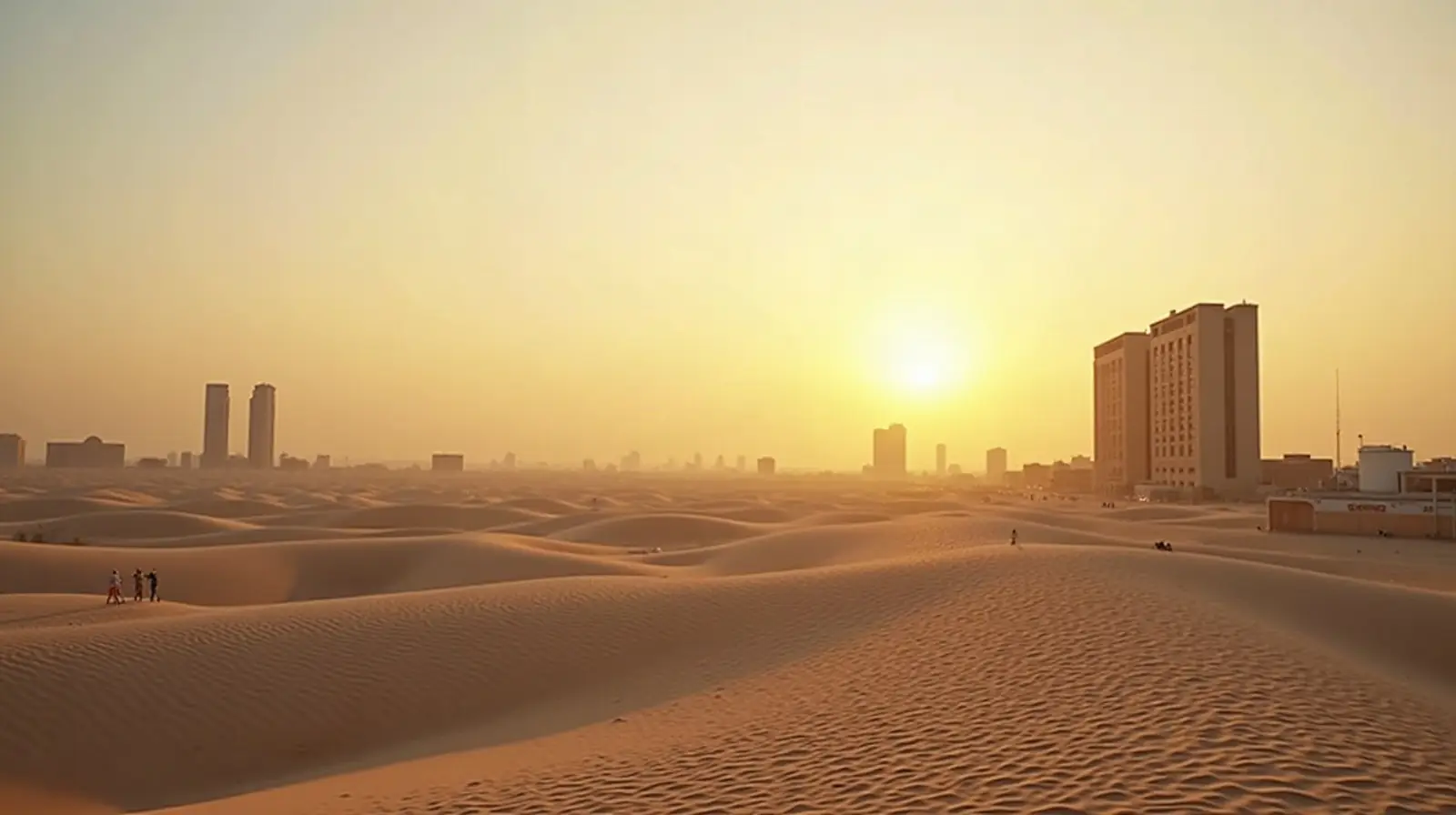
flat to slightly undulating desert plain
Highest point
3.6 km W. of Al-Salmi Border Post 300 m
Natural resources
petroleum, fish, shrimp, natural gas
Natural hazards
sudden cloudbursts are common from October to April and bring heavy rain, which can damage roads and houses; sandstorms and dust storms occur throughout the year but are most common between March and August
National symbols
golden falcon
Driving
Speed limits & road rules in Kuwait
The default speed limits in Kuwait are 45 km/h in built-up areas and 80 km/h outside built-up areas. Posted signs always take priority over these defaults.
- 4545 km/hBuilt-up areasTowns and citiesWHO data (2017)
- 8080 km/hOutside built-up areasCountry roadsWHO data (2017)
- International Driving PermitRecognised: 1968 ViennaCarry the IDP together with your national licence
- Driving sideDrive on the rightOvertake on the left
- Seat beltsRequired by law
- Child seatsNo national child-restraint law
- Motorcycle helmetsRequired for riders
- Road deaths (2021)9.2 per 100,000 peopleSafer than most countries (median 12.4)
Speed limits: OpenStreetMap wiki — Default speed limits (CC BY-SA 2.0) and WHO. Road-safety laws: WHO Global Health Observatory. Compare speed limits and alcohol limits by country. Defaults for cars; local signs, weather and vehicle type can lower them.
Safety
Is Kuwait safe to visit?
Travel to Kuwait carries a high risk: the US State Department rates Kuwait Level 3 (“Reconsider Travel”), and the UK Foreign Office has no warnings against travel there.
 US State Department
 UK Foreign Office (FCDO)
Latest update: FCDO no longer advises against all but essential travel to Kuwait (‘Warnings and insurance’ page).
Updated 20 Aug 2026 · Full travel advice
Sources: US Department of State travel advisories (public domain) and UK FCDO foreign travel advice (contains public sector information licensed under the Open Government Licence v3.0). Checked daily. Advice can change quickly — always read the official page before you travel.
Weather
Best time to visit Kuwait
The best time to visit Kuwait is March and November, when daytime highs in Kuwait City are around 25°C. April is also a good time to go. August is the warmest month (42°C by day), January the coldest (10°C at night).
- Jan18°C10°C
- Feb20°C11°C
- Mar25°C15°C
- Apr29°C20°C
- May36°C26°C
- Jun41°C30°C
- Jul42°C32°C
- Aug42°C32°C
- Sep39°C29°C
- Oct34°C24°C
- Nov25°C18°C
- Dec20°C12°C
Best time Good Less ideal
Before you go
Plugs, voltage & emergency numbers in Kuwait
Plugs & sockets
240 V, 50 Hz · Standard 220–240 V: devices from the US or Japan (110–120 V) need a converter unless they are dual voltage (100–240 V).
Emergency numbers
112 works from any mobile phone, even without a SIM card in most networks. All countries →
Sources: Wikipedia — Mains electricity by country and List of emergency telephone numbers (CC BY-SA 4.0).
Currency · 26 October 2026
Kuwaiti dinar exchange rates today
Kuwait uses the Kuwaiti dinar (KWD, د.ك). One US dollar buys 0.3107 KWD; over the last 30 days the KWD has lost 0.7% against the dollar.
What other currencies cost in KWD
Currency converter
Daily reference rates from the open-source currency-api (CC0), 26 Oct 2026. Banks and exchange offices add a margin.
World rankings
Where Kuwait ranks
How Kuwait compares with the rest of the world — open any card for the full ranking.
Airports
Airports in Kuwait
46 airports and airfields — 1 large, 2 medium and 4 small, plus 39 heliports. 1 have scheduled passenger flights.
Borders
Neighbouring countries
Kuwait borders 2 countries along 475 km of land borders. Coastline: 499 km.


Military
Kuwaiti armed forces
Kuwait ranks #78 of 145 in the Global Firepower military strength ranking, with a defence budget of $8.1 billion (2025).
People
Population & society
Religion
Largest cities: Kuwait (3.3 million)
Economy
Economy
Main industries
petroleum, petrochemicals, cement, shipbuilding and repair, water desalination, food processing, construction materials
Export partners
China 25%, India 13%, Japan 13%, Taiwan 7%, UK 5% (2023)
Top exports
crude petroleum, refined petroleum, natural gas, hydrocarbons, plastics (2023)
Travel tools
Handy before every trip to Kuwait
Next public holiday
New Year's Day — Friday, 1 January 2027. Then Isra' and Mi'raj (5 Jan).
Kuwaiti passport
Ranked #98: 58 countries visa-free, 37 with visa on arrival, 5 with an eTA and 24 with an eVisa.
Kuwaiti passport photo
Exact size, head position and background for Kuwait's passport and visa photos — make one free with AI checks.
Calling Kuwait
Dial +965 before the local number. Internet domain .kw.
Climate footprint
129.5 million tonnes of CO₂ in 2024 — 26.25 t per person.
Entry requirements
Visa rules for every passport visiting Kuwait: visa-free stays, eVisas, visas on arrival and documents to bring.
News
Latest travel news about Kuwait
UAE trips: US advisory adds terror, conflict risk; check plans before you fly
The United States updated its United Arab Emirates travel advisory on 24 October 2026 to add terrorism and armed conflict risks. The alert stays at L…
Kuwaiti Passport Holders May Join Gulf States With Visa-Free Russia Entry
Russia is negotiating visa-free entry with Kuwait and Bahrain, Deputy Foreign Minister Georgy Borisenko said. Visa-free travel for ordinary passport …
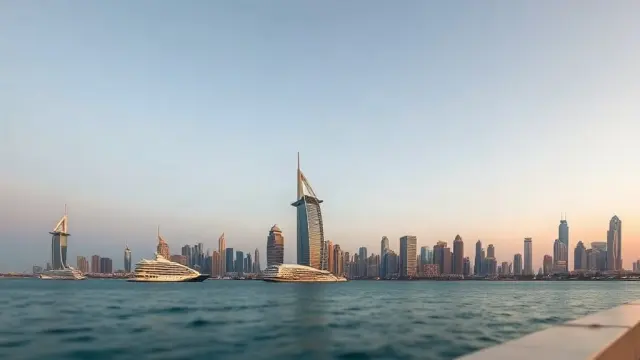
Travellers to Kuwait Still Advised to Reconsider Trip as Houthi Risk Rises
The U.S. Embassy in Kuwait updated its travel advisory on 23 October 2026 to reflect a greater threat of Iranian-supported Houthi attacks. The level …
Frequently asked questions about Kuwait
What do I need to travel to Kuwait?
How long must my passport be valid for Kuwait?
Where is Kuwait?
What is the capital of Kuwait?
What language is spoken in Kuwait?
What currency does Kuwait use?
What is the calling code of Kuwait?
Which countries border Kuwait?
How strong is the Kuwaiti passport?
What is the speed limit in Kuwait?
Is Kuwait safe to visit?
When is the best time to visit Kuwait?
What plug type does Kuwait use?
How many airports does Kuwait have?
Sources: CIA World Factbook (public domain); World Bank Open Data (CC BY 4.0); names, languages and currencies: mledoze/countries (ODbL); flag: flag-icons (MIT); coat of arms: Wikimedia Commons (file page); exchange rates: Daily reference rates from the open-source currency-api (CC0); airports: OurAirports.