
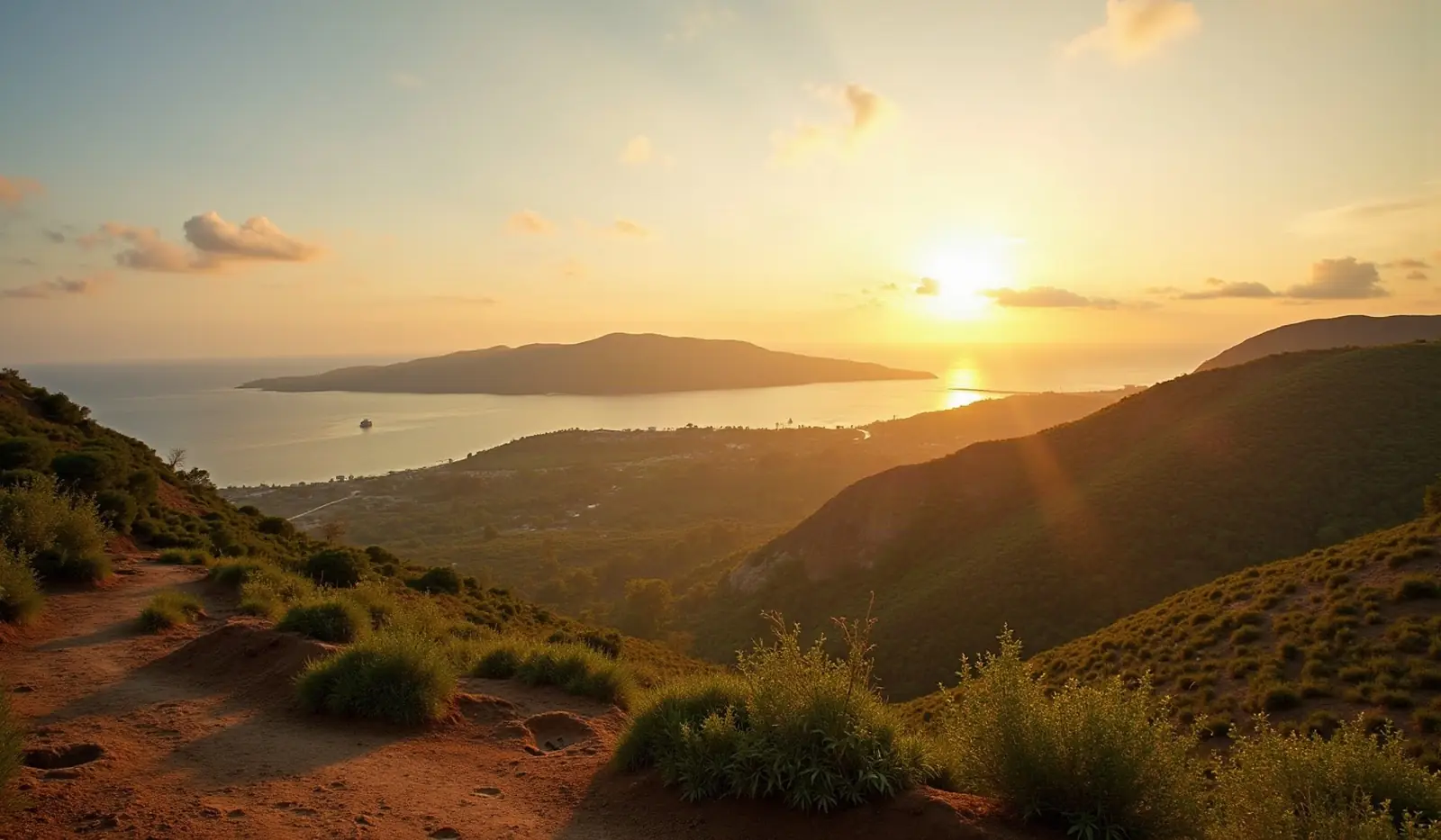
South-Eastern Asia · UN member

Timor-Leste: Travel Guide & Requirements
Democratic Republic of Timor-Leste · Repúblika Demokrátika Timór-Leste
Timor-Leste is a country in South-Eastern Asia with its capital in Dili. It has a population of 1.4 million (#154 in the world) and covers 14,874 km². The official languages are Portuguese and Tetum. The currency is the United States dollar (USD, $).
Where is Timor-Leste? Map of Timor-Leste
Southeastern Asia, northwest of Australia in the Lesser Sunda Islands at the eastern end of the Indonesian archipelago; note - Timor-Leste includes the eastern half of the island of Timor, the Oecussi (Ambeno) region on the northwest portion of the island of Timor, and the islands of Pulau Atauro and Pulau Jaco.
- Region
- South-Eastern Asia
- Coordinates
- 8.8333° S, 125.9167° E
- Neighbours
- 1 — see list
- Coastline
- 706 km
- Timor-Leste
- Neighbours
- Capital
- Largest cities
Map of Timor-Leste showing Dili (capital) and the largest cities: Maliana, Lospalos and Venilale.
Travel requirements
What you need to travel to Timor-Leste
- Passport
Timor-Leste's Migration Service says foreigners entering for tourism or transit must hold a travel document valid for at least six months, and its tourist visa page asks for a travel document valid for at least 6 months…
- Visa or eTA
Depends on your passport: of 198 passports, 34 need no visa, 164 get a visa on arrival. Check yours or see Timor-Leste entry requirements for every passport.
- Return or onward ticket
No official requirement. The Migration Service says visa-on-arrival applicants must present, if requested, evidence of departure arrangements such as an onwards transportation ticket or booking, and lists it among the documents for a tourist vi…
- Proof of funds
Timor-Leste's Migration Service says foreigners must have access to funds and accommodation sufficient for sustenance whilst in the country, whatever the visa, permit or exemption used to enter.
- Travel insurance
No official requirement. The UK Foreign Office says medical services are limited, particularly outside Dili, and that in a medical emergency it's likely you'll need to be evacuated to Australia or Singapore.
- Arrival card
The Migration Service says all travellers must complete and submit an official declaration online prior to entry or departure.
- Customs allowance
The customs e-Passenger Declaration asks whether you have more than US$5,000 or the equivalent in other currencies; if you do, you must declare the exact amount to Customs.
- Travel advice
Some caution needed — US and UK advice.
Entry rules: TravelRequirements.info — Entry Requirements Dataset (CC BY 4.0), each rule cited to an official government source. Always confirm with the airline and the official source before you travel.
Before you go
10 things to know before you travel to Timor-Leste
- Safety: Timor-Leste is generally safe for travellers, but some caution is needed: the US State Department rates Timor-Leste Level 2 (“Exercise Increased Caution”), and the UK Foreign Office has no warnings against travel there.
- Best time to go: May to September — when daytime highs in Dili are around 29–32°C.
- Money: the United States dollar (USD) — 1 euro is about 1.1222 USD.
- Plugs: type C, E, F and I, 220 V, 50 Hz — standard 220–240 V: devices from the US or Japan (110–120 V) need a converter unless they are dual voltage (100–240 V).
- Emergency numbers: Police 112, Ambulance 112, Fire 112.
- Language: Portuguese and Tetum are official.
- Driving: on the left — speed limits are 50 km/h in built-up areas, 90 km/h outside built-up areas, 100 km/h on expressways and 120 km/h on motorways.
- Time zone: UTC+9 in Dili.
- Capital: Dili. About 1.4 million people live in Timor-Leste.
- Outdoors: 2 national parks.
Key facts
Timor-Leste at a glance
Languages spoken: Tetun Prasa 30.6%, Mambai 16.6%, Makasai 10.5%, Tetun Terik 6.1%, Baikenu 5.9%, Kemak 5.8%, Bunak 5.5%, Tokodede 4%, Fataluku 3.5%, Waima'a 1.8%, Galoli 1.4%, Naueti 1.4%, Idate 1.2%, Midiki 1.2%, other 4.5% (2015 est.)
Geography & history
About Timor-Leste
The island of Timor was actively involved in Southeast Asian trading networks for centuries, and by the 14th century, it exported sandalwood, slaves, honey, and wax. The sandalwood trade attracted the Portuguese, who arrived in the early 16th century; by mid-century, they had colonized the island, which was previously ruled by local chieftains. In 1859, Portugal ceded the western portion of the island to the Dutch. Imperial Japan occupied Portuguese Timor from 1942 to 1945, but Portugal resumed colonial authority after the Japanese defeat in World War II. The eastern part of Timor declared itself independent from Portugal on 28 November 1975, but Indonesian forces invaded and occupied the a…
Read the full history
The island of Timor was actively involved in Southeast Asian trading networks for centuries, and by the 14th century, it exported sandalwood, slaves, honey, and wax. The sandalwood trade attracted the Portuguese, who arrived in the early 16th century; by mid-century, they had colonized the island, which was previously ruled by local chieftains. In 1859, Portugal ceded the western portion of the island to the Dutch. Imperial Japan occupied Portuguese Timor from 1942 to 1945, but Portugal resumed colonial authority after the Japanese defeat in World War II. The eastern part of Timor declared itself independent from Portugal on 28 November 1975, but Indonesian forces invaded and occupied the area nine days later. It was incorporated into Indonesia in 1976 as the province of Timor Timur (East Timor or Timor Leste). Indonesia conducted an unsuccessful pacification campaign in the province over the next two decades, during which as many as 250,000 people died. In a UN-supervised referendum in 1999, an overwhelming majority of the people of Timor-Leste voted for independence from Indonesia. However, anti-independence Timorese militias -- organized and supported by the Indonesian military -- began a large-scale, scorched-earth campaign of retribution, killing approximately 1,400 Timorese and displacing nearly 500,000. Most of the country's infrastructure was destroyed, including homes, irrigation systems, water supply systems, schools, and most of the electrical grid. Australian-led peacekeeping troops eventually deployed to the country and ended the violence. In 2002, Timor-Leste was internationally recognized as an independent state. In 2006, Australia and the UN had to step in again to stabilize the country, which allowed presidential and parliamentary elections to be conducted in 2007 in a largely peaceful atmosphere. In 2008, rebels staged an unsuccessful attack against the president and prime minister. Since that attack, Timor-Leste has made considerable progress in building stability and democratic institutions, holding a series of successful parliamentary and presidential elections since 2012. Nonetheless, weak and unstable political coalitions have led to periodic episodes of stalemate and crisis. The UN continues to provide assistance on economic development and strengthening governing institutions. Currently, Timor-Leste is one of the world's poorest nations, with an economy that relies heavily on energy resources in the Timor Sea.
Location
Southeastern Asia, northwest of Australia in the Lesser Sunda Islands at the eastern end of the Indonesian archipelago; note - Timor-Leste includes the eastern half of the island of Timor, the Oecussi (Ambeno) region on the northwest portion of the island of …
Climate
tropical; hot, humid; distinct rainy and dry seasons
Terrain
mountainous
Highest point
Foho Tatamailau 2,963 m
Natural resources
gold, petroleum, natural gas, manganese, marble
Natural hazards
floods and landslides are common; earthquakes; tsunamis; tropical cyclones
National symbols
Mount Ramelau
Driving
Speed limits & road rules in Timor-Leste
The default speed limits in Timor-Leste are 50 km/h in built-up areas, 90 km/h outside built-up areas, 100 km/h on expressways and 120 km/h on motorways. The legal alcohol limit for drivers is 0.5‰. Posted signs always take priority over these defaults.
- 5050 km/hBuilt-up areasTowns and cities
- 9090 km/hOutside built-up areasCountry roadsWith a trailer: 70 km/h
- 100100 km/hExpresswaysDual carriageways & expresswaysWith a trailer: 80 km/h
- 120120 km/hMotorwaysMotorways / freewaysWith a trailer: 100 km/h
- International Driving PermitNot a party to the IDP conventionsCheck with the embassy whether your licence is accepted
- Driving sideDrive on the leftOvertake on the right
- Alcohol limit0.5‰ blood alcohol (0.05% BAC)
- Seat beltsRequired by law
- Child seatsNo national child-restraint law
- Motorcycle helmetsRequired for riders
- Road deaths (2021)12.0 per 100,000 peopleClose to the world median (12.4)
Speed limits: OpenStreetMap wiki — Default speed limits (CC BY-SA 2.0). Road-safety laws: WHO Global Health Observatory. Compare speed limits and alcohol limits by country. Defaults for cars; local signs, weather and vehicle type can lower them.
Safety
Is Timor-Leste safe to visit?
Timor-Leste is generally safe for travellers, but some caution is needed: the US State Department rates Timor-Leste Level 2 (“Exercise Increased Caution”), and the UK Foreign Office has no warnings against travel there.
 US State Department
 UK Foreign Office (FCDO)
Latest update: New information about dual nationals returning to the UK (‘Entry requirements’ page).
Updated 10 Dec 2025 · Full travel advice
Sources: US Department of State travel advisories (public domain) and UK FCDO foreign travel advice (contains public sector information licensed under the Open Government Licence v3.0). Checked daily. Advice can change quickly — always read the official page before you travel.
Weather
Best time to visit Timor-Leste
The best time to visit Timor-Leste is May to September, when daytime highs in Dili are around 29–32°C. March to April and October to November are also a good time to go. October is the warmest month (33°C by day), August the coldest (22°C at night), and January the wettest with about 243 mm of rain.
- Jan29°C25°C
- Feb28°C25°C
- Mar29°C25°C
- Apr30°C25°C
- May30°C24°C
- Jun29°C23°C
- Jul29°C22°C
- Aug30°C22°C
- Sep32°C23°C
- Oct33°C25°C
- Nov32°C26°C
- Dec30°C26°C
Best time Good Less ideal
Before you go
Plugs, voltage & emergency numbers in Timor-Leste
Plugs & sockets
- Type C (Europlug)two round pins
- Type Etwo round pins and a hole for the socket's earth pin
- Type F (Schuko)two round pins with earth clips on the sides
- Type Itwo flat pins in a V shape, often with an earth pin
220 V, 50 Hz · Standard 220–240 V: devices from the US or Japan (110–120 V) need a converter unless they are dual voltage (100–240 V).
Emergency numbers
112 works from any mobile phone, even without a SIM card in most networks. All countries →
Sources: Wikipedia — Mains electricity by country and List of emergency telephone numbers (CC BY-SA 4.0).
National parks
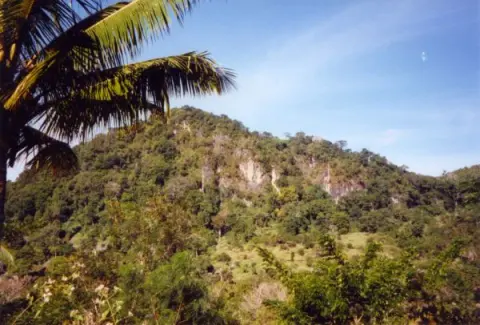
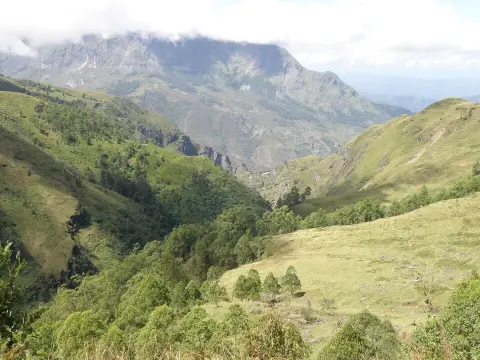
2 national parks in Timor-Leste
- 1,236 km² protected
- oldest from 2007
Largest: Nino Konis Santana National Park · Kay Rala Xanana Gusmão National Park
Currency · 26 October 2026
United States dollar exchange rates today
Timor-Leste uses the United States dollar (USD, $).
What other currencies cost in USD
Currency converter
Daily reference rates from the open-source currency-api (CC0), 26 Oct 2026. Banks and exchange offices add a margin.
World rankings
Where Timor-Leste ranks
How Timor-Leste compares with the rest of the world — open any card for the full ranking.
Airports
Airports in Timor-Leste
13 airports and airfields — 2 large, 2 medium and 7 small, plus 2 heliports. 4 have scheduled passenger flights.
Borders
Neighbouring countries
Timor-Leste borders 1 country along 253 km of land borders. Coastline: 706 km.

People
Population & society
Religion
Largest cities: Dili (281,000)
Economy
Economy
Main industries
printing, soap manufacturing, handicrafts, woven cloth
Export partners
China 46%, Singapore 25%, Japan 15%, Indonesia 5%, USA 3% (2023)
Top exports
crude petroleum, natural gas, coffee, scrap iron, telephones (2023)
Travel tools
Handy before every trip to Timor-Leste
Next public holiday
All Saints' Day — Sunday, 1 November 2026. Then All Souls' Day (2 Nov).

Timorese passport
Ranked #99: 56 countries visa-free, 30 with visa on arrival, 3 with an eTA and 44 with an eVisa.
Timorese passport photo
Exact size, head position and background for Timor-Leste's passport and visa photos — make one free with AI checks.
Calling Timor-Leste
Dial +670 before the local number. Internet domain .tl.
Climate footprint
0.7 million tonnes of CO₂ in 2024 — 0.48 t per person.
Entry requirements
Visa rules for every passport visiting Timor-Leste: visa-free stays, eVisas, visas on arrival and documents to bring.
News
Latest travel news about Timor-Leste
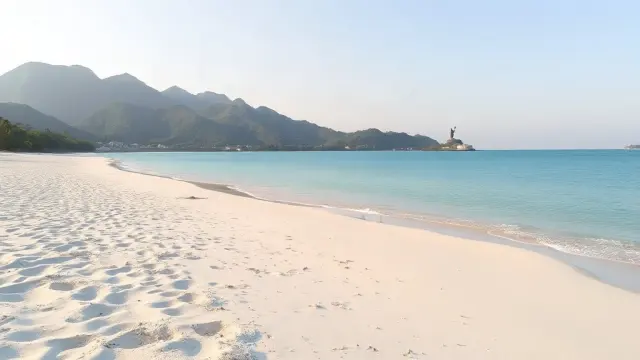
Dili, Timor-Leste: Visa on Arrival Rules and Flights Travellers Should Know
Timor-Leste receives fewer than 100,000 visitors a year and is now positioning itself as a sustainable tourism destination. Most international travel…
Indian Travellers Can Apply Online for Suriname e-Visa to Reach Its Rainforests
Indian passport holders can apply for an e-Visa to visit Suriname, a South American country known for its Amazonian rainforests and multicultural her…
Samoa Achieves 100% Success Rate in Pacific Engagement Visa Program
Samoa has recorded a 100% success rate in the Pacific Engagement Visa program, having joined the initiative a year late. This achievement highlights …
Frequently asked questions about Timor-Leste
What do I need to travel to Timor-Leste?
How long must my passport be valid for Timor-Leste?
Where is Timor-Leste?
What is Timor-Leste known for?
What is the capital of Timor-Leste?
What language is spoken in Timor-Leste?
What currency does Timor-Leste use?
What is the calling code of Timor-Leste?
Which countries border Timor-Leste?
How strong is the Timorese passport?
What is the speed limit in Timor-Leste?
Is Timor-Leste safe to visit?
When is the best time to visit Timor-Leste?
What plug type does Timor-Leste use?
How many airports does Timor-Leste have?
Sources: CIA World Factbook (public domain); World Bank Open Data (CC BY 4.0); names, languages and currencies: mledoze/countries (ODbL); flag: flag-icons (MIT); coat of arms: Wikimedia Commons (file page); exchange rates: Daily reference rates from the open-source currency-api (CC0); airports: OurAirports.