
South America · UN member

Chile: Travel Guide & Requirements
Republic of Chile
Chile is a country in South America with its capital in Santiago. It has a population of 19.9 million (#65 in the world) and covers 756,102 km². The official language is Spanish. The currency is the Chilean peso (CLP, $).
Where is Chile? Map of Chile
Southern South America, bordering the South Pacific Ocean, between Argentina and Peru.
- Region
- South America
- Coordinates
- 30° S, 71° W
- Neighbours
- 3 — see list
- Coastline
- 6,435 km
- Chile
- Neighbours
- Capital
- Largest cities
Map of Chile showing Santiago (capital) and the largest cities: Antofagasta, Viña del Mar, Puerto Montt, Arica, Temuco, Concepción, Rancagua and Iquique.
Travel requirements
What you need to travel to Chile
- Passport
Chile's migration service says the transitory stay permit cannot run past the validity of your passport or travel document, and the UK Foreign Office says your passport should have an expiry date after the day you plan …
- Visa or eTA
Depends on your passport: of 198 passports, 94 need no visa, 104 need a visa from an embassy. Check yours or see Chile entry requirements for every passport.
- Return or onward ticket
No official requirement. The UK Foreign Office says that to enter Rapa Nui (Easter Island) you must show a return ticket.
- Proof of funds
Chile's foreign ministry says every foreigner entering as the holder of a transitory stay permit must show the border authority lawful means of support for their stay.
- Travel insurance
No official requirement. Canada's travel advice says to make sure you get travel insurance that includes coverage for medical evacuation and hospital stays.
- Arrival card
SAG's Digital Affidavit for Entry to Chile asks you to declare the plant and animal origin products, goods and currencies (money) you carry in your luggage or means of transport.
- Customs allowance
Chile's customs service says that if you enter or leave Chile with cash or bearer negotiable instruments of USD 10,000 or more, or the equivalent in other currencies including the Chilean peso, you must declare it to cu…
- Travel advice
Some caution needed — US and UK advice.
Entry rules: TravelRequirements.info — Entry Requirements Dataset (CC BY 4.0), each rule cited to an official government source. Always confirm with the airline and the official source before you travel.
Before you go
10 things to know before you travel to Chile
- Safety: Chile is generally safe for travellers, but some caution is needed: the US State Department rates Chile Level 2 (“Exercise Increased Caution”), and the UK Foreign Office has no warnings against travel there.
- Best time to go: March to April and November — when daytime highs in Santiago are around 23–27°C.
- Money: the Chilean peso (CLP) — 1 US dollar is about 995.4831 CLP.
- Plugs: type C, F and L, 220 V, 50 Hz — standard 220–240 V: devices from the US or Japan (110–120 V) need a converter unless they are dual voltage (100–240 V).
- Emergency numbers: Police 133, Ambulance 131, Fire 132.
- Language: Spanish is official; English is also spoken.
- Driving: on the right — speed limits are 50 km/h in built-up areas and 100 km/h outside built-up areas.
- Time zone: UTC-3 in Santiago.
- Capital: Santiago. About 19.9 million people live in Chile.
- Outdoors: 48 national parks and 28 ski areas.
Key facts
Chile at a glance
Languages spoken: Spanish 99.5% (official), English 10.2%, Indigenous 1% (includes Mapudungun, Aymara, Quechua, Rapa Nui), other 2.3%, unspecified 0.2% (2012 est.)
Geography & history
About Chile
Indigenous groups inhabited central and southern Chile for several thousand years, living in mixed pastoralist and settled communities. The Inca then ruled the north of the country for nearly a century prior to the arrival of the Spanish in the 16th century. In 1541, the Spanish established the Captaincy General of Chile, which lasted until Chile declared its independence in 1810. The subsequent struggle with the Spanish became tied to other South American independence conflicts, with a decisive victory not being achieved until 1818. In the War of the Pacific (1879-83), Chile defeated Peru and Bolivia to win its current northernmost regions. By the 1880s, the Chilean central government ceme…
Read the full history
Indigenous groups inhabited central and southern Chile for several thousand years, living in mixed pastoralist and settled communities. The Inca then ruled the north of the country for nearly a century prior to the arrival of the Spanish in the 16th century. In 1541, the Spanish established the Captaincy General of Chile, which lasted until Chile declared its independence in 1810. The subsequent struggle with the Spanish became tied to other South American independence conflicts, with a decisive victory not being achieved until 1818. In the War of the Pacific (1879-83), Chile defeated Peru and Bolivia to win its current northernmost regions. By the 1880s, the Chilean central government cemented its control over the central and southern regions inhabited by Mapuche Indigenous peoples. Between 1891 and 1973, a series of elected governments succeeded each other until the Marxist government of Salvador ALLENDE was overthrown in 1973 in a military coup led by General Augusto PINOCHET, who ruled until a democratically elected president was inaugurated in 1990. Economic reforms that were maintained consistently since the 1980s contributed to steady growth, reduced poverty rates by over half, and helped secure the country's commitment to democratic and representative government. Chile has increasingly assumed regional and international leadership roles befitting its status as a stable, democratic nation.
Location
Southern South America, bordering the South Pacific Ocean, between Argentina and Peru
Climate
temperate; desert in north; Mediterranean in central region; cool and damp in south
Terrain
low coastal mountains, fertile central valley, rugged Andes in east
Highest point
Nevado Ojos del Salado 6,893 m (highest volcano in the world)
Natural resources
copper, timber, iron ore, nitrates, precious metals, molybdenum, hydropower
Natural hazards
severe earthquakes; active volcanism; tsunamis volcanism: significant volcanic activity due to more than three-dozen active volcanoes along the Andes Mountains; Lascar (5,592 m), which last erupted in 2007, is the most active volcano in the northern Chilean A…
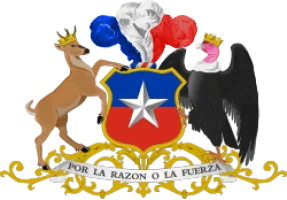
National symbols
huemul (mountain deer), Andean condor
Driving
Speed limits & road rules in Chile
The default speed limits in Chile are 50 km/h in built-up areas and 100 km/h outside built-up areas. The legal alcohol limit for drivers is 0.3‰. Posted signs always take priority over these defaults.
- 5050 km/hBuilt-up areasTowns and cities
- 100100 km/hOutside built-up areasCountry roads
- International Driving PermitRecognised: 1968 Vienna, 1949 Geneva, 1926 ParisCarry the IDP together with your national licence
- Driving sideDrive on the rightOvertake on the left
- Alcohol limit0.3‰ blood alcohol (0.03% BAC)
- Seat beltsRequired by law
- Child seatsRequired by law
- Motorcycle helmetsRequired for riders
- Road deaths (2021)10.3 per 100,000 peopleClose to the world median (12.4)
Speed limits: OpenStreetMap wiki — Default speed limits (CC BY-SA 2.0). Road-safety laws: WHO Global Health Observatory. Compare speed limits and alcohol limits by country. Defaults for cars; local signs, weather and vehicle type can lower them.
Safety
Is Chile safe to visit?
Chile is generally safe for travellers, but some caution is needed: the US State Department rates Chile Level 2 (“Exercise Increased Caution”), and the UK Foreign Office has no warnings against travel there.
 US State Department
 UK Foreign Office (FCDO)
Latest update: Information on heavy rain and severe mudslides in eastern Santiago ('Warnings and insurance’ page).
Updated 9 Oct 2026 · Full travel advice
Sources: US Department of State travel advisories (public domain) and UK FCDO foreign travel advice (contains public sector information licensed under the Open Government Licence v3.0). Checked daily. Advice can change quickly — always read the official page before you travel.
Weather
Best time to visit Chile
The best time to visit Chile is March to April and November, when daytime highs in Santiago are around 23–27°C. December to February and October are also a good time to go. January is the warmest month (30°C by day), July the coldest (3°C at night), and June the wettest with about 63 mm of rain.
- Jan30°C14°C
- Feb29°C14°C
- Mar27°C12°C
- Apr23°C9°C
- May19°C6°C
- Jun15°C3°C
- Jul14°C3°C
- Aug16°C3°C
- Sep19°C5°C
- Oct22°C7°C
- Nov26°C10°C
- Dec28°C13°C
Best time Good Less ideal
Before you go
Plugs, voltage & emergency numbers in Chile
Plugs & sockets
- Type C (Europlug)two round pins
- Type F (Schuko)two round pins with earth clips on the sides
- Type Lthree round pins in a row
220 V, 50 Hz · Standard 220–240 V: devices from the US or Japan (110–120 V) need a converter unless they are dual voltage (100–240 V).
Emergency numbers
Save the local numbers before you travel — 112 or 911 may not connect here. All countries →
Sources: Wikipedia — Mains electricity by country and List of emergency telephone numbers (CC BY-SA 4.0).
Ski resorts
28 ski resorts in Chile
- 332 km of slopes
- 117 lifts
- up to 3,674 m
Biggest: El Colorado · La Parva · Valle Nevado
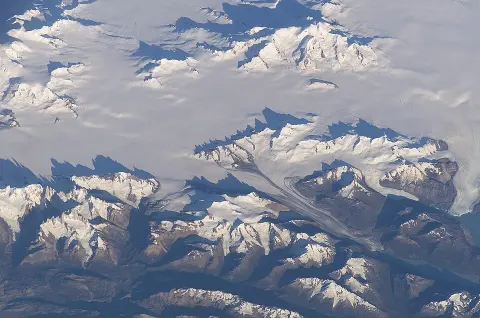
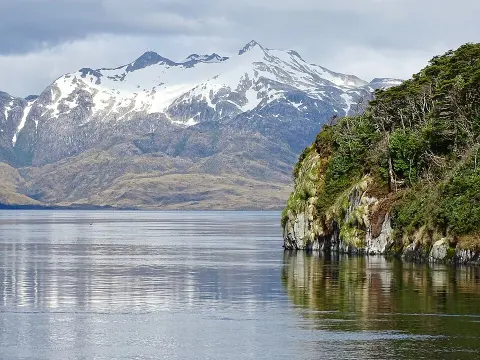
National parks
48 national parks in Chile
- 129,547 km² protected
- oldest from 1926
Largest: Bernardo O'Higgins National Park · Kawésqar National Park · Laguna San Rafael National Park
Currency · 26 October 2026
Chilean peso exchange rates today
Chile uses the Chilean peso (CLP, $). One US dollar buys 995.4831 CLP; over the last 30 days the CLP has lost 3.4% against the dollar.
What other currencies cost in CLP
Currency converter
Daily reference rates from the open-source currency-api (CC0), 26 Oct 2026. Banks and exchange offices add a margin.
World rankings
Where Chile ranks
How Chile compares with the rest of the world — open any card for the full ranking.
Airports
Airports in Chile
522 airports and airfields — 8 large, 25 medium and 347 small, plus 142 heliports. 20 have scheduled passenger flights.
Borders
Neighbouring countries
Chile borders 3 countries along 7,801 km of land borders. Coastline: 6,435 km.


Military
Chilean armed forces
Chile ranks #46 of 145 in the Global Firepower military strength ranking, with a defence budget of $5.3 billion (2025).
People
Population & society
Religion
Largest cities: Santiago (6.9 million), Valparaiso (1.0 million), Concepcion (912,000)
Economy
Economy
Main industries
copper, lithium, other minerals, foodstuffs, fish processing, iron and steel, wood and wood products, transport equipment, cement, textiles
Export partners
China 39%, USA 16%, Japan 7%, S. Korea 6%, Brazil 4% (2023)
Top exports
copper ore, refined copper, fish, carbonates, pitted fruits (2023)
Travel tools
Handy before every trip to Chile
Next public holiday
Reformation Day — Saturday, 31 October 2026. Then All Saints Day (1 Nov).
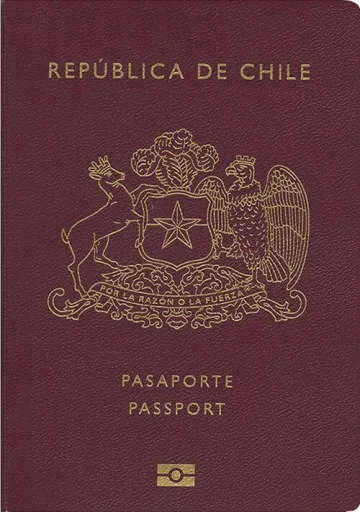
Chilean passport
Ranked #46: 106 countries visa-free, 35 with visa on arrival, 9 with an eTA and 26 with an eVisa.
Chilean passport photo
Exact size, head position and background for Chile's passport and visa photos — make one free with AI checks.
Calling Chile
Dial +56 before the local number. Internet domain .cl.
Climate footprint
78.7 million tonnes of CO₂ in 2024 — 3.98 t per person.
Entry requirements
Visa rules for every passport visiting Chile: visa-free stays, eVisas, visas on arrival and documents to bring.
News
Latest travel news about Chile
Bogota to Host February 2027 Golf Event on New Korn Ferry Calendar
The PGA Tour has released the 2027 Korn Ferry Tour schedule, with 25 events across seven countries. Five tournaments are set for Latin America, inclu…
US entry rules: check passport validity before flying, some travellers exempt
US Customs and Border Protection requires passports valid for six months beyond a visitor's planned departure date, with exemptions for certain count…
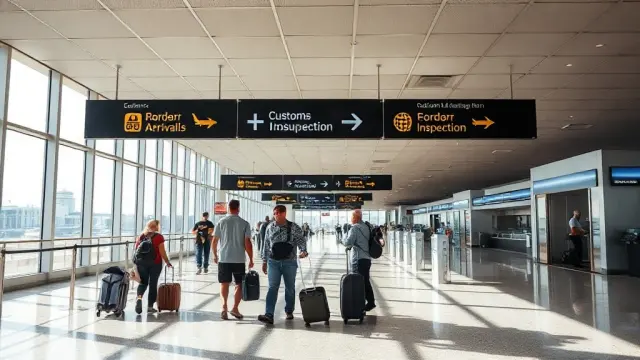
Andorra passport holders cleared for visa-free US business and tourist trips
The United States allows citizens of 42 countries, including Andorra, to visit for business or tourism without a visa under its Visa Waiver Programme…
Frequently asked questions about Chile
What do I need to travel to Chile?
How long must my passport be valid for Chile?
Where is Chile?
What is Chile known for?
What is the capital of Chile?
What language is spoken in Chile?
What currency does Chile use?
What is the calling code of Chile?
Which countries border Chile?
How strong is the Chilean passport?
What is the speed limit in Chile?
Is Chile safe to visit?
When is the best time to visit Chile?
What plug type does Chile use?
How many airports does Chile have?
Sources: CIA World Factbook (public domain); World Bank Open Data (CC BY 4.0); names, languages and currencies: mledoze/countries (ODbL); flag: flag-icons (MIT); coat of arms: Wikimedia Commons (file page); exchange rates: Daily reference rates from the open-source currency-api (CC0); airports: OurAirports.