
Western Asia · UN member

Saudi Arabia: Travel Guide & Requirements
Kingdom of Saudi Arabia · المملكة العربية السعودية
Saudi Arabia is a country in Western Asia with its capital in Riyadh. It has a population of 37.0 million (#43 in the world) and covers 2,149,690 km². The official language is Arabic. The currency is the Saudi riyal (SAR, ر.س).
Where is Saudi Arabia? Map of Saudi Arabia
Middle East, bordering the Persian Gulf and the Red Sea, north of Yemen.
- Region
- Western Asia
- Coordinates
- 25° N, 45° E
- Neighbours
- 7 — see list
- Coastline
- 2,640 km
- Saudi Arabia
- Neighbours
- Capital
- Largest cities
Map of Saudi Arabia showing Riyadh (capital) and the largest cities: Jeddah, Makkah, Madinah, Dammam, Buraydah, Ta’if, Tabuk and Ha'il.
Travel requirements
What you need to travel to Saudi Arabia
- Passport
Visit Saudi says your passport must be valid for a minimum of six months beyond the date of entry into Saudi Arabia, unless you are a US citizen: US citizens may enter as long as the passport is valid.
- Visa or eTA
Depends on your passport: of 198 passports, 6 need no visa, 2 need an eTA, 67 need an eVisa, 122 need a visa from an embassy. Check yours or see Saudi Arabia entry requirements for every passport.
- Return or onward ticket
Visit Saudi lists a return ticket among the documents required to obtain an Embassy/Consulate/Tasheer visa.
- Proof of funds
Visit Saudi lists financial solvency or a bank statement among the documents required to obtain an Embassy/Consulate/Tasheer visa.
- Travel insurance
Visit Saudi says medical insurance fees are included in the price of the tourist eVisa and the visa on arrival, but not included when you qualify only through a GCC residence permit or a US, UK or Schengen visa or resid…
- Vaccinations
Saudi Arabia's Ministry of Health requires everyone intending to perform Umrah in 1447H (2026), from all countries, to be vaccinated against meningococcal meningitis (including serogroup ACYW) at least 10 days before ar…
- Customs allowance
ZATCA says a declaration is compulsory for every traveller to or from the Kingdom carrying currency, monetary instruments, gold bullion or precious metals, precious stones or fine jewellery valued at SAR 40,000 or more;…
- Travel advice
High risk — US and UK advice.
Entry rules: TravelRequirements.info — Entry Requirements Dataset (CC BY 4.0), each rule cited to an official government source. Always confirm with the airline and the official source before you travel.
Before you go
10 things to know before you travel to Saudi Arabia
- Safety: Travel to Saudi Arabia carries a high risk: the US State Department rates Saudi Arabia Level 3 (“Reconsider Travel”), and the UK Foreign Office advises against all travel to parts of the country.
- Best time to go: February and November — when daytime highs in Riyadh are around 24–27°C.
- Money: the Saudi riyal (SAR) — 1 US dollar is about 3.7500 SAR.
- Plugs: type G, 230 V, 60 Hz — standard 220–240 V: devices from the US or Japan (110–120 V) need a converter unless they are dual voltage (100–240 V).
- Emergency numbers: Police 911, Ambulance 911, Fire 911.
- Language: Arabic is official.
- Driving: on the right — speed limits are 50 km/h in built-up areas and 120 km/h outside built-up areas.
- Time zone: UTC+3 in Riyadh.
- Capital: Riyadh. About 37.0 million people live in Saudi Arabia.
- Saudi Arabia is the 13th largest country in the world by area.
Key facts
Saudi Arabia at a glance
Languages spoken: Arabic (official)
Geography & history
About Saudi Arabia
Saudi Arabia is the birthplace of Islam and home to Islam's two holiest shrines in Mecca and Medina. The king's official title is the Custodian of the Two Holy Mosques. ABD AL-AZIZ bin Abd al-Rahman AL SAUD (Ibn Saud) founded the modern Saudi state in 1932 after a 30-year campaign to unify most of the Arabian Peninsula. One of his male descendants rules the country today, as required by the country's 1992 Basic Law. After Iraq invaded Kuwait in 1990, Saudi Arabia took in the Kuwaiti royal family and 400,000 refugees, while allowing Western and Arab troops to deploy on its soil and liberate Kuwait the following year. Major terrorist attacks in 2003 spurred a strong ongoing campaign against d…
Read the full history
Saudi Arabia is the birthplace of Islam and home to Islam's two holiest shrines in Mecca and Medina. The king's official title is the Custodian of the Two Holy Mosques. ABD AL-AZIZ bin Abd al-Rahman AL SAUD (Ibn Saud) founded the modern Saudi state in 1932 after a 30-year campaign to unify most of the Arabian Peninsula. One of his male descendants rules the country today, as required by the country's 1992 Basic Law. After Iraq invaded Kuwait in 1990, Saudi Arabia took in the Kuwaiti royal family and 400,000 refugees, while allowing Western and Arab troops to deploy on its soil and liberate Kuwait the following year. Major terrorist attacks in 2003 spurred a strong ongoing campaign against domestic terrorism and extremism. US troops returned to the Kingdom in 2019 after attacks on Saudi oil infrastructure. From 2005 to 2015, King ABDALLAH bin Abd al-Aziz Al Saud incrementally modernized the Kingdom through a series of social and economic initiatives that included expanding employment and social opportunities for women, attracting foreign investment, increasing the private sector's role in the economy, and discouraging the hiring of foreign workers. Saudi Arabia saw some protests during the 2011 Arab Spring but not the level of bloodshed seen in protests elsewhere in the region; Riyadh took a cautious but firm approach, arresting and quickly releasing some protesters and using its state-sponsored clerics to counter political and Islamist activism. The government held its first-ever elections in 2005 and 2011, when Saudis voted for municipal councilors. King ABDALLAH's reforms accelerated under King SALMAN bin Abd al-Aziz, who ascended to the throne in 2015 and lifted the Kingdom's ban on women driving, implemented education reforms, funded green initiatives, and allowed cinemas to operate for the first time in decades. In 2015, women were allowed to vote and stand as candidates for the first time in municipal elections, with 19 women winning seats. King SALMAN initially named his nephew, MUHAMMAD BIN NAYIF bin Abd al-Aziz Al Saud, as the Crown Prince, but a palace coup in 2017 resulted in King SALMAN's son, Deputy Crown Prince MUHAMMAD BIN SALMAN bin Abd al-Aziz Al Saud, taking over as Crown Prince. King SALMAN appointed MUHAMMAD BIN SALMAN as prime minister in 2022. In 2015, Saudi Arabia led a coalition of 10 countries in a military campaign to restore Yemen's legitimate government, which had been ousted by Houthi forces. The war in Yemen has drawn international criticism for civilian casualties and its effect on the country’s dire humanitarian situation. The same year, MUHAMMAD BIN SALMAN announced that Saudi Arabia would lead a multi-nation Islamic Coalition to fight terrorism, and in 2017, Saudi Arabia inaugurated the Global Center for Combatting Extremist Ideology (also known as "Etidal"). The country remains a leading producer of oil and natural gas and holds about 17% of the world's proven oil reserves as of 2020. The government continues to pursue economic reform and diversification -- particularly since Saudi Arabia's accession to the WTO in 2005 -- and promotes foreign investment in the Kingdom. In 2016, the Saudi Government announced broad socio-economic reforms known as Vision 2030. Low global oil prices in 2015 and 2016 significantly lowered Saudi Arabia’s governmental revenue, prompting cuts to subsidies on water, electricity, and gasoline; reduced government-employee compensation; and new land taxes. In coordination with OPEC and some key non-OPEC countries, Saudi Arabia agreed to cut oil output in 2017 to regulate supply and help boost global prices. In 2020, this agreement collapsed, and Saudi Arabia launched a price war by flooding the market with low-priced oil before returning to the negotiating table to agree to a major output cut that helped buoy prices.
Location
Middle East, bordering the Persian Gulf and the Red Sea, north of Yemen
Climate
harsh, dry desert with great temperature extremes
Terrain
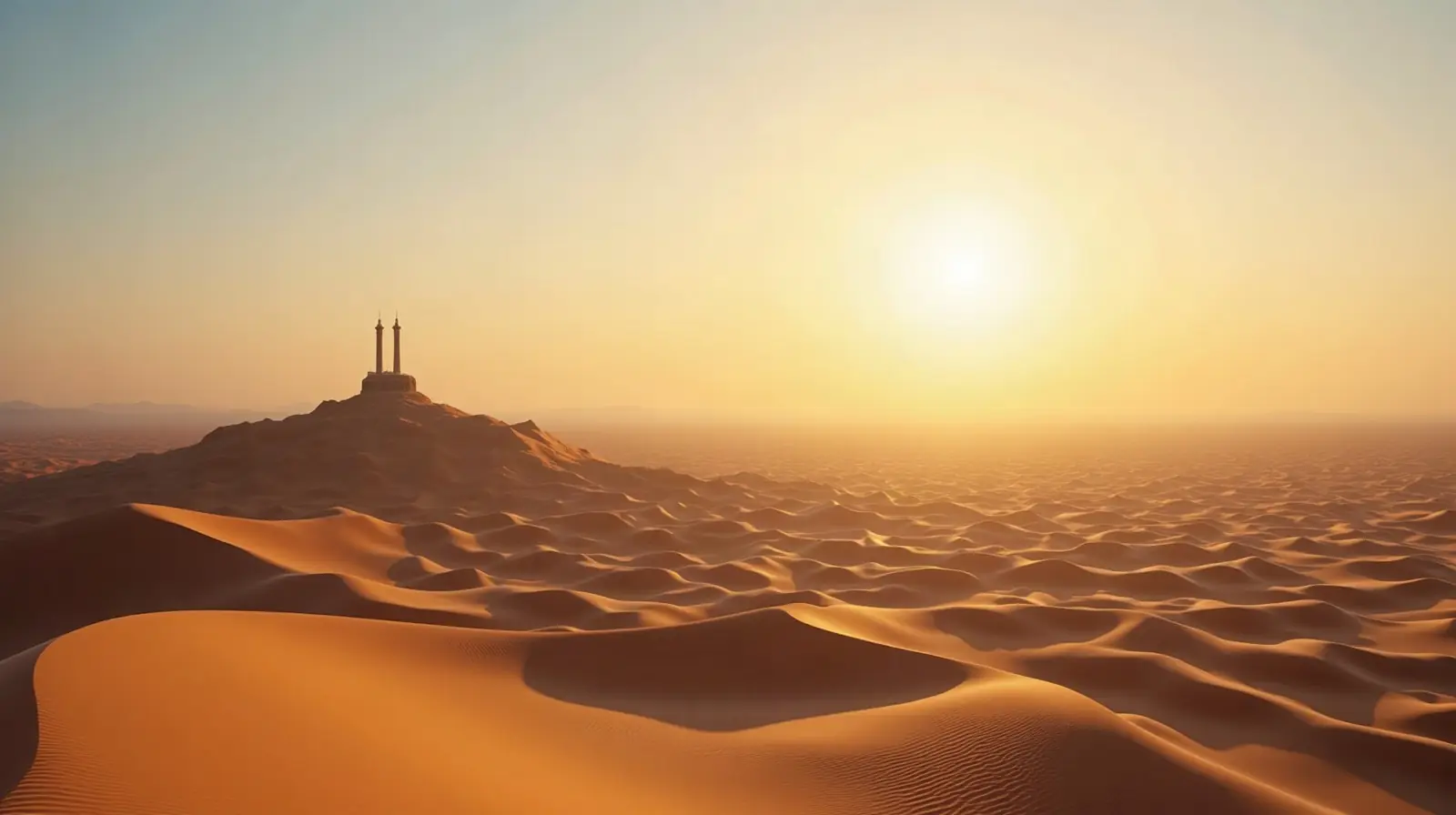
mostly sandy desert
Highest point
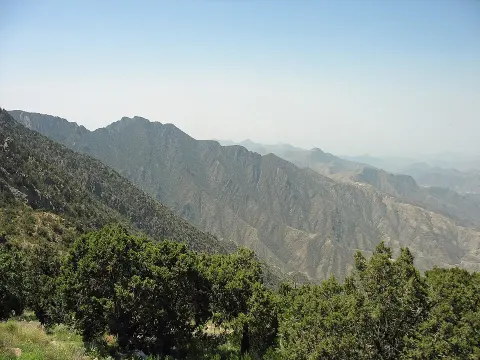
As Sarawat range, 3,000 m
Natural resources
petroleum, natural gas, iron ore, gold, copper
Natural hazards
frequent sand and dust storms volcanism: little activity in the past few centuries, despite many volcanic formations; volcanoes include Harrat Rahat, Harrat Khaybar, Harrat Lunayyir, and Jabal Yar
National symbols
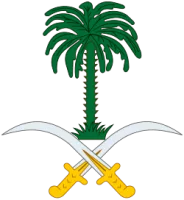
palm tree over two crossed swords
Driving
Speed limits & road rules in Saudi Arabia
The default speed limits in Saudi Arabia are 50 km/h in built-up areas and 120 km/h outside built-up areas. Posted signs always take priority over these defaults.
- 5050 km/hBuilt-up areasTowns and cities
- 120120 km/hOutside built-up areasCountry roads
- International Driving PermitRecognised: 1968 ViennaCarry the IDP together with your national licence
- Driving sideDrive on the rightOvertake on the left
- Seat beltsRequired by law
- Child seatsRequired by law
- Motorcycle helmetsRequired for riders
- Road deaths (2021)18.5 per 100,000 peopleHigher than most countries (median 12.4)
Speed limits: OpenStreetMap wiki — Default speed limits (CC BY-SA 2.0). Road-safety laws: WHO Global Health Observatory. Compare speed limits and alcohol limits by country. Defaults for cars; local signs, weather and vehicle type can lower them.
Safety
Is Saudi Arabia safe to visit?
Travel to Saudi Arabia carries a high risk: the US State Department rates Saudi Arabia Level 3 (“Reconsider Travel”), and the UK Foreign Office advises against all travel to parts of the country.
 US State Department
 UK Foreign Office (FCDO)
Latest update: Updated information about King Khalid Airport which continues to be targeted and ongoing threat from terrorism in Saudi Arabia (‘Warnings and insurance’ and ‘Safety and security’ pages).
Updated 21 Oct 2026 · Full travel advice
Sources: US Department of State travel advisories (public domain) and UK FCDO foreign travel advice (contains public sector information licensed under the Open Government Licence v3.0). Checked daily. Advice can change quickly — always read the official page before you travel.
Weather
Best time to visit Saudi Arabia
The best time to visit Saudi Arabia is February and November, when daytime highs in Riyadh are around 24–27°C. December to January and March are also a good time to go. July is the warmest month (44°C by day), January the coldest (7°C at night).
- Jan21°C7°C
- Feb24°C9°C
- Mar29°C13°C
- Apr34°C19°C
- May40°C24°C
- Jun43°C26°C
- Jul44°C28°C
- Aug44°C28°C
- Sep40°C25°C
- Oct35°C20°C
- Nov27°C14°C
- Dec22°C8°C
Best time Good Less ideal
Before you go
Plugs, voltage & emergency numbers in Saudi Arabia
Plugs & sockets
230 V, 60 Hz · Standard 220–240 V: devices from the US or Japan (110–120 V) need a converter unless they are dual voltage (100–240 V).
Emergency numbers
Save the local numbers before you travel — 112 or 911 may not connect here. All countries →
Sources: Wikipedia — Mains electricity by country and List of emergency telephone numbers (CC BY-SA 4.0).
National parks
2 national parks in Saudi Arabia
- 46,500 km² protected
- oldest from 1981
Largest: Wadi Turabah Nature Reserve · Asir National Park
Currency · 26 October 2026
Saudi riyal exchange rates today
Saudi Arabia uses the Saudi riyal (SAR, ر.س). One US dollar buys 3.7500 SAR; over the last 30 days the SAR has gained 0.0% against the dollar.
What other currencies cost in SAR
Currency converter
Daily reference rates from the open-source currency-api (CC0), 26 Oct 2026. Banks and exchange offices add a margin.
World rankings
Where Saudi Arabia ranks
How Saudi Arabia compares with the rest of the world — open any card for the full ranking.
Airports
Airports in Saudi Arabia
180 airports and airfields — 17 large, 23 medium and 49 small, plus 91 heliports. 30 have scheduled passenger flights.
Borders
Neighbouring countries
Saudi Arabia borders 7 countries along 4,272 km of land borders. Coastline: 2,640 km.


Military
Saudi or Saudi Arabian armed forces
Saudi Arabia ranks #22 of 145 in the Global Firepower military strength ranking, with a defence budget of $83.2 billion (2025).
People
Population & society
Largest cities: Riyadh (7.7 million), Jeddah (4.9 million), Mecca (2.2 million), Medina (1.6 million), Ad Dammam (1.3 million)
Economy
Economy
Main industries
crude oil production, petroleum refining, basic petrochemicals, ammonia, industrial gases, sodium hydroxide (caustic soda), cement, fertilizer, plastics, metals, commercial ship repair, commercial aircraft repair, const…
Export partners
China 21%, India 12%, Japan 12%, USA 6%, UAE 4% (2023)
Top exports
crude petroleum, refined petroleum, plastics, alcohols, ships (2023)
Travel tools
Handy before every trip to Saudi Arabia
Next public holiday
Founding Day Holiday — Monday, 22 February 2027. Then Eid al-Fitr Holiday (9 Mar).

Saudi or Saudi Arabian passport
Ranked #101: 55 countries visa-free, 31 with visa on arrival, 5 with an eTA and 29 with an eVisa.
Saudi or Saudi Arabian passport photo
Exact size, head position and background for Saudi Arabia's passport and visa photos — make one free with AI checks.
Calling Saudi Arabia
Dial +966 before the local number. Internet domain .sa.
Climate footprint
692.1 million tonnes of CO₂ in 2024 — 20.38 t per person.
Entry requirements
Visa rules for every passport visiting Saudi Arabia: visa-free stays, eVisas, visas on arrival and documents to bring.
News
Latest travel news about Saudi Arabia
UAE trips: US advisory adds terror, conflict risk; check plans before you fly
The United States updated its United Arab Emirates travel advisory on 24 October 2026 to add terrorism and armed conflict risks. The alert stays at L…
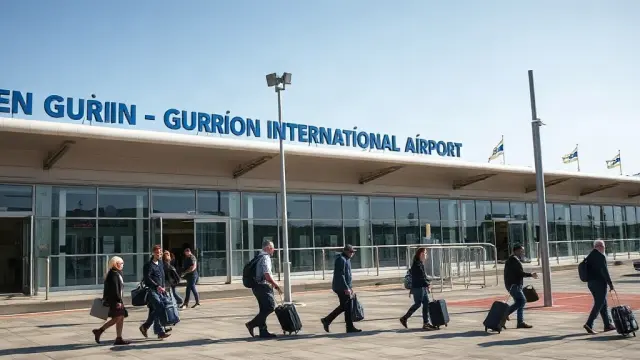
Israel trips: US adds Houthi risk, keeps Level 3 rating and border no-go areas
The US State Department updated its Israel travel advisory on 23 October 2026, warning of a growing threat from Iran-backed Houthis. Israel stays at …
Kuwaiti Passport Holders May Join Gulf States With Visa-Free Russia Entry
Russia is negotiating visa-free entry with Kuwait and Bahrain, Deputy Foreign Minister Georgy Borisenko said. Visa-free travel for ordinary passport …
Frequently asked questions about Saudi Arabia
What do I need to travel to Saudi Arabia?
How long must my passport be valid for Saudi Arabia?
Where is Saudi Arabia?
What is Saudi Arabia known for?
What is the capital of Saudi Arabia?
What language is spoken in Saudi Arabia?
What currency does Saudi Arabia use?
What is the calling code of Saudi Arabia?
Which countries border Saudi Arabia?
How strong is the Saudi or Saudi Arabian passport?
What is the speed limit in Saudi Arabia?
Is Saudi Arabia safe to visit?
When is the best time to visit Saudi Arabia?
What plug type does Saudi Arabia use?
How many airports does Saudi Arabia have?
Sources: CIA World Factbook (public domain); World Bank Open Data (CC BY 4.0); names, languages and currencies: mledoze/countries (ODbL); flag: flag-icons (MIT); coat of arms: Wikimedia Commons (file page); exchange rates: Daily reference rates from the open-source currency-api (CC0); airports: OurAirports.