
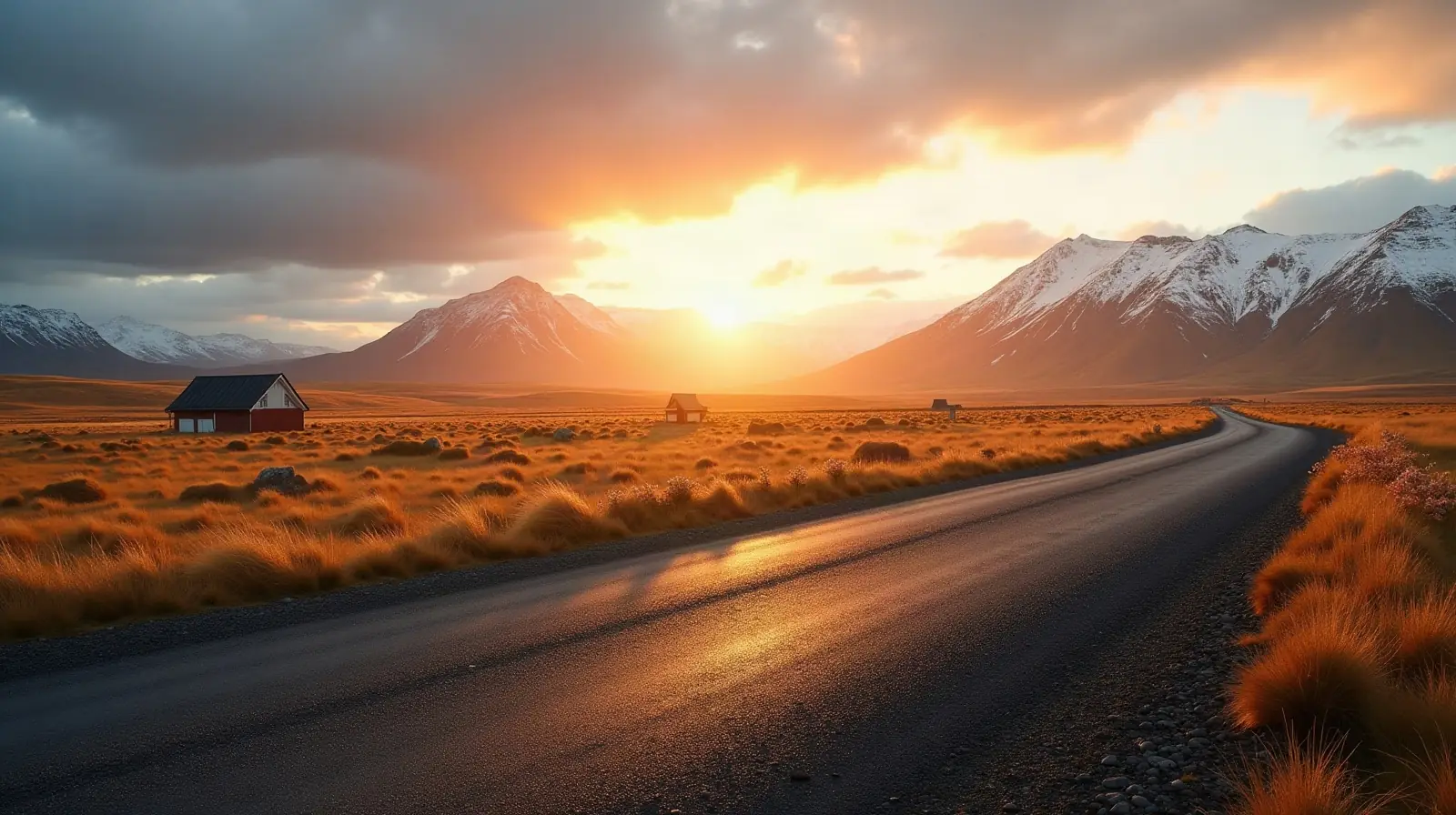
Northern Europe · UN member

Iceland: Travel Guide & Requirements
· Ísland
Iceland is a country in Northern Europe with its capital in Reykjavik. It has a population of 392,404 (#176 in the world) and covers 103,000 km². The official language is Icelandic. The currency is the Icelandic króna (ISK, kr).
Where is Iceland? Map of Iceland
Northern Europe, island between the Greenland Sea and the North Atlantic Ocean, northwest of the United Kingdom.
- Region
- Northern Europe
- Coordinates
- 65° N, 18° W
- Neighbours
- none (no land borders)
- Coastline
- 4,970 km
- Iceland
- Capital
- Largest cities
Map of Iceland showing Reykjavik (capital) and the largest cities: Akureyri.
Travel requirements
What you need to travel to Iceland
- Passport
Ísland.is says non-EEA/EFTA citizens' travel documents must be valid at least 3 months beyond the intended departure date and have been issued within the last 10 years.
- Visa or eTA
Depends on your passport: of 198 passports, 93 need no visa, 105 need a visa from an embassy. Check yours or see Iceland entry requirements for every passport.
- Return or onward ticket
No official requirement. The Schengen Borders Code lists a return or round-trip ticket among the supporting documents that may verify the entry conditions, and the UK government tells British visitors they may need to show a return or onward ti…
- Proof of funds
Ísland.is says non-EEA/EFTA citizens must have enough money to support themselves, both during the planned stay and to return to their country of origin, or be in a position to obtain such money legally.
- Travel insurance
Schengen visa applicants need travel medical insurance valid throughout the territory of the Member States for the entire intended stay, with minimum coverage of EUR 30,000 (Visa Code, Article 15).
- Arrival card
If you arrive at a Schengen border crossing point for the first time since the EES started, passport control officers will take a photo of your face and/or scan your fingerprints, the EU says.
- Customs allowance
Iceland Revenue and Customs says that if you carry cash of more than €10,000, or the equivalent in other currencies, travellers' cheques or bearer negotiable instruments, when departing or arriving in Iceland, you must …
- Travel advice
Safe to visit — US and UK advice.
Entry rules: TravelRequirements.info — Entry Requirements Dataset (CC BY 4.0), each rule cited to an official government source. Always confirm with the airline and the official source before you travel.
Before you go
10 things to know before you travel to Iceland
- Safety: Yes — Iceland is generally safe to visit: the US State Department rates Iceland Level 1 (“Exercise Normal Precautions”), and the UK Foreign Office has no warnings against travel there.
- Best time to go: May to August — when daytime highs in Reykjavik are around 8–14°C.
- Money: the Icelandic króna (ISK) — 1 US dollar is about 121.5514 ISK.
- Plugs: type C and F, 230 V, 50 Hz — standard 220–240 V: devices from the US or Japan (110–120 V) need a converter unless they are dual voltage (100–240 V).
- Emergency numbers: Police 112, Ambulance 112, Fire 112.
- Language: Icelandic is official; English is also spoken.
- Driving: on the right — speed limits are 50 km/h in built-up areas and 80 km/h outside built-up areas.
- Time zone: UTC0 in Reykjavik.
- Capital: Reykjavik. About 392,404 people live in Iceland.
- Outdoors: 3 national parks and 10 ski areas.
Key facts
Iceland at a glance
Languages spoken: Icelandic, English, Polish, Nordic languages, German
Geography & history
About Iceland
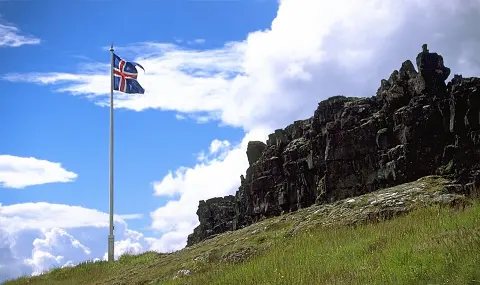
Settled by Norwegian and Celtic (Scottish and Irish) immigrants during the late 9th and 10th centuries A.D., Iceland boasts the world's oldest functioning legislative assembly, the Althingi, which was established in 930. Independent for over 300 years, Iceland was subsequently ruled by Norway and Denmark. Fallout from the Askja volcano of 1875 devastated the Icelandic economy and caused widespread famine. Over the next quarter-century, 20% of the island's population emigrated, mostly to Canada and the US. Denmark granted limited home rule in 1874 and complete independence in 1944. The second half of the 20th century saw substantial economic growth driven primarily by the fishing industry. T…
Read the full history
Settled by Norwegian and Celtic (Scottish and Irish) immigrants during the late 9th and 10th centuries A.D., Iceland boasts the world's oldest functioning legislative assembly, the Althingi, which was established in 930. Independent for over 300 years, Iceland was subsequently ruled by Norway and Denmark. Fallout from the Askja volcano of 1875 devastated the Icelandic economy and caused widespread famine. Over the next quarter-century, 20% of the island's population emigrated, mostly to Canada and the US. Denmark granted limited home rule in 1874 and complete independence in 1944. The second half of the 20th century saw substantial economic growth driven primarily by the fishing industry. The economy diversified greatly after the country joined the European Economic Area in 1994, but the global financial crisis hit Iceland especially hard in the years after 2008. The economy is now on an upward trajectory, primarily thanks to a tourism and construction boom. Literacy, longevity, and social cohesion are first-rate by world standards.
Location
Northern Europe, island between the Greenland Sea and the North Atlantic Ocean, northwest of the United Kingdom
Climate
temperate; moderated by North Atlantic Current; mild, windy winters; damp, cool summers
Terrain
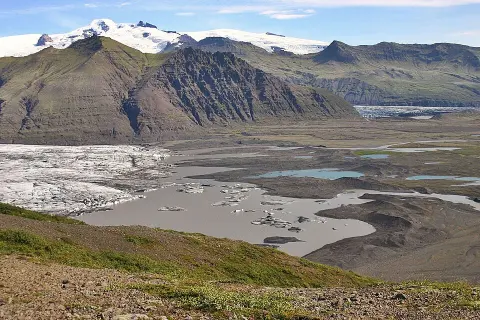
mostly plateau interspersed with mountain peaks, icefields; coast deeply indented by bays and fiords
Highest point
Hvannadalshnukur (at Vatnajokull Glacier) 2,110 m
Natural resources
fish, hydropower, geothermal power, diatomite
Natural hazards
earthquakes and volcanic activity volcanism: Iceland is situated on top of a hotspot and experiences severe volcanic activity; Eyjafjallajokull (1,666 m) erupted in 2010, sending ash high into the atmosphere and seriously disrupting European air traffic; scie…
National symbols
gyrfalcon
Driving
Speed limits & road rules in Iceland
The default speed limits in Iceland are 50 km/h in built-up areas and 80 km/h outside built-up areas. The legal alcohol limit for drivers is 0.5‰. Posted signs always take priority over these defaults.
- 1010 km/hResidential zonesLiving streets & residential areas
- 5050 km/hBuilt-up areasTowns and cities
- 8080 km/hOutside built-up areasCountry roads
- International Driving PermitRecognised: 1949 GenevaCarry the IDP together with your national licence
- Driving sideDrive on the rightOvertake on the left
- Alcohol limit0.5‰ blood alcohol (0.05% BAC)
- Seat beltsRequired by law
- Child seatsRequired by law
- Motorcycle helmetsRequired for riders
- Road deaths (2021)2.4 per 100,000 peopleSafer than most countries (median 12.4)
Speed limits: OpenStreetMap wiki — Default speed limits (CC BY-SA 2.0). Road-safety laws: WHO Global Health Observatory. Compare speed limits and alcohol limits by country. Defaults for cars; local signs, weather and vehicle type can lower them.
Safety
Is Iceland safe to visit?
Yes — Iceland is generally safe to visit: the US State Department rates Iceland Level 1 (“Exercise Normal Precautions”), and the UK Foreign Office has no warnings against travel there.
 US State Department
 UK Foreign Office (FCDO)
Latest update: Updated information on European Entry-Exit System (EES) (‘Entry requirements’ page).
Updated 11 Aug 2026 · Full travel advice
Sources: US Department of State travel advisories (public domain) and UK FCDO foreign travel advice (contains public sector information licensed under the Open Government Licence v3.0). Checked daily. Advice can change quickly — always read the official page before you travel.
Weather
Best time to visit Iceland
The best time to visit Iceland is May to August, when daytime highs in Reykjavik are around 8–14°C. July is the warmest month (14°C by day), February the coldest (-2°C at night), and September the wettest with about 181 mm of rain.
- Jan2°C-2°C
- Feb2°C-2°C
- Mar3°C-1°C
- Apr5°C1°C
- May8°C3°C
- Jun12°C7°C
- Jul14°C9°C
- Aug13°C8°C
- Sep10°C6°C
- Oct6°C3°C
- Nov3°C0°C
- Dec2°C-2°C
Best time Good Less ideal
Before you go
Plugs, voltage & emergency numbers in Iceland
Plugs & sockets
230 V, 50 Hz · Standard 220–240 V: devices from the US or Japan (110–120 V) need a converter unless they are dual voltage (100–240 V).
Emergency numbers
112 works from any mobile phone, even without a SIM card in most networks. All countries →
Sources: Wikipedia — Mains electricity by country and List of emergency telephone numbers (CC BY-SA 4.0).
Ski resorts
10 ski resorts in Iceland
- 67 km of slopes
- 43 lifts
- up to 942 m
Biggest: Bláfjöll · Dalirnir tveir · Hlíðarfjall
National parks
3 national parks in Iceland
- 395 km² protected
- oldest from 2001
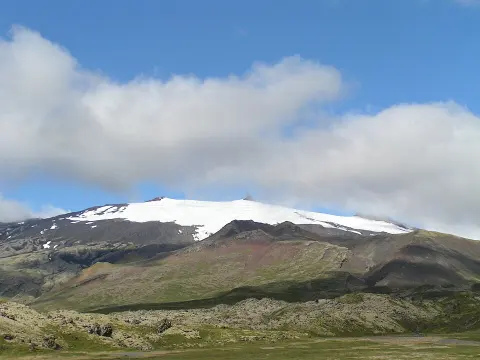
Largest: Thingvellir National Park · Snæfellsjökull National Park · Vatnajökull National Park
Currency · 26 October 2026
Icelandic króna exchange rates today
Iceland uses the Icelandic króna (ISK, kr). One US dollar buys 121.5514 ISK; over the last 30 days the ISK has lost 1.1% against the dollar.
What other currencies cost in ISK
Currency converter
Daily reference rates from the open-source currency-api (CC0), 26 Oct 2026. Banks and exchange offices add a margin.
World rankings
Where Iceland ranks
How Iceland compares with the rest of the world — open any card for the full ranking.
Airports
Airports in Iceland
78 airports and airfields — 2 large, 11 medium and 64 small, plus 1 heliports. 9 have scheduled passenger flights.
Borders
No land borders
Iceland has no land borders with other countries. Coastline: 4,970 km.
Military
Icelandic armed forces
Iceland ranks #137 of 145 in the Global Firepower military strength ranking, with a defence budget of $0 (2025).
People
Population & society
Religion
Largest cities: Reykjavik (216,000)
Economy
Economy
Main industries
tourism, fish processing; aluminum smelting; geothermal power, hydropower; medical/pharmaceutical products
Export partners
Netherlands 27%, Germany 11%, USA 10%, UK 8%, Norway 6% (2023)
Top exports
aluminum, fish, orthopedic appliances, animal meal, iron alloys (2023)
Travel tools
Handy before every trip to Iceland
Next public holiday
Christmas Eve — Thursday, 24 December 2026. Then Christmas Day (25 Dec).

Icelandic passport
Ranked #39: 114 countries visa-free, 37 with visa on arrival, 9 with an eTA and 21 with an eVisa.
Icelandic passport photo
Exact size, head position and background for Iceland's passport and visa photos — make one free with AI checks.
Calling Iceland
Dial +354 before the local number. Internet domain .is.
Climate footprint
3.8 million tonnes of CO₂ in 2024 — 9.67 t per person.
Entry requirements
Visa rules for every passport visiting Iceland: visa-free stays, eVisas, visas on arrival and documents to bring.
News
Latest travel news about Iceland
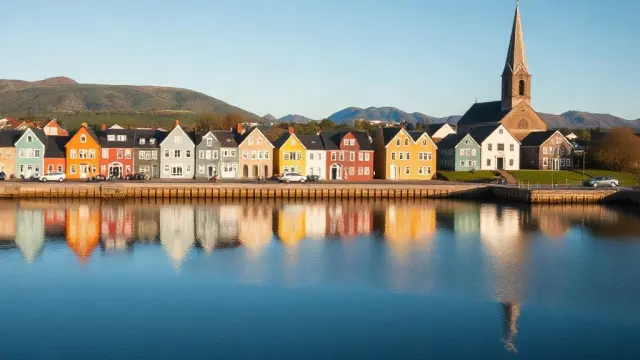
US Relocators Need Iceland Residence Permit Before Arrival, 2026 Routes Explained
US citizens need a residence permit before moving to Iceland, tied to work, study, family or remote work. This guide sets out the routes, fees, docum…
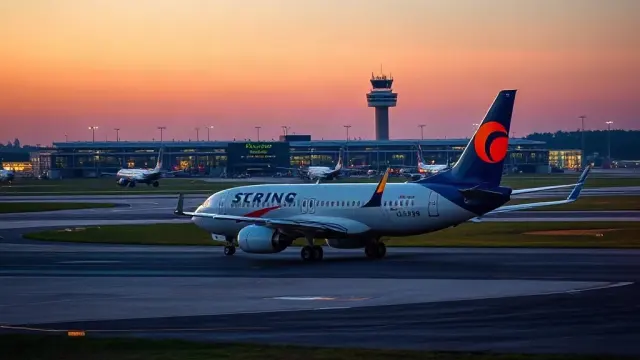
Midwest travellers gain direct Iceland link as St. Louis–Reykjavik flights open
Icelandair will fly non-stop between St. Louis Lambert International Airport and Iceland up to four times a week from 14 May to 24 October, using a B…
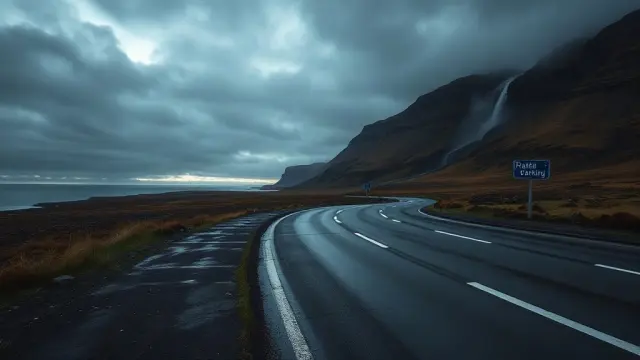
Iceland Rules on Roadside Stops, Camping and Pools That Carry Fines
An Iceland travel guide updated 19 October 2026 lists the tourist habits that most annoy locals, including illegal roadside stops, camping outside of…
Frequently asked questions about Iceland
What do I need to travel to Iceland?
How long must my passport be valid for Iceland?
Where is Iceland?
What is Iceland known for?
What is the capital of Iceland?
What language is spoken in Iceland?
What currency does Iceland use?
What is the calling code of Iceland?
Does Iceland have land borders?
How strong is the Icelandic passport?
What is the speed limit in Iceland?
Is Iceland safe to visit?
When is the best time to visit Iceland?
What plug type does Iceland use?
How many airports does Iceland have?
Sources: CIA World Factbook (public domain); World Bank Open Data (CC BY 4.0); names, languages and currencies: mledoze/countries (ODbL); flag: flag-icons (MIT); coat of arms: Wikimedia Commons (file page); exchange rates: Daily reference rates from the open-source currency-api (CC0); airports: OurAirports.