
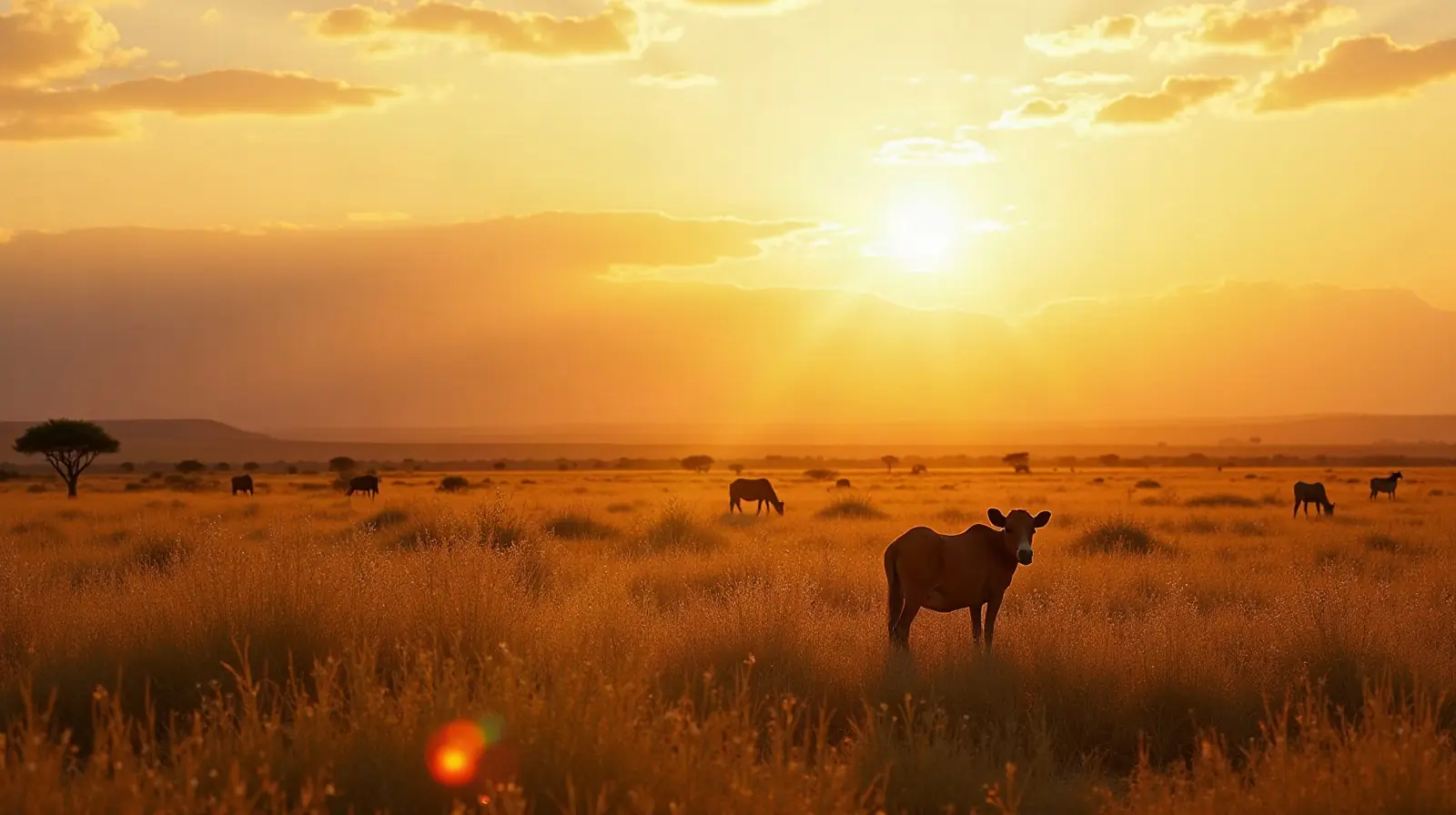
Eastern Africa · UN member

Kenya: Travel Guide & Requirements
Republic of Kenya
Kenya is a country in Eastern Africa with its capital in Nairobi. It has a population of 57.5 million (#26 in the world) and covers 580,367 km². The official languages are English and Swahili. The currency is the Kenyan shilling (KES, Sh).
Where is Kenya? Map of Kenya
Eastern Africa, bordering the Indian Ocean, between Somalia and Tanzania.
- Region
- Eastern Africa
- Coordinates
- 1° N, 38° E
- Neighbours
- 5 — see list
- Coastline
- 536 km
- Kenya
- Neighbours
- Capital
- Largest cities
Map of Kenya showing Nairobi (capital) and the largest cities: Kakamega, Mombasa, Nakuru, Eldoret, Naivasha, Karuri, Garissa and Kitale.
Travel requirements
What you need to travel to Kenya
- Passport
The eTA portal lists a valid passport (minimum 6 months validity with at least one blank page) among the documents to have before starting an application.
- Visa or eTA
Depends on your passport: of 198 passports, 77 need no visa, 121 need an eTA. Check yours or see Kenya entry requirements for every passport.
- Return or onward ticket
No official requirement. The eTA portal lists a travel itinerary (arrival and departure) and an accommodation booking confirmation among the documents an application typically includes.
- Proof of funds
No official requirement.
- Travel insurance
A Ministry of Health notice shown in the eTA application says that, in accordance with Gazette Notice No. 11492 (Vol.
- Vaccinations
WHO's country list says proof of vaccination against yellow fever is required for travellers aged 1 year or over arriving from countries with risk of yellow fever transmission.
- Customs allowance
The Kenya Revenue Authority lists currency of USD 10,000 and above, or its equivalent, among what you should declare on arrival in Kenya; Canada's travel advice says amounts exceeding the equivalent of USD 10,000 must b…
- Travel advice
High risk — US and UK advice.
Entry rules: TravelRequirements.info — Entry Requirements Dataset (CC BY 4.0), each rule cited to an official government source. Always confirm with the airline and the official source before you travel.
Before you go
10 things to know before you travel to Kenya
- Safety: Travel to Kenya carries a high risk: the US State Department rates Kenya Level 3 (“Reconsider Travel”), and the UK Foreign Office advises against all travel to parts of the country.
- Best time to go: June to September — when daytime highs in Nairobi are around 25–28°C.
- Money: the Kenyan shilling (KES) — 1 US dollar is about 129.8139 KES.
- Plugs: type G, 240 V, 50 Hz — standard 220–240 V: devices from the US or Japan (110–120 V) need a converter unless they are dual voltage (100–240 V).
- Emergency numbers: Police 112 / 999 / 911, Ambulance 112 / 999 / 911, Fire 112 / 999 / 911.
- Language: English and Swahili are official.
- Driving: on the left — speed limits are 50 km/h in built-up areas, 100 km/h outside built-up areas and 110 km/h on expressways.
- Time zone: UTC+3 in Nairobi.
- Capital: Nairobi. About 57.5 million people live in Kenya.
- Outdoors: 29 national parks.
Key facts
Kenya at a glance
Languages spoken: English (official), Kiswahili (official), numerous indigenous languages
Geography & history
About Kenya
Trade centers such as Mombasa have existed along the Kenyan and Tanzanian coastlines, known as the Land of Zanj, since at least the 2nd century. These centers traded with the outside world, including China, India, Indonesia, the Middle East, North Africa, and Persia. By around the 9th century, the mix of Africans, Arabs, and Persians who lived and traded there became known as Swahili ("people of the coast") with a distinct language (KiSwahili) and culture. The Portuguese arrived in the 1490s and, using Mombasa as a base, sought to monopolize trade in the Indian Ocean. The Portuguese were pushed out in the late 1600s by the combined forces of Oman and Pate, an island off the coast. In 1890, …
Read the full history
Trade centers such as Mombasa have existed along the Kenyan and Tanzanian coastlines, known as the Land of Zanj, since at least the 2nd century. These centers traded with the outside world, including China, India, Indonesia, the Middle East, North Africa, and Persia. By around the 9th century, the mix of Africans, Arabs, and Persians who lived and traded there became known as Swahili ("people of the coast") with a distinct language (KiSwahili) and culture. The Portuguese arrived in the 1490s and, using Mombasa as a base, sought to monopolize trade in the Indian Ocean. The Portuguese were pushed out in the late 1600s by the combined forces of Oman and Pate, an island off the coast. In 1890, Germany and the UK divided up the region, with the UK taking the north and the Germans the south, including present-day Tanzania, Burundi, and Rwanda. In 1895, the British established the East Africa Protectorate, which in 1920 was converted into a colony, and named Kenya after its highest mountain. Numerous political disputes between the colony and the UK led to the violent Mau Mau Uprising, which began in 1952, and the eventual declaration of independence in 1963. Jomo KENYATTA, the founding president and an icon of the liberation struggle, led Kenya from independence in 1963 until his death in 1978, when Vice President Daniel Arap MOI took power in a constitutional succession. The country was a de facto one-party state from 1969 until 1982, after which time the ruling Kenya African National Union (KANU) changed the constitution to make itself the sole legal political party. MOI gave in to internal and external pressure for political liberalization in 1991, but the ethnically fractured opposition failed to dislodge KANU from power in elections in 1992 and 1997, which were marred by violence and fraud. MOI stepped down in 2002 after fair and peaceful elections. Mwai KIBAKI, running as the candidate of the multiethnic, united opposition group, the National Rainbow Coalition (NARC), defeated KANU candidate Uhuru KENYATTA, the son of the founding president, and assumed the presidency following a campaign centered on an anticorruption platform. Opposition candidate Raila ODINGA challenged KIBAKI's reelection in 2007 on the grounds of widespread vote rigging, leading to two months of ethnic violence that caused more than 1,100 deaths and displaced hundreds of thousands. African Union-sponsored mediation resulted in a power-sharing accord that brought ODINGA into the government as prime minister and outlined a reform agenda. In 2010, Kenyans overwhelmingly voted to adopt a new constitution that eliminated the prime minister, introduced additional checks and balances to executive power, and devolved power and resources to 47 newly created counties. Uhuru KENYATTA won the first presidential election under the new constitution in 2013. He won a second and final term in office in 2017 after a contentious repeat election. In 2022, William RUTO won a close presidential election; he assumed the office the following month after the Kenyan Supreme Court upheld the victory.
Location
Eastern Africa, bordering the Indian Ocean, between Somalia and Tanzania
Climate
varies from tropical along coast to arid in interior
Terrain
low plains rise to central highlands bisected by Great Rift Valley; fertile plateau in west
Highest point
Mount Kenya 5,199 m
Natural resources
limestone, soda ash, salt, gemstones, fluorspar, zinc, diatomite, gypsum, wildlife, hydropower
Natural hazards
recurring drought; flooding during rainy seasons volcanism: limited volcanic activity; the Barrier (1,032 m) last erupted in 1921; South Island is the only other historically active volcano
National symbols
lion
Driving
Speed limits & road rules in Kenya
The default speed limits in Kenya are 50 km/h in built-up areas, 100 km/h outside built-up areas and 110 km/h on expressways. The legal alcohol limit for drivers is 0.8‰. Posted signs always take priority over these defaults.
- 5050 km/hBuilt-up areasTowns and citiesWith a trailer: 65 km/h
- 100100 km/hOutside built-up areasCountry roadsWith a trailer: 65 km/h
- 110110 km/hExpresswaysDual carriageways & expresswaysWith a trailer: 65 km/h
- International Driving PermitRecognised: 1968 ViennaCarry the IDP together with your national licence
- Driving sideDrive on the leftOvertake on the right
- Alcohol limit0.8‰ blood alcohol (0.08% BAC)
- Seat beltsRequired by law
- Child seatsNo national child-restraint law
- Motorcycle helmetsRequired for riders
- Road deaths (2021)28.2 per 100,000 peopleHigher than most countries (median 12.4)
Speed limits: OpenStreetMap wiki — Default speed limits (CC BY-SA 2.0). Road-safety laws: WHO Global Health Observatory. Compare speed limits and alcohol limits by country. Defaults for cars; local signs, weather and vehicle type can lower them.
Safety
Is Kenya safe to visit?
Travel to Kenya carries a high risk: the US State Department rates Kenya Level 3 (“Reconsider Travel”), and the UK Foreign Office advises against all travel to parts of the country.
 US State Department
 UK Foreign Office (FCDO)
Latest update: New information about Ebola screening (‘Entry requirements’ page).
Updated 16 Oct 2026 · Full travel advice
Sources: US Department of State travel advisories (public domain) and UK FCDO foreign travel advice (contains public sector information licensed under the Open Government Licence v3.0). Checked daily. Advice can change quickly — always read the official page before you travel.
Weather
Best time to visit Kenya
The best time to visit Kenya is June to September, when daytime highs in Nairobi are around 25–28°C. October to May are also a good time to go. February is the warmest month (29°C by day), July the coldest (12°C at night), and April the wettest with about 114 mm of rain.
- Jan27°C14°C
- Feb29°C14°C
- Mar29°C15°C
- Apr27°C15°C
- May25°C13°C
- Jun25°C12°C
- Jul26°C12°C
- Aug26°C12°C
- Sep28°C13°C
- Oct28°C14°C
- Nov26°C14°C
- Dec26°C14°C
Best time Good Less ideal
Before you go
Plugs, voltage & emergency numbers in Kenya
Plugs & sockets
240 V, 50 Hz · Standard 220–240 V: devices from the US or Japan (110–120 V) need a converter unless they are dual voltage (100–240 V).
Sources: Wikipedia — Mains electricity by country and List of emergency telephone numbers (CC BY-SA 4.0).
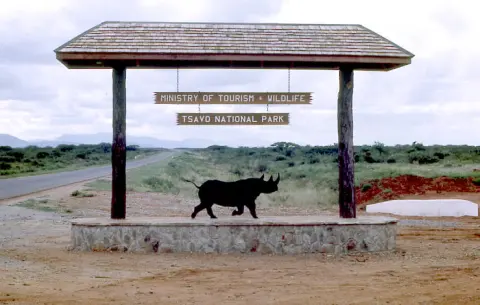
National parks
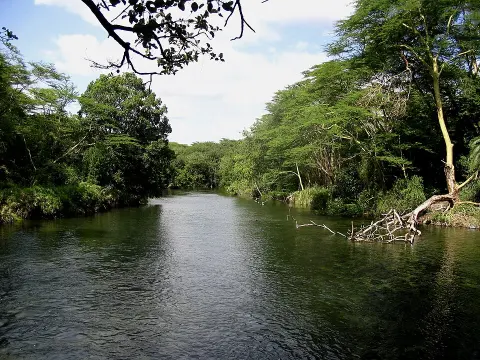
29 national parks in Kenya
- 32,034 km² protected
- oldest from 1593
Largest: Tsavo East National Park · Tsavo West National Park · Sibiloi National Park
Currency · 26 October 2026
Kenyan shilling exchange rates today
Kenya uses the Kenyan shilling (KES, Sh). One US dollar buys 129.8139 KES; over the last 30 days the KES has lost 0.2% against the dollar.
What other currencies cost in KES
Currency converter
Daily reference rates from the open-source currency-api (CC0), 26 Oct 2026. Banks and exchange offices add a margin.
World rankings
Where Kenya ranks
How Kenya compares with the rest of the world — open any card for the full ranking.
Airports
Airports in Kenya
345 airports and airfields — 4 large, 14 medium and 326 small, plus 1 heliports. 12 have scheduled passenger flights.
Borders
Neighbouring countries
Kenya borders 5 countries along 3,457 km of land borders. Coastline: 536 km.


Military
Kenyan armed forces
Kenya ranks #87 of 145 in the Global Firepower military strength ranking, with a defence budget of $1.5 billion (2025).
People
Population & society
Religion
Largest cities: Nairobi (5.3 million), Mombassa (1.4 million)
Economy
Economy
Main industries
agriculture, transportation, services, manufacturing, construction, telecommunications, tourism, retail
Export partners
Uganda 10%, USA 10%, UAE 8%, Netherlands 8%, Pakistan 6% (2023)
Top exports
tea, cut flowers, garments, gold, tropical fruits (2023)
Travel tools
Handy before every trip to Kenya
Next public holiday
Jamhuri Day — Saturday, 12 December 2026. Then Christmas Day (25 Dec).
Kenyan passport
Ranked #123: 40 countries visa-free, 29 with visa on arrival, 2 with an eTA and 32 with an eVisa.
Kenyan passport photo
Exact size, head position and background for Kenya's passport and visa photos — make one free with AI checks.
Calling Kenya
Dial +254 before the local number. Internet domain .ke.
Climate footprint
21.2 million tonnes of CO₂ in 2024 — 0.38 t per person.
Entry requirements
Visa rules for every passport visiting Kenya: visa-free stays, eVisas, visas on arrival and documents to bring.
News
Latest travel news about Kenya

More intra-African flights, but visas and fares still deter travellers
Seats on intra-African tourism routes rose 10.5% year-on-year in August 2026, yet visas, high fares and indirect connections still hold back regional…

Indianapolis outreach lets Midwest Kenyans apply for passports and IDs closer to home
The Kenyan Embassy in Washington, D.C. ran a three-day consular outreach in Indianapolis from 22 to 24 October 2026, helping Kenyans in Indiana and n…

UK student visa squeeze and £925 levy planned for 2028: what applicants face
British universities say tighter UK immigration rules are cutting international student numbers, putting a £925 annual levy planned for August 2028 a…
Frequently asked questions about Kenya
What do I need to travel to Kenya?
How long must my passport be valid for Kenya?
Where is Kenya?
What is Kenya known for?
What is the capital of Kenya?
What language is spoken in Kenya?
What currency does Kenya use?
What is the calling code of Kenya?
Which countries border Kenya?
How strong is the Kenyan passport?
What is the speed limit in Kenya?
Is Kenya safe to visit?
When is the best time to visit Kenya?
What plug type does Kenya use?
How many airports does Kenya have?
Sources: CIA World Factbook (public domain); World Bank Open Data (CC BY 4.0); names, languages and currencies: mledoze/countries (ODbL); flag: flag-icons (MIT); coat of arms: Wikimedia Commons (file page); exchange rates: Daily reference rates from the open-source currency-api (CC0); airports: OurAirports.