

Southern Europe · UN member

Cyprus: Travel Guide & Requirements
Republic of Cyprus · Δημοκρατία της Κύπρος · Kıbrıs Cumhuriyeti
Cyprus is a country in Southern Europe with its capital in Nicosia. It has a population of 1.4 million (#155 in the world) and covers 9,251 km². The official languages are Greek and Turkish. The currency is the Euro (EUR, €).
Where is Cyprus? Map of Cyprus
Middle East, island in the Mediterranean Sea, south of Turkey; note - Cyprus views itself as part of Europe; geopolitically, it can be classified as falling within Europe, the Middle East, or both.
- Region
- Southern Europe
- Coordinates
- 35° N, 33° E
- Neighbours
- none (no land borders)
- Coastline
- 648 km
- Cyprus
- Capital
- Largest cities
Map of Cyprus showing Nicosia (capital) and the largest cities: Limassol, Famagusta and Paphos.
Travel requirements
What you need to travel to Cyprus
- Passport
The Ministry of Foreign Affairs says passports submitted with a visa application must be valid for at least three months after the intended date of departure from Cyprus, contain at least two blank pages and have been i…
- Visa or eTA
Depends on your passport: of 198 passports, 93 need no visa, 105 need a visa from an embassy. Check yours or see Cyprus entry requirements for every passport.
- Return or onward ticket
Cyprus's Ministry of Foreign Affairs lists pre-bookings of round-trip flights among the documents for a visa application.
- Proof of funds
Cyprus's Ministry of Foreign Affairs says third-country nationals must be able to prove that they have the necessary financial resources to cover their expenses in Cyprus.
- Travel insurance
The Ministry of Foreign Affairs lists travel medical insurance for the period of stay in Cyprus, with a minimum coverage of €30,000 for each applicant, among the documents for a visa application.
- Arrival card
The EU's official ETIAS website lists Cyprus among the 30 European countries that require visa-exempt travellers to have an ETIAS travel authorisation.
- Customs allowance
The EU's Your Europe portal says that if you enter or leave the EU with €10,000 in cash (or its equivalent in other currencies), you must declare it to the customs authorities of the EU country you are entering or leavi…
- Travel advice
Safe to visit — US and UK advice.
Entry rules: TravelRequirements.info — Entry Requirements Dataset (CC BY 4.0), each rule cited to an official government source. Always confirm with the airline and the official source before you travel.
Before you go
10 things to know before you travel to Cyprus
- Safety: Yes — Cyprus is generally safe to visit: the US State Department rates Cyprus Level 1 (“Exercise Normal Precautions”), and the UK Foreign Office has no warnings against travel there.
- Best time to go: April to May and October — when daytime highs in Nicosia are around 22–27°C.
- Money: the Euro (EUR) — 1 US dollar is about 0.8911 EUR.
- Plugs: type G, 240 V, 50 Hz — standard 220–240 V: devices from the US or Japan (110–120 V) need a converter unless they are dual voltage (100–240 V).
- Emergency numbers: Police 112 / 199, Ambulance 112 / 199, Fire 112 / 199.
- Language: Greek and Turkish are official; English is also spoken.
- Driving: on the left — speed limits are 50 km/h in built-up areas, 80 km/h outside built-up areas and 100 km/h on motorways.
- Time zone: UTC+2 in Nicosia.
- Capital: Nicosia. About 1.4 million people live in Cyprus.
- Outdoors: 1 ski area.
Key facts
Cyprus at a glance
Languages spoken: Greek (official) 80.9%, Turkish (official) 0.2%, English 4.1%, Romanian 2.9%, Russian 2.5%, Bulgarian 2.2%, Arabic 1.2%, Filipino 1.1%, other 4.3%, unspecified 0.6% (2011 est.)
Geography & history
About Cyprus
A former British colony, Cyprus became independent in 1960 after years of resistance to British rule. Tensions between the Greek Cypriot majority and Turkish Cypriot minority came to a head in December 1963, when violence broke out in the capital of Nicosia. Despite the deployment of UN peacekeepers in 1964, sporadic intercommunal violence continued and forced most Turkish Cypriots into enclaves throughout the island. In 1974, a Greek Government-sponsored attempt to overthrow the elected president of Cyprus was met by military intervention from Turkey, which soon controlled more than a third of the island. In 1983, the Turkish Cypriot administered area declared itself the "Turkish Republic …
Read the full history
A former British colony, Cyprus became independent in 1960 after years of resistance to British rule. Tensions between the Greek Cypriot majority and Turkish Cypriot minority came to a head in December 1963, when violence broke out in the capital of Nicosia. Despite the deployment of UN peacekeepers in 1964, sporadic intercommunal violence continued and forced most Turkish Cypriots into enclaves throughout the island. In 1974, a Greek Government-sponsored attempt to overthrow the elected president of Cyprus was met by military intervention from Turkey, which soon controlled more than a third of the island. In 1983, the Turkish Cypriot administered area declared itself the "Turkish Republic of Northern Cyprus" (TRNC), but it is recognized only by Turkey. A UN-mediated agreement to reunite Cyprus, the Annan Plan, failed to win approval from both communities in 2004. The most recent round of reunification negotiations was suspended in 2017 after failure to achieve a breakthrough. The entire island joined the EU in 2004, although the EU acquis -- the body of common rights and obligations -- applies only to the areas under the internationally recognized government and is suspended in the TRNC. However, individual Turkish Cypriots able to document their eligibility for Republic of Cyprus citizenship have the same legal rights accorded to citizens of other EU states.
Location
Middle East, island in the Mediterranean Sea, south of Turkey; note - Cyprus views itself as part of Europe; geopolitically, it can be classified as falling within Europe, the Middle East, or both
Climate
temperate; Mediterranean with hot, dry summers and cool winters
Terrain
central plain with mountains to north and south; scattered but significant plains along southern coast
Highest point
Mount Olympus 1,951 m
Natural resources
copper, pyrites, asbestos, gypsum, timber, salt, marble, clay earth pigment
Natural hazards
moderate earthquake activity; droughts
National symbols
Cypriot mouflon (wild sheep), white dove
Driving
Speed limits & road rules in Cyprus
The default speed limits in Cyprus are 50 km/h in built-up areas, 80 km/h outside built-up areas and 100 km/h on motorways. The legal alcohol limit for drivers is 0.5‰. Posted signs always take priority over these defaults.
- 5050 km/hBuilt-up areasTowns and cities
- 8080 km/hOutside built-up areasCountry roads
- 100100 km/hMotorwaysMotorways / freeways
- International Driving PermitRecognised: 1949 GenevaCarry the IDP together with your national licence
- Driving sideDrive on the leftOvertake on the right
- Alcohol limit0.5‰ blood alcohol (0.05% BAC)0.2‰ for young / novice drivers
- Seat beltsRequired by law
- Child seatsRequired by law
- Motorcycle helmetsRequired for riders
- Road deaths (2021)3.9 per 100,000 peopleSafer than most countries (median 12.4)
Speed limits: OpenStreetMap wiki — Default speed limits (CC BY-SA 2.0). Road-safety laws: WHO Global Health Observatory. Compare speed limits and alcohol limits by country. Defaults for cars; local signs, weather and vehicle type can lower them.
Safety
Is Cyprus safe to visit?
Yes — Cyprus is generally safe to visit: the US State Department rates Cyprus Level 1 (“Exercise Normal Precautions”), and the UK Foreign Office has no warnings against travel there.
 US State Department
 UK Foreign Office (FCDO)
Latest update: New information about fertility treatment (‘Safety and security’ page).
Updated 14 Aug 2026 · Full travel advice
Sources: US Department of State travel advisories (public domain) and UK FCDO foreign travel advice (contains public sector information licensed under the Open Government Licence v3.0). Checked daily. Advice can change quickly — always read the official page before you travel.
Weather
Best time to visit Cyprus
The best time to visit Cyprus is April to May and October, when daytime highs in Nicosia are around 22–27°C. September and November are also a good time to go. July is the warmest month (36°C by day), January the coldest (8°C at night), and December the wettest with about 85 mm of rain.
- Jan14°C8°C
- Feb15°C8°C
- Mar18°C9°C
- Apr22°C12°C
- May27°C17°C
- Jun33°C21°C
- Jul36°C24°C
- Aug36°C24°C
- Sep32°C22°C
- Oct27°C18°C
- Nov21°C13°C
- Dec16°C9°C
Best time Good Less ideal
Before you go
Plugs, voltage & emergency numbers in Cyprus
Plugs & sockets
240 V, 50 Hz · Standard 220–240 V: devices from the US or Japan (110–120 V) need a converter unless they are dual voltage (100–240 V).
Sources: Wikipedia — Mains electricity by country and List of emergency telephone numbers (CC BY-SA 4.0).
Ski resorts
1 ski resort in Cyprus
- 6 km of slopes
- 4 lifts
- up to 1,936 m
Biggest: Troodos Ski Resort
Currency · 26 October 2026
Euro exchange rates today
Cyprus uses the Euro (EUR, €). One US dollar buys 0.8911 EUR; over the last 30 days the EUR has lost 1.5% against the dollar.
What other currencies cost in EUR
Currency converter
Daily reference rates from the open-source currency-api (CC0), 26 Oct 2026. Banks and exchange offices add a margin.
World rankings
Where Cyprus ranks
How Cyprus compares with the rest of the world — open any card for the full ranking.
Airports
Airports in Cyprus
87 airports and airfields — 3 large, 2 medium and 10 small, plus 72 heliports. 3 have scheduled passenger flights.
Borders
No land borders
Cyprus has no land borders with other countries. Coastline: 648 km.
People
Population & society
Religion
Largest cities: Nicosia (269,000)
Economy
Economy
Main industries
tourism, food and beverage processing, cement and gypsum, ship repair and refurbishment, textiles, light chemicals, metal products, wood, paper, stone and clay products
Export partners
Libya 14%, Greece 11%, Lebanon 8%, Bermuda 7%, Marshall Islands 5% (2023)
Top exports
ships, refined petroleum, packaged medicine, cheese, scented mixtures (2023)
Travel tools
Handy before every trip to Cyprus
Next public holiday
Ohi Day — Wednesday, 28 October 2026. Then Christmas Eve (24 Dec).
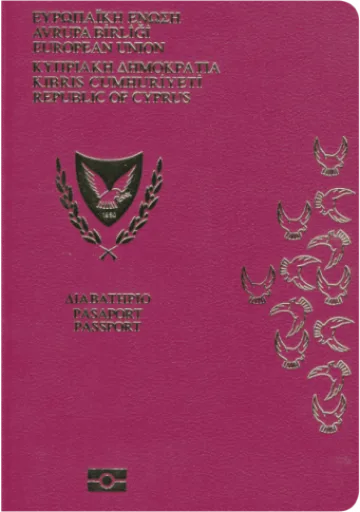
Cypriot passport
Ranked #17: 122 countries visa-free, 30 with visa on arrival, 7 with an eTA and 21 with an eVisa.
Cypriot passport photo
Exact size, head position and background for Cyprus's passport and visa photos — make one free with AI checks.
Calling Cyprus
Dial +357 before the local number. Internet domain .cy.
Climate footprint
7.3 million tonnes of CO₂ in 2024 — 5.37 t per person.
Entry requirements
Visa rules for every passport visiting Cyprus: visa-free stays, eVisas, visas on arrival and documents to bring.
News
Latest travel news about Cyprus

Monaco Passport Holders Among 82 Nationalities Listed for UK ETA
The United Kingdom has published a list of 82 countries and territories whose citizens can apply for an Electronic Travel Authorisation (ETA) instead…

Cyprus Citizenship Trial Opens Over Passports Granted to Foreign Investors
The trial of a former Cypriot transport minister and nine others over the island's investment-based citizenship scheme began at Nicosia Permanent Cri…

Retiring in Europe in 2026: which countries tax pensions at 5%, 7% or 15%
Non-EU retirees choosing a European destination in 2026 face a trade-off between flat pension taxes and services. Greece, Italy, Cyprus and Malta tax…
Frequently asked questions about Cyprus
What do I need to travel to Cyprus?
How long must my passport be valid for Cyprus?
Where is Cyprus?
What is the capital of Cyprus?
What language is spoken in Cyprus?
What currency does Cyprus use?
What is the calling code of Cyprus?
Does Cyprus have land borders?
How strong is the Cypriot passport?
What is the speed limit in Cyprus?
Is Cyprus safe to visit?
When is the best time to visit Cyprus?
What plug type does Cyprus use?
How many airports does Cyprus have?
Sources: CIA World Factbook (public domain); World Bank Open Data (CC BY 4.0); names, languages and currencies: mledoze/countries (ODbL); flag: flag-icons (MIT); coat of arms: Wikimedia Commons (file page); exchange rates: Daily reference rates from the open-source currency-api (CC0); airports: OurAirports.