
Caribbean · UN member

Haiti: Travel Guide & Requirements
Republic of Haiti · République d'Haïti · Repiblik Ayiti
Haiti is a country in Caribbean with its capital in Port-au-Prince. It has a population of 11.9 million (#82 in the world) and covers 27,750 km². The official languages are French and Haitian Creole. The currency is the Haitian gourde (HTG, G).
Where is Haiti? Map of Haiti
Caribbean, western one-third of the island of Hispaniola, between the Caribbean Sea and the North Atlantic Ocean, west of the Dominican Republic.
- Region
- Caribbean
- Coordinates
- 19° N, 72.4167° W
- Neighbours
- 1 — see list
- Coastline
- 1,771 km
- Haiti
- Neighbours
- Capital
- Largest cities
Map of Haiti showing Port-au-Prince (capital) and the largest cities: Port-de-Paix, Saint-Marc, Cap-Haïtien, Les Cayes, Tigwav, Jérémie and Saint-Michel de l'Atalaye.
Travel requirements
What you need to travel to Haiti
- Passport
The Embassy of Haiti in Washington says tourists' passports must be valid for at least 6 months, and the UK government says your passport must have an expiry date at least 6 months after the date you arrive.
- Visa or eTA
Depends on your passport: of 198 passports, 181 need no visa, 3 get a visa on arrival, 14 need a visa from an embassy. Check yours or see Haiti entry requirements for every passport.
- Return or onward ticket
The Embassy of Haiti in Washington says nationals who need a visa must provide, among the supporting documents, a photocopy of an airline reservation confirmation or round-trip ticket.
- Proof of funds
No official requirement. Canada's travel advice says customs officials may ask you to show them a return or onward ticket and proof of sufficient funds to cover your stay.
- Travel insurance
No official requirement. Canada's travel advice says physicians and hospitals generally expect immediate cash payment for care even if you have proof of valid travel health insurance.
- Vaccinations
WHO's country list says proof of yellow fever vaccination is required for travellers aged 1 year or over arriving from countries at risk for yellow fever transmission.
- Arrival card
The Embassy of Haiti in Washington says tourists must pay a fee of US$10.00 on arrival at the airport, and the UK government says the entry fee is paid in cash.
- Customs allowance
No official requirement.
- Travel advice
Avoid travel — US and UK advice.
Entry rules: TravelRequirements.info — Entry Requirements Dataset (CC BY 4.0), each rule cited to an official government source. Always confirm with the airline and the official source before you travel.
Before you go
10 things to know before you travel to Haiti
- Safety: Governments advise against travel to Haiti: the US State Department rates Haiti Level 4 (“Do Not Travel”), and the UK Foreign Office advises against all travel to the whole country.
- Best time to go: November to April — when daytime highs in Port-au-Prince are around 30–31°C.
- Money: the Haitian gourde (HTG) — 1 US dollar is about 130.8769 HTG.
- Plugs: type A and B, 110 V, 60 Hz — low-voltage country: devices made only for 220–240 V need a voltage converter. Phone and laptop chargers (100–240 V) only need a plug adapter.
- Emergency numbers: Police 114, Ambulance 116, Fire 115.
- Language: French and Haitian Creole are official.
- Driving: on the right — speed limits are 50 km/h in built-up areas.
- Time zone: UTC-5 in Port-au-Prince.
- Capital: Port-au-Prince. About 11.9 million people live in Haiti.
- Outdoors: 9 national parks.
Key facts
Haiti at a glance
Languages spoken: French (official), Creole (official)
Geography & history
About Haiti
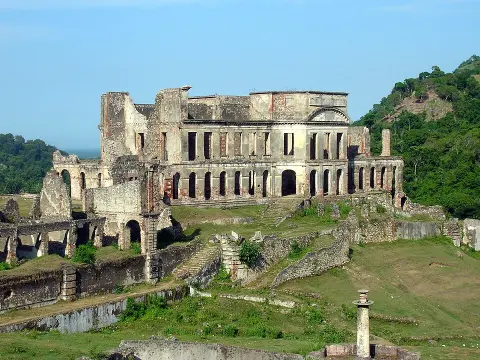
The native Taino -- who inhabited the island of Hispaniola when Christopher COLUMBUS first landed in 1492 -- were virtually wiped out by Spanish settlers within 25 years. In the early 17th century, the French established a presence on Hispaniola. In 1697, Spain ceded to the French the western third of the island, which later became Haiti. The French colony, based on forestry and sugar-related industries, became one of the wealthiest in the Caribbean but relied heavily on the forced labor of enslaved Africans and environmentally degrading practices. In the late 18th century, Toussaint L'OUVERTURE led a revolution of Haiti's nearly half a million slaves that ended France's rule on the island.…
Read the full history
The native Taino -- who inhabited the island of Hispaniola when Christopher COLUMBUS first landed in 1492 -- were virtually wiped out by Spanish settlers within 25 years. In the early 17th century, the French established a presence on Hispaniola. In 1697, Spain ceded to the French the western third of the island, which later became Haiti. The French colony, based on forestry and sugar-related industries, became one of the wealthiest in the Caribbean but relied heavily on the forced labor of enslaved Africans and environmentally degrading practices. In the late 18th century, Toussaint L'OUVERTURE led a revolution of Haiti's nearly half a million slaves that ended France's rule on the island. After a prolonged struggle, and under the leadership of Jean-Jacques DESSALINES, Haiti became the first country in the world led by former slaves after declaring its independence in 1804, but it was forced to pay an indemnity of 100 million francs (equivalent to $22 billion USD in March 2023) to France for more than a century and was shunned by other countries for nearly 40 years. In 1862, the US officially recognized Haiti, but foreign economic influence and internal political instability induced the US to occupy Haiti from 1915 to 1934. Francois "Papa Doc" DUVALIER and then his son Jean-Claude "Baby Doc" DUVALIER led repressive and corrupt regimes that ruled Haiti in 1957-1971 and 1971-1986, respectively. Jean-Bertrand ARISTIDE was Haiti's first democratically elected president in 1991 and was elected a second time in 2000, but coups interrupted his first term after only a few months and ended his second term in 2004. President Jovenel MOÏSE was assassinated in 2021, leading the country further into an extra-constitutional governance structure and contributing to the country’s growing fragility. The Government of Haiti then installed Ariel HENRY -- whom President MOÏSE had nominated shortly before his death -- as prime minister. On 29 February 2024, a significant escalation of gang violence occurred on the 20th anniversary of ARISTIDE's second overthrow, after the announcement that HENRY would not hold elections until August 2025. HENRY’s return from an overseas trip was diverted to Puerto Rico when the airport closed due to gang violence. With control of much of the capital, Port-au-Prince, gang leaders called for the ouster of HENRY’S government. By mid-March, Haiti’s continued violence, HENRY’S inability to return to the country, and increasing pressure from the international community led HENRY to pledge to resign. On 25 April 2024, HENRY formally submitted his resignation as a nine-member Transitional Presidential Council assumed control, tasked with returning stability to the country and preparing elections. Since January 2023, Haiti has had no sitting elected officials. The country has long been plagued by natural disasters. In 2010, a major 7.0 magnitude earthquake struck Haiti with an epicenter about 25 km (15 mi) west of the capital, Port-au-Prince. An estimated 300,000 people were killed, and some 1.5 million left homeless. The earthquake was assessed as the worst in this region in 200 years. A 7.2 magnitude earthquake hit Haiti’s southern peninsula in 2021, causing well over 2,000 deaths; an estimated 500,000 required emergency humanitarian aid. Haiti is the poorest country in the Western Hemisphere, as well as one of the most unequal in wealth distribution.
Location
Caribbean, western one-third of the island of Hispaniola, between the Caribbean Sea and the North Atlantic Ocean, west of the Dominican Republic
Climate
tropical; semiarid where mountains in east cut off trade winds
Terrain
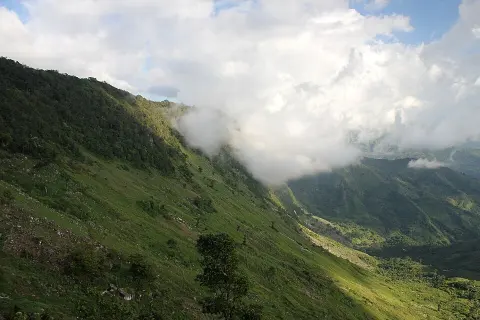
mostly rough and mountainous
Highest point
Pic la Selle 2,674 m
Natural resources
bauxite, copper, calcium carbonate, gold, marble, hydropower, arable land
Natural hazards
lies in the middle of the hurricane belt and subject to severe storms from June to October; occasional flooding and earthquakes; periodic droughts
National symbols
Hispaniolan trogon (bird), hibiscus flower
Driving
Speed limits & road rules in Haiti
The default speed limits in Haiti are 50 km/h in built-up areas. Posted signs always take priority over these defaults.
- 5050 km/hBuilt-up areasTowns and cities
- International Driving PermitRecognised: 1949 GenevaCarry the IDP together with your national licence
- Driving sideDrive on the rightOvertake on the left
- Road deaths (2021)31.3 per 100,000 peopleHigher than most countries (median 12.4)
Speed limits: OpenStreetMap wiki — Default speed limits (CC BY-SA 2.0). Road-safety laws: WHO Global Health Observatory. Compare speed limits and alcohol limits by country. Defaults for cars; local signs, weather and vehicle type can lower them.
Safety
Is Haiti safe to visit?
Governments advise against travel to Haiti: the US State Department rates Haiti Level 4 (“Do Not Travel”), and the UK Foreign Office advises against all travel to the whole country.
 US State Department
 UK Foreign Office (FCDO)
Latest update: New information about dual nationals returning to the UK (‘Entry requirements’ page).
Updated 10 Dec 2025 · Full travel advice
Sources: US Department of State travel advisories (public domain) and UK FCDO foreign travel advice (contains public sector information licensed under the Open Government Licence v3.0). Checked daily. Advice can change quickly — always read the official page before you travel.
Weather
Best time to visit Haiti
The best time to visit Haiti is November to April, when daytime highs in Port-au-Prince are around 30–31°C. May to October are also a good time to go. July is the warmest month (32°C by day), January the coldest (22°C at night), and October the wettest with about 75 mm of rain.
- Jan30°C22°C
- Feb30°C22°C
- Mar30°C23°C
- Apr31°C24°C
- May31°C25°C
- Jun32°C25°C
- Jul32°C26°C
- Aug32°C26°C
- Sep32°C26°C
- Oct31°C25°C
- Nov30°C24°C
- Dec30°C23°C
Best time Good Less ideal
Before you go
Plugs, voltage & emergency numbers in Haiti
Plugs & sockets
110 V, 60 Hz · Low-voltage country: devices made only for 220–240 V need a voltage converter. Phone and laptop chargers (100–240 V) only need a plug adapter.
Emergency numbers
Save the local numbers before you travel — 112 or 911 may not connect here. All countries →
Sources: Wikipedia — Mains electricity by country and List of emergency telephone numbers (CC BY-SA 4.0).
National parks
9 national parks in Haiti
- 305 km² protected
- oldest from 1983
Largest: parc national Forêt des Pins · La Visite National Park · National History Park
Currency · 26 October 2026
Haitian gourde exchange rates today
Haiti uses the Haitian gourde (HTG, G). One US dollar buys 130.8769 HTG; over the last 30 days the HTG has lost 0.1% against the dollar.
What other currencies cost in HTG
Currency converter
Daily reference rates from the open-source currency-api (CC0), 26 Oct 2026. Banks and exchange offices add a margin.
World rankings
Where Haiti ranks
How Haiti compares with the rest of the world — open any card for the full ranking.
Airports
Airports in Haiti
19 airports and airfields — 2 large, 4 medium and 11 small, plus 2 heliports. 4 have scheduled passenger flights.
Borders
Neighbouring countries
Haiti borders 1 country along 376 km of land borders. Coastline: 1,771 km.

People
Population & society
Religion
Largest cities: Port-Au-Prince (3.0 million)
Economy
Economy
Main industries
textiles, sugar refining, flour milling, cement, light assembly using imported parts
Export partners
USA 82%, Canada 4%, Mexico 2%, France 2%, India 2% (2023)
Top exports
garments, essential oils, scrap iron, industrial acids/oils/alcohols, bedding (2023)
Travel tools
Handy before every trip to Haiti
Next public holiday
All Saints Day — Sunday, 1 November 2026. Then All Souls' Day (2 Nov).
Haitian passport
Ranked #182: 15 countries visa-free, 31 with visa on arrival, 3 with an eTA and 45 with an eVisa.
Haitian passport photo
Exact size, head position and background for Haiti's passport and visa photos — make one free with AI checks.
Calling Haiti
Dial +509 before the local number. Internet domain .ht.
Climate footprint
3.0 million tonnes of CO₂ in 2024 — 0.25 t per person.
Entry requirements
Visa rules for every passport visiting Haiti: visa-free stays, eVisas, visas on arrival and documents to bring.
News
Latest travel news about Haiti
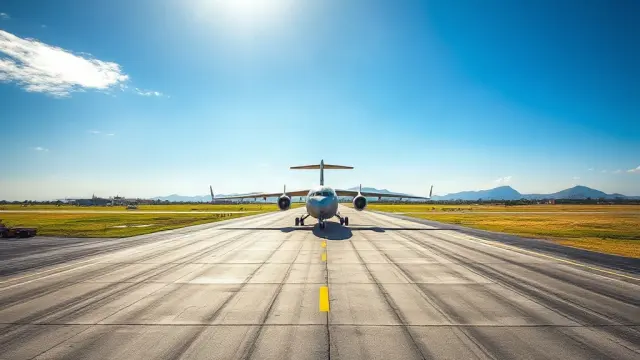
Travellers to Haiti Face Growing Military Presence After Gang Ambush
Three flights of Salvadoran soldiers landed in Haiti on 23 October 2026, adding to 100 special forces sent earlier, as rescue teams search for soldie…
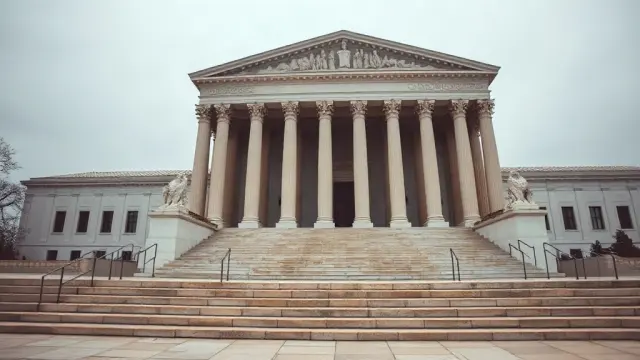
El Salvador travellers face deportation risk as TPS court challenges limited
A June 2026 Supreme Court decision means federal courts cannot review most challenges to ending Temporary Protected Status (TPS). Around 1 million pe…
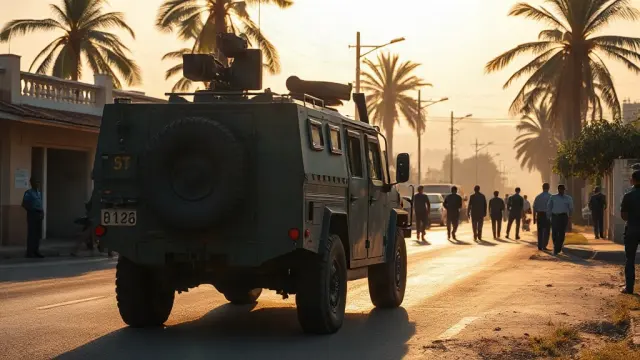
Haiti travel alert: hunt on for four missing El Salvador techs after attack
El Salvador has deployed special forces to Haiti to help find four of its aviation technicians missing after a gang attack in Croix-des-Bouquets. Hai…
Frequently asked questions about Haiti
What do I need to travel to Haiti?
How long must my passport be valid for Haiti?
Where is Haiti?
What is Haiti known for?
What is the capital of Haiti?
What language is spoken in Haiti?
What currency does Haiti use?
What is the calling code of Haiti?
Which countries border Haiti?
How strong is the Haitian passport?
What is the speed limit in Haiti?
Is Haiti safe to visit?
When is the best time to visit Haiti?
What plug type does Haiti use?
How many airports does Haiti have?
Sources: CIA World Factbook (public domain); World Bank Open Data (CC BY 4.0); names, languages and currencies: mledoze/countries (ODbL); flag: flag-icons (MIT); coat of arms: Wikimedia Commons (file page); exchange rates: Daily reference rates from the open-source currency-api (CC0); airports: OurAirports.