
Central Asia · UN member

Tajikistan: Travel Guide & Requirements
Republic of Tajikistan · Республика Таджикистан · Ҷумҳурии Тоҷикистон
Tajikistan is a country in Central Asia with its capital in Dushanbe. It has a population of 10.8 million (#90 in the world) and covers 144,100 km². The official languages are Russian and Tajik. The currency is the Tajikistani somoni (TJS, ЅМ).
Where is Tajikistan? Map of Tajikistan
Central Asia, west of China, south of Kyrgyzstan.
- Region
- Central Asia
- Coordinates
- 39° N, 71° E
- Neighbours
- 4 — see list
- Coastline
- Landlocked
- Tajikistan
- Neighbours
- Capital
- Largest cities
Map of Tajikistan showing Dushanbe (capital) and the largest cities: Isfara, Istaravshan, Kŭlob, Khujand, Bokhtar, Tursunzoda, Panjakent and Khorugh.
Travel requirements
What you need to travel to Tajikistan
- Passport
Tajikistan's Consular Department says that, as a rule, the passport must not expire earlier than 6 months before the visa expires and must have at least 2 blank pages reserved for a visa.
- Visa or eTA
Depends on your passport: of 198 passports, 92 need no visa, 50 need an eVisa, 56 need a visa from an embassy. Check yours or see Tajikistan entry requirements for every passport.
- Return or onward ticket
No official requirement.
- Proof of funds
No official requirement.
- Travel insurance
No official requirement.
- Customs allowance
The UK Foreign Office says travellers may bring up to USD 10,000 (or the equivalent) into Tajikistan without declaring it, that any amount exceeding this should be declared before entry, that above USD 10,000 travellers…
- Travel advice
Some caution needed — US and UK advice.
Entry rules: TravelRequirements.info — Entry Requirements Dataset (CC BY 4.0), each rule cited to an official government source. Always confirm with the airline and the official source before you travel.
Before you go
10 things to know before you travel to Tajikistan
- Safety: Tajikistan is generally safe for travellers, but some caution is needed: the US State Department rates Tajikistan Level 2 (“Exercise Increased Caution”), and the UK Foreign Office has no warnings against travel there.
- Best time to go: May and September — when daytime highs in Dushanbe are around 26–28°C.
- Money: the Tajikistani somoni (TJS) — 1 US dollar is about 9.2019 TJS.
- Plugs: type C, F and I, 220 V, 50 Hz — standard 220–240 V: devices from the US or Japan (110–120 V) need a converter unless they are dual voltage (100–240 V).
- Emergency numbers: Police 112, Ambulance 112, Fire 112.
- Language: Russian and Tajik are official.
- Driving: on the right — speed limits are 60 km/h in built-up areas and 90 km/h outside built-up areas.
- Time zone: UTC+5 in Dushanbe.
- Capital: Dushanbe. About 10.8 million people live in Tajikistan.
- Outdoors: 3 national parks and 1 ski area.
Key facts
Tajikistan at a glance
Languages spoken: Tajik (official) 84.4%, Uzbek 11.9%, Kyrgyz 0.8%, Russian 0.5%, other 2.4% (2010 est.)
Geography & history
About Tajikistan
The Tajik people came under Russian imperial rule in the 1860s and 1870s, but Russia's hold on Central Asia weakened following the Revolution of 1917. At that time, bands of indigenous guerrillas (known as "basmachi") fiercely contested Bolshevik control of the area, which was not fully reestablished until 1925. Tajikistan was first established as an autonomous Soviet Socialist Republic within the Uzbek Soviet Socialist Republic in 1924, but in 1929 the Soviet Union made Tajikistan as a separate republic and transferred to it much of present-day Sughd Province. Ethnic Uzbeks form a substantial minority in Tajikistan, and ethnic Tajiks an even larger minority in Uzbekistan. Tajikistan became…
Read the full history
The Tajik people came under Russian imperial rule in the 1860s and 1870s, but Russia's hold on Central Asia weakened following the Revolution of 1917. At that time, bands of indigenous guerrillas (known as "basmachi") fiercely contested Bolshevik control of the area, which was not fully reestablished until 1925. Tajikistan was first established as an autonomous Soviet Socialist Republic within the Uzbek Soviet Socialist Republic in 1924, but in 1929 the Soviet Union made Tajikistan as a separate republic and transferred to it much of present-day Sughd Province. Ethnic Uzbeks form a substantial minority in Tajikistan, and ethnic Tajiks an even larger minority in Uzbekistan. Tajikistan became independent in 1991 after the breakup of the Soviet Union, and the country experienced a civil war among political, regional, and religious factions from 1992 to 1997. Despite Tajikistan's general elections for both the presidency (once every seven years) and legislature (once every five years), observers note an electoral system rife with irregularities and abuse, and results that are neither free nor fair. President Emomali RAHMON, who came to power in 1992 during the civil war and was first elected president in 1994, used an attack planned by a disaffected deputy defense minister in 2015 to ban the last major opposition party in Tajikistan. RAHMON further strengthened his position by having himself declared "Founder of Peace and National Unity, Leader of the Nation," with limitless terms and lifelong immunity through constitutional amendments ratified in a referendum. The referendum also lowered the minimum age required to run for president from 35 to 30, which made RAHMON's first-born son Rustam EMOMALI, the mayor of the capital city of Dushanbe, eligible to run for president in 2020. RAHMON orchestrated EMOMALI's selection in 2020 as chairman of the Majlisi Milli (the upper chamber of Tajikistan's parliament), positioning EMOMALI as next in line of succession for the presidency. RAHMON opted to run in the presidential election later that year and received 91% of the vote. The country remains the poorest of the former Soviet republics. Tajikistan became a member of the WTO in 2013, but its economy continues to face major challenges, including dependence on remittances from Tajikistani migrant laborers in Russia and Kazakhstan, pervasive corruption, the opiate trade, and destabilizing violence emanating from neighboring Afghanistan. Tajikistan has endured several domestic security incidents since 2010, including armed conflict between government forces and local strongmen in the Rasht Valley and between government forces and informal leaders in Gorno-Badakhshan Autonomous Oblast. Tajikistan suffered its first ISIS-claimed attack in 2018, when assailants attacked a group of Western bicyclists, killing four. Friction between forces on the border between Tajikistan and the Kyrgyz Republic flared up in 2021, culminating in fatal clashes between border forces in 2021 and 2022.
Location
Central Asia, west of China, south of Kyrgyzstan
Climate
mid-latitude continental, hot summers, mild winters; semiarid to polar in Pamir Mountains
Terrain
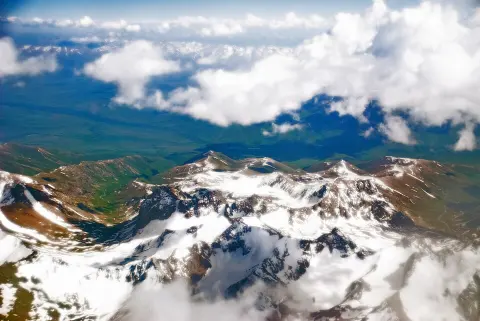
mountainous region dominated by the Alay Mountains in the north and the Pamirs in the southeast; western Fergana Valley in north, Kofirnihon and Vakhsh Valleys in southwest
Highest point
Qullai Somoniyon 7,495 m
Natural resources
hydropower, some petroleum, uranium, mercury, brown coal, lead, zinc, antimony, tungsten, silver, gold
Natural hazards
earthquakes; floods
National symbols
arc of seven five-pointed stars over a crown, Marco Polo sheep
Driving
Speed limits & road rules in Tajikistan
The default speed limits in Tajikistan are 60 km/h in built-up areas and 90 km/h outside built-up areas. Posted signs always take priority over these defaults.
- 6060 km/hBuilt-up areasTowns and citiesWHO data (2017)
- 9090 km/hOutside built-up areasCountry roadsWHO data (2017)
- International Driving PermitRecognised: 1968 ViennaCarry the IDP together with your national licence
- Driving sideDrive on the rightOvertake on the left
- Seat beltsRequired by law
- Child seatsNo national child-restraint law
- Motorcycle helmetsRequired for riders
- Road deaths (2021)13.9 per 100,000 peopleClose to the world median (12.4)
Speed limits: OpenStreetMap wiki — Default speed limits (CC BY-SA 2.0) and WHO. Road-safety laws: WHO Global Health Observatory. Compare speed limits and alcohol limits by country. Defaults for cars; local signs, weather and vehicle type can lower them.
Safety
Is Tajikistan safe to visit?
Tajikistan is generally safe for travellers, but some caution is needed: the US State Department rates Tajikistan Level 2 (“Exercise Increased Caution”), and the UK Foreign Office has no warnings against travel there.
 US State Department
 UK Foreign Office (FCDO)
Latest update: New information about terrorism and armed clashes near the Tajikistan-Afghanistan border ('Safety and security' and ‘Regional risks’ pages).
Updated 19 Aug 2026 · Full travel advice
Sources: US Department of State travel advisories (public domain) and UK FCDO foreign travel advice (contains public sector information licensed under the Open Government Licence v3.0). Checked daily. Advice can change quickly — always read the official page before you travel.
Weather
Best time to visit Tajikistan
The best time to visit Tajikistan is May and September, when daytime highs in Dushanbe are around 26–28°C. October is also a good time to go. July is the warmest month (35°C by day), January the coldest (-4°C at night).
- Jan5°C-4°C
- Feb7°C-3°C
- Mar14°C2°C
- Apr20°C8°C
- May26°C13°C
- Jun32°C18°C
- Jul35°C20°C
- Aug34°C19°C
- Sep28°C14°C
- Oct20°C8°C
- Nov12°C2°C
- Dec7°C-3°C
Best time Good Less ideal
Before you go
Plugs, voltage & emergency numbers in Tajikistan
Plugs & sockets
- Type C (Europlug)two round pins
- Type F (Schuko)two round pins with earth clips on the sides
- Type Itwo flat pins in a V shape, often with an earth pin
220 V, 50 Hz · Standard 220–240 V: devices from the US or Japan (110–120 V) need a converter unless they are dual voltage (100–240 V).
Emergency numbers
112 works from any mobile phone, even without a SIM card in most networks. All countries →
Sources: Wikipedia — Mains electricity by country and List of emergency telephone numbers (CC BY-SA 4.0).
Ski resorts
1 ski resort in Tajikistan
- 2 lifts
- up to 3,016 m
Biggest: Сафед Дара
National parks
3 national parks in Tajikistan
- 320 km² protected
- oldest from 1991
Largest: Shirkent National Park · Yaghnob National Nature Park · Pamir National Park
Currency · 26 October 2026
Tajikistani somoni exchange rates today
Tajikistan uses the Tajikistani somoni (TJS, ЅМ). One US dollar buys 9.2019 TJS; over the last 30 days the TJS has gained 0.2% against the dollar.
What other currencies cost in TJS
Currency converter
Daily reference rates from the open-source currency-api (CC0), 26 Oct 2026. Banks and exchange offices add a margin.
World rankings
Where Tajikistan ranks
How Tajikistan compares with the rest of the world — open any card for the full ranking.
Airports
Airports in Tajikistan
21 airports and airfields — 4 large, 3 medium and 13 small, plus 1 heliports. 4 have scheduled passenger flights.
Borders
Neighbouring countries
Tajikistan borders 4 countries along 4,130 km of land borders. It is landlocked.


Military
Tajikistani armed forces
Tajikistan ranks #120 of 145 in the Global Firepower military strength ranking, with a defence budget of $247 million (2025).
People
Population & society
Religion
Largest cities: Dushanbe (987,000)
Economy
Economy
Main industries
aluminum, cement, coal, gold, silver, antimony, textile, vegetable oil
Export partners
Switzerland 31%, Kazakhstan 18%, China 17%, Uzbekistan 10%, Turkey 8% (2023)
Top exports
gold, precious metal ore, aluminum, lead ore, antimony (2023)
Travel tools
Handy before every trip to Tajikistan
Next public holiday
Constitution Day — Friday, 6 November 2026. Then New Year's Day (1 Jan).

Tajikistani passport
Ranked #165: 22 countries visa-free, 33 with visa on arrival, 4 with an eTA and 42 with an eVisa.
Tajikistani passport photo
Exact size, head position and background for Tajikistan's passport and visa photos — make one free with AI checks.
Calling Tajikistan
Dial +992 before the local number. Internet domain .tj.
Climate footprint
10.7 million tonnes of CO₂ in 2024 — 1.01 t per person.
Entry requirements
Visa rules for every passport visiting Tajikistan: visa-free stays, eVisas, visas on arrival and documents to bring.
News
Latest travel news about Tajikistan
Sao Tome and Principe travellers: 59 countries visa-free, joint 81st in index
Kyrgyzstan has fallen six places since the start of 2026 to 81st in the Henley Passport Index, sharing the position with Sao Tome and Principe. Kyrgy…
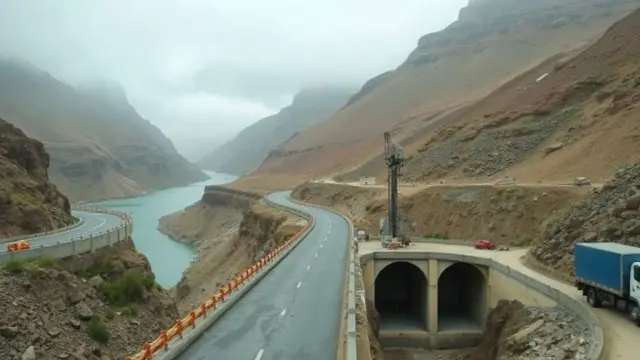
Travellers Warned Off Tajik Southern Border as Guarded Highway Work Resumes
Chinese engineers are back on the Dushanbe–Kulma highway in eastern Tajikistan under armed protection after attacks from Afghanistan killed five Chin…
Central Asia's Best Passport Still Ranks 101st for Kazakh Travellers Worldwide
Kazakhstan's passport ranks fourth among the 10 Shanghai Cooperation Organization member states for travel access, behind Russia, China and Belarus, …
Frequently asked questions about Tajikistan
What do I need to travel to Tajikistan?
How long must my passport be valid for Tajikistan?
Where is Tajikistan?
What is Tajikistan known for?
What is the capital of Tajikistan?
What language is spoken in Tajikistan?
What currency does Tajikistan use?
What is the calling code of Tajikistan?
Which countries border Tajikistan?
How strong is the Tajikistani passport?
What is the speed limit in Tajikistan?
Is Tajikistan safe to visit?
When is the best time to visit Tajikistan?
What plug type does Tajikistan use?
How many airports does Tajikistan have?
Sources: CIA World Factbook (public domain); World Bank Open Data (CC BY 4.0); names, languages and currencies: mledoze/countries (ODbL); flag: flag-icons (MIT); coat of arms: Wikimedia Commons (file page); exchange rates: Daily reference rates from the open-source currency-api (CC0); airports: OurAirports.