
 TajikistanTravel
Travellers Warned Off Tajik Southern Border as Guarded Highway Work Resumes
Chinese engineers are back on the Dushanbe–Kulma highway in eastern Tajikistan under armed protection after attacks from Afghanistan killed five Chinese nationals in November. China's embassy still tells its citizens not to work or travel in Tajikistan's southern border areas.
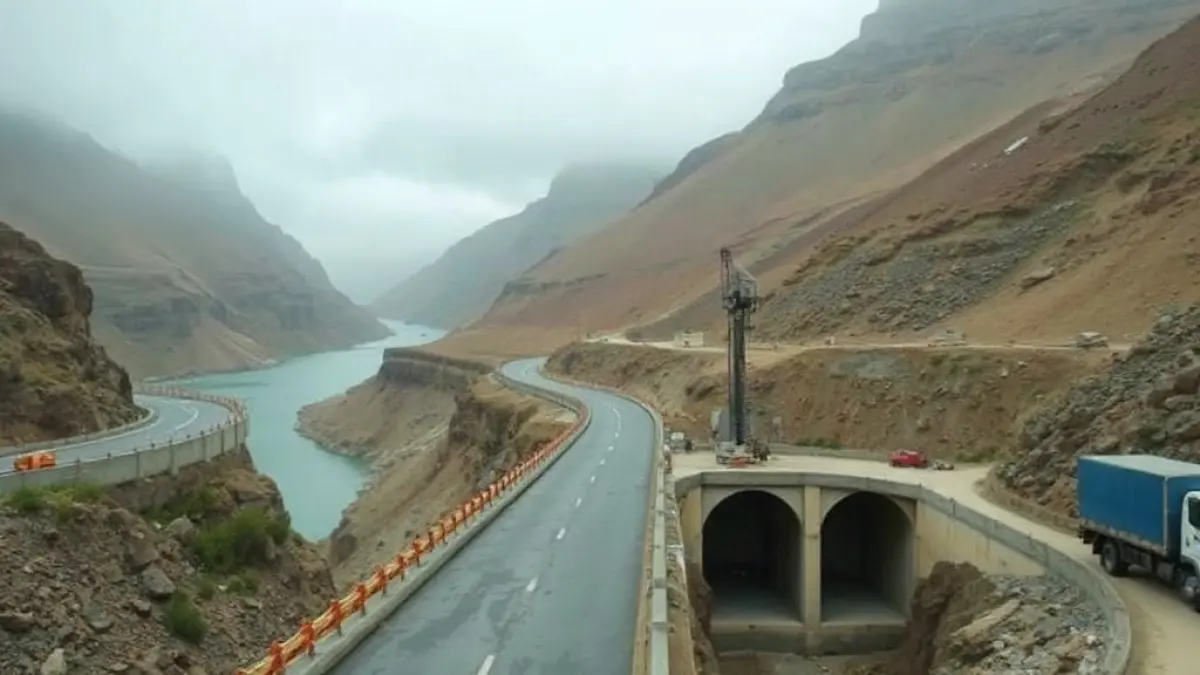
Chinese engineers and workers have returned to a highway site in eastern Tajikistan under armed protection, restarting work that stopped after two attacks from Afghanistan killed five Chinese nationals in November. Tajikistan's Transport Ministry said the specialists came back in April to the Kalai-Khumb to Vanj section of the Dushanbe–Kulma highway in Gorno-Badakhshan.
Even so, China's embassy continues to warn its citizens to stay away from the border region, so anyone planning travel in southern or eastern Tajikistan should note that the security situation there is still described as difficult.
Key facts
- April: Chinese specialists returned to the Kalai-Khumb–Vanj works, advising local crews, pouring concrete and fitting tunnel lighting, the Transport Ministry said.
- Late May: a correspondent saw Tajik special forces guarding Chinese workers in Darvaz, but security officers did not allow photos or video.
- 9 June: the Chinese embassy's latest public warning still told Chinese citizens not to work or travel in Tajikistan's southern border areas, citing a complex security situation and extreme weather.
- The Kalai-Khumb–Vanj contract runs from 20 September 2022 to 20 September 2026, funded by a $230 million Chinese grant.
- The road is meant to cut the section from 109 kilometres to 92.3 kilometres and include two tunnels, five anti-avalanche corridors and 14 bridges.
Why did work stop?
Work halted after an attack on 30 November in Shodak, a village in Darvaz district. Tajikistan's Border Troops said an armed group crossed from Ruzvayak in Afghanistan's Badakhshan province and attacked employees of contractor China Road and Bridge Corporation, killing two Chinese citizens and wounding two. Dushanbe called the attackers members of an armed terrorist group but did not name the organization.
Four days earlier, another attack from Afghan territory hit Shamsiddin Shohin district in Khatlon. The Chinese embassy said three Chinese citizens were killed and one wounded. Tajikistan described that strike as using an unmanned aerial vehicle carrying explosives.
What travel warnings are in force?
After the killings, the Chinese embassy urged Chinese companies and personnel on 1 December to evacuate the Tajik-Afghan border area. Its most recent notice, issued on 9 June, still tells Chinese citizens not to work or travel in southern border areas of Tajikistan.
Tajik authorities say the border is stable and under control, while continuing to report smuggling cases and armed incidents. Afghanistan's Taliban government promised cooperation after the killings, and Taliban officials later said suspects had been detained in Badakhshan province.
What is being built?
The Dushanbe–Kulma corridor links the Tajik capital with the Kulma Pass on the Chinese frontier through the Pamir. The Kalai-Khumb–Vanj works run close to the Pyanj River, where attacks from the Afghan side are affecting the cost of Chinese projects. The route crosses Darvaz, one of Tajikistan's hardest mountain road sections, which the Transport Ministry says went for years without major repairs; the work is intended to allow year-round movement and lower fuel and travel costs.
By January, crews had completed 12 of the 14 bridges, with two bridges, avalanche corridors and tunnel systems still under construction.
What this means for travellers
Travellers should take account of the Chinese embassy's standing advice to avoid the southern border areas, and the general caution around the Afghan frontier, when planning routes through southern and eastern Tajikistan. The mountain road through Darvaz remains an active construction zone, with crews working under armed guard.
Wider measures are also under way: the Russia-led CSTO has said it plans to begin sending weapons and military equipment for the Tajik-Afghan border in 2026, in a programme running through 2029. In March, Tajik lawmakers approved a Chinese-funded plan worth more than 550 million somoni, about $57.4 million, to build nine border facilities near Afghanistan.
Also about:  Afghanistan
 China
 Russia