
Eastern Africa · UN member

Eritrea: Travel Guide & Requirements
State of Eritrea · دولة إريتريا · ሃገረ ኤርትራ
Eritrea is a country in Eastern Africa with its capital in Asmara. It has a population of 3.6 million (#131 in the world) and covers 117,600 km². The official languages are Arabic, English and Tigrinya. The currency is the Eritrean nakfa (ERN, Nfk).
Where is Eritrea? Map of Eritrea
Eastern Africa, bordering the Red Sea, between Djibouti and Sudan.
- Region
- Eastern Africa
- Coordinates
- 15° N, 39° E
- Neighbours
- 3 — see list
- Coastline
- 2,234 km
- Eritrea
- Neighbours
- Capital
- Largest cities
Map of Eritrea showing Asmara (capital) and the largest cities: Keren, Himora, Massawa, Assab, Mendefera and Barentu.
Travel requirements
What you need to travel to Eritrea
- Passport
The UK government says that to enter Eritrea your passport must have an expiry date at least 6 months after the date you arrive.
- Visa or eTA
Depends on your passport: of 198 passports, 2 need no visa, 196 need a visa from an embassy. Check yours or see Eritrea entry requirements for every passport.
- Return or onward ticket
No official requirement. The Eritrean Embassy in Switzerland lists, for a tourist visa, proof of financial support and a hotel or apartment reservation (if applicable); its list does not include a ticket.
- Proof of funds
The Eritrean Embassy in Switzerland lists proof of financial support among the documents for a tourist visa.
- Travel insurance
No official requirement. The UK government says public hospitals in towns other than Asmara are often poorly equipped and medical facilities in rural areas are even more limited, and advises travel insurance for local treatment or unexpected me…
- Vaccinations
WHO's Annex 1 lists Eritrea as requiring proof of yellow fever vaccination from travellers aged 9 months or over arriving from countries at risk of yellow fever transmission.
- Customs allowance
The UK government says to declare foreign cash or travellers cheques if the value is 10,000 US dollars or more and to keep the certificate you get to show when you leave.
- Travel advice
High risk — US and UK advice.
Entry rules: TravelRequirements.info — Entry Requirements Dataset (CC BY 4.0), each rule cited to an official government source. Always confirm with the airline and the official source before you travel.
Before you go
10 things to know before you travel to Eritrea
- Safety: Travel to Eritrea carries a high risk: the US State Department rates Eritrea Level 2 (“Exercise Increased Caution”), and the UK Foreign Office advises against all travel to parts of the country.
- Best time to go: November to February — when daytime highs in Asmara are around 27–29°C.
- Money: the Eritrean nakfa (ERN) — 1 US dollar is about 15.0000 ERN.
- Plugs: type C and L, 230 V, 50 Hz — standard 220–240 V: devices from the US or Japan (110–120 V) need a converter unless they are dual voltage (100–240 V).
- Emergency numbers: Police 113, Ambulance 114, Fire 116.
- Language: Arabic, English and Tigrinya are official.
- Driving: on the right — speed limits are 60 km/h in built-up areas and 100 km/h outside built-up areas.
- Time zone: UTC+3 in Asmara.
- Capital: Asmara. About 3.6 million people live in Eritrea.
- Outdoors: 2 national parks.
Key facts
Eritrea at a glance
Languages spoken: Tigrinya (official), Arabic (official), English (official), Tigre, Kunama, Afar, other Cushitic languages
Geography & history
About Eritrea
Eritrea won independence from Italian colonial control in 1941, but the UN only established it as an autonomous region within the Ethiopian federation in 1952, after a decade of British administrative control. Ethiopia's full annexation of Eritrea as a province 10 years later sparked a violent 30-year conflict for independence that ended in 1991 with Eritrean fighters defeating government forces. Eritreans overwhelmingly approved independence in a 1993 referendum. ISAIAS Afwerki has been Eritrea's only president since independence; his rule, particularly since 2001, has been characterized by highly autocratic and repressive actions. His government has created a highly militarized society by…
Read the full history
Eritrea won independence from Italian colonial control in 1941, but the UN only established it as an autonomous region within the Ethiopian federation in 1952, after a decade of British administrative control. Ethiopia's full annexation of Eritrea as a province 10 years later sparked a violent 30-year conflict for independence that ended in 1991 with Eritrean fighters defeating government forces. Eritreans overwhelmingly approved independence in a 1993 referendum. ISAIAS Afwerki has been Eritrea's only president since independence; his rule, particularly since 2001, has been characterized by highly autocratic and repressive actions. His government has created a highly militarized society by instituting an unpopular program of mandatory conscription into national service -- divided between military and civilian service -- of indefinite length. A two-and-a-half-year border war with Ethiopia that erupted in 1998 ended under UN auspices in 2000. Ethiopia rejected a subsequent 2007 Eritrea-Ethiopia Boundary Commission (EEBC) demarcation. More than a decade of a tense “no peace, no war” stalemate ended in 2018 when the newly elected Ethiopian prime minister accepted the EEBC’s 2007 ruling, and the two countries signed declarations of peace and friendship. Eritrean leaders then engaged in intensive diplomacy around the Horn of Africa, bolstering regional peace, security, and cooperation, as well as brokering rapprochements between governments and opposition groups. In 2018, the UN Security Council lifted an arms embargo that had been imposed on Eritrea since 2009, after the UN Somalia-Eritrea Monitoring Group reported they had not found evidence of Eritrean support in recent years for al-Shabaab. The country’s rapprochement with Ethiopia led to a resumption of economic ties, but the level of air transport, trade, and tourism have remained roughly the same since late 2020. The Eritrean economy remains agriculture-dependent, and the country is still one of Africa’s poorest nations. Eritrea faced new international condemnation and US sanctions in mid-2021 for its participation in the war in Ethiopia’s Tigray Regional State, where Eritrean forces were found to have committed war crimes and crimes against humanity. As most Eritrean troops were departing northern Ethiopia in January 2023, ISAIAS began a series of diplomatic engagements aimed at bolstering Eritrea’s foreign partnerships and regional influence. Despite the country's improved relations with its neighbors, ISAIAS has not let up on repression, and conscription and militarization continue.
Location
Eastern Africa, bordering the Red Sea, between Djibouti and Sudan
Climate
hot, dry desert strip along Red Sea coast; cooler and wetter in the central highlands (up to 61 cm of rainfall annually, heaviest June to September); semiarid in western hills and lowlands
Terrain
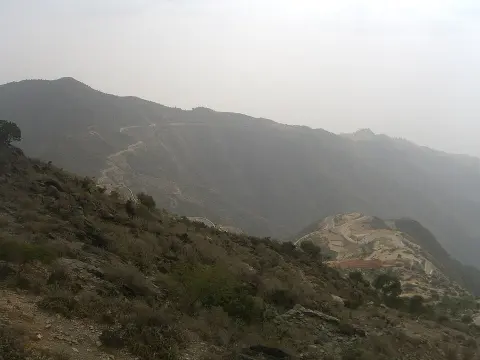
dominated by extension of Ethiopian north-south trending highlands, descending on the east to a coastal desert plain, on the northwest to hilly terrain and on the southwest to flat-to-rolling plains
Highest point
Soira 3,018 m
Natural resources
gold, potash, zinc, copper, salt, possibly oil and natural gas, fish
Natural hazards
frequent droughts, rare earthquakes and volcanoes; locust swarms volcanism: Dubbi (1,625 m), which last erupted in 1861, was the country's only historically active volcano until Nabro (2,218 m) came to life in 2011
National symbols
camel
Driving
Speed limits & road rules in Eritrea
The default speed limits in Eritrea are 60 km/h in built-up areas and 100 km/h outside built-up areas. The legal alcohol limit for drivers is 0.5‰. Posted signs always take priority over these defaults.
- 6060 km/hBuilt-up areasTowns and citiesWHO data (2017)
- 100100 km/hOutside built-up areasCountry roadsWHO data (2017)
- International Driving PermitNot a party to the IDP conventionsCheck with the embassy whether your licence is accepted
- Driving sideDrive on the rightOvertake on the left
- Alcohol limit0.5‰ blood alcohol (0.05% BAC)
- Seat beltsRequired by law
- Child seatsNo national child-restraint law
- Motorcycle helmetsRequired for riders
- Road deaths (2021)17.7 per 100,000 peopleHigher than most countries (median 12.4)
Speed limits: OpenStreetMap wiki — Default speed limits (CC BY-SA 2.0) and WHO. Road-safety laws: WHO Global Health Observatory. Compare speed limits and alcohol limits by country. Defaults for cars; local signs, weather and vehicle type can lower them.
Safety
Is Eritrea safe to visit?
Travel to Eritrea carries a high risk: the US State Department rates Eritrea Level 2 (“Exercise Increased Caution”), and the UK Foreign Office advises against all travel to parts of the country.
 US State Department
 UK Foreign Office (FCDO)
Latest update: Addition of information about the temporary withdrawal of dependants of British Embassy staff from Eritrea (‘Warnings and insurance’ page).
Updated 12 Oct 2026 · Full travel advice
Sources: US Department of State travel advisories (public domain) and UK FCDO foreign travel advice (contains public sector information licensed under the Open Government Licence v3.0). Checked daily. Advice can change quickly — always read the official page before you travel.
Weather
Best time to visit Eritrea
The best time to visit Eritrea is November to February, when daytime highs in Asmara are around 27–29°C. March and September to October are also a good time to go. May is the warmest month (33°C by day), January the coldest (12°C at night), and August the wettest with about 144 mm of rain.
- Jan27°C12°C
- Feb29°C13°C
- Mar31°C15°C
- Apr32°C17°C
- May33°C19°C
- Jun33°C20°C
- Jul28°C19°C
- Aug27°C19°C
- Sep30°C18°C
- Oct29°C16°C
- Nov28°C14°C
- Dec27°C13°C
Best time Good Less ideal
Before you go
Plugs, voltage & emergency numbers in Eritrea
Plugs & sockets
230 V, 50 Hz · Standard 220–240 V: devices from the US or Japan (110–120 V) need a converter unless they are dual voltage (100–240 V).
Emergency numbers
Save the local numbers before you travel — 112 or 911 may not connect here. All countries →
Sources: Wikipedia — Mains electricity by country and List of emergency telephone numbers (CC BY-SA 4.0).
National parks
2 national parks in Eritrea
Largest: Dahlak Marine National Park · Semenawi Bahri National Park
Currency · 26 October 2026
Eritrean nakfa exchange rates today
Eritrea uses the Eritrean nakfa (ERN, Nfk). One US dollar buys 15.0000 ERN; over the last 30 days the ERN has gained 0.0% against the dollar.
What other currencies cost in ERN
Currency converter
Daily reference rates from the open-source currency-api (CC0), 26 Oct 2026. Banks and exchange offices add a margin.
World rankings
Where Eritrea ranks
How Eritrea compares with the rest of the world — open any card for the full ranking.
Airports
Airports in Eritrea
19 airports and airfields — 0 large, 3 medium and 16 small, plus 0 heliports. 1 have scheduled passenger flights.
Borders
Neighbouring countries
Eritrea borders 3 countries along 1,840 km of land borders. Coastline: 2,234 km.


Military
Eritrean armed forces
Eritrea ranks #113 of 145 in the Global Firepower military strength ranking.
People
Population & society
Largest cities: Asmara (1.1 million)
Economy
Economy
Main industries
food processing, beverages, clothing and textiles, light manufacturing, salt, cement
Export partners
China 67%, UAE 26%, Philippines 5%, Italy 1%, Croatia 1% (2023)
Top exports
copper ore, zinc ore, gold, garments, liquor (2023)
Travel tools
Handy before every trip to Eritrea
Next public holiday
New Year's Day — Friday, 1 January 2027. Then Orthodox Christmas (7 Jan).

Eritrean passport
Ranked #189: 12 countries visa-free, 26 with visa on arrival, 2 with an eTA and 49 with an eVisa.
Eritrean passport photo
Exact size, head position and background for Eritrea's passport and visa photos — make one free with AI checks.
Calling Eritrea
Dial +291 before the local number. Internet domain .er.
Climate footprint
0.7 million tonnes of CO₂ in 2024 — 0.21 t per person.
Entry requirements
Visa rules for every passport visiting Eritrea: visa-free stays, eVisas, visas on arrival and documents to bring.
News
Latest travel news about Eritrea
Travellers to Northern Ethiopia Face Uncertainty After Border Incursion
Eritrean troops reportedly crossed into northern Ethiopia near Zalambessa around 7 October 2026, prompting Ethiopian drone strikes and troop deployme…
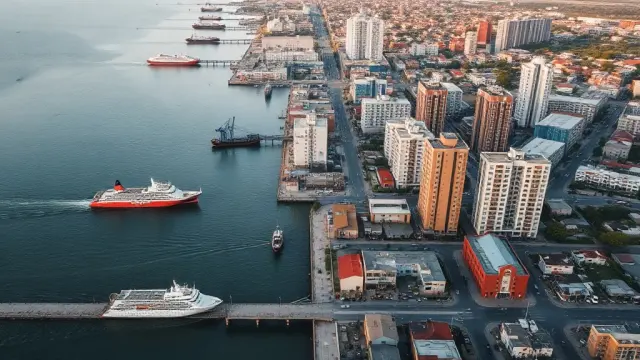
Angola agrees closer co-operation with UK after visa penalties threat
The UK Home Secretary threatened Eritrea with a visa ban unless it takes back its nationals without permission to stay. Angola, Namibia and the DR Co…
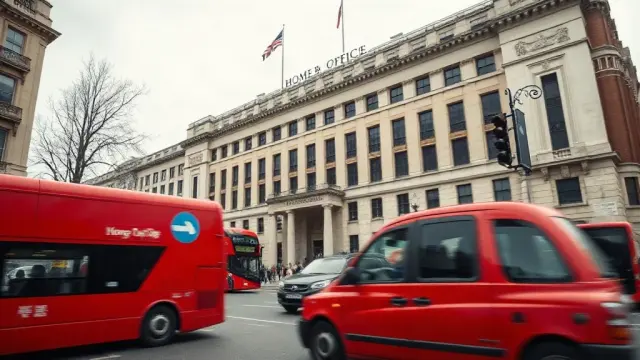
Angola Travellers Face No UK Visa Curbs as Threat Shifts to Eritrea
The UK has restricted Eritrean diplomats' travel and suspended fast-track visas for officials, and warned of a wider visa ban on Eritrean nationals u…
Frequently asked questions about Eritrea
What do I need to travel to Eritrea?
How long must my passport be valid for Eritrea?
Where is Eritrea?
What is Eritrea known for?
What is the capital of Eritrea?
What language is spoken in Eritrea?
What currency does Eritrea use?
What is the calling code of Eritrea?
Which countries border Eritrea?
How strong is the Eritrean passport?
What is the speed limit in Eritrea?
Is Eritrea safe to visit?
When is the best time to visit Eritrea?
What plug type does Eritrea use?
How many airports does Eritrea have?
Sources: CIA World Factbook (public domain); World Bank Open Data (CC BY 4.0); names, languages and currencies: mledoze/countries (ODbL); flag: flag-icons (MIT); coat of arms: Wikimedia Commons (file page); exchange rates: Daily reference rates from the open-source currency-api (CC0); airports: OurAirports.