
Western Asia · UN member


Yemen: Travel Guide & Requirements
Republic of Yemen · الجمهورية اليمنية
Yemen is a country in Western Asia with its capital in Sanaa. It has a population of 41.8 million (#37 in the world) and covers 527,968 km². The official language is Arabic. The currency is the Yemeni rial (YER, ﷼).
Where is Yemen? Map of Yemen
Middle East, bordering the Arabian Sea, Gulf of Aden, and Red Sea, between Oman and Saudi Arabia.
- Region
- Western Asia
- Coordinates
- 15° N, 48° E
- Neighbours
- 2 — see list
- Coastline
- 1,906 km
- Yemen
- Neighbours
- Capital
- Largest cities
Map of Yemen showing Sanaa (capital) and the largest cities: Aden, Taiz, Ibb, Al Ḩudaydah, Mukalla, Dhamār, Zabīd and Sa'dah.
Travel requirements
What you need to travel to Yemen
- Passport
The Embassy of Yemen in Washington asks visa applicants for a passport valid for at least six months after the date of the intended departure to Yemen, and the UK government says your passport must have an expiry date a…
- Visa or eTA
Depends on your passport: of 198 passports, 1 gets a visa on arrival, 196 need a visa from an embassy. Check yours or see Yemen entry requirements for every passport.
- Return or onward ticket
The Embassy of Yemen in Washington asks visa applicants who are not US citizens for confirmation of a round-trip ticket, or a ticket to another destination.
- Proof of funds
No official requirement.
- Travel insurance
No official requirement. The UK government advises against all travel to Yemen, and says travel insurance could be invalidated by travelling against its advice.
- Customs allowance
The UK government says you must declare foreign currency worth more than USD 3,000 on arrival; there is no restriction on how much you bring in, but you may not take out more foreign currency than you brought in.
- Travel advice
Avoid travel — US and UK advice.
Entry rules: TravelRequirements.info — Entry Requirements Dataset (CC BY 4.0), each rule cited to an official government source. Always confirm with the airline and the official source before you travel.
Before you go
9 things to know before you travel to Yemen
- Safety: Governments advise against travel to Yemen: the US State Department rates Yemen Level 4 (“Do Not Travel”), and the UK Foreign Office advises against all travel to the whole country.
- Best time to go: January to April and September to October — when daytime highs in Sanaa are around 23–27°C.
- Money: the Yemeni rial (YER) — 1 US dollar is about 236.1339 YER.
- Plugs: type A, D and G, 240 V, 50 Hz — standard 220–240 V: devices from the US or Japan (110–120 V) need a converter unless they are dual voltage (100–240 V).
- Emergency numbers: Police 194, Ambulance 191, Fire 191.
- Language: Arabic is official.
- Driving: on the right.
- Time zone: UTC+3 in Sanaa.
- Capital: Sanaa. About 41.8 million people live in Yemen.
Key facts
Yemen at a glance
Languages spoken: Arabic (official)
Geography & history
About Yemen
The Kingdom of Yemen (colloquially known as North Yemen) became independent from the Ottoman Empire in 1918 and in 1962 became the Yemen Arab Republic. The British, who had set up a protectorate area around the southern port of Aden in the 19th century, withdrew in 1967 from what became the People's Republic of Southern Yemen (colloquially known as South Yemen). Three years later, the southern government adopted a Marxist orientation and changed the country's name to the People's Democratic Republic of Yemen. The exodus of hundreds of thousands of Yemenis from the south to the north contributed to two decades of hostility between the states, which were formally unified as the Republic of Ye…
Read the full history
The Kingdom of Yemen (colloquially known as North Yemen) became independent from the Ottoman Empire in 1918 and in 1962 became the Yemen Arab Republic. The British, who had set up a protectorate area around the southern port of Aden in the 19th century, withdrew in 1967 from what became the People's Republic of Southern Yemen (colloquially known as South Yemen). Three years later, the southern government adopted a Marxist orientation and changed the country's name to the People's Democratic Republic of Yemen. The exodus of hundreds of thousands of Yemenis from the south to the north contributed to two decades of hostility between the states, which were formally unified as the Republic of Yemen in 1990. A southern secessionist movement and brief civil war in 1994 was quickly subdued. In 2000, Saudi Arabia and Yemen agreed to delineate their border. Fighting in the northwest between the government and the Houthis, a Zaydi Shia Muslim minority, continued intermittently from 2004 to 2010, and then again from 2014 to the present. The southern secessionist movement was revitalized in 2007. Public rallies in Sana'a against then President Ali Abdallah SALIH -- inspired by similar Arab Spring demonstrations in Tunisia and Egypt -- slowly gained momentum in 2011, fueled by complaints over high unemployment, poor economic conditions, and corruption. Some protests resulted in violence, and the demonstrations spread to other major cities. The Gulf Cooperation Council (GCC) mediated the crisis with the GCC Initiative, an agreement in which the president would step down in exchange for immunity from prosecution. SALIH eventually agreed to step down and transfer some powers to Vice President Abd Rabuh Mansur HADI. After HADI's uncontested election victory in 2012, SALIH formally transferred all presidential powers. In accordance with the GCC Initiative, Yemen launched a National Dialogue Conference (NDC) in 2013 to discuss key constitutional, political, and social issues. HADI concluded the NDC in 2014 and planned to proceed with constitutional drafting, a constitutional referendum, and national elections. The Houthis, perceiving their grievances were not addressed in the NDC, joined forces with SALIH and expanded their influence in northwestern Yemen, which culminated in a major offensive against military units and rival tribes and enabled their forces to overrun the capital, Sana'a, in 2014. In 2015, the Houthis surrounded key government facilities, prompting HADI and the cabinet to resign. HADI fled first to Aden -- where he rescinded his resignation -- and then to Oman before moving to Saudi Arabia and asking the GCC to intervene militarily in Yemen. Saudi Arabia assembled a coalition of Arab militaries and began airstrikes, and ground fighting continued through 2016. In 2016, the UN initiated peace talks that ended without agreement. Rising tensions between the Houthis and SALIH culminated in Houthi forces killing SALIH. In 2018, the Houthis and the Yemeni Government participated in UN-brokered peace talks, agreeing to a limited cease-fire and the establishment of a UN mission. In 2019, Yemen’s parliament convened for the first time since the conflict broke out in 2014. Violence then erupted between HADI's government and the pro-secessionist Southern Transitional Council (STC) in southern Yemen. HADI's government and the STC signed a power-sharing agreement to end the fighting, and in 2020, the signatories formed a new cabinet. In 2020 and 2021, fighting continued as the Houthis gained territory and also conducted regular UAV and missile attacks against targets in Saudi Arabia. In 2022, the UN brokered a temporary truce between the Houthis and the Saudi-led coalition. HADI and his vice-president resigned and were replaced by an eight-person Presidential Leadership Council. Although the truce formally expired in 2022, the parties nonetheless refrained from large-scale conflict through the end of 2023. Saudi Arabia, after the truce expired, continued to negotiate with the Yemeni Government and Houthis on a roadmap agreement that would include a permanent ceasefire and a peace process under UN auspices.
Location
Middle East, bordering the Arabian Sea, Gulf of Aden, and Red Sea, between Oman and Saudi Arabia
Climate
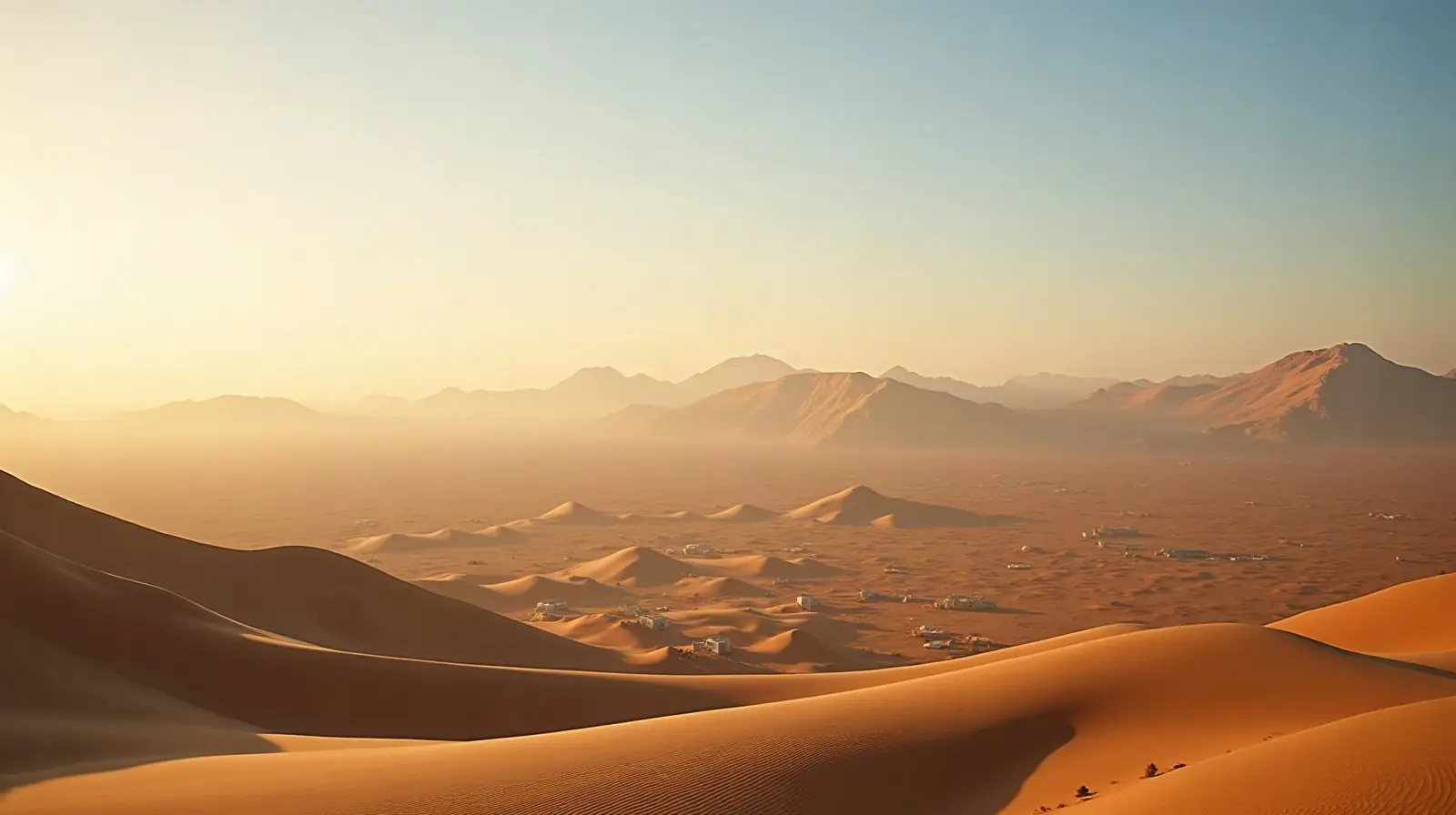
mostly desert; hot and humid along west coast; temperate in western mountains affected by seasonal monsoon; extraordinarily hot, dry, harsh desert in east
Terrain
narrow coastal plain backed by flat-topped hills and rugged mountains; dissected upland desert plains in center slope into the desert interior of the Arabian Peninsula
Highest point
Jabal an Nabi Shu'ayb 3,666 m
Natural resources
petroleum, fish, rock salt, marble; small deposits of coal, gold, lead, nickel, and copper; fertile soil in west
Natural hazards
sandstorms and dust storms in summer volcanism: limited volcanic activity; Jebel at Tair (Jabal al-Tair, Jebel Teir, Jabal al-Tayr, Jazirat at-Tair) (244 m), which forms an island in the Red Sea, became active in 2007; other historically active volcanoes incl…
National symbols
golden eagle
Safety
Is Yemen safe to visit?
Governments advise against travel to Yemen: the US State Department rates Yemen Level 4 (“Do Not Travel”), and the UK Foreign Office advises against all travel to the whole country.
 US State Department
 UK Foreign Office (FCDO)
Latest update: Latest information about regional risks including the Yemen-Saudi border and threats from the Houthis (see 'Regional tensions' on ‘Warnings and insurance’ page).
Updated 31 Jul 2026 · Full travel advice
Sources: US Department of State travel advisories (public domain) and UK FCDO foreign travel advice (contains public sector information licensed under the Open Government Licence v3.0). Checked daily. Advice can change quickly — always read the official page before you travel.
Weather
Best time to visit Yemen
The best time to visit Yemen is January to April and September to October, when daytime highs in Sanaa are around 23–27°C. May to August and November to December are also a good time to go. June is the warmest month (29°C by day), December the coldest (5°C at night).
- Jan23°C6°C
- Feb25°C8°C
- Mar26°C10°C
- Apr27°C13°C
- May28°C15°C
- Jun29°C16°C
- Jul29°C16°C
- Aug29°C16°C
- Sep27°C14°C
- Oct24°C9°C
- Nov23°C7°C
- Dec22°C5°C
Best time Good Less ideal
Before you go
Plugs, voltage & emergency numbers in Yemen
Plugs & sockets
- Type Atwo flat parallel pins
- Type Dthree large round pins in a triangle
- Type Gthree rectangular pins in a triangle
240 V, 50 Hz · Standard 220–240 V: devices from the US or Japan (110–120 V) need a converter unless they are dual voltage (100–240 V).
Emergency numbers
Save the local numbers before you travel — 112 or 911 may not connect here. All countries →
Sources: Wikipedia — Mains electricity by country and List of emergency telephone numbers (CC BY-SA 4.0).
Currency · 26 October 2026
Yemeni rial exchange rates today
Yemen uses the Yemeni rial (YER, ﷼). One US dollar buys 236.1339 YER; over the last 30 days the YER has gained 0.2% against the dollar.
What other currencies cost in YER
Currency converter
Daily reference rates from the open-source currency-api (CC0), 26 Oct 2026. Banks and exchange offices add a margin.
World rankings
Where Yemen ranks
How Yemen compares with the rest of the world — open any card for the full ranking.
Airports
Airports in Yemen
43 airports and airfields — 4 large, 6 medium and 27 small, plus 6 heliports. 7 have scheduled passenger flights.
Borders
Neighbouring countries
Yemen borders 2 countries along 1,601 km of land borders. Coastline: 1,906 km.


Military
Yemeni armed forces
Yemen ranks #74 of 145 in the Global Firepower military strength ranking.
People
Population & society
Religion
Largest cities: Sanaa (3.3 million), Aden (1.1 million), Taiz (941,000), Ibb (772,000)
Economy
Economy
Main industries
crude oil production and petroleum refining; small-scale production of cotton textiles, leather goods; food processing; handicrafts; aluminum products; cement; commercial ship repair; natural gas production
Export partners
UAE 28%, India 21%, Saudi Arabia 17%, Oman 7%, Malaysia 5% (2023)
Top exports
gold, fish, scrap iron, shellfish, industrial acids/oils/alcohols (2023)
Travel tools
Handy before every trip to Yemen
Next public holiday
Independence Day — Monday, 30 November 2026. Then Unity Day (5 Feb).

Yemeni passport
Ranked #195: 9 countries visa-free, 24 with visa on arrival, 3 with an eTA and 45 with an eVisa.
Yemeni passport photo
Exact size, head position and background for Yemen's passport and visa photos — make one free with AI checks.
Calling Yemen
Dial +967 before the local number. Internet domain .ye.
Climate footprint
10.1 million tonnes of CO₂ in 2024 — 0.25 t per person.
Entry requirements
Visa rules for every passport visiting Yemen: visa-free stays, eVisas, visas on arrival and documents to bring.
News
Latest travel news about Yemen

Israel trips: US adds Houthi risk, keeps Level 3 rating and border no-go areas
The US State Department updated its Israel travel advisory on 23 October 2026, warning of a growing threat from Iran-backed Houthis. Israel stays at …

Travellers to Saudi Arabia Told to Reconsider Plans as US Holds Level 3
The U.S. Department of State updated its Saudi Arabia travel advisory on 23 October 2026, citing increased Houthi aggression and Iranian threats. The…

Saudi Arabia flights disrupted: What stuck Indian pilgrims need to know about getting home
Thousands of Indian Muslim pilgrims are stuck in Saudi Arabia after Houthi attacks disrupted flights. India's government says it is working with airl…
Frequently asked questions about Yemen
What do I need to travel to Yemen?
How long must my passport be valid for Yemen?
Where is Yemen?
What is Yemen known for?
What is the capital of Yemen?
What language is spoken in Yemen?
What currency does Yemen use?
What is the calling code of Yemen?
Which countries border Yemen?
How strong is the Yemeni passport?
Is Yemen safe to visit?
When is the best time to visit Yemen?
What plug type does Yemen use?
How many airports does Yemen have?
Sources: CIA World Factbook (public domain); World Bank Open Data (CC BY 4.0); names, languages and currencies: mledoze/countries (ODbL); flag: flag-icons (MIT); coat of arms: Wikimedia Commons (file page); exchange rates: Daily reference rates from the open-source currency-api (CC0); airports: OurAirports.