
Middle Africa · UN member

Central African Republic: Travel Guide & Requirements
· République centrafricaine · Ködörösêse tî Bêafrîka
The Central African Republic is a country in Middle Africa with its capital in Bangui. It has a population of 5.5 million (#119 in the world) and covers 622,984 km². The official languages are French and Sango. The currency is the Central African CFA franc (XAF, Fr).
Where is the Central African Republic? Map of the Central African Republic
Central Africa, north of Democratic Republic of the Congo.
- Region
- Middle Africa
- Coordinates
- 7° N, 21° E
- Neighbours
- 6 — see list
- Coastline
- Landlocked
- Central African Republic
- Neighbours
- Capital
- Largest cities
Map of the Central African Republic showing Bangui (capital) and the largest cities: Carnot, Berbérati, Bambari, Bouar, Bossangoa, Kaga-Bandoro, Bangassou and Paoua.
Travel requirements
What you need to travel to the Central African Republic
- Passport
The embassy in Washington says your passport must be valid for at least 6 months.
- Visa or eTA
Depends on your passport: of 198 passports, 5 need no visa, 193 need a visa from an embassy. Check yours or see The Central African Republic entry requirements for every passport.
- Return or onward ticket
The embassy in Washington asks visa applicants for a flight itinerary and an invitation letter or hotel reservation, and its application page lists proof of travel arrangements (flight tickets, itinerary) and proof of a…
- Proof of funds
The embassy in Washington lists proof of sufficient funds among the required documents for a visa application.
- Travel insurance
No official requirement. The Government of Canada says health care is very limited and only available in Bangui, that medical expenses must generally be paid for before treatment, and advises getting travel insurance that includes coverage for …
- Vaccinations
The embassy in Washington says yellow fever immunization is required, and the UK FCDO says you must have a yellow fever vaccination certificate to pass border control.
- Travel advice
Avoid travel — US and UK advice.
Entry rules: TravelRequirements.info — Entry Requirements Dataset (CC BY 4.0), each rule cited to an official government source. Always confirm with the airline and the official source before you travel.
Before you go
10 things to know before you travel to the Central African Republic
- Safety: Governments advise against travel to the Central African Republic: the US State Department rates the Central African Republic Level 4 (“Do Not Travel”), and the UK Foreign Office advises against all travel to parts of the country.
- Best time to go: September to January — when daytime highs in Bangui are around 29–35°C.
- Money: the Central African CFA franc (XAF) — 1 US dollar is about 584.5354 XAF.
- Plugs: type C and E, 220 V, 50 Hz — standard 220–240 V: devices from the US or Japan (110–120 V) need a converter unless they are dual voltage (100–240 V).
- Emergency numbers: Police 117, Ambulance 1220, Fire 118.
- Language: French and Sango are official.
- Driving: on the right — speed limits are 60 km/h in built-up areas and 110 km/h outside built-up areas.
- Time zone: UTC+1 in Bangui.
- Capital: Bangui. About 5.5 million people live in the Central African Republic.
- Outdoors: 5 national parks.
Key facts
Central African Republic at a glance
Languages spoken: French (official), Sangho (lingua franca and national language), tribal languages
Geography & history
About the Central African Republic
The Central African Republic (CAR) is a perennially weak state that sits at the crossroads of ethnic and linguistic groups in the center of the African continent. Among the last areas of Sub-Saharan Africa to be drawn into the world economy, its introduction into trade networks around the early 1700s fostered significant competition among its population. The local population sought to benefit from the lucrative Atlantic, trans-Saharan, and Indian Ocean trade in enslaved people and ivory. Slave raids aided by the local populations fostered animosity between ethnic groups that remains today. The territory was established as a French colony named Ubangui-Shari in 1903, and France modeled its a…
Read the full history
The Central African Republic (CAR) is a perennially weak state that sits at the crossroads of ethnic and linguistic groups in the center of the African continent. Among the last areas of Sub-Saharan Africa to be drawn into the world economy, its introduction into trade networks around the early 1700s fostered significant competition among its population. The local population sought to benefit from the lucrative Atlantic, trans-Saharan, and Indian Ocean trade in enslaved people and ivory. Slave raids aided by the local populations fostered animosity between ethnic groups that remains today. The territory was established as a French colony named Ubangui-Shari in 1903, and France modeled its administration of the colony after the Belgian Congo, subcontracting control of the territory to private companies that collected rubber and ivory. Although France banned the domestic slave trade in CAR in the 1910s, the private companies continued to exploit the population through forced labor. The colony of Ubangi-Shari gained independence from France as the Central African Republic in 1960, but the death of independence leader Barthelemy BOGANDA six months prior led to an immediate struggle for power. CAR’s political history has since been marred by a series of coups, the first of which brought Jean-Bedel BOKASSA to power in 1966. Widespread corruption and intolerance for any political opposition characterized his regime. In an effort to prolong his mandate, BOKASSA named himself emperor in 1976 and changed the country’s name to the Central African Empire. His regime’s economic mismanagement culminated in widespread student protests in 1979 that were violently suppressed by security forces. BOKASSA fell out of favor with the international community and was overthrown in a French-backed coup in 1979. After BOKASSA’s departure, the country’s name once again became the Central African Republic. CAR’s fifth coup in 2013 unseated President Francois BOZIZE after the Seleka, a mainly Muslim rebel coalition, seized the capital and forced BOZIZE to flee the country. The Seleka's widespread abuses spurred the formation of mainly Christian self-defense groups that called themselves the anti-Balaka, which have also committed human rights abuses against Muslim populations in retaliation. Since the rise of these groups, conflict in CAR has become increasingly ethnoreligious, although focused on identity rather than religious ideology. Elections in 2016 installed independent candidate Faustin-Archange TOUADERA as president; he was reelected in 2020. A peace agreement signed in 2019 between the government and the main armed factions has had little effect, and armed groups remain in control of large swaths of the country's territory. TOUADERA's United Hearts Movement has governed the country since 2016, and a new constitution approved by referendum on 30 July 2023 effectively ended term limits, creating the potential for TOUADERA to extend his rule.
Location
Central Africa, north of Democratic Republic of the Congo
Climate
tropical; hot, dry winters; mild to hot, wet summers
Terrain
vast, flat to rolling plateau; scattered hills in northeast and southwest
Highest point
Mont Ngaoui 1,410 m
Natural resources
diamonds, uranium, timber, gold, oil, hydropower
Natural hazards
hot, dry, dusty harmattan winds affect northern areas; floods are common
National symbols
elephant
Driving
Speed limits & road rules in the Central African Republic
The default speed limits in the Central African Republic are 60 km/h in built-up areas and 110 km/h outside built-up areas. The legal alcohol limit for drivers is 0.8‰. Posted signs always take priority over these defaults.
- 6060 km/hBuilt-up areasTowns and cities
- 110110 km/hOutside built-up areasCountry roads
- International Driving PermitRecognised: 1968 Vienna, 1949 GenevaCarry the IDP together with your national licence
- Driving sideDrive on the rightOvertake on the left
- Alcohol limit0.8‰ blood alcohol (0.08% BAC)
- Seat beltsRequired by law
- Child seatsNo national child-restraint law
- Motorcycle helmetsRequired for riders
- Road deaths (2021)25.9 per 100,000 peopleHigher than most countries (median 12.4)
Speed limits: OpenStreetMap wiki — Default speed limits (CC BY-SA 2.0). Road-safety laws: WHO Global Health Observatory. Compare speed limits and alcohol limits by country. Defaults for cars; local signs, weather and vehicle type can lower them.
Safety
Is the Central African Republic safe to visit?
Governments advise against travel to the Central African Republic: the US State Department rates the Central African Republic Level 4 (“Do Not Travel”), and the UK Foreign Office advises against all travel to parts of the country.
 US State Department
 UK Foreign Office (FCDO)
Latest update: Addition of information about a declaration of an Ebola outbreak in DRC on 15 May (‘Health page’).
Updated 28 May 2026 · Full travel advice
Sources: US Department of State travel advisories (public domain) and UK FCDO foreign travel advice (contains public sector information licensed under the Open Government Licence v3.0). Checked daily. Advice can change quickly — always read the official page before you travel.
Weather
Best time to visit the Central African Republic
The best time to visit the Central African Republic is September to January, when daytime highs in Bangui are around 29–35°C. April to June are also a good time to go. February is the warmest month (35°C by day), January the coldest (20°C at night), and August the wettest with about 209 mm of rain.
- Jan35°C20°C
- Feb35°C22°C
- Mar33°C23°C
- Apr32°C22°C
- May31°C22°C
- Jun30°C22°C
- Jul29°C21°C
- Aug29°C21°C
- Sep29°C21°C
- Oct29°C22°C
- Nov30°C21°C
- Dec33°C20°C
Best time Good Less ideal
Before you go
Plugs, voltage & emergency numbers in the Central African Republic
Plugs & sockets
220 V, 50 Hz · Standard 220–240 V: devices from the US or Japan (110–120 V) need a converter unless they are dual voltage (100–240 V).
Emergency numbers
Save the local numbers before you travel — 112 or 911 may not connect here. All countries →
Sources: Wikipedia — Mains electricity by country and List of emergency telephone numbers (CC BY-SA 4.0).
National parks
5 national parks in the Central African Republic
- 32,300 km² protected
- oldest from 1960
Largest: Manovo-Gounda St. Floris National Park · Bamingui-Bangoran National Park and Biosphere Reserve · Andre Felix National Park

Currency · 26 October 2026
Central African CFA franc exchange rates today
The Central African Republic uses the Central African CFA franc (XAF, Fr). One US dollar buys 584.5354 XAF; over the last 30 days the XAF has lost 1.5% against the dollar.
What other currencies cost in XAF
Currency converter
Daily reference rates from the open-source currency-api (CC0), 26 Oct 2026. Banks and exchange offices add a margin.
World rankings
Where the Central African Republic ranks
How the Central African Republic compares with the rest of the world — open any card for the full ranking.
Airports
Airports in the Central African Republic
43 airports and airfields — 1 large, 1 medium and 41 small, plus 0 heliports. 1 have scheduled passenger flights.
Borders
Neighbouring countries
The Central African Republic borders 6 countries along 5,920 km of land borders. It is landlocked.


Military
Central African armed forces
The Central African Republic ranks #136 of 145 in the Global Firepower military strength ranking, with a defence budget of $74 million (2025).
People
Population & society
Religion
Largest cities: Bangui (958,000)
Economy
Economy
Main industries
gold and diamond mining, logging, brewing, sugar refining
Export partners
UAE 54%, China 14%, France 6%, Turkey 5%, Belgium 4% (2023)
Top exports
gold, wood, diamonds, vehicle parts/accessories, cotton (2023)
Travel tools
Handy before every trip to the Central African Republic
Next public holiday
All Saints Day — Sunday, 1 November 2026. Then National Day (1 Dec).
Central African passport
Ranked #167: 21 countries visa-free, 27 with visa on arrival, 2 with an eTA and 43 with an eVisa.
Central African passport photo
Exact size, head position and background for the Central African Republic's passport and visa photos — make one free with AI checks.
Calling the Central African Republic
Dial +236 before the local number. Internet domain .cf.
Climate footprint
0.4 million tonnes of CO₂ in 2024 — 0.07 t per person.
Entry requirements
Visa rules for every passport visiting the Central African Republic: visa-free stays, eVisas, visas on arrival and documents to bring.
News
Latest travel news about the Central African Republic

Filings say Canada did not respond before ICE sent Afghan woman to Africa
An Afghan woman travelling to Toronto was detained by U.S. ICE and deported to the Central African Republic in June 2026. Legal filings say U.S. auth…
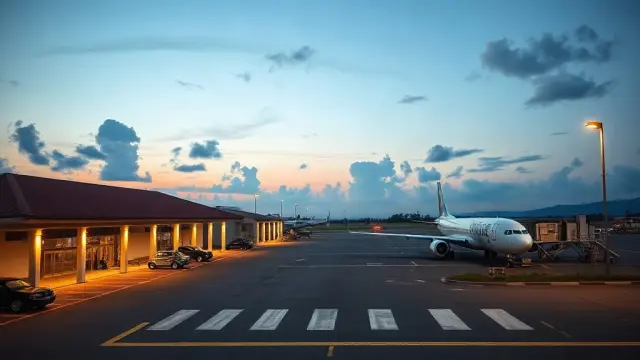
Entebbe Airport Ebola Probe Focuses on Travelers Who Left Uganda on Oct. 3
Africa CDC is investigating whether Nigeria's first Bundibugyo Ebola patient and Kenya's deceased index case crossed paths at Entebbe Airport on 3 Oc…
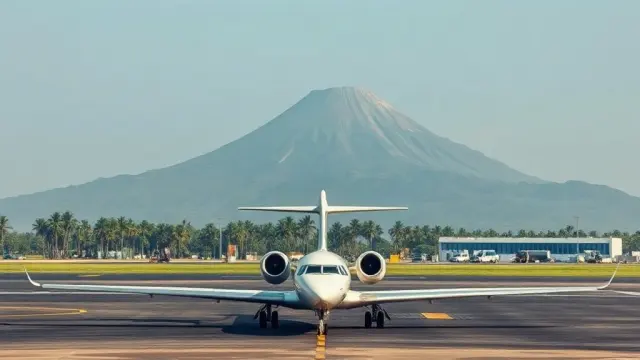
ICE Charter to Equatorial Guinea to Expel 25, Not Return Jailed Man
Documents show an ICE charter flight due in Equatorial Guinea on Thursday plans to expel 25 people there rather than retrieve Ahmed Soliman, an Egypt…
Frequently asked questions about the Central African Republic
What do I need to travel to the Central African Republic?
How long must my passport be valid for the Central African Republic?
Where is the Central African Republic?
What is the Central African Republic known for?
What is the capital of the Central African Republic?
What language is spoken in the Central African Republic?
What currency does the Central African Republic use?
What is the calling code of the Central African Republic?
Which countries border the Central African Republic?
How strong is the Central African passport?
What is the speed limit in the Central African Republic?
Is the Central African Republic safe to visit?
When is the best time to visit the Central African Republic?
What plug type does the Central African Republic use?
How many airports does the Central African Republic have?
Sources: CIA World Factbook (public domain); World Bank Open Data (CC BY 4.0); names, languages and currencies: mledoze/countries (ODbL); flag: flag-icons (MIT); coat of arms: Wikimedia Commons (file page); exchange rates: Daily reference rates from the open-source currency-api (CC0); airports: OurAirports.