
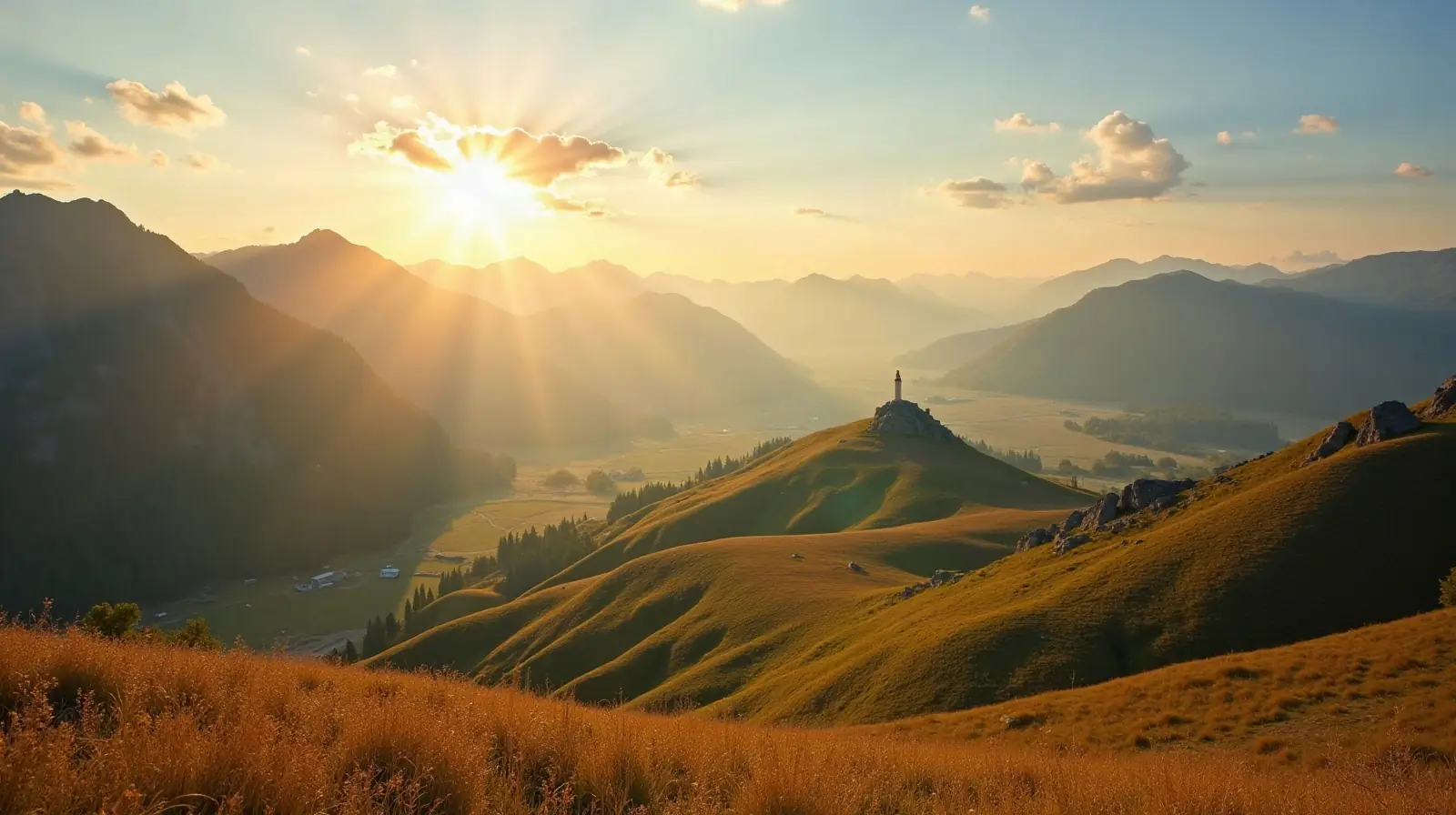
Southeast Europe

Kosovo: Travel Guide & Requirements
Republic of Kosovo · Republika e Kosovës · Република Косово
Kosovo is a country in Southeast Europe with its capital in Pristina. It has a population of 1.6 million (#153 in the world) and covers 10,887 km². The official languages are Albanian and Serbian. The currency is the Euro (EUR, €).
Where is Kosovo? Map of Kosovo
Southeastern Europe, between Serbia and Macedonia.
- Region
- Southeast Europe
- Coordinates
- 42.6667° N, 21.1667° E
- Neighbours
- 4 — see list
- Coastline
- Landlocked
- Kosovo
- Neighbours
- Capital
- Largest cities
Map of Kosovo showing Pristina (capital) and the largest cities: Prizren, Deçan and Leposaviq.
Travel requirements
What you need to travel to Kosovo
- Passport
Kosovo's Ministry of Foreign Affairs requires visa applicants to show a travel document valid for at least 3 months beyond their departure from Kosovo, with at least two blank pages.
- Visa or eTA
Depends on your passport: of 198 passports, 108 need no visa, 90 need a visa from an embassy. Check yours or see Kosovo entry requirements for every passport.
- Return or onward ticket
No official requirement. Kosovo's Ministry of Foreign Affairs says visa applicants must prove they can cover the stay and the return to their country of origin or transit to a third country.
- Proof of funds
Kosovo's Ministry of Foreign Affairs says visa applicants must prove sufficient funds for the stay and for the return or onward journey, and give evidence of accommodation or of sufficient means to pay for it.
- Travel insurance
Kosovo's Ministry of Foreign Affairs says visa applicants must show health insurance valid in Kosovo for the whole stay.
- Customs allowance
Kosovo Customs says everyone entering or leaving Kosovo with monetary instruments worth €10,000 or more (or the equivalent in foreign currency) must declare them to customs officers.
- Travel advice
Some caution needed — US and UK advice.
Entry rules: TravelRequirements.info — Entry Requirements Dataset (CC BY 4.0), each rule cited to an official government source. Always confirm with the airline and the official source before you travel.
Before you go
10 things to know before you travel to Kosovo
- Safety: Kosovo is generally safe for travellers, but some caution is needed: the US State Department rates Kosovo Level 2 (“Exercise Increased Caution”), and the UK Foreign Office has no warnings against travel there.
- Best time to go: June to September — when daytime highs in Pristina are around 23–29°C.
- Money: the Euro (EUR) — 1 US dollar is about 0.8911 EUR.
- Plugs: type C and F, 230 V, 50 Hz — standard 220–240 V: devices from the US or Japan (110–120 V) need a converter unless they are dual voltage (100–240 V).
- Emergency numbers: Police 192, Ambulance 194, Fire 193.
- Language: Albanian and Serbian are official.
- Driving: on the right — speed limits are 50 km/h in built-up areas, 80 km/h outside built-up areas, 110 km/h on expressways and 130 km/h on motorways.
- Time zone: UTC+1 in Pristina.
- Capital: Pristina. About 1.6 million people live in Kosovo.
- Outdoors: 2 national parks and 1 ski area.
Key facts
Kosovo at a glance
Languages spoken: Albanian (official) 94.5%, Bosnian 1.7%, Serbian (official) 1.6%, Turkish 1.1%, other 0.9% (includes Romani), unspecified 0.1% (2011 est.)
Geography & history
About Kosovo
The Ottoman Empire took control of Kosovo in 1389 after defeating Serbian forces. Large numbers of Turks and Albanians moved to the region, and by the end of the 19th century, Albanians had replaced Serbs as the majority ethnic group in Kosovo. Serbia reacquired control of Kosovo during the First Balkan War of 1912, and after World War II, Kosovo became an autonomous province of Serbia in the Socialist Federal Republic of Yugoslavia (SFRY). Increasing Albanian nationalism in the 1980s led to riots and calls for Kosovo's independence, but in 1989, Belgrade -- which has in turn served as the capital of Serbia and Yugoslavia -- revoked Kosovo's autonomous status. When the SFRY broke up in 1991…
Read the full history
The Ottoman Empire took control of Kosovo in 1389 after defeating Serbian forces. Large numbers of Turks and Albanians moved to the region, and by the end of the 19th century, Albanians had replaced Serbs as the majority ethnic group in Kosovo. Serbia reacquired control of Kosovo during the First Balkan War of 1912, and after World War II, Kosovo became an autonomous province of Serbia in the Socialist Federal Republic of Yugoslavia (SFRY). Increasing Albanian nationalism in the 1980s led to riots and calls for Kosovo's independence, but in 1989, Belgrade -- which has in turn served as the capital of Serbia and Yugoslavia -- revoked Kosovo's autonomous status. When the SFRY broke up in 1991, Kosovo Albanian leaders organized an independence referendum, and Belgrade's repressive response led to an insurgency. Kosovo remained part of Serbia, which joined with Montenegro to declare a new Federal Republic of Yugoslavia (FRY) in 1992. In 1998, Belgrade launched a brutal counterinsurgency campaign, with some 800,000 ethnic Albanians expelled from their homes in Kosovo. After international mediation failed, a NATO military operation began in March 1999 and forced Belgrade to withdraw its forces from Kosovo. UN Security Council Resolution 1244 (1999) placed Kosovo under the temporary control of the UN Interim Administration Mission in Kosovo (UNMIK). Negotiations in 2006-07 ended without agreement between Serbia and Kosovo, though the UN issued a comprehensive report that endorsed independence. On 17 February 2008, the Kosovo Assembly declared Kosovo independent. Serbia continues to reject Kosovo's independence, but the two countries began EU-facilitated discussions in 2013 to normalize relations, which resulted in several agreements. Additional agreements were reached in 2015 and 2023, but implementation remains incomplete. In 2022, Kosovo formally applied for membership in the EU, which is contingent on fulfillment of accession criteria, and the Council of Europe. Kosovo is also seeking UN and NATO memberships.
Location
Southeastern Europe, between Serbia and Macedonia
Climate
influenced by continental air masses resulting in relatively cold winters with heavy snowfall and hot, dry summers and autumns; Mediterranean and alpine influences create regional variation; maximum rainfall between October and December
Terrain
flat fluvial basin at an elevation of 400-700 m above sea level surrounded by several high mountain ranges with elevations of 2,000 to 2,500 m
Highest point
Gjeravica/Deravica 2,656 m
Natural resources
nickel, lead, zinc, magnesium, lignite, kaolin, chrome, bauxite
National symbols
six five-pointed white stars
Driving
Speed limits & road rules in Kosovo
The default speed limits in Kosovo are 50 km/h in built-up areas, 80 km/h outside built-up areas, 110 km/h on expressways and 130 km/h on motorways. Posted signs always take priority over these defaults.
- 5050 km/hBuilt-up areasTowns and cities
- 8080 km/hOutside built-up areasCountry roads
- 110110 km/hExpresswaysDual carriageways & expressways
- 130130 km/hMotorwaysMotorways / freeways
- International Driving PermitNot a party to the IDP conventionsCheck with the embassy whether your licence is accepted
- Driving sideDrive on the rightOvertake on the left
Speed limits: OpenStreetMap wiki — Default speed limits (CC BY-SA 2.0). Road-safety laws: WHO Global Health Observatory. Compare speed limits and alcohol limits by country. Defaults for cars; local signs, weather and vehicle type can lower them.
Safety
Is Kosovo safe to visit?
Kosovo is generally safe for travellers, but some caution is needed: the US State Department rates Kosovo Level 2 (“Exercise Increased Caution”), and the UK Foreign Office has no warnings against travel there.
 US State Department
 UK Foreign Office (FCDO)
Latest update: Updated information about large gatherings in Pristina and other urban areas of Kosovo (‘Warnings and insurance’ page).
Updated 23 Sep 2026 · Full travel advice
Sources: US Department of State travel advisories (public domain) and UK FCDO foreign travel advice (contains public sector information licensed under the Open Government Licence v3.0). Checked daily. Advice can change quickly — always read the official page before you travel.
Weather
Best time to visit Kosovo
The best time to visit Kosovo is June to September, when daytime highs in Pristina are around 23–29°C. August is the warmest month (29°C by day), January the coldest (-6°C at night), and May the wettest with about 80 mm of rain.
- Jan2°C-6°C
- Feb5°C-4°C
- Mar10°C-1°C
- Apr15°C4°C
- May20°C9°C
- Jun24°C13°C
- Jul29°C15°C
- Aug29°C15°C
- Sep23°C10°C
- Oct17°C5°C
- Nov10°C1°C
- Dec3°C-4°C
Best time Good Less ideal
Before you go
Plugs, voltage & emergency numbers in Kosovo
Plugs & sockets
230 V, 50 Hz · Standard 220–240 V: devices from the US or Japan (110–120 V) need a converter unless they are dual voltage (100–240 V).
Emergency numbers
Save the local numbers before you travel — 112 or 911 may not connect here. All countries →
Sources: Wikipedia — Mains electricity by country and List of emergency telephone numbers (CC BY-SA 4.0).
Ski resorts
1 ski resort in Kosovo
- 7 km of slopes
- 8 lifts
- up to 2,260 m
Biggest: Ski Center Brezovica
National parks
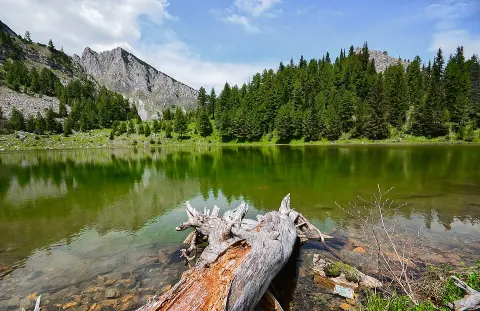
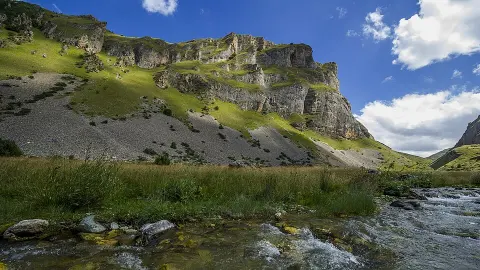
2 national parks in Kosovo
- 1,158 km² protected
- oldest from 2012
Largest: National park Bjeshkët e Nemuna · Sharr Mountains National Park
Currency · 26 October 2026
Euro exchange rates today
Kosovo uses the Euro (EUR, €). One US dollar buys 0.8911 EUR; over the last 30 days the EUR has lost 1.5% against the dollar.
What other currencies cost in EUR
Currency converter
Daily reference rates from the open-source currency-api (CC0), 26 Oct 2026. Banks and exchange offices add a margin.
World rankings
Where Kosovo ranks
How Kosovo compares with the rest of the world — open any card for the full ranking.
Airports
Airports in Kosovo
13 airports and airfields — 1 large, 0 medium and 1 small, plus 11 heliports. 1 have scheduled passenger flights.
Borders
Neighbouring countries
Kosovo borders 4 countries along 714 km of land borders. It is landlocked.


Military
Kosovan armed forces
Kosovo ranks #134 of 145 in the Global Firepower military strength ranking, with a defence budget of $235 million (2025).
People
Population & society
Religion
Largest cities: Pristina (218,782)
Economy
Economy
Main industries
mineral mining, construction materials, base metals, leather, machinery, appliances, foodstuffs and beverages, textiles
Export partners
United States 16%, Albania 15%, North Macedonia 12%, Germany 8%, Italy 8% (2021)
Top exports
mattress materials, iron alloys, metal piping, scrap iron, building plastics (2021)
Travel tools
Handy before every trip to Kosovo
Next public holiday
Catholic Christmas Day — Friday, 25 December 2026. Then New Year's Day (1 Jan).
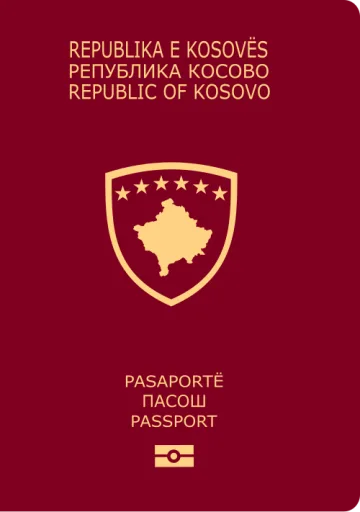
Kosovan passport
Ranked #103: 50 countries visa-free, 27 with visa on arrival, 3 with an eTA and 39 with an eVisa.
Kosovan passport photo
Exact size, head position and background for Kosovo's passport and visa photos — make one free with AI checks.
Calling Kosovo
Dial +383 before the local number.
Entry requirements
Visa rules for every passport visiting Kosovo: visa-free stays, eVisas, visas on arrival and documents to bring.
News
Latest travel news about Kosovo
Kosovo Entry Rules Unchanged as EU Debates Limited Russian Schengen Visas
The EU is considering issuing Russian tourists Schengen visas valid only in named member states. No start date, eligibility rules or scope have been …

Germany to Halve Western Balkans Work Quota to 25,000 From 2027
Germany will cut its annual quota for workers from the Western Balkans from 50,000 to 25,000 from 1 January 2027. The Western Balkans Regulation cove…
Denmark Grants Visa-Free Entry to Citizens with Biometric Passports
Denmark has announced visa-free entry for citizens of nine countries holding biometric passports, streamlining travel for these nationalities.
Frequently asked questions about Kosovo
What do I need to travel to Kosovo?
How long must my passport be valid for Kosovo?
Where is Kosovo?
What is Kosovo known for?
What is the capital of Kosovo?
What language is spoken in Kosovo?
What currency does Kosovo use?
What is the calling code of Kosovo?
Which countries border Kosovo?
How strong is the Kosovan passport?
What is the speed limit in Kosovo?
Is Kosovo safe to visit?
When is the best time to visit Kosovo?
What plug type does Kosovo use?
How many airports does Kosovo have?
Sources: CIA World Factbook (public domain); World Bank Open Data (CC BY 4.0); names, languages and currencies: mledoze/countries (ODbL); flag: flag-icons (MIT); coat of arms: Wikimedia Commons (file page); exchange rates: Daily reference rates from the open-source currency-api (CC0); airports: OurAirports.