
Northern Africa · UN member

Sudan: Travel Guide & Requirements
Republic of the Sudan · جمهورية السودان
Sudan is a country in Northern Africa with its capital in Khartoum. It has a population of 51.7 million (#30 in the world) and covers 1,861,484 km². The official languages are Arabic and English. The currency is the Sudanese pound (SDG, PT).
Where is Sudan? Map of Sudan
north-eastern Africa, bordering the Red Sea, between Egypt and Eritrea.
- Region
- Northern Africa
- Coordinates
- 15° N, 30° E
- Neighbours
- 7 — see list
- Coastline
- 853 km
- Sudan
- Neighbours
- Capital
- Largest cities
Map of Sudan showing Khartoum (capital) and the largest cities: Nyala, Port Sudan, Kassala, El Obeid, Al Qadarif, Kosti, Wad Medani and El Daein.
Travel requirements
What you need to travel to Sudan
- Passport
The UK government says your passport must have an expiry date at least 6 months after the date you arrive in Sudan.
- Visa or eTA
Depends on your passport: of 198 passports, 4 need no visa, 3 get a visa on arrival, 191 need a visa from an embassy. Check yours or see Sudan entry requirements for every passport.
- Return or onward ticket
No official requirement.
- Proof of funds
No official source we could read publishes an amount.
- Travel insurance
No official requirement. The UK government says the conflict has severely affected health services, that medical evacuation is likely to be necessary for all but the most basic treatments, and tells travellers to make sure they have adequate tr…
- Vaccinations
Sudan's embassy in Washington says yellow fever and cholera vaccinations are not required but recommended.
- Customs allowance
No official requirement. Canada's travel advice says the Sudanese pound is non-convertible outside the country and its export is prohibited.
- Travel advice
Avoid travel — US and UK advice.
Entry rules: TravelRequirements.info — Entry Requirements Dataset (CC BY 4.0), each rule cited to an official government source. Always confirm with the airline and the official source before you travel.
Before you go
10 things to know before you travel to Sudan
- Safety: Governments advise against travel to Sudan: the US State Department rates Sudan Level 4 (“Do Not Travel”), and the UK Foreign Office advises against all travel to parts of the country.
- Best time to go: December to January — when daytime highs in Khartoum are around 31–32°C.
- Money: the Sudanese pound (SDG) — 1 US dollar is about 600.1886 SDG.
- Plugs: type C, D, F and G, 230 V, 50 Hz — standard 220–240 V: devices from the US or Japan (110–120 V) need a converter unless they are dual voltage (100–240 V).
- Emergency numbers: Police 999, Ambulance 999, Fire 999.
- Language: Arabic and English are official.
- Driving: on the right — speed limits are 50 km/h in built-up areas and 90 km/h outside built-up areas.
- Time zone: UTC+3 in Khartoum.
- Capital: Khartoum. About 51.7 million people live in Sudan.
- Sudan is the 16th largest country in the world by area.
Key facts
Sudan at a glance
Languages spoken: Arabic (official), English (official), Nubian, Ta Bedawie, Fur
Geography & history
About Sudan
Long referred to as Nubia, modern-day Sudan was the site of the Kingdom of Kerma (ca. 2500-1500 B.C.) until it was absorbed into the New Kingdom of Egypt. By the 11th century B.C., the Kingdom of Kush gained independence from Egypt; it lasted in various forms until the middle of the 4th century A.D. After the fall of Kush, the Nubians formed three Christian kingdoms of Nobatia, Makuria, and Alodia, with the latter two enduring until around 1500. Between the 14th and 15th centuries, Arab nomads settled much of Sudan, leading to extensive Islamization between the 16th and 19th centuries. Following Egyptian occupation early in the 19th century, an agreement in 1899 set up a joint British-Egypt…
Read the full history
Long referred to as Nubia, modern-day Sudan was the site of the Kingdom of Kerma (ca. 2500-1500 B.C.) until it was absorbed into the New Kingdom of Egypt. By the 11th century B.C., the Kingdom of Kush gained independence from Egypt; it lasted in various forms until the middle of the 4th century A.D. After the fall of Kush, the Nubians formed three Christian kingdoms of Nobatia, Makuria, and Alodia, with the latter two enduring until around 1500. Between the 14th and 15th centuries, Arab nomads settled much of Sudan, leading to extensive Islamization between the 16th and 19th centuries. Following Egyptian occupation early in the 19th century, an agreement in 1899 set up a joint British-Egyptian government in Sudan, but it was effectively a British colony. Military regimes favoring Islamic-oriented governments have dominated national politics since Sudan gained independence from Anglo-Egyptian co-rule in 1956. During most of the second half of the 20th century, Sudan was embroiled in two prolonged civil wars rooted in northern domination of the largely non-Muslim, non-Arab southern portion of the country. The first civil war ended in 1972, but another broke out in 1983. Peace talks gained momentum in 2002-04, and the final North/South Comprehensive Peace Agreement in 2005 granted the southern rebels autonomy for six years, followed by a referendum on independence for Southern Sudan. South Sudan became independent in 2011, but Sudan and South Sudan have yet to fully implement security and economic agreements to normalize relations between the two countries. Sudan has also faced conflict in Darfur, Southern Kordofan, and Blue Nile starting in 2003. In 2019, after months of nationwide protests, the 30-year reign of President Omar Hassan Ahmad al-BASHIR ended when the military forced him out. Economist and former international civil servant Abdalla HAMDOUK al-Kinani was selected to serve as the prime minister of a transitional government as the country prepared for elections in 2022. In late 2021, however, the Sudanese military ousted HAMDOUK and his government and replaced civilian members of the Sovereign Council (Sudan’s collective Head of State) with individuals selected by the military. HAMDOUK was briefly reinstated but resigned in January 2022. General Abd-al-Fatah al-BURHAN Abd-al-Rahman, the Chair of Sudan’s Sovereign Council and Commander-in-Chief of the Sudanese Armed Forces, currently serves as de facto head of state and government. He presides over a Sovereign Council consisting of military leaders, former armed opposition group representatives, and military-appointed civilians. A cabinet of acting ministers handles day-to-day administration.
Location
north-eastern Africa, bordering the Red Sea, between Egypt and Eritrea
Climate
hot and dry; arid desert; rainy season varies by region (April to November)
Terrain
generally flat, featureless plain; desert dominates the north
Highest point
Jabal Marrah 3,042 m
Natural resources
petroleum; small reserves of iron ore, copper, chromium ore, zinc, tungsten, mica, silver, gold; hydropower
Natural hazards
dust storms and periodic persistent droughts
National symbols
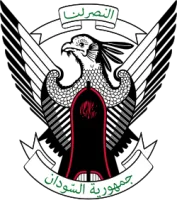
secretary bird
Driving
Speed limits & road rules in Sudan
The default speed limits in Sudan are 50 km/h in built-up areas and 90 km/h outside built-up areas. Posted signs always take priority over these defaults.
- 5050 km/hBuilt-up areasTowns and cities
- 9090 km/hOutside built-up areasCountry roadsWHO data (2017)
- International Driving PermitNot a party to the IDP conventionsCheck with the embassy whether your licence is accepted
- Driving sideDrive on the rightOvertake on the left
- Seat beltsRequired by law
- Child seatsNo national child-restraint law
- Motorcycle helmetsRequired for riders
- Road deaths (2021)19.6 per 100,000 peopleHigher than most countries (median 12.4)
Speed limits: OpenStreetMap wiki — Default speed limits (CC BY-SA 2.0) and WHO. Road-safety laws: WHO Global Health Observatory. Compare speed limits and alcohol limits by country. Defaults for cars; local signs, weather and vehicle type can lower them.
Safety
Is Sudan safe to visit?
Governments advise against travel to Sudan: the US State Department rates Sudan Level 4 (“Do Not Travel”), and the UK Foreign Office advises against all travel to parts of the country.
 US State Department
 UK Foreign Office (FCDO)
Latest update: Updated information on operations in Sudanese airports ('Safety and security' page).
Updated 11 May 2026 · Full travel advice
Sources: US Department of State travel advisories (public domain) and UK FCDO foreign travel advice (contains public sector information licensed under the Open Government Licence v3.0). Checked daily. Advice can change quickly — always read the official page before you travel.
Weather
Best time to visit Sudan
The best time to visit Sudan is December to January, when daytime highs in Khartoum are around 31–32°C. February and November are also a good time to go. May is the warmest month (42°C by day), January the coldest (13°C at night).
- Jan31°C13°C
- Feb34°C16°C
- Mar37°C19°C
- Apr40°C22°C
- May42°C26°C
- Jun42°C27°C
- Jul39°C26°C
- Aug36°C25°C
- Sep39°C25°C
- Oct39°C25°C
- Nov35°C19°C
- Dec32°C15°C
Best time Good Less ideal
Before you go
Plugs, voltage & emergency numbers in Sudan
Plugs & sockets
- Type C (Europlug)two round pins
- Type Dthree large round pins in a triangle
- Type F (Schuko)two round pins with earth clips on the sides
- Type Gthree rectangular pins in a triangle
230 V, 50 Hz · Standard 220–240 V: devices from the US or Japan (110–120 V) need a converter unless they are dual voltage (100–240 V).
Emergency numbers
Save the local numbers before you travel — 112 or 911 may not connect here. All countries →
Sources: Wikipedia — Mains electricity by country and List of emergency telephone numbers (CC BY-SA 4.0).
National parks
4 national parks in Sudan
- 24,010 km² protected
- oldest from 1935
Largest: Radom National Park · Dinder National Park · Suakin Archipelago National Park
Currency · 26 October 2026
Sudanese pound exchange rates today
Sudan uses the Sudanese pound (SDG, PT). One US dollar buys 600.1886 SDG; over the last 30 days the SDG has gained 0.0% against the dollar.
What other currencies cost in SDG
Currency converter
Daily reference rates from the open-source currency-api (CC0), 26 Oct 2026. Banks and exchange offices add a margin.
World rankings
Where Sudan ranks
How Sudan compares with the rest of the world — open any card for the full ranking.
Airports
Airports in Sudan
52 airports and airfields — 2 large, 8 medium and 34 small, plus 8 heliports. 7 have scheduled passenger flights.
Borders
Neighbouring countries
Sudan borders 7 countries along 6,819 km of land borders. Coastline: 853 km.


Military
Sudanese armed forces
Sudan ranks #75 of 145 in the Global Firepower military strength ranking, with a defence budget of $369 million (2021).
People
Population & society
Largest cities: Khartoum (6.3 million), Nyala (1.1 million)
Economy
Economy
Main industries
oil, cotton ginning, textiles, cement, edible oils, sugar, soap distilling, shoes, petroleum refining, pharmaceuticals, armaments, automobile/light truck assembly, milling
Export partners
UAE 21%, China 17%, Saudi Arabia 16%, Malaysia 9%, Egypt 8% (2023)
Top exports
crude petroleum, gold, oil seeds, sheep and goats, ground nuts (2023)
Travel tools
Handy before every trip to Sudan
Next public holiday
Christmas Day — Friday, 25 December 2026. Then Independence Day (1 Jan).

Sudanese passport
Ranked #186: 13 countries visa-free, 26 with visa on arrival, 3 with an eTA and 43 with an eVisa.
Sudanese passport photo
Exact size, head position and background for Sudan's passport and visa photos — make one free with AI checks.
Calling Sudan
Dial +249 before the local number. Internet domain .sd.
Climate footprint
17.8 million tonnes of CO₂ in 2024 — 0.35 t per person.
Entry requirements
Visa rules for every passport visiting Sudan: visa-free stays, eVisas, visas on arrival and documents to bring.
News
Latest travel news about Sudan
Armed Clashes and Drone Strikes Return to Ethiopia's Tigray Region
Tigrayan authorities declared the 2022 Pretoria peace agreement collapsed on 11 July, and clashes and drone strikes have been reported in Tigray sinc…

US Keeps Sudan and Ukraine TPS Protections Going Past Expiry Date
The U.S. Department of Homeland Security has confirmed that Temporary Protected Status (TPS) protections will continue for eligible Sudanese and Ukra…

Sudanese TPS holders keep US protection after 19 October, DHS guidance awaited
Sudanese and Ukrainian Temporary Protected Status holders retain their US status and work authorisation after their designation periods expired on 19…
Frequently asked questions about Sudan
What do I need to travel to Sudan?
How long must my passport be valid for Sudan?
Where is Sudan?
What is Sudan known for?
What is the capital of Sudan?
What language is spoken in Sudan?
What currency does Sudan use?
What is the calling code of Sudan?
Which countries border Sudan?
How strong is the Sudanese passport?
What is the speed limit in Sudan?
Is Sudan safe to visit?
When is the best time to visit Sudan?
What plug type does Sudan use?
How many airports does Sudan have?
Sources: CIA World Factbook (public domain); World Bank Open Data (CC BY 4.0); names, languages and currencies: mledoze/countries (ODbL); flag: flag-icons (MIT); coat of arms: Wikimedia Commons (file page); exchange rates: Daily reference rates from the open-source currency-api (CC0); airports: OurAirports.