
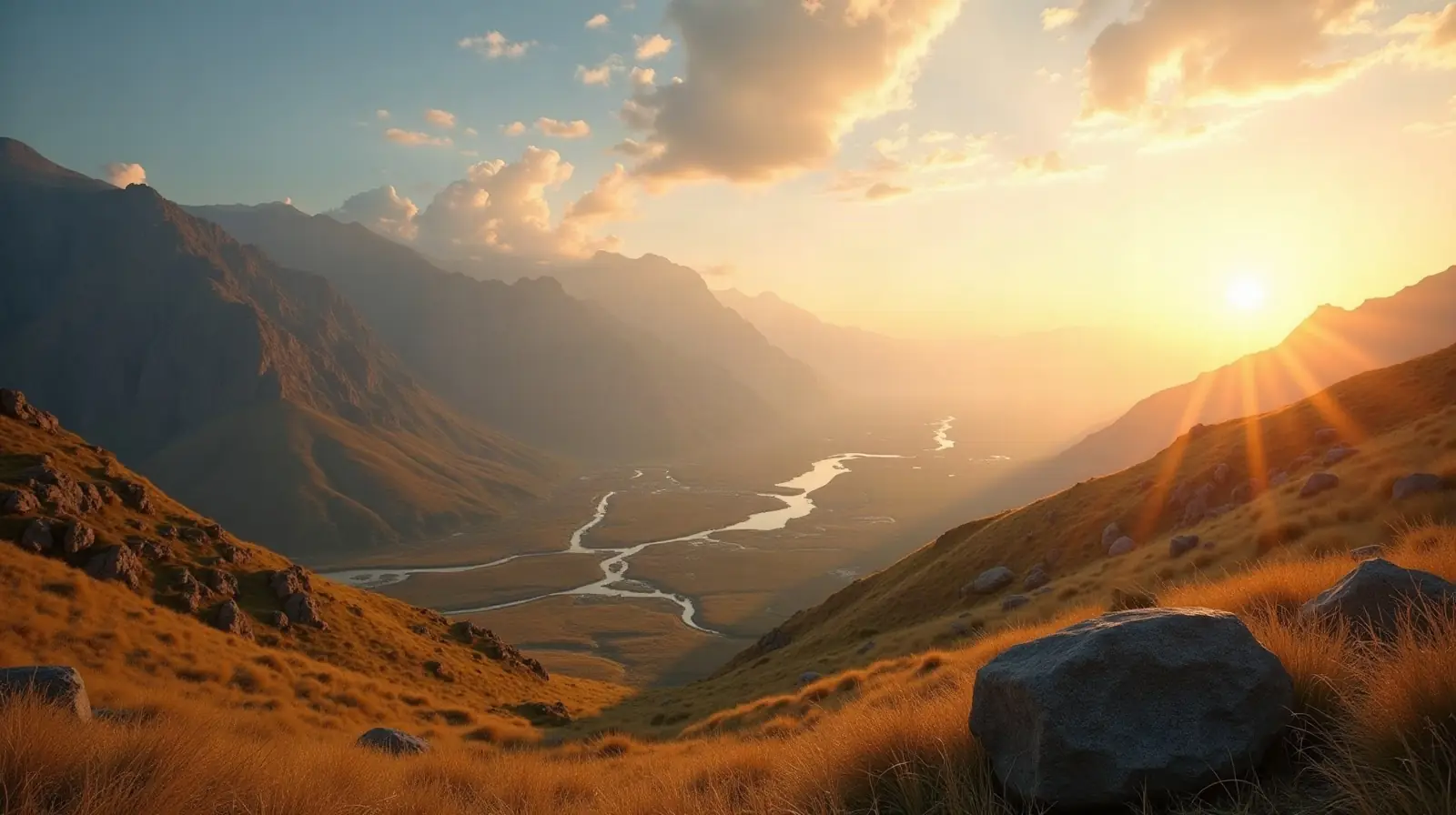
Southern Asia · UN member

Pakistan: Travel Guide & Requirements
Islamic Republic of Pakistan · اسلامی جمہوریۂ پاكستان
Pakistan is a country in Southern Asia with its capital in Islamabad. It has a population of 255.2 million (#5 in the world) and covers 796,095 km². The official languages are English and Urdu. The currency is the Pakistani rupee (PKR, ₨).
Where is Pakistan? Map of Pakistan
Southern Asia, bordering the Arabian Sea, between India on the east and Iran and Afghanistan on the west and China in the north.
- Region
- Southern Asia
- Coordinates
- 30° N, 70° E
- Neighbours
- 4 — see list
- Coastline
- 1,046 km
- Pakistan
- Neighbours
- Capital
- Largest cities
Map of Pakistan showing Islamabad (capital) and the largest cities: Lahore, Karachi, Peshawar, Faisalabad, Gujranwala, Multan, Hyderabad and Quetta.
Travel requirements
What you need to travel to Pakistan
- Passport
The UK government tells British travellers that to enter Pakistan their passport must have an expiry date at least 6 months after the date of the visa application.
- Visa or eTA
Depends on your passport: of 198 passports, 6 need no visa, 186 need an eVisa, 5 need a visa from an embassy. Check yours or see Pakistan entry requirements for every passport.
- Return or onward ticket
No official requirement. Pakistan's visa portal lists hotel booking details among the documents for a tourist entry visa.
- Proof of funds
No official requirement. Pakistan's visa portal lists hotel booking details among the documents for a tourist entry visa.
- Travel insurance
No official requirement.
- Vaccinations
The UK government says that to enter Pakistan you must have a certificate to prove you have had a yellow fever vaccination if you are coming from a country listed as a transmission risk.
- Customs allowance
The State Bank of Pakistan's general permission lets travellers to Pakistan bring foreign currency notes without limit (except un-issued notes and coin).
- Travel advice
High risk — US and UK advice.
Entry rules: TravelRequirements.info — Entry Requirements Dataset (CC BY 4.0), each rule cited to an official government source. Always confirm with the airline and the official source before you travel.
Before you go
10 things to know before you travel to Pakistan
- Safety: Travel to Pakistan carries a high risk: the US State Department rates Pakistan Level 3 (“Reconsider Travel”), and the UK Foreign Office advises against all travel to parts of the country.
- Best time to go: March and November — when daytime highs in Islamabad are around 24–25°C.
- Money: the Pakistani rupee (PKR) — 1 US dollar is about 276.2887 PKR.
- Plugs: type C, D, G and M, 230 V, 50 Hz — standard 220–240 V: devices from the US or Japan (110–120 V) need a converter unless they are dual voltage (100–240 V).
- Emergency numbers: Police 15, Ambulance 115 / 1122, Fire 16.
- Language: English and Urdu are official.
- Driving: on the left — speed limits are 55 km/h in built-up areas, 70 km/h outside built-up areas and 130 km/h on motorways.
- Time zone: UTC+5 in Islamabad.
- Capital: Islamabad; the largest city is Karachi. About 255.2 million people live in Pakistan.
- Outdoors: 43 national parks and 2 ski areas.
Key facts
Pakistan at a glance
Languages spoken: Punjabi 38.8%, Pashto (alternate name, Pashtu) 18.2%, Sindhi 14.6%, Saraiki (a Punjabi variant) 12.2%, Urdu 7.1%, Balochi 3%, Hindko 2.4%, Brahui 1.2%, other 2.4%
Geography & history
About Pakistan
The Indus Valley civilization, one of the oldest in the world and dating back at least 5,000 years, spread over much of modern-day Pakistan. During the second millennium B.C., remnants of this culture fused with the migrating Indo-Aryan peoples. The area underwent successive invasions in subsequent centuries from the Persians, Greeks, Scythians, Arabs (who brought Islam), Afghans, and Turks. The Mughal Empire flourished in the 16th and 17th centuries; the British came to dominate the region in the 18th century. The partition in 1947 of British India into the Muslim state of Pakistan (with West and East sections) and largely Hindu India created lasting tension between the two countries. They…
Read the full history
The Indus Valley civilization, one of the oldest in the world and dating back at least 5,000 years, spread over much of modern-day Pakistan. During the second millennium B.C., remnants of this culture fused with the migrating Indo-Aryan peoples. The area underwent successive invasions in subsequent centuries from the Persians, Greeks, Scythians, Arabs (who brought Islam), Afghans, and Turks. The Mughal Empire flourished in the 16th and 17th centuries; the British came to dominate the region in the 18th century. The partition in 1947 of British India into the Muslim state of Pakistan (with West and East sections) and largely Hindu India created lasting tension between the two countries. They have fought two wars and a limited conflict -- in 1947-48, 1965, and 1999 respectively -- over the Kashmir territory, a dispute that continues to this day. A third war in 1971 -- in which India assisted an indigenous movement reacting to Bengali marginalization in Pakistani politics -- resulted in East Pakistan becoming the separate nation of Bangladesh. In response to Indian nuclear weapons testing, Pakistan conducted its own tests in 1998. Pakistan has been engaged in a decades-long armed conflict with militant groups, including the Tehreek-e-Taliban Pakistan (TTP) and other militant networks that target government institutions and civilians.
Location
Southern Asia, bordering the Arabian Sea, between India on the east and Iran and Afghanistan on the west and China in the north
Climate
mostly hot, dry desert; temperate in northwest; arctic in north
Terrain
divided into three major geographic areas: the northern highlands, the Indus River plain in the center and east, and the Balochistan Plateau in the south and west
Highest point
K2 (Mt. Godwin-Austen) 8,611 m
Natural resources
arable land, extensive natural gas reserves, limited petroleum, poor quality coal, iron ore, copper, salt, limestone
Natural hazards
frequent earthquakes, occasionally severe especially in north and west; flooding along the Indus after heavy rains (July and August)
National symbols
five-pointed star between the horns of a waxing crescent moon, jasmine
Driving
Speed limits & road rules in Pakistan
The default speed limits in Pakistan are 55 km/h in built-up areas, 70 km/h outside built-up areas and 130 km/h on motorways. Posted signs always take priority over these defaults.
- 5555 km/hBuilt-up areasTowns and citiesWith a trailer: 50 km/h
- 7070 km/hOutside built-up areasCountry roadsWith a trailer: 50 km/h
- 130130 km/hMotorwaysMotorways / freeways
- International Driving PermitRecognised: 1968 ViennaCarry the IDP together with your national licence
- Driving sideDrive on the leftOvertake on the right
- Seat beltsRequired by law
- Child seatsNo national child-restraint law
- Motorcycle helmetsRequired for riders
- Road deaths (2021)11.9 per 100,000 peopleClose to the world median (12.4)
Speed limits: OpenStreetMap wiki — Default speed limits (CC BY-SA 2.0). Road-safety laws: WHO Global Health Observatory. Compare speed limits and alcohol limits by country. Defaults for cars; local signs, weather and vehicle type can lower them.
Safety
Is Pakistan safe to visit?
Travel to Pakistan carries a high risk: the US State Department rates Pakistan Level 3 (“Reconsider Travel”), and the UK Foreign Office advises against all travel to parts of the country.
 US State Department
 UK Foreign Office (FCDO)
Latest update: Addition of information about emergency measures in Khyber Pakhtunkhwa (‘Warnings and insurance’ page).
Updated 13 Oct 2026 · Full travel advice
Sources: US Department of State travel advisories (public domain) and UK FCDO foreign travel advice (contains public sector information licensed under the Open Government Licence v3.0). Checked daily. Advice can change quickly — always read the official page before you travel.
Weather
Best time to visit Pakistan
The best time to visit Pakistan is March and November, when daytime highs in Islamabad are around 24–25°C. October is also a good time to go. June is the warmest month (40°C by day), January the coldest (5°C at night), and July the wettest with about 220 mm of rain.
- Jan17°C5°C
- Feb20°C7°C
- Mar25°C12°C
- Apr32°C17°C
- May38°C23°C
- Jun40°C27°C
- Jul37°C27°C
- Aug34°C25°C
- Sep33°C22°C
- Oct30°C16°C
- Nov24°C11°C
- Dec19°C7°C
Best time Good Less ideal
Before you go
Plugs, voltage & emergency numbers in Pakistan
Plugs & sockets
- Type C (Europlug)two round pins
- Type Dthree large round pins in a triangle
- Type Gthree rectangular pins in a triangle
- Type Mthree large round pins in a triangle
230 V, 50 Hz · Standard 220–240 V: devices from the US or Japan (110–120 V) need a converter unless they are dual voltage (100–240 V).
Emergency numbers
112 works from any mobile phone, even without a SIM card in most networks. All countries →
Sources: Wikipedia — Mains electricity by country and List of emergency telephone numbers (CC BY-SA 4.0).
Ski resorts
2 ski resorts in Pakistan
- 2 lifts
- up to 3,819 m
Biggest: Malam Jabba · Naltar
National parks
43 national parks in Pakistan
- 28,310 km² protected
- oldest from 1959
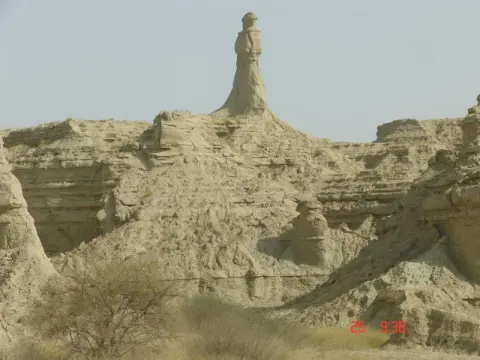
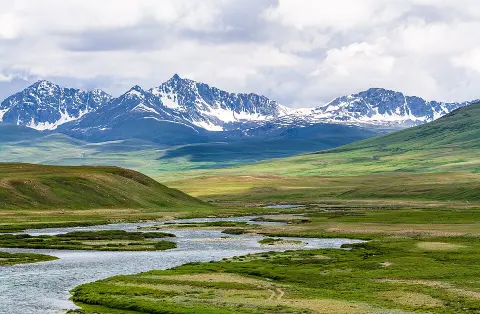
Largest: Hingol National Park · Deosai National Park · Kirthar National Park
Currency · 26 October 2026
Pakistani rupee exchange rates today
Pakistan uses the Pakistani rupee (PKR, ₨). One US dollar buys 276.2887 PKR; over the last 30 days the PKR has gained 0.3% against the dollar.
What other currencies cost in PKR
Currency converter
Daily reference rates from the open-source currency-api (CC0), 26 Oct 2026. Banks and exchange offices add a margin.
World rankings
Where Pakistan ranks
How Pakistan compares with the rest of the world — open any card for the full ranking.
Airports
Airports in Pakistan
168 airports and airfields — 11 large, 28 medium and 76 small, plus 53 heliports. 23 have scheduled passenger flights.
Borders
Neighbouring countries
Pakistan borders 4 countries along 7,257 km of land borders. Coastline: 1,046 km.


Military
Pakistani armed forces
Pakistan ranks #7 of 145 in the Global Firepower military strength ranking, with a defence budget of $11.9 billion (2025).
People
Population & society
Religion
Largest cities: Karachi (17.2 million), Lahore (14.0 million), Faisalabad (3.7 million), Gujranwala (2.4 million), Peshawar (2.4 million)
Economy
Economy
Main industries
textiles and apparel, food processing, pharmaceuticals, surgical instruments, construction materials, paper products, fertilizer, shrimp
Export partners
USA 14%, UAE 10%, China 9%, Germany 7%, UK 6% (2023)
Top exports
garments, fabric, refined petroleum, rice, cotton fabric (2023)
Travel tools
Handy before every trip to Pakistan
Next public holiday
Iqbal Day — Monday, 9 November 2026. Then Quaid-e-Azam Day (25 Dec).

Pakistani passport
Ranked #194: 10 countries visa-free, 20 with visa on arrival, 2 with an eTA and 50 with an eVisa.
Pakistani passport photo
Exact size, head position and background for Pakistan's passport and visa photos — make one free with AI checks.
Calling Pakistan
Dial +92 before the local number. Internet domain .pk.
Climate footprint
179.8 million tonnes of CO₂ in 2024 — 0.72 t per person.
Entry requirements
Visa rules for every passport visiting Pakistan: visa-free stays, eVisas, visas on arrival and documents to bring.
News
Latest travel news about Pakistan
UK student visa squeeze and £925 levy planned for 2028: what applicants face
British universities say tighter UK immigration rules are cutting international student numbers, putting a £925 annual levy planned for August 2028 a…
Moroccans Won the Most Italian Residence Permits in 2025, Data Shows
Italy issued 44,549 first residence permits to Moroccan nationals in 2025, the highest of any non-EU nationality, according to ISTAT. Moroccans also …
US visa refusals keep Zimbabwe, Nepal and Pakistan fellows out of Utah event
Visa applications from religious freedom fellows in Nepal, Pakistan, Kenya, Nigeria and Zimbabwe were turned down by US officials, leaving only nine …
Frequently asked questions about Pakistan
What do I need to travel to Pakistan?
How long must my passport be valid for Pakistan?
Where is Pakistan?
What is Pakistan known for?
What is the capital of Pakistan?
What language is spoken in Pakistan?
What currency does Pakistan use?
What is the calling code of Pakistan?
Which countries border Pakistan?
How strong is the Pakistani passport?
What is the speed limit in Pakistan?
Is Pakistan safe to visit?
When is the best time to visit Pakistan?
What plug type does Pakistan use?
How many airports does Pakistan have?
Sources: CIA World Factbook (public domain); World Bank Open Data (CC BY 4.0); names, languages and currencies: mledoze/countries (ODbL); flag: flag-icons (MIT); coat of arms: Wikimedia Commons (file page); exchange rates: Daily reference rates from the open-source currency-api (CC0); airports: OurAirports.