
Southern Europe · UN member

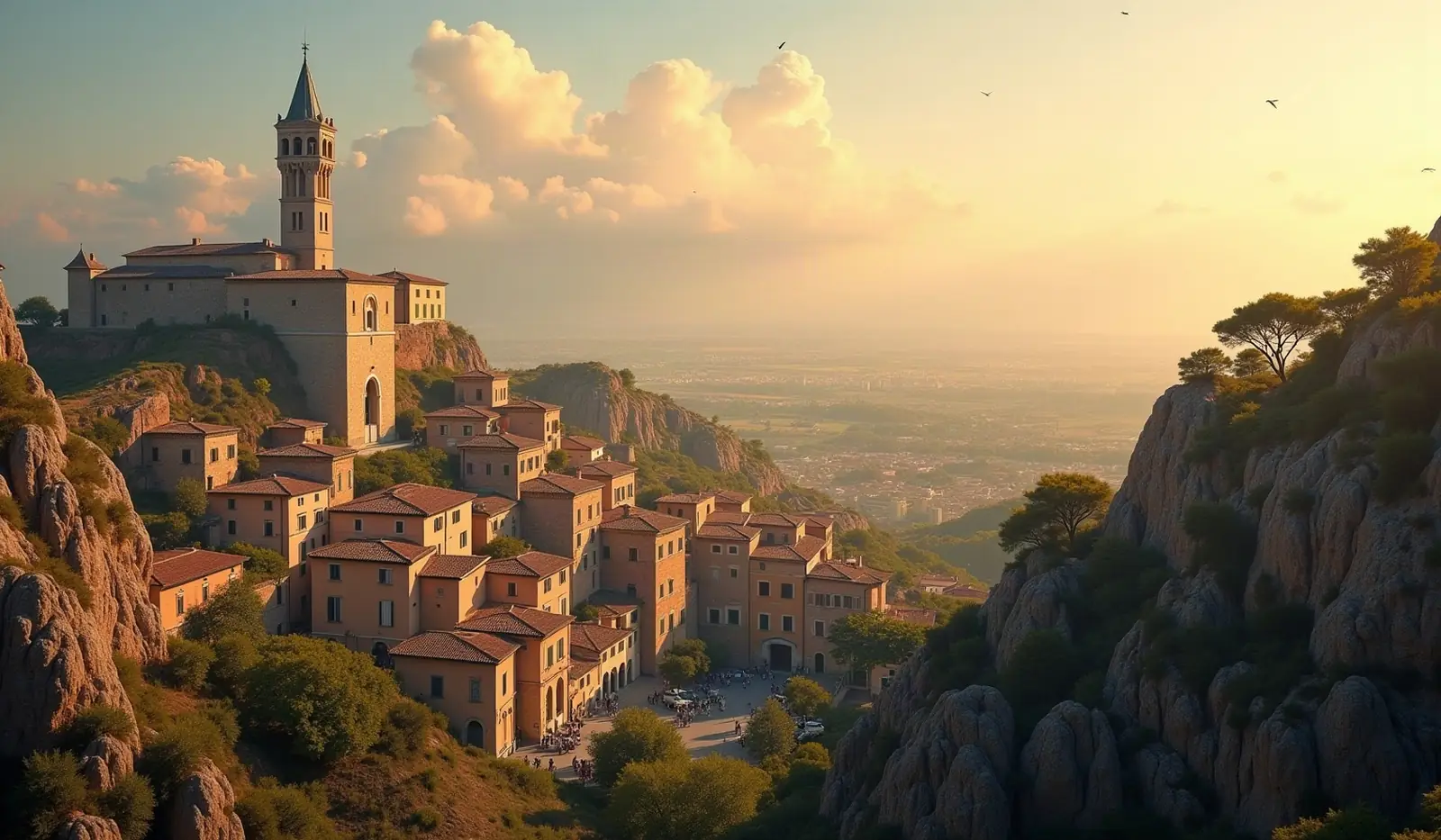
Italy: Travel Guide & Requirements
Italian Republic · Repubblica italiana
Italy is a country in Southern Europe with its capital in Rome. It has a population of 58.9 million (#25 in the world) and covers 301,340 km². The official language is Italian. The currency is the Euro (EUR, €).
Where is Italy? Map of Italy
Southern Europe, a peninsula extending into the central Mediterranean Sea, northeast of Tunisia.
- Region
- Southern Europe
- Coordinates
- 42.8333° N, 12.8333° E
- Neighbours
- 6 — see list
- Coastline
- 7,600 km
- Italy
- Neighbours
- Capital
- Largest cities
Map of Italy showing Rome (capital) and the largest cities: Milan, Naples, Turin, Palermo, Genoa, Bologna, Florence and Bari.
Travel requirements
What you need to travel to Italy
- Passport
Under the Schengen Borders Code (Article 6(1)(a)), a third-country national's travel document must be valid for at least three months after the intended date of departure from the Schengen Area (this may be waived in a …
- Visa or eTA
Depends on your passport: of 198 passports, 93 need no visa, 105 need a visa from an embassy. Check yours or see Italy entry requirements for every passport.
- Return or onward ticket
Italy's State Police lists sufficient means of subsistence for the intended stay and for the return among the entry conditions, and says showing a return ticket is sufficient proof.
- Proof of funds
For admission for business, medical treatment, sports competitions, religious reasons, study, transit, transport or tourism, the State Police table sets means of subsistence by length of stay: for one person, €269.60 in…
- Travel insurance
Schengen visa applicants must prove they hold adequate and valid travel medical insurance, valid throughout the Schengen Area for the whole intended stay, with minimum coverage of €30,000.
- Arrival card
On a first crossing since the EU Entry/Exit System started, passport control officers take a photo of your face and/or scan your fingerprints.
- Customs allowance
Cash of €10,000 or more (or its equivalent in other currencies) must be declared to customs when entering or leaving the EU.
- Travel advice
Some caution needed — US and UK advice.
Entry rules: TravelRequirements.info — Entry Requirements Dataset (CC BY 4.0), each rule cited to an official government source. Always confirm with the airline and the official source before you travel.
Before you go
10 things to know before you travel to Italy
- Safety: Italy is generally safe for travellers, but some caution is needed: the US State Department rates Italy Level 2 (“Exercise Increased Caution”), and the UK Foreign Office has no warnings against travel there.
- Best time to go: May to June and September — when daytime highs in Rome are around 23–28°C.
- Money: the Euro (EUR) — 1 US dollar is about 0.8911 EUR.
- Plugs: type C, F and L, 230 V, 50 Hz — standard 220–240 V: devices from the US or Japan (110–120 V) need a converter unless they are dual voltage (100–240 V).
- Emergency numbers: Police 112, Ambulance 112, Fire 112.
- Language: Italian is official.
- Driving: on the right — speed limits are 50 km/h in built-up areas and 90 km/h outside built-up areas.
- Time zone: UTC+1 in Rome.
- Capital: Rome. About 58.9 million people live in Italy.
- Outdoors: 29 national parks and 277 ski areas.
Key facts
Italy at a glance
Languages spoken: Italian (official), German (parts of Trentino-Alto Adige region are predominantly German-speaking), French (small French-speaking minority in Valle d'Aosta region), Slovene (Slovene-speaking minority in the Trieste-Gorizia area), Croatian (in Molise)
Geography & history
About Italy
Italy became a nation-state in 1861 when the regional states of the peninsula, along with Sardinia and Sicily, were united under King Victor EMMANUEL II. An era of parliamentary government came to a close in the early 1920s when Benito MUSSOLINI established a Fascist dictatorship. His alliance with Nazi Germany led to Italy's defeat in World War II. A democratic republic replaced the monarchy in 1946, and economic revival followed. Italy is a charter member of NATO, as well as the European Economic Community (EEC) and its successors, the EC and the EU. It has been at the forefront of European economic and political unification, joining the Economic and Monetary Union in 1999. Persistent pro…
Read the full history
Italy became a nation-state in 1861 when the regional states of the peninsula, along with Sardinia and Sicily, were united under King Victor EMMANUEL II. An era of parliamentary government came to a close in the early 1920s when Benito MUSSOLINI established a Fascist dictatorship. His alliance with Nazi Germany led to Italy's defeat in World War II. A democratic republic replaced the monarchy in 1946, and economic revival followed. Italy is a charter member of NATO, as well as the European Economic Community (EEC) and its successors, the EC and the EU. It has been at the forefront of European economic and political unification, joining the Economic and Monetary Union in 1999. Persistent problems include sluggish economic growth, high youth and female unemployment, organized crime, corruption, and economic disparities between southern Italy and the more prosperous north.
Location
Southern Europe, a peninsula extending into the central Mediterranean Sea, northeast of Tunisia
Climate
predominantly Mediterranean; alpine in far north; hot, dry in south
Terrain
mostly rugged and mountainous; some plains, coastal lowlands
Highest point
Mont Blanc (Monte Bianco) de Courmayeur (a secondary peak of Mont Blanc) 4,748 m
Natural resources
coal, antimony, mercury, zinc, potash, marble, barite, asbestos, pumice, fluorspar, feldspar, pyrite (sulfur), natural gas and crude oil reserves, fish, arable land
Natural hazards
regional risks include landslides, mudflows, avalanches, earthquakes, volcanic eruptions, flooding; land subsidence in Venice volcanism: significant volcanic activity; Etna (3,330 m) is Europe's most active volcano, and its flank eruptions pose a threat to ne…
National symbols
five-pointed white star (Stella d'Italia)
Driving
Speed limits & road rules in Italy
The default speed limits in Italy are 50 km/h in built-up areas and 90 km/h outside built-up areas. The legal alcohol limit for drivers is 0.5‰. Posted signs always take priority over these defaults.
- 5050 km/hBuilt-up areasTowns and cities
- 9090 km/hOutside built-up areasCountry roads
- International Driving PermitRecognised: 1968 Vienna, 1949 Geneva, 1926 ParisCarry the IDP together with your national licence
- Driving sideDrive on the rightOvertake on the left
- Alcohol limit0.5‰ blood alcohol (0.05% BAC)Zero tolerance for young / novice drivers
- Seat beltsRequired by law
- Child seatsRequired by law
- Motorcycle helmetsRequired for riders
- Road deaths (2021)5.0 per 100,000 peopleSafer than most countries (median 12.4)
Speed limits: OpenStreetMap wiki — Default speed limits (CC BY-SA 2.0). Road-safety laws: WHO Global Health Observatory. Compare speed limits and alcohol limits by country. Defaults for cars; local signs, weather and vehicle type can lower them.
Safety
Is Italy safe to visit?
Italy is generally safe for travellers, but some caution is needed: the US State Department rates Italy Level 2 (“Exercise Increased Caution”), and the UK Foreign Office has no warnings against travel there.
 US State Department
 UK Foreign Office (FCDO)
Latest update: Addition of information about a national strike planned for 30 October and updated information about demonstrations (‘Warnings and insurance’ and ‘Safety and security’ pages).
Updated 21 Oct 2026 · Full travel advice
Sources: US Department of State travel advisories (public domain) and UK FCDO foreign travel advice (contains public sector information licensed under the Open Government Licence v3.0). Checked daily. Advice can change quickly — always read the official page before you travel.
Weather
Best time to visit Italy
The best time to visit Italy is May to June and September, when daytime highs in Rome are around 23–28°C. April, July to August and October are also a good time to go. August is the warmest month (32°C by day), January the coldest (3°C at night), and November the wettest with about 114 mm of rain.
- Jan11°C3°C
- Feb12°C3°C
- Mar15°C6°C
- Apr19°C9°C
- May23°C13°C
- Jun28°C17°C
- Jul32°C20°C
- Aug32°C20°C
- Sep27°C16°C
- Oct22°C12°C
- Nov16°C9°C
- Dec12°C4°C
Best time Good Less ideal
Before you go
Plugs, voltage & emergency numbers in Italy
Plugs & sockets
- Type C (Europlug)two round pins
- Type F (Schuko)two round pins with earth clips on the sides
- Type Lthree round pins in a row
230 V, 50 Hz · Standard 220–240 V: devices from the US or Japan (110–120 V) need a converter unless they are dual voltage (100–240 V).
Emergency numbers
112 works from any mobile phone, even without a SIM card in most networks. All countries →
Sources: Wikipedia — Mains electricity by country and List of emergency telephone numbers (CC BY-SA 4.0).
Ski resorts
277 ski resorts in Italy
- 5,227 km of slopes
- 2,368 lifts
- up to 3,355 m
Biggest: Dolomiti Superski · Alta Badia · Cortina d'Ampezzo
National parks
29 national parks in Italy
- 16,525 km² protected
- oldest from 1922
Largest: Cilento, Vallo di Diano and Alburni National Park · Pollino National Park · Gran Sasso e Monti della Laga National Park
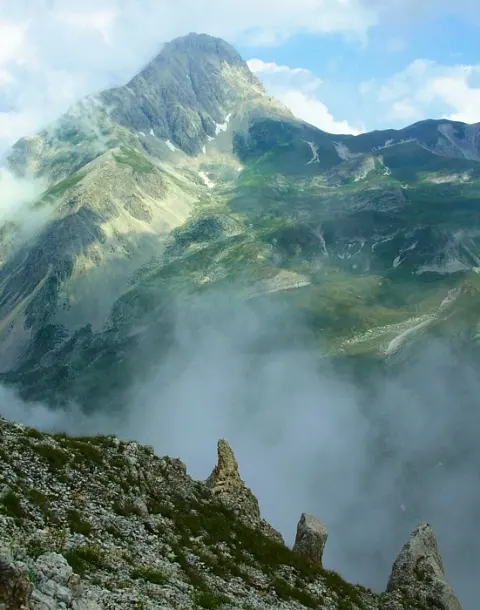
Currency · 26 October 2026
Euro exchange rates today
Italy uses the Euro (EUR, €). One US dollar buys 0.8911 EUR; over the last 30 days the EUR has lost 1.5% against the dollar.
What other currencies cost in EUR
Currency converter
Daily reference rates from the open-source currency-api (CC0), 26 Oct 2026. Banks and exchange offices add a margin.
World rankings
Where Italy ranks
How Italy compares with the rest of the world — open any card for the full ranking.
Airports
Airports in Italy
1,027 airports and airfields — 25 large, 48 medium and 587 small, plus 360 heliports. 45 have scheduled passenger flights.
Borders
Neighbouring countries
Italy borders 6 countries along 1,836 km of land borders. Coastline: 7,600 km.


Military
Italian armed forces
Italy ranks #10 of 145 in the Global Firepower military strength ranking, with a defence budget of $48.1 billion (2025).
People
Population & society
Religion
Largest cities: Rome (4.3 million), Milan (3.2 million), Naples (2.2 million), Turin (1.8 million), Bergamo (913,000)
Economy
Economy
Main industries
tourism, machinery, iron and steel, chemicals, food processing, textiles, motor vehicles, clothing, footwear, ceramics
Export partners
Germany 11%, USA 11%, France 10%, Spain 5%, UK 5% (2023)
Top exports
packaged medicine, garments, cars, refined petroleum, vehicle parts/accessories (2023)
Travel tools
Handy before every trip to Italy
Next public holiday
All Saints Day — Sunday, 1 November 2026. Then Immaculate Conception (8 Dec).

Italian passport
Ranked #8: 125 countries visa-free, 32 with visa on arrival, 9 with an eTA and 18 with an eVisa.
Italian passport photo
Exact size, head position and background for Italy's passport and visa photos — make one free with AI checks.
Calling Italy
Dial +39 before the local number. Internet domain .it.
Climate footprint
301.9 million tonnes of CO₂ in 2024 — 5.09 t per person.
Entry requirements
Visa rules for every passport visiting Italy: visa-free stays, eVisas, visas on arrival and documents to bring.
News
Latest travel news about Italy
Russian water polo team plans camps in visa-free Serbia and Montenegro
Russia's men's water polo coach says his squad can travel visa-free only to Serbia and Montenegro, while Hungary, Italy, Spain, France and the Nether…
Bill C-3: Americans With Canadian Ancestors May Already Be Citizens
Canada's Bill C-3, in force since 15 December 2025, removed the first-generation limit on citizenship by descent. Americans with an unbroken line to …
Moroccans Won the Most Italian Residence Permits in 2025, Data Shows
Italy issued 44,549 first residence permits to Moroccan nationals in 2025, the highest of any non-EU nationality, according to ISTAT. Moroccans also …
Frequently asked questions about Italy
What do I need to travel to Italy?
How long must my passport be valid for Italy?
Where is Italy?
What is Italy known for?
What is the capital of Italy?
What language is spoken in Italy?
What currency does Italy use?
What is the calling code of Italy?
Which countries border Italy?
How strong is the Italian passport?
What is the speed limit in Italy?
Is Italy safe to visit?
When is the best time to visit Italy?
What plug type does Italy use?
How many airports does Italy have?
Sources: CIA World Factbook (public domain); World Bank Open Data (CC BY 4.0); names, languages and currencies: mledoze/countries (ODbL); flag: flag-icons (MIT); coat of arms: Wikimedia Commons (file page); exchange rates: Daily reference rates from the open-source currency-api (CC0); airports: OurAirports.