
Southeast Europe · UN member

Bosnia and Herzegovina: Travel Guide & Requirements
· Bosna i Hercegovina · Bosna i Hercegovina
Bosnia and Herzegovina is a country in Southeast Europe with its capital in Sarajevo. It has a population of 3.1 million (#135 in the world) and covers 51,197 km². The official languages are Bosnian, Croatian and Serbian. The currency is the Bosnia and Herzegovina convertible mark (BAM, KM).
Where is Bosnia and Herzegovina? Map of Bosnia and Herzegovina
Southeastern Europe, bordering the Adriatic Sea and Croatia.
- Region
- Southeast Europe
- Coordinates
- 44° N, 18° E
- Neighbours
- 3 — see list
- Coastline
- 20 km
- Bosnia and Herzegovina
- Neighbours
- Capital
- Largest cities
Map of Bosnia and Herzegovina showing Sarajevo (capital) and the largest cities: Banja Luka, Zenica, Tuzla, Mostar, Bihać, Bijeljina, Trebinje and Doboj.
Travel requirements
What you need to travel to Bosnia and Herzegovina
- Passport
The UK Foreign Office says your passport must have an expiry date at least 90 days after the date you plan to leave Bosnia and Herzegovina, and a date of issue less than 10 years before the date you arrive.
- Visa or eTA
Depends on your passport: of 198 passports, 98 need no visa, 100 need a visa from an embassy. Check yours or see Bosnia and Herzegovina entry requirements for every passport.
- Return or onward ticket
The Embassy of Bosnia and Herzegovina in Qatar lists a photocopy of the return air ticket among the documents required for a visa.
- Proof of funds
The Ministry of Foreign Affairs of Bosnia and Herzegovina says the minimum amount of financial resources required for a foreigner's stay is KM 150.00, or the equivalent in a freely convertible foreign currency, for each…
- Travel insurance
The Embassy of Bosnia and Herzegovina in Qatar lists travel insurance covering EUR 30,000 or USD 50,000 among the documents required for a visa.
- Arrival card
The Government of Canada says that if you plan to visit for 3 or more days you must register with local police within 48 hours of your arrival; if you stay in a hotel, the staff will register you, and otherwise you fill…
- Customs allowance
Bosnia and Herzegovina's Indirect Taxation Authority says all travellers bringing in or taking out cash or securities valued at more than 10,000 euros must declare it to customs at every border crossing, on a currency d…
- Travel advice
Some caution needed — US and UK advice.
Entry rules: TravelRequirements.info — Entry Requirements Dataset (CC BY 4.0), each rule cited to an official government source. Always confirm with the airline and the official source before you travel.
Before you go
10 things to know before you travel to Bosnia and Herzegovina
- Safety: Bosnia and Herzegovina is generally safe for travellers, but some caution is needed: the US State Department rates Bosnia and Herzegovina Level 2 (“Exercise Increased Caution”), and the UK Foreign Office has no warnings against travel there.
- Best time to go: July to August — when daytime highs in Sarajevo are around 25–26°C.
- Money: the Bosnia and Herzegovina convertible mark (BAM) — 1 US dollar is about 1.7429 BAM.
- Plugs: type C and F, 230 V, 50 Hz — standard 220–240 V: devices from the US or Japan (110–120 V) need a converter unless they are dual voltage (100–240 V).
- Emergency numbers: Police 122, Ambulance 124, Fire 123.
- Language: Bosnian, Croatian and Serbian are official.
- Driving: on the right — speed limits are 50 km/h in built-up areas, 80 km/h outside built-up areas, 100 km/h on expressways and 130 km/h on motorways.
- Time zone: UTC+1 in Sarajevo.
- Capital: Sarajevo. About 3.1 million people live in Bosnia and Herzegovina.
- Outdoors: 4 national parks and 16 ski areas.
Key facts
Bosnia and Herzegovina at a glance
Languages spoken: Bosnian (official) 52.9%, Serbian (official) 30.8%, Croatian (official) 14.6%, other 1.6%, no answer 0.2% (2013 est.)
Geography & history
About Bosnia and Herzegovina
After four centuries of Ottoman rule over Bosnia and Herzegovina, Austria-Hungary took control in 1878 and held the region until 1918, when it was incorporated into the newly created Kingdom of Serbs, Croats, and Slovenes. After World War II, Bosnia and Herzegovina joined the Socialist Federal Republic of Yugoslavia (SFRY). Bosnia and Herzegovina declared sovereignty in October 1991 and independence from the SFRY on 3 March 1992 after a referendum boycotted by ethnic Serbs. Bosnian Serb militias, with the support of Serbia and Croatia, then tried to take control of territories they claimed as their own. From 1992 to 1995, ethnic cleansing campaigns killed thousands and displaced more than t…
Read the full history
After four centuries of Ottoman rule over Bosnia and Herzegovina, Austria-Hungary took control in 1878 and held the region until 1918, when it was incorporated into the newly created Kingdom of Serbs, Croats, and Slovenes. After World War II, Bosnia and Herzegovina joined the Socialist Federal Republic of Yugoslavia (SFRY). Bosnia and Herzegovina declared sovereignty in October 1991 and independence from the SFRY on 3 March 1992 after a referendum boycotted by ethnic Serbs. Bosnian Serb militias, with the support of Serbia and Croatia, then tried to take control of territories they claimed as their own. From 1992 to 1995, ethnic cleansing campaigns killed thousands and displaced more than two million people. On 21 November 1995, in Dayton, Ohio, the warring parties initialed a peace agreement, and the final agreement was signed in Paris on 14 December 1995. The Dayton Accords retained Bosnia and Herzegovina's international boundaries and created a multiethnic and democratic government composed of two entities roughly equal in size: the predominantly Bosniak-Bosnian Croat Federation of Bosnia and Herzegovina and the predominantly Bosnian Serb-led Republika Srpska (RS). The Dayton Accords also established the Office of the High Representative to oversee the agreement's implementation. In 1996, the NATO-led Stabilization Force (SFOR) took over responsibility for enforcing the peace. In 2004, European Union peacekeeping troops (EUFOR) replaced SFOR. As of 2022, EUFOR deploys around 1,600 troops in Bosnia in a peacekeeping capacity. Bosnia and Herzegovina became an official candidate for EU membership in 2022.
Location
Southeastern Europe, bordering the Adriatic Sea and Croatia
Climate
hot summers and cold winters; areas of high elevation have short, cool summers and long, severe winters; mild, rainy winters along coast
Terrain
mountains and valleys
Highest point
Maglic 2,386 m
Natural resources
coal, iron ore, antimony, bauxite, copper, lead, zinc, chromite, cobalt, manganese, nickel, clay, gypsum, salt, sand, timber, hydropower
Natural hazards
destructive earthquakes
National symbols
golden lily
Driving
Speed limits & road rules in Bosnia and Herzegovina
The default speed limits in Bosnia and Herzegovina are 50 km/h in built-up areas, 80 km/h outside built-up areas, 100 km/h on expressways and 130 km/h on motorways. The legal alcohol limit for drivers is 0.3‰. Posted signs always take priority over these defaults.
- 5050 km/hBuilt-up areasTowns and citiesWith a trailer: 80 km/h
- 8080 km/hOutside built-up areasCountry roads
- 100100 km/hExpresswaysDual carriageways & expresswaysWith a trailer: 80 km/h
- 130130 km/hMotorwaysMotorways / freewaysWith a trailer: 80 km/h
- International Driving PermitRecognised: 1968 ViennaCarry the IDP together with your national licence
- Driving sideDrive on the rightOvertake on the left
- Alcohol limit0.3‰ blood alcohol (0.03% BAC)Zero tolerance for young / novice drivers
- Seat beltsRequired by law
- Child seatsRequired by law
- Motorcycle helmetsRequired for riders
- Road deaths (2021)13.7 per 100,000 peopleClose to the world median (12.4)
Speed limits: OpenStreetMap wiki — Default speed limits (CC BY-SA 2.0). Road-safety laws: WHO Global Health Observatory. Compare speed limits and alcohol limits by country. Defaults for cars; local signs, weather and vehicle type can lower them.
Safety
Is Bosnia and Herzegovina safe to visit?
Bosnia and Herzegovina is generally safe for travellers, but some caution is needed: the US State Department rates Bosnia and Herzegovina Level 2 (“Exercise Increased Caution”), and the UK Foreign Office has no warnings against travel there.
 US State Department
 UK Foreign Office (FCDO)
Latest update: New information on wait times if travelling to and from the Schengen area from Bosnia and Herzegovina. New information that the border crossing at Gradiška has been relocated to a new facility ('Warnings and insurance' page).
Updated 13 Aug 2026 · Full travel advice
Sources: US Department of State travel advisories (public domain) and UK FCDO foreign travel advice (contains public sector information licensed under the Open Government Licence v3.0). Checked daily. Advice can change quickly — always read the official page before you travel.
Weather
Best time to visit Bosnia and Herzegovina
The best time to visit Bosnia and Herzegovina is July to August, when daytime highs in Sarajevo are around 25–26°C. June is also a good time to go. August is the warmest month (26°C by day), January the coldest (-6°C at night), and November the wettest with about 91 mm of rain.
- Jan2°C-6°C
- Feb3°C-5°C
- Mar8°C-2°C
- Apr13°C3°C
- May18°C7°C
- Jun22°C11°C
- Jul25°C13°C
- Aug26°C13°C
- Sep20°C8°C
- Oct15°C4°C
- Nov9°C1°C
- Dec3°C-4°C
Best time Good Less ideal
Before you go
Plugs, voltage & emergency numbers in Bosnia and Herzegovina
Plugs & sockets
230 V, 50 Hz · Standard 220–240 V: devices from the US or Japan (110–120 V) need a converter unless they are dual voltage (100–240 V).
Emergency numbers
Save the local numbers before you travel — 112 or 911 may not connect here. All countries →
Sources: Wikipedia — Mains electricity by country and List of emergency telephone numbers (CC BY-SA 4.0).
Ski resorts
16 ski resorts in Bosnia and Herzegovina
- 80 km of slopes
- 54 lifts
- up to 2,056 m
Biggest: Jahorina olimpijski centar · OC Bjelašnica ZOI '84 · Ski centar Vlašić
National parks
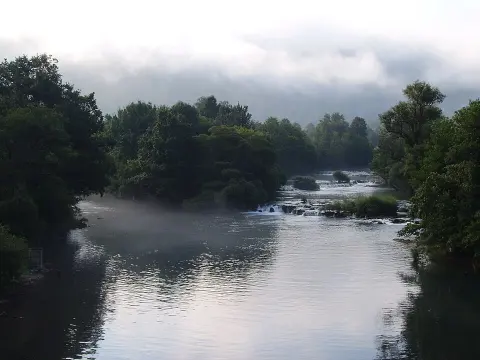
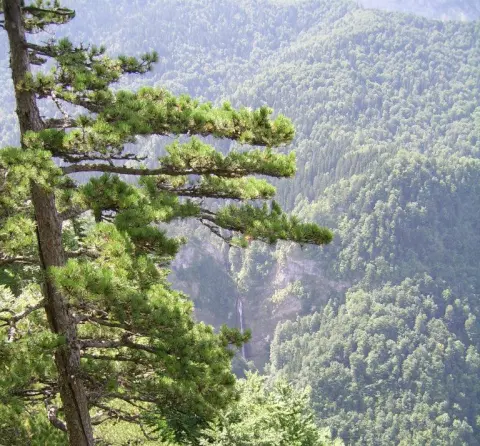
4 national parks in Bosnia and Herzegovina
- 470 km² protected
- oldest from 1962
Largest: Una National Park · Sutjeska National Park · National park Drina
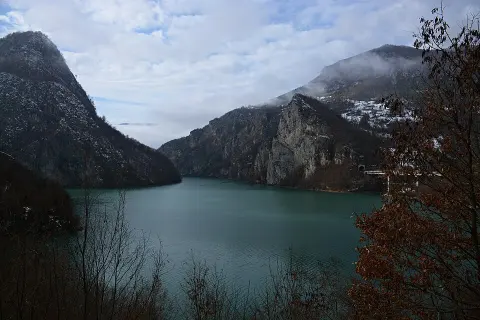
Currency · 26 October 2026
Bosnia and Herzegovina convertible mark exchange rates today
Bosnia and Herzegovina uses the Bosnia and Herzegovina convertible mark (BAM, KM). One US dollar buys 1.7429 BAM; over the last 30 days the BAM has lost 1.5% against the dollar.
What other currencies cost in BAM
Currency converter
Daily reference rates from the open-source currency-api (CC0), 26 Oct 2026. Banks and exchange offices add a margin.
World rankings
Where Bosnia and Herzegovina ranks
How Bosnia and Herzegovina compares with the rest of the world — open any card for the full ranking.
Airports
Airports in Bosnia and Herzegovina
25 airports and airfields — 4 large, 0 medium and 16 small, plus 5 heliports. 4 have scheduled passenger flights.
Borders
Neighbouring countries
Bosnia and Herzegovina borders 3 countries along 1,543 km of land borders. Coastline: 20 km.


Military
Bosnian, Herzegovinian armed forces
Bosnia and Herzegovina ranks #133 of 145 in the Global Firepower military strength ranking, with a defence budget of $231 million (2025).
People
Population & society
Religion
Largest cities: Sarajevo (346,000)
Economy
Economy
Main industries
steel, coal, iron ore, lead, zinc, manganese, bauxite, aluminum, motor vehicle assembly, textiles, tobacco products, wooden furniture, ammunition, domestic appliances, oil refining
Export partners
Germany 15%, Croatia 14%, Serbia 12%, Austria 10%, Slovenia 9% (2023)
Top exports
footwear, electricity, garments, plastic products, insulated wire (2023)
Travel tools
Handy before every trip to Bosnia and Herzegovina
Next public holiday
New Year's Day — Friday, 1 January 2027. Then New Year's Day (2 Jan).

Bosnian, Herzegovinian passport
Ranked #87: 74 countries visa-free, 34 with visa on arrival, 4 with an eTA and 37 with an eVisa.
Bosnian, Herzegovinian passport photo
Exact size, head position and background for Bosnia and Herzegovina's passport and visa photos — make one free with AI checks.
Calling Bosnia and Herzegovina
Dial +387 before the local number. Internet domain .ba.
Climate footprint
19.4 million tonnes of CO₂ in 2024 — 6.14 t per person.
Entry requirements
Visa rules for every passport visiting Bosnia and Herzegovina: visa-free stays, eVisas, visas on arrival and documents to bring.
News
Latest travel news about Bosnia and Herzegovina
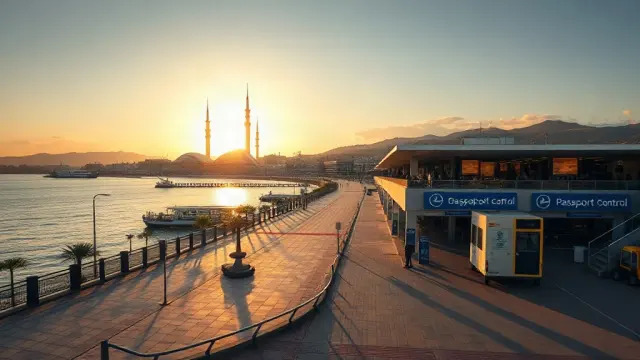
Bosnian Travellers to Azerbaijan No Longer Need Visas, 30-Day Stays Allowed
Azerbaijan's Ministry of Foreign Affairs has published a list of nine countries whose ordinary passport holders can enter visa-free, staying up to 30…
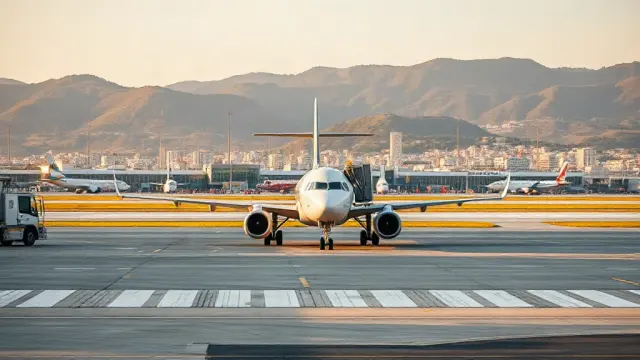
Sarajevo–Cairo flights proposed, tied to easier entry for Egyptians
Sarajevo Airport is seeking scheduled Egyptair flights between Sarajevo and Cairo and has proposed easing Bosnia and Herzegovina's visa rules for Egy…
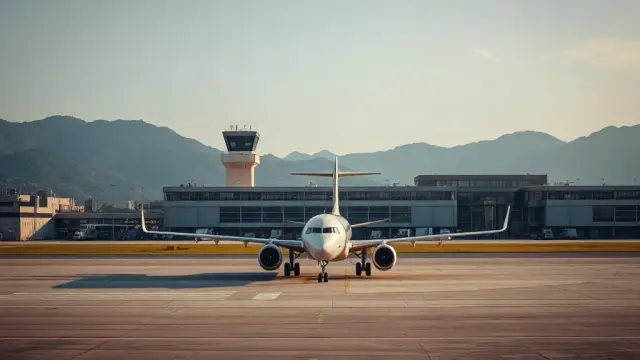
Sarajevo–Cairo Flights and Egyptian Visa Waiver on the Table in Talks
Sarajevo airport officials and Egypt's ambassador have discussed a direct Sarajevo–Cairo service and a possible visa waiver for Egyptian travellers. …
Frequently asked questions about Bosnia and Herzegovina
What do I need to travel to Bosnia and Herzegovina?
How long must my passport be valid for Bosnia and Herzegovina?
Where is Bosnia and Herzegovina?
What is Bosnia and Herzegovina known for?
What is the capital of Bosnia and Herzegovina?
What language is spoken in Bosnia and Herzegovina?
What currency does Bosnia and Herzegovina use?
What is the calling code of Bosnia and Herzegovina?
Which countries border Bosnia and Herzegovina?
How strong is the Bosnian, Herzegovinian passport?
What is the speed limit in Bosnia and Herzegovina?
Is Bosnia and Herzegovina safe to visit?
When is the best time to visit Bosnia and Herzegovina?
What plug type does Bosnia and Herzegovina use?
How many airports does Bosnia and Herzegovina have?
Sources: CIA World Factbook (public domain); World Bank Open Data (CC BY 4.0); names, languages and currencies: mledoze/countries (ODbL); flag: flag-icons (MIT); coat of arms: Wikimedia Commons (file page); exchange rates: Daily reference rates from the open-source currency-api (CC0); airports: OurAirports.