
Eastern Africa · UN member

Burundi: Travel Guide & Requirements
Republic of Burundi · Republika y'Uburundi
Burundi is a country in Eastern Africa with its capital in Gitega. It has a population of 14.4 million (#77 in the world) and covers 27,830 km². The official languages are French and Kirundi. The currency is the Burundian franc (BIF, Fr).
Where is Burundi? Map of Burundi
Central Africa, east of the Democratic Republic of the Congo, west of Tanzania.
- Region
- Eastern Africa
- Coordinates
- 3.5° S, 30° E
- Neighbours
- 3 — see list
- Coastline
- Landlocked
- Burundi
- Neighbours
- Capital
- Largest cities
Map of Burundi showing Gitega (capital) and the largest cities: Bujumbura, Ngozi, Rumonge, Cibitoke and Kirundo.
Travel requirements
What you need to travel to Burundi
- Passport
Canada's travel advice says your passport must be valid for at least 6 months beyond the date you expect to leave Burundi and have at least one blank page.
- Visa or eTA
Depends on your passport: of 198 passports, 19 need an eVisa, 176 get a visa on arrival, 3 need a visa from an embassy. Check yours or see Burundi entry requirements for every passport.
- Return or onward ticket
Canada's travel advice says visitors entering Burundi must have a return ticket, or an onward ticket if they are in transit.
- Proof of funds
No official requirement.
- Travel insurance
No official requirement. The UK's travel advice says to check that you have appropriate travel insurance for local treatment or unexpected medical evacuation.
- Vaccinations
The UK government says that to enter Burundi you must have a certificate proving you have had a yellow fever vaccination, due to a risk of yellow fever transmission.
- Customs allowance
No official requirement.
- Travel advice
High risk — US and UK advice.
Entry rules: TravelRequirements.info — Entry Requirements Dataset (CC BY 4.0), each rule cited to an official government source. Always confirm with the airline and the official source before you travel.
Before you go
10 things to know before you travel to Burundi
- Safety: Travel to Burundi carries a high risk: the US State Department rates Burundi Level 3 (“Reconsider Travel”), and the UK Foreign Office advises against all travel to parts of the country.
- Best time to go: June to September — when daytime highs in Gitega are around 24–27°C.
- Money: the Burundian franc (BIF) — 1 US dollar is about 2,992.6 BIF.
- Plugs: type C and E, 220 V, 50 Hz — standard 220–240 V: devices from the US or Japan (110–120 V) need a converter unless they are dual voltage (100–240 V).
- Emergency numbers: Police 117, Ambulance 112, Fire 118.
- Language: French and Kirundi are official; English is also spoken.
- Driving: on the right — speed limits are 50 km/h in built-up areas, 80 km/h outside built-up areas and 100 km/h on expressways.
- Time zone: UTC+2 in Gitega.
- Capital: Gitega. About 14.4 million people live in Burundi.
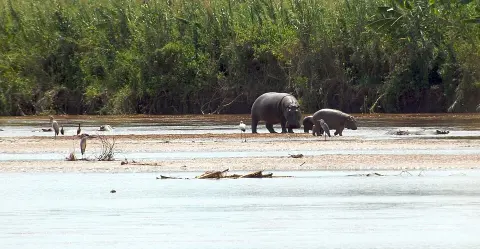
- Outdoors: 3 national parks.
Key facts
Burundi at a glance
Languages spoken: Kirundi (official), French (official), English (official, least spoken), Swahili (2008 est.)
Geography & history
About Burundi
Established in the 1600s, the Burundi Kingdom has had borders similar to those of modern Burundi since the 1800s. Burundi’s two major ethnic groups, the majority Hutu and minority Tutsi, share a common language and culture and largely lived in peaceful cohabitation under Tutsi monarchs in pre-colonial Burundi. Regional, class, and clan distinctions contributed to social status in the Burundi Kingdom, yielding a complex class structure. German colonial rule in the late 19th and early 20th centuries and Belgian rule after World War I preserved Burundi’s monarchy. Seeking to simplify administration, Belgian colonial officials reduced the number of chiefdoms and eliminated most Hutu chiefs from…
Read the full history
Established in the 1600s, the Burundi Kingdom has had borders similar to those of modern Burundi since the 1800s. Burundi’s two major ethnic groups, the majority Hutu and minority Tutsi, share a common language and culture and largely lived in peaceful cohabitation under Tutsi monarchs in pre-colonial Burundi. Regional, class, and clan distinctions contributed to social status in the Burundi Kingdom, yielding a complex class structure. German colonial rule in the late 19th and early 20th centuries and Belgian rule after World War I preserved Burundi’s monarchy. Seeking to simplify administration, Belgian colonial officials reduced the number of chiefdoms and eliminated most Hutu chiefs from positions of power. In 1961, the Burundian Tutsi king’s oldest son, Louis RWAGASORE, was murdered by a competing political faction shortly before he was set to become prime minister, triggering increased political competition that contributed to later instability. Burundi gained its independence from Belgium in 1962 as the Kingdom of Burundi. Revolution in neighboring Rwanda stoked ethnic polarization as the Tutsi increasingly feared violence and loss of political power. A failed Hutu-led coup in 1965 triggered a purge of Hutu officials and set the stage for Tutsi officers to overthrow the monarchy in 1966 and establish a Tutsi-dominated republic. A Hutu rebellion in 1972 resulted in the deaths of several thousand Tutsi civilians and sparked brutal Tutsi-led military reprisals against Hutu civilians which ultimately killed 100,000-200,000 people. International pressure led to a new constitution in 1992 and democratic elections in 1993. Tutsi military officers feared Hutu domination and assassinated Burundi's first democratically elected president, Hutu Melchior NDADAYE, in 1993 after only 100 days in office, sparking a civil war. In 1994, his successor, Cyprien NTARYAMIRA, died when the Rwandan president’s plane he was traveling on was shot down, which triggered the Rwandan genocide and further entrenched ethnic conflict in Burundi. The internationally brokered Arusha Agreement, signed in 2000, and subsequent cease-fire agreements with armed movements ended the 1993-2005 civil war. Burundi’s second democratic elections were held in 2005, resulting in the election of Pierre NKURUNZIZA as president. He was reelected in 2010 and again in 2015 after a controversial court decision allowed him to circumvent a term limit. President Evariste NDAYISHIMIYE -- from NKURUNZIZA’s ruling party -- was elected in 2020.
Location
Central Africa, east of the Democratic Republic of the Congo, west of Tanzania
Climate
equatorial; high plateau with considerable altitude variation (772 m to 2,670 m above sea level); average annual temperature varies with altitude from 23 to 17 degrees Celsius but is generally moderate; average annual rainfall is about 150 cm with two wet sea…
Terrain
hilly and mountainous, dropping to a plateau in east, some plains
Highest point
unnamed elevation on Mukike Range 2,685 m
Natural resources
nickel, uranium, rare earth oxides, peat, cobalt, copper, platinum, vanadium, arable land, hydropower, niobium, tantalum, gold, tin, tungsten, kaolin, limestone
Natural hazards
flooding; landslides; drought
National symbols
lion
Driving
Speed limits & road rules in Burundi
The default speed limits in Burundi are 50 km/h in built-up areas, 80 km/h outside built-up areas and 100 km/h on expressways. The legal alcohol limit for drivers is 0.8‰. Posted signs always take priority over these defaults.
- 5050 km/hBuilt-up areasTowns and cities
- 8080 km/hOutside built-up areasCountry roads
- 100100 km/hExpresswaysDual carriageways & expressways
- International Driving PermitNot a party to the IDP conventionsCheck with the embassy whether your licence is accepted
- Driving sideDrive on the rightOvertake on the left
- Alcohol limit0.8‰ blood alcohol (0.08% BAC)
- Seat beltsRequired by law
- Child seatsNo national child-restraint law
- Motorcycle helmetsRequired for riders
- Road deaths (2021)12.3 per 100,000 peopleClose to the world median (12.4)
Speed limits: OpenStreetMap wiki — Default speed limits (CC BY-SA 2.0). Road-safety laws: WHO Global Health Observatory. Compare speed limits and alcohol limits by country. Defaults for cars; local signs, weather and vehicle type can lower them.
Safety
Is Burundi safe to visit?
Travel to Burundi carries a high risk: the US State Department rates Burundi Level 3 (“Reconsider Travel”), and the UK Foreign Office advises against all travel to parts of the country.
 US State Department
 UK Foreign Office (FCDO)
Latest update: Addition of information about a declaration of an Ebola outbreak in DRC on 15 May (‘Health page’).
Updated 21 May 2026 · Full travel advice
Sources: US Department of State travel advisories (public domain) and UK FCDO foreign travel advice (contains public sector information licensed under the Open Government Licence v3.0). Checked daily. Advice can change quickly — always read the official page before you travel.
Weather
Best time to visit Burundi
The best time to visit Burundi is June to September, when daytime highs in Gitega are around 24–27°C. February, May and October are also a good time to go. September is the warmest month (27°C by day), July the coldest (10°C at night), and November the wettest with about 240 mm of rain.
- Jan25°C14°C
- Feb25°C14°C
- Mar25°C14°C
- Apr24°C14°C
- May23°C13°C
- Jun24°C11°C
- Jul24°C10°C
- Aug26°C12°C
- Sep27°C14°C
- Oct26°C14°C
- Nov24°C14°C
- Dec24°C14°C
Best time Good Less ideal
Before you go
Plugs, voltage & emergency numbers in Burundi
Plugs & sockets
220 V, 50 Hz · Standard 220–240 V: devices from the US or Japan (110–120 V) need a converter unless they are dual voltage (100–240 V).
Emergency numbers
112 works from any mobile phone, even without a SIM card in most networks. All countries →
Sources: Wikipedia — Mains electricity by country and List of emergency telephone numbers (CC BY-SA 4.0).
National parks
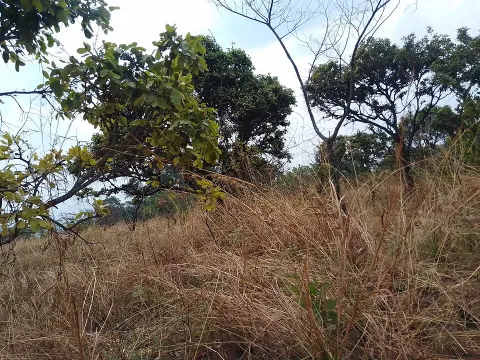
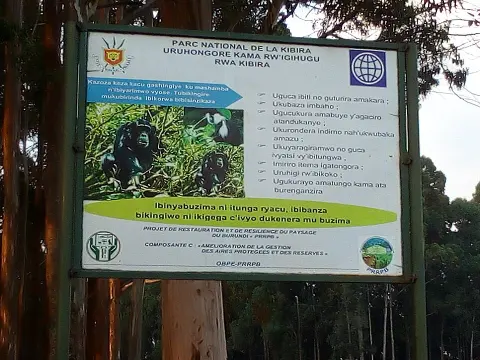
3 national parks in Burundi
- 998 km² protected
- oldest from 1933
Largest: Ruvubu National Park · Kibira National Park · Rusizi National Park
Currency · 26 October 2026
Burundian franc exchange rates today
Burundi uses the Burundian franc (BIF, Fr). One US dollar buys 2,992.6 BIF; over the last 30 days the BIF has gained 0.2% against the dollar.
What other currencies cost in BIF
Currency converter
Daily reference rates from the open-source currency-api (CC0), 26 Oct 2026. Banks and exchange offices add a margin.
World rankings
Where Burundi ranks
How Burundi compares with the rest of the world — open any card for the full ranking.
Airports
Airports in Burundi
6 airports and airfields — 1 large, 1 medium and 4 small, plus 0 heliports. 3 have scheduled passenger flights.
Borders
Neighbouring countries
Burundi borders 3 countries along 1,140 km of land borders. It is landlocked.


People
Population & society
Religion
Largest cities: Bujumbura (1.2 million)
Economy
Economy
Main industries
light consumer goods (sugar, shoes, soap, beer); cement, assembly of imported components; public works construction; food processing (fruits)
Export partners
UAE 59%, Uganda 8%, China 5%, Germany 5%, USA 3% (2023)
Top exports
gold, coffee, tea, tin ores, iron bars (2023)
Travel tools
Handy before every trip to Burundi
Next public holiday
All Saints' Day — Sunday, 1 November 2026. Then Christmas Day (25 Dec).
Burundian passport
Ranked #174: 19 countries visa-free, 27 with visa on arrival, 2 with an eTA and 42 with an eVisa.
Burundian passport photo
Exact size, head position and background for Burundi's passport and visa photos — make one free with AI checks.
Calling Burundi
Dial +257 before the local number. Internet domain .bi.
Climate footprint
0.9 million tonnes of CO₂ in 2024 — 0.07 t per person.
Entry requirements
Visa rules for every passport visiting Burundi: visa-free stays, eVisas, visas on arrival and documents to bring.
News
Latest travel news about Burundi
Nigerians Arriving in Comoros Can Get Visas on Arrival for Stays Up to 45 Days
Nigerian passport holders can obtain visas on arrival in 14 countries in 2026, including Comoros, where Passport Index lists stays of up to 45 days. …
Entebbe Airport Ebola Probe Focuses on Travelers Who Left Uganda on Oct. 3
Africa CDC is investigating whether Nigeria's first Bundibugyo Ebola patient and Kenya's deceased index case crossed paths at Entebbe Airport on 3 Oc…
ICE Charter to Equatorial Guinea to Expel 25, Not Return Jailed Man
Documents show an ICE charter flight due in Equatorial Guinea on Thursday plans to expel 25 people there rather than retrieve Ahmed Soliman, an Egypt…
Frequently asked questions about Burundi
What do I need to travel to Burundi?
How long must my passport be valid for Burundi?
Where is Burundi?
What is Burundi known for?
What is the capital of Burundi?
What language is spoken in Burundi?
What currency does Burundi use?
What is the calling code of Burundi?
Which countries border Burundi?
How strong is the Burundian passport?
What is the speed limit in Burundi?
Is Burundi safe to visit?
When is the best time to visit Burundi?
What plug type does Burundi use?
How many airports does Burundi have?
Sources: CIA World Factbook (public domain); World Bank Open Data (CC BY 4.0); names, languages and currencies: mledoze/countries (ODbL); flag: flag-icons (MIT); coat of arms: Wikimedia Commons (file page); exchange rates: Daily reference rates from the open-source currency-api (CC0); airports: OurAirports.