
Western Africa · UN member

Guinea-Bissau: Travel Guide & Requirements
Republic of Guinea-Bissau · República da Guiné-Bissau · República da Guiné-Bissau
Guinea-Bissau is a country in Western Africa with its capital in Bissau. It has a population of 2.2 million (#147 in the world) and covers 36,125 km². The official languages are Portuguese and Upper Guinea Creole. The currency is the West African CFA franc (XOF, Fr).
Where is Guinea-Bissau? Map of Guinea-Bissau
Western Africa, bordering the North Atlantic Ocean, between Guinea and Senegal.
- Region
- Western Africa
- Coordinates
- 12° N, 15° W
- Neighbours
- 2 — see list
- Coastline
- 350 km
- Guinea-Bissau
- Neighbours
- Capital
- Largest cities
Map of Guinea-Bissau showing Bissau (capital) and the largest cities: Gabú and Bafatá.
Travel requirements
What you need to travel to Guinea-Bissau
- Passport
The UK Foreign Office says your passport must have an expiry date at least 6 months after the date you arrive in Guinea-Bissau.
- Visa or eTA
Depends on your passport: of 198 passports, 14 need no visa, 159 get a visa on arrival, 25 need a visa from an embassy. Check yours or see Guinea-Bissau entry requirements for every passport.
- Return or onward ticket
No official requirement.
- Proof of funds
No official requirement.
- Travel insurance
No official requirement. Canada's travel advice tells travellers to get insurance that covers medical evacuation and hospital stays.
- Vaccinations
The UK Foreign Office says you must have a certificate proving yellow fever vaccination to enter Guinea-Bissau.
- Customs allowance
The Government of Canada says import and export of local currency is prohibited, that the import of foreign currency is unlimited provided it is declared on arrival, and that the export of foreign currency is limited to…
- Travel advice
High risk — US and UK advice.
Entry rules: TravelRequirements.info — Entry Requirements Dataset (CC BY 4.0), each rule cited to an official government source. Always confirm with the airline and the official source before you travel.
Before you go
10 things to know before you travel to Guinea-Bissau
- Safety: Travel to Guinea-Bissau carries a high risk: the US State Department rates Guinea-Bissau Level 3 (“Reconsider Travel”), and the UK Foreign Office has no warnings against travel there.
- Best time to go: November to January — when daytime highs in Bissau are around 29–30°C.
- Money: the West African CFA franc (XOF) — 1 US dollar is about 584.5354 XOF.
- Plugs: type C, E and F, 220 V, 50 Hz — standard 220–240 V: devices from the US or Japan (110–120 V) need a converter unless they are dual voltage (100–240 V).
- Emergency numbers: Police 112, Ambulance 112, Fire 112.
- Language: Portuguese and Upper Guinea Creole are official.
- Driving: on the right — speed limits are 50 km/h in built-up areas and 80 km/h outside built-up areas.
- Time zone: UTC0 in Bissau.
- Capital: Bissau. About 2.2 million people live in Guinea-Bissau.
- Outdoors: 7 national parks.
Key facts
Guinea-Bissau at a glance
Languages spoken: Portuguese-based Creole, Portuguese (official; largely used as a second or third language), Pular (a Fula language), Mandingo
Geography & history
About Guinea-Bissau
For much of its history, Guinea-Bissau was under the control of the Mali Empire and the Kaabu Kingdom. In the 16th century, Portugal began establishing trading posts along Guinea-Bissau’s shoreline. Initially, the Portuguese were restricted to the coastline and islands. However, the slave and gold trades were lucrative to local African leaders, and the Portuguese were slowly able to expand their power and influence inland. Starting in the 18th century, the Mali Empire and Kingdom of Kaabu slowly disintegrated into smaller local entities. By the 19th century, Portugal had fully incorporated Guinea-Bissau into its empire. Since gaining independence in 1974, Guinea-Bissau has experienced consi…
Read the full history
For much of its history, Guinea-Bissau was under the control of the Mali Empire and the Kaabu Kingdom. In the 16th century, Portugal began establishing trading posts along Guinea-Bissau’s shoreline. Initially, the Portuguese were restricted to the coastline and islands. However, the slave and gold trades were lucrative to local African leaders, and the Portuguese were slowly able to expand their power and influence inland. Starting in the 18th century, the Mali Empire and Kingdom of Kaabu slowly disintegrated into smaller local entities. By the 19th century, Portugal had fully incorporated Guinea-Bissau into its empire. Since gaining independence in 1974, Guinea-Bissau has experienced considerable political and military upheaval. In 1980, a military coup established General Joao Bernardo 'Nino' VIEIRA as president. VIEIRA's regime suppressed political opposition and purged political rivals. Several coup attempts through the 1980s and early 1990s failed to unseat him, but a military mutiny and civil war in 1999 led to VIEIRA's ouster. In 2000, a transitional government turned over power to opposition leader Kumba YALA. In 2003, a bloodless military coup overthrew YALA and installed businessman Henrique ROSA as interim president. In 2005, VIEIRA was reelected, pledging to pursue economic development and national reconciliation; he was assassinated in 2009. Malam Bacai SANHA was then elected president, but he passed away in 2012 from a long-term illness. A military coup blocked the second round of the election to replace him, but after mediation from the Economic Community of Western African States, a civilian transitional government assumed power. In 2014, Jose Mario VAZ was elected president in a free and fair election, and in 2019, he became the first president in Guinea-Bissau’s history to complete a full term. Umaro Sissoco EMBALO was elected president in 2019, but he did not take office until 2020 because of a prolonged challenge to the election results.
Location
Western Africa, bordering the North Atlantic Ocean, between Guinea and Senegal
Climate
tropical; generally hot and humid; monsoonal-type rainy season (June to November) with southwesterly winds; dry season (December to May) with northeasterly harmattan winds
Terrain
mostly low-lying coastal plain with a deeply indented estuarine coastline rising to savanna in east; numerous off-shore islands including the Arquipelago Dos Bijagos consisting of 18 main islands and many small islets
Highest point
Dongol Ronde 277 m
Natural resources
fish, timber, phosphates, bauxite, clay, granite, limestone, unexploited deposits of petroleum
Natural hazards
hot, dry, dusty harmattan haze may reduce visibility during dry season; brush fires
National symbols
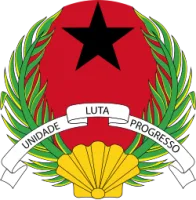
black star
Driving
Speed limits & road rules in Guinea-Bissau
The default speed limits in Guinea-Bissau are 50 km/h in built-up areas and 80 km/h outside built-up areas. The legal alcohol limit for drivers is 0.5‰. Posted signs always take priority over these defaults.
- 5050 km/hBuilt-up areasTowns and citiesWHO data (2017)
- 8080 km/hOutside built-up areasCountry roadsWHO data (2017)
- International Driving PermitNot a party to the IDP conventionsCheck with the embassy whether your licence is accepted
- Driving sideDrive on the rightOvertake on the left
- Alcohol limit0.5‰ blood alcohol (0.05% BAC)
- Seat beltsRequired by law
- Child seatsRequired by law
- Motorcycle helmetsRequired for riders
- Road deaths (2021)30.5 per 100,000 peopleHigher than most countries (median 12.4)
Speed limits: OpenStreetMap wiki — Default speed limits (CC BY-SA 2.0) and WHO. Road-safety laws: WHO Global Health Observatory. Compare speed limits and alcohol limits by country. Defaults for cars; local signs, weather and vehicle type can lower them.
Safety
Is Guinea-Bissau safe to visit?
Travel to Guinea-Bissau carries a high risk: the US State Department rates Guinea-Bissau Level 3 (“Reconsider Travel”), and the UK Foreign Office has no warnings against travel there.
 US State Department
 UK Foreign Office (FCDO)
Latest update: New information about dual nationals returning to the UK (‘Entry requirements’ page).
Updated 10 Dec 2025 · Full travel advice
Sources: US Department of State travel advisories (public domain) and UK FCDO foreign travel advice (contains public sector information licensed under the Open Government Licence v3.0). Checked daily. Advice can change quickly — always read the official page before you travel.
Weather
Best time to visit Guinea-Bissau
The best time to visit Guinea-Bissau is November to January, when daytime highs in Bissau are around 29–30°C. February is also a good time to go. April is the warmest month (36°C by day), January the coldest (16°C at night), and August the wettest with about 487 mm of rain.
- Jan29°C16°C
- Feb32°C18°C
- Mar35°C20°C
- Apr36°C22°C
- May35°C23°C
- Jun32°C25°C
- Jul29°C24°C
- Aug28°C24°C
- Sep29°C24°C
- Oct30°C25°C
- Nov30°C22°C
- Dec29°C18°C
Best time Good Less ideal
Before you go
Plugs, voltage & emergency numbers in Guinea-Bissau
Plugs & sockets
- Type C (Europlug)two round pins
- Type Etwo round pins and a hole for the socket's earth pin
- Type F (Schuko)two round pins with earth clips on the sides
220 V, 50 Hz · Standard 220–240 V: devices from the US or Japan (110–120 V) need a converter unless they are dual voltage (100–240 V).
Emergency numbers
112 works from any mobile phone, even without a SIM card in most networks. All countries →
Sources: Wikipedia — Mains electricity by country and List of emergency telephone numbers (CC BY-SA 4.0).
National parks
7 national parks in Guinea-Bissau
- 6,818 km² protected
- oldest from 1980
Largest: Dulombi National Park · Orango Islands National Park · Boé National Park
Currency · 26 October 2026
West African CFA franc exchange rates today
Guinea-Bissau uses the West African CFA franc (XOF, Fr). One US dollar buys 584.5354 XOF; over the last 30 days the XOF has lost 1.5% against the dollar.
What other currencies cost in XOF
Currency converter
Daily reference rates from the open-source currency-api (CC0), 26 Oct 2026. Banks and exchange offices add a margin.
World rankings
Where Guinea-Bissau ranks
How Guinea-Bissau compares with the rest of the world — open any card for the full ranking.
Airports
Airports in Guinea-Bissau
10 airports and airfields — 1 large, 0 medium and 9 small, plus 0 heliports. 1 have scheduled passenger flights.
Borders
Neighbouring countries
Guinea-Bissau borders 2 countries along 762 km of land borders. Coastline: 350 km.


People
Population & society
Religion
Largest cities: Bissau (664,000)
Economy
Economy
Main industries
agricultural products processing, beer, soft drinks
Export partners
India 66%, Chile 9%, Cote d'Ivoire 5%, Ghana 4%, Netherlands 3% (2023)
Top exports
coconuts/brazil nuts/cashews, fish, fish oil, processed crustaceans, malt extract (2023)
Travel tools
Handy before every trip to Guinea-Bissau
Next public holiday
All Souls' Day — Monday, 2 November 2026. Then Christmas Eve (24 Dec).

Bissau-Guinean passport
Ranked #155: 26 countries visa-free, 23 with visa on arrival, 2 with an eTA and 42 with an eVisa.
Bissau-Guinean passport photo
Exact size, head position and background for Guinea-Bissau's passport and visa photos — make one free with AI checks.
Calling Guinea-Bissau
Dial +245 before the local number. Internet domain .gw.
Climate footprint
0.3 million tonnes of CO₂ in 2024 — 0.16 t per person.
Entry requirements
Visa rules for every passport visiting Guinea-Bissau: visa-free stays, eVisas, visas on arrival and documents to bring.
News
Latest travel news about Guinea-Bissau
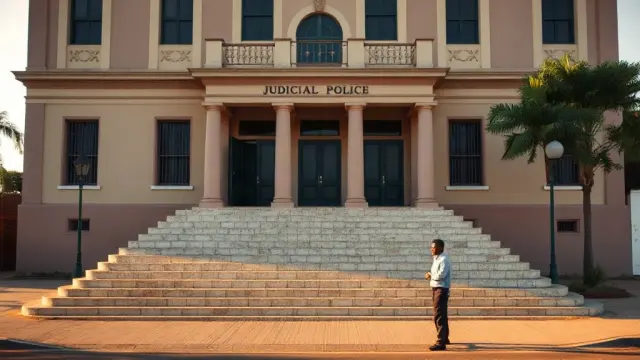
Guinea-Bissau police free 71 people from fake jobs and visas scam
Guinea-Bissau's judicial police freed 71 people and arrested four suspects after raiding two houses in Bissau, targeting a network that promised jobs…
Indians to Enjoy Visa-Free Travel to 55 Destinations in 2026
In 2026, Indian passport holders will have access to 55 countries without needing a visa, including Guinea-Bissau. This development enhances travel o…
Nigerian Passport Holders Can Visit 45 Countries Visa-Free
Nigerian passport holders can now travel to 45 countries without a visa, including Guinea-Bissau, as Nigeria's passport ranking improves to 92nd glob…
Frequently asked questions about Guinea-Bissau
What do I need to travel to Guinea-Bissau?
How long must my passport be valid for Guinea-Bissau?
Where is Guinea-Bissau?
What is Guinea-Bissau known for?
What is the capital of Guinea-Bissau?
What language is spoken in Guinea-Bissau?
What currency does Guinea-Bissau use?
What is the calling code of Guinea-Bissau?
Which countries border Guinea-Bissau?
How strong is the Bissau-Guinean passport?
What is the speed limit in Guinea-Bissau?
Is Guinea-Bissau safe to visit?
When is the best time to visit Guinea-Bissau?
What plug type does Guinea-Bissau use?
How many airports does Guinea-Bissau have?
Sources: CIA World Factbook (public domain); World Bank Open Data (CC BY 4.0); names, languages and currencies: mledoze/countries (ODbL); flag: flag-icons (MIT); coat of arms: Wikimedia Commons (file page); exchange rates: Daily reference rates from the open-source currency-api (CC0); airports: OurAirports.