
Western Africa · UN member

Nigeria: Travel Guide & Requirements
Federal Republic of Nigeria
Nigeria is a country in Western Africa with its capital in Abuja. It has a population of 237.5 million (#6 in the world) and covers 923,768 km². The official language is English. The currency is the Nigerian naira (NGN, ₦).
Where is Nigeria? Map of Nigeria
Western Africa, bordering the Gulf of Guinea, between Benin and Cameroon.
- Region
- Western Africa
- Coordinates
- 10° N, 8° E
- Neighbours
- 4 — see list
- Coastline
- 853 km
- Nigeria
- Neighbours
- Capital
- Largest cities
Map of Nigeria showing Abuja (capital) and the largest cities: Lagos, Kano, Ibadan, Port Harcourt, Kaduna, Benin City, Onitsha and Aba.
Travel requirements
What you need to travel to Nigeria
- Passport
The UK Foreign Office says that to enter Nigeria your passport must have an expiry date at least 6 months after the date you arrive.
- Visa or eTA
Depends on your passport: of 198 passports, 16 need no visa, 182 need an eVisa. Check yours or see Nigeria entry requirements for every passport.
- Return or onward ticket
The Nigeria Immigration Service lists evidence of a return ticket among the requirements for the tourism visa and the single-entry business visa.
- Proof of funds
The Nigeria Immigration Service lists evidence of sufficient funds (a 180-day bank statement) among the requirements for the tourism visa.
- Travel insurance
No official requirement. Canada's travel advice says public and private medical facilities usually require a cash deposit, a payment guarantee or confirmation of medical insurance, that you will likely need medical evacuation in case of serious…
- Vaccinations
The UK Foreign Office says people travelling on a full British citizen passport must have a certificate proving yellow fever vaccination to enter Nigeria; infants aged 8 months or younger and adults aged 61 or older are…
- Arrival card
The Nigeria Immigration Service says all foreigners visiting or departing Nigeria must use its Landing and Exit Card portal to pre-process their arrival and departure; the portal is not for transit purposes, its service…
- Customs allowance
Nigeria's Money Laundering (Prevention and Prohibition) Act 2022 says transportation of cash or negotiable instruments in excess of USD 10,000 or its equivalent by individuals in or out of Nigeria shall be declared to t…
- Travel advice
High risk — US and UK advice.
Entry rules: TravelRequirements.info — Entry Requirements Dataset (CC BY 4.0), each rule cited to an official government source. Always confirm with the airline and the official source before you travel.
Before you go
10 things to know before you travel to Nigeria
- Safety: Travel to Nigeria carries a high risk: the US State Department rates Nigeria Level 3 (“Reconsider Travel”), and the UK Foreign Office advises against all travel to parts of the country.
- Best time to go: November to January — when daytime highs in Abuja are around 31–33°C.
- Money: the Nigerian naira (NGN) — 1 US dollar is about 1,347.6 NGN.
- Plugs: type D and G, 230 V, 50 Hz — standard 220–240 V: devices from the US or Japan (110–120 V) need a converter unless they are dual voltage (100–240 V).
- Emergency numbers: Police 112, Ambulance 112, Fire 112.
- Language: English is official.
- Driving: on the right — speed limits are 50 km/h in built-up areas, 80 km/h outside built-up areas and 100 km/h on motorways.
- Time zone: UTC+1 in Abuja.
- Capital: Abuja; the largest city is Lagos. About 237.5 million people live in Nigeria.
- Outdoors: 14 national parks.
Key facts
Nigeria at a glance
Languages spoken: English (official), Hausa, Yoruba, Igbo (Ibo), Fulani, over 500 additional indigenous languages
Geography & history
About Nigeria
In ancient and pre-colonial times, the area of present-day Nigeria was occupied by a variety of ethnic groups with different languages and traditions. These included large Islamic kingdoms such as Borno, Kano, and the Sokoto Caliphate dominating the north, the Benin and Oyo Empires that controlled much of modern western Nigeria, and more decentralized political entities and city states in the south and southeast. In 1914, the British amalgamated their separately administered northern and southern territories into a Colony and Protectorate of Nigeria. Nigeria achieved independence from Britain in 1960 and transitioned to a federal republic with three constituent states in 1963 under Presiden…
Read the full history
In ancient and pre-colonial times, the area of present-day Nigeria was occupied by a variety of ethnic groups with different languages and traditions. These included large Islamic kingdoms such as Borno, Kano, and the Sokoto Caliphate dominating the north, the Benin and Oyo Empires that controlled much of modern western Nigeria, and more decentralized political entities and city states in the south and southeast. In 1914, the British amalgamated their separately administered northern and southern territories into a Colony and Protectorate of Nigeria. Nigeria achieved independence from Britain in 1960 and transitioned to a federal republic with three constituent states in 1963 under President Nnamdi AZIKIWE. This structure served to enflame regional and ethnic tension, contributing to a bloody coup led by predominately southeastern military officers in 1966 and a countercoup later that year masterminded by northern officers. In the aftermath of this tension, the governor of Nigeria’s Eastern Region, centered on the southeast, declared the region independent as the Republic of Biafra. The ensuring civil war (1967-1970), resulted in more than a million deaths, many from starvation. While the war forged a stronger Nigerian state and national identity, it contributed to long-lasting mistrust of the southeast’s predominantly Igbo population. Wartime military leader Yakubu GOWON ruled until a bloodless coup by frustrated junior officers in 1975. This generation of officers, including Olusegun OBASANJO, Ibrahim BABANGIDA, and Muhammadu BUHARI, who would all later serve as president, continue to exert significant influence in Nigeria to the present day. Military rule predominated until the first durable transition to civilian government and adoption of a new constitution in 1999. The elections of 2007 marked the first civilian-to-civilian transfer of power in the country's history. National and state elections in 2011 and 2015 were generally regarded as credible. The 2015 election was also heralded for the fact that the then-umbrella opposition party, the All Progressives Congress, defeated the long-ruling (since 1999) People's Democratic Party and assumed the presidency, marking the first peaceful transfer of power from one party to another. Presidential and legislative elections in 2019 and 2023 were deemed broadly free and fair despite voting irregularities, intimidation, and violence. The government of Africa's most populous nation continues to face the daunting task of institutionalizing democracy and reforming a petroleum-based economy whose revenues have been squandered through decades of corruption and mismanagement. In addition, Nigeria faces increasing violence from Islamic terrorism, largely in the northeast, large scale criminal banditry, secessionist violence in the southeast, and competition over land and resources nationwide.
Location
Western Africa, bordering the Gulf of Guinea, between Benin and Cameroon
Climate
varies; equatorial in south, tropical in center, arid in north
Terrain
southern lowlands merge into central hills and plateaus; mountains in southeast, plains in north
Highest point
Chappal Waddi 2,419 m
Natural resources
natural gas, petroleum, tin, iron ore, coal, limestone, niobium, lead, zinc, arable land
Natural hazards
periodic droughts; flooding
National symbols
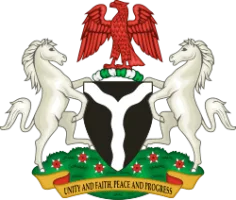
eagle
Driving
Speed limits & road rules in Nigeria
The default speed limits in Nigeria are 50 km/h in built-up areas, 80 km/h outside built-up areas and 100 km/h on motorways. The legal alcohol limit for drivers is 0.5‰. Posted signs always take priority over these defaults.
- 5050 km/hBuilt-up areasTowns and cities
- 8080 km/hOutside built-up areasCountry roads
- 100100 km/hMotorwaysMotorways / freeways
- International Driving PermitRecognised: 1968 Vienna, 1949 GenevaCarry the IDP together with your national licence
- Driving sideDrive on the rightOvertake on the left
- Alcohol limit0.5‰ blood alcohol (0.05% BAC)0.0‰ for young / novice drivers
- Seat beltsRequired by law
- Child seatsRequired by law
- Motorcycle helmetsRequired for riders
- Road deaths (2021)17.2 per 100,000 peopleHigher than most countries (median 12.4)
Speed limits: OpenStreetMap wiki — Default speed limits (CC BY-SA 2.0). Road-safety laws: WHO Global Health Observatory. Compare speed limits and alcohol limits by country. Defaults for cars; local signs, weather and vehicle type can lower them.
Safety
Is Nigeria safe to visit?
Travel to Nigeria carries a high risk: the US State Department rates Nigeria Level 3 (“Reconsider Travel”), and the UK Foreign Office advises against all travel to parts of the country.
 US State Department
 UK Foreign Office (FCDO)
Latest update: New information about Ebola (‘Health’ page)
Updated 21 Oct 2026 · Full travel advice
Sources: US Department of State travel advisories (public domain) and UK FCDO foreign travel advice (contains public sector information licensed under the Open Government Licence v3.0). Checked daily. Advice can change quickly — always read the official page before you travel.
Weather
Best time to visit Nigeria
The best time to visit Nigeria is November to January, when daytime highs in Abuja are around 31–33°C. February to March and May to October are also a good time to go. March is the warmest month (35°C by day), December the coldest (16°C at night), and August the wettest with about 253 mm of rain.
- Jan33°C17°C
- Feb35°C20°C
- Mar35°C22°C
- Apr33°C23°C
- May31°C23°C
- Jun29°C22°C
- Jul28°C21°C
- Aug27°C21°C
- Sep28°C21°C
- Oct29°C21°C
- Nov31°C19°C
- Dec32°C16°C
Best time Good Less ideal
Before you go
Plugs, voltage & emergency numbers in Nigeria
Plugs & sockets
230 V, 50 Hz · Standard 220–240 V: devices from the US or Japan (110–120 V) need a converter unless they are dual voltage (100–240 V).
Emergency numbers
112 works from any mobile phone, even without a SIM card in most networks. All countries →
Sources: Wikipedia — Mains electricity by country and List of emergency telephone numbers (CC BY-SA 4.0).
National parks
14 national parks in Nigeria
- 26,350 km² protected
- oldest from 1949
Largest: Gashaka Gumti National Park · Kainji National Park · Cross River National Park


Currency · 26 October 2026
Nigerian naira exchange rates today
Nigeria uses the Nigerian naira (NGN, ₦). One US dollar buys 1,347.6 NGN; over the last 30 days the NGN has lost 1.4% against the dollar.
What other currencies cost in NGN
Currency converter
Daily reference rates from the open-source currency-api (CC0), 26 Oct 2026. Banks and exchange offices add a margin.
World rankings
Where Nigeria ranks
How Nigeria compares with the rest of the world — open any card for the full ranking.
Airports
Airports in Nigeria
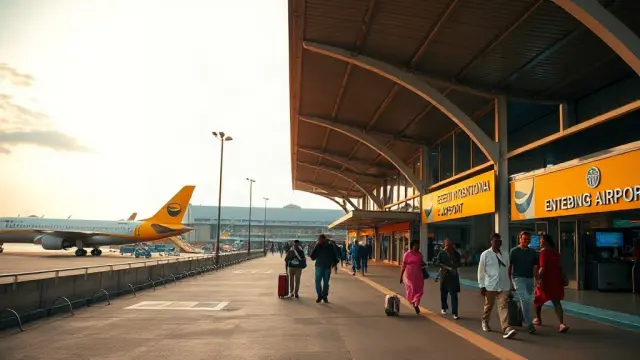
67 airports and airfields — 12 large, 17 medium and 21 small, plus 17 heliports. 27 have scheduled passenger flights.
Borders
Neighbouring countries
Nigeria borders 4 countries along 4,477 km of land borders. Coastline: 853 km.


Military
Nigerian armed forces
Nigeria ranks #36 of 145 in the Global Firepower military strength ranking, with a defence budget of $2.1 billion (2025).
People
Population & society
Religion
Largest cities: Lagos (15.9 million), Kano (4.3 million), Ibadan (3.9 million), Abuja (3.8 million), Port Harcourt (3.5 million)
Economy
Economy
Main industries
crude oil, coal, tin, columbite; rubber products, wood; hides and skins, textiles, cement and other construction materials, food products, footwear, chemicals, fertilizer, printing, ceramics, steel
Export partners
USA 10%, Spain 9%, France 8%, Netherlands 7%, India 6% (2023)
Top exports
crude petroleum, natural gas, gold, fertilizers, cocoa beans (2023)
Travel tools
Handy before every trip to Nigeria
Next public holiday
National Youth Day — Sunday, 1 November 2026. Then Christmas Day (25 Dec).

Nigerian passport
Ranked #155: 26 countries visa-free, 16 with visa on arrival, 1 with an eTA and 44 with an eVisa.
Nigerian passport photo
Exact size, head position and background for Nigeria's passport and visa photos — make one free with AI checks.
Calling Nigeria
Dial +234 before the local number. Internet domain .ng.
Climate footprint
135.8 million tonnes of CO₂ in 2024 — 0.58 t per person.
Entry requirements
Visa rules for every passport visiting Nigeria: visa-free stays, eVisas, visas on arrival and documents to bring.
News
Latest travel news about Nigeria

UK student visa squeeze and £925 levy planned for 2028: what applicants face
British universities say tighter UK immigration rules are cutting international student numbers, putting a £925 annual levy planned for August 2028 a…
UK care worker visa rules squeeze Nigerians and Zimbabweans in the sector
Nigerian and Zimbabwean nationals received a combined 120,692 UK Health and Care Worker visa extensions in the year to March 2026, Home Office figure…
Recent DR Congo trips now trigger 21-day quarantine for returning Ugandans
Uganda will quarantine its own citizens for 21 days if they are returning with recent travel to the Democratic Republic of Congo, Health Minister Chr…
Frequently asked questions about Nigeria
What do I need to travel to Nigeria?
How long must my passport be valid for Nigeria?
Where is Nigeria?
What is Nigeria known for?
What is the capital of Nigeria?
What language is spoken in Nigeria?
What currency does Nigeria use?
What is the calling code of Nigeria?
Which countries border Nigeria?
How strong is the Nigerian passport?
What is the speed limit in Nigeria?
Is Nigeria safe to visit?
When is the best time to visit Nigeria?
What plug type does Nigeria use?
How many airports does Nigeria have?
Sources: CIA World Factbook (public domain); World Bank Open Data (CC BY 4.0); names, languages and currencies: mledoze/countries (ODbL); flag: flag-icons (MIT); coat of arms: Wikimedia Commons (file page); exchange rates: Daily reference rates from the open-source currency-api (CC0); airports: OurAirports.