

North America · UN member

Canada: Travel Guide & Requirements
Canada is a country in North America with its capital in Ottawa. It has a population of 41.7 million (#38 in the world) and covers 9,984,670 km². The official languages are English and French. The currency is the Canadian dollar (CAD, $).
Where is Canada? Map of Canada
Northern North America, bordering the North Atlantic Ocean on the east, North Pacific Ocean on the west, and the Arctic Ocean on the north, north of the conterminous US.
- Region
- North America
- Coordinates
- 60° N, 95° W
- Neighbours
- 2 — see list
- Coastline
- 202,080 km
- Canada
- Neighbours
- Capital
- Largest cities
Map of Canada showing Ottawa (capital) and the largest cities: Toronto, Montréal, Calgary, Edmonton, Winnipeg, Vancouver, Hamilton and Québec.
Travel requirements
What you need to travel to Canada
- Passport
Immigration, Refugees and Citizenship Canada (IRCC) tells visitor visa applicants that their passport or travel document should be valid for at least 6 months from the date they plan to travel.
- Visa or eTA
Depends on your passport: of 198 passports, 1 needs no visa, 53 need an eTA, 144 need a visa from an embassy. Check yours or see Canada entry requirements for every passport.
- Return or onward ticket
No official requirement. The UK FCDO says Canadian border officials may ask you to show a return or onward ticket.
- Proof of funds
IRCC says you must have enough money for your stay; the amount varies with how long you stay and whether you stay in a hotel or with friends or relatives.
- Travel insurance
No official requirement. The UK FCDO says medical treatment can be very expensive, that there are no special arrangements for British visitors, and advises insurance for local treatment or unexpected medical evacuation.
- Customs allowance
The Canada Border Services Agency says any time you cross the border you must declare currency or monetary instruments valued at CAD 10,000 or more, in any combination of Canadian or foreign currency and monetary instru…
- Travel advice
Safe to visit — US and UK advice.
Entry rules: TravelRequirements.info — Entry Requirements Dataset (CC BY 4.0), each rule cited to an official government source. Always confirm with the airline and the official source before you travel.
Before you go
10 things to know before you travel to Canada
- Safety: Yes — Canada is generally safe to visit: the US State Department rates Canada Level 1 (“Exercise Normal Precautions”), and the UK Foreign Office has no warnings against travel there.
- Best time to go: July to August — when daytime highs in Ottawa are around 25–26°C.
- Money: the Canadian dollar (CAD) — 1 US dollar is about 1.4006 CAD.
- Plugs: type A and B, 120 V, 60 Hz — low-voltage country: devices made only for 220–240 V need a voltage converter. Phone and laptop chargers (100–240 V) only need a plug adapter.
- Emergency numbers: Police 911, Ambulance 911, Fire 911.
- Language: English and French are official.
- Driving: on the right — speed limits are 50 km/h in built-up areas and 80 km/h outside built-up areas.
- Time zone: UTC-5 in Ottawa.
- Capital: Ottawa; the largest city is Toronto. About 41.7 million people live in Canada.
- Canada is the 2nd largest country in the world by area.
Key facts
Canada at a glance
Languages spoken: English (official) 87.1%, French (official) 29.1%, Chinese languages 4.2%, Spanish 3.2%, Punjabi 2.6%, Arabic 2.4%, Tagalog 2.3%, Italian 1.5% (2022 est.)
Geography & history
About Canada
A land of vast distances and rich natural resources, Canada became a self-governing dominion in 1867, while retaining ties to the British crown. Canada gained legislative independence from Britain in 1931 and formalized its constitutional independence from the UK when it passed the Canada Act in 1982. Economically and technologically, the nation has developed in parallel with the US, its neighbor to the south across the world's longest international border. Canada faces the political challenges of meeting public demands for quality improvements in health care, education, social services, and economic competitiveness, as well as responding to the particular concerns of predominantly francoph…
Read the full history
A land of vast distances and rich natural resources, Canada became a self-governing dominion in 1867, while retaining ties to the British crown. Canada gained legislative independence from Britain in 1931 and formalized its constitutional independence from the UK when it passed the Canada Act in 1982. Economically and technologically, the nation has developed in parallel with the US, its neighbor to the south across the world's longest international border. Canada faces the political challenges of meeting public demands for quality improvements in health care, education, social services, and economic competitiveness, as well as responding to the particular concerns of predominantly francophone Quebec. Canada also aims to develop its diverse energy resources while maintaining its commitment to the environment.
Location
Northern North America, bordering the North Atlantic Ocean on the east, North Pacific Ocean on the west, and the Arctic Ocean on the north, north of the conterminous US
Climate
varies from temperate in south to subarctic and arctic in north
Terrain
mostly plains with mountains in west, lowlands in southeast
Highest point
Mount Logan 5,959 m
Natural resources
bauxite, iron ore, nickel, zinc, copper, gold, lead, uranium, rare earth elements, molybdenum, potash, diamonds, silver, fish, timber, wildlife, coal, petroleum, natural gas, hydropower
Natural hazards
continuous permafrost in north is a serious obstacle to development; cyclonic storms form east of the Rocky Mountains, a result of the mixing of air masses from the Arctic, Pacific, and North American interior, and produce most of the country's rain and snow …
National symbols
maple leaf, beaver
Driving
Speed limits & road rules in Canada
The default speed limits in Canada are 50 km/h in built-up areas and 80 km/h outside built-up areas. Posted signs always take priority over these defaults.
- 5050 km/hBuilt-up areasTowns and cities
- 8080 km/hOutside built-up areasCountry roadsMost common · varies by province: 50–100 km/h
- International Driving PermitRecognised: 1949 GenevaCarry the IDP together with your national licence
- Driving sideDrive on the rightOvertake on the left
- Seat beltsRequired by law
- Child seatsRequired by law
- Motorcycle helmetsRequired for riders
- Road deaths (2021)4.7 per 100,000 peopleSafer than most countries (median 12.4)
Speed limits: OpenStreetMap wiki — Default speed limits (CC BY-SA 2.0). Road-safety laws: WHO Global Health Observatory. Compare speed limits and alcohol limits by country. Defaults for cars; local signs, weather and vehicle type can lower them.
Safety
Is Canada safe to visit?
Yes — Canada is generally safe to visit: the US State Department rates Canada Level 1 (“Exercise Normal Precautions”), and the UK Foreign Office has no warnings against travel there.
 US State Department
 UK Foreign Office (FCDO)
Latest update: Addition of information about entry requirements for those entering from Ebola-affected regions ('Entry requirements' page).
Updated 2 Jun 2026 · Full travel advice
Sources: US Department of State travel advisories (public domain) and UK FCDO foreign travel advice (contains public sector information licensed under the Open Government Licence v3.0). Checked daily. Advice can change quickly — always read the official page before you travel.
Weather
Best time to visit Canada
The best time to visit Canada is July to August, when daytime highs in Ottawa are around 25–26°C. June and September are also a good time to go. July is the warmest month (26°C by day), January the coldest (-16°C at night), and June the wettest with about 104 mm of rain.
- Jan-6°C-16°C
- Feb-5°C-16°C
- Mar2°C-9°C
- Apr11°C-1°C
- May19°C7°C
- Jun23°C12°C
- Jul26°C15°C
- Aug25°C14°C
- Sep21°C10°C
- Oct13°C3°C
- Nov5°C-3°C
- Dec-3°C-11°C
Best time Good Less ideal
Before you go
Plugs, voltage & emergency numbers in Canada
Plugs & sockets
120 V, 60 Hz · Low-voltage country: devices made only for 220–240 V need a voltage converter. Phone and laptop chargers (100–240 V) only need a plug adapter.
Emergency numbers
Save the local numbers before you travel — 112 or 911 may not connect here. All countries →
Sources: Wikipedia — Mains electricity by country and List of emergency telephone numbers (CC BY-SA 4.0).
Ski resorts
403 ski resorts in Canada
- 3,566 km of slopes
- 947 lifts
- up to 2,686 m
Biggest: Whistler Blackcomb · Sun Peaks Resort · Silver Star Mountain Resort
National parks
53 national parks in Canada
- 343,007 km² protected
- oldest from 1885
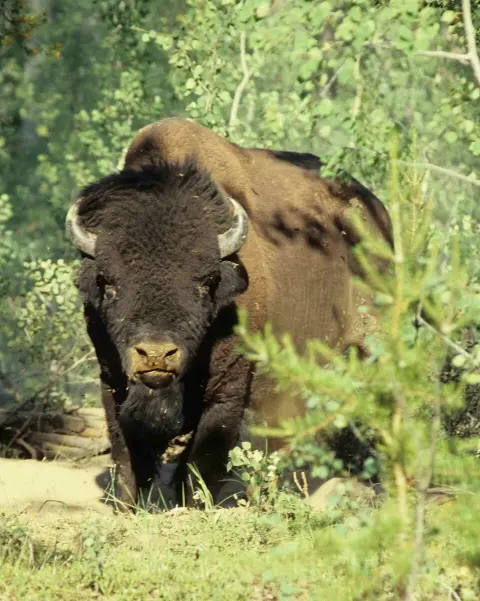
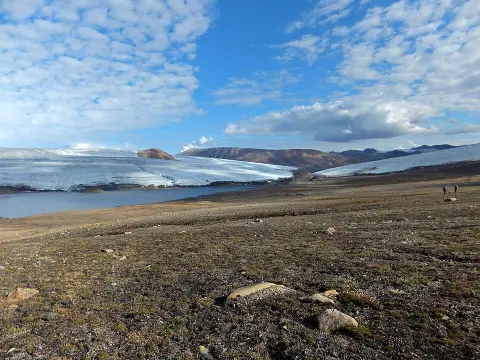
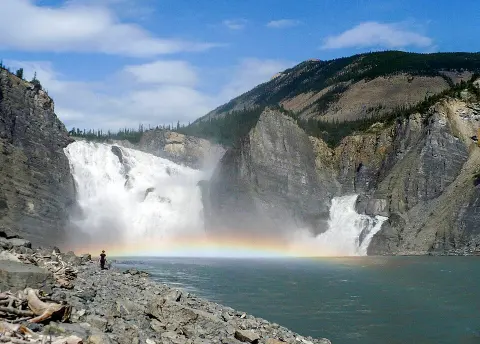
Largest: Wood Buffalo National Park · Quttinirpaaq National Park · Nahanni National Park Reserve
Currency · 26 October 2026
Canadian dollar exchange rates today
Canada uses the Canadian dollar (CAD, $). One US dollar buys 1.4006 CAD; over the last 30 days the CAD has gained 1.0% against the dollar.
What other currencies cost in CAD
Currency converter
Daily reference rates from the open-source currency-api (CC0), 26 Oct 2026. Banks and exchange offices add a margin.
World rankings
Where Canada ranks
How Canada compares with the rest of the world — open any card for the full ranking.
Airports
Airports in Canada
2,480 airports and airfields — 17 large, 233 medium and 1254 small, plus 525 heliports. 297 have scheduled passenger flights.
Borders
Neighbouring countries
Canada borders 2 countries along 8,892 km of land borders. Coastline: 202,080 km.

Military
Canadian armed forces
Canada ranks #27 of 145 in the Global Firepower military strength ranking, with a defence budget of $37.5 billion (2025).
People
Population & society
Religion
Largest cities: Toronto (6.4 million), Montreal (4.3 million), Vancouver (2.7 million), Calgary (1.6 million), Edmonton (1.5 million)
Economy
Economy
Main industries
transportation equipment, chemicals, processed and unprocessed minerals, food products, wood and paper products, fish products, petroleum, natural gas
Export partners
USA 71%, China 5%, UK 3%, Japan 2%, Mexico 2% (2023)
Top exports
crude petroleum, cars, gold, natural gas, refined petroleum (2023)
Travel tools
Handy before every trip to Canada
Next public holiday
Christmas Day — Friday, 25 December 2026. Then New Year's Day (1 Jan).
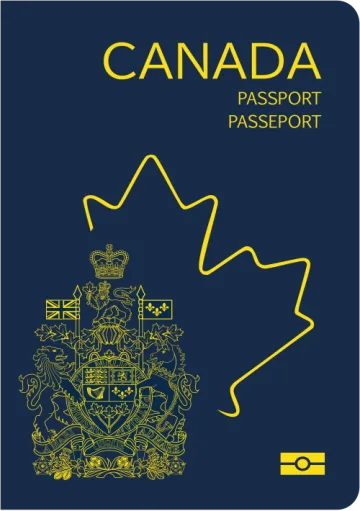
Canadian passport
Ranked #32: 117 countries visa-free, 38 with visa on arrival, 8 with an eTA and 18 with an eVisa.
Canadian passport photo
Exact size, head position and background for Canada's passport and visa photos — make one free with AI checks.
Calling Canada
Dial +1 before the local number. Internet domain .ca.
Climate footprint
533.3 million tonnes of CO₂ in 2024 — 13.42 t per person.
Entry requirements
Visa rules for every passport visiting Canada: visa-free stays, eVisas, visas on arrival and documents to bring.
News
Latest travel news about Canada

Bill C-3: Americans With Canadian Ancestors May Already Be Citizens
Canada's Bill C-3, in force since 15 December 2025, removed the first-generation limit on citizenship by descent. Americans with an unbroken line to …

Saint Kitts and Nevis Revives Toronto Flights for Winter 2027 Season
Air Canada resumes weekly direct Toronto–Saint Kitts flights from 31 October, several weeks earlier than usual, as the tourism ministry targets Canad…

Caribbean retirement permits and income rules island by island
A comparison of eight Caribbean retirement destinations sets out the permits and income thresholds facing foreign retirees, from the Dominican Republ…
Frequently asked questions about Canada
What do I need to travel to Canada?
How long must my passport be valid for Canada?
Where is Canada?
What is Canada known for?
What is the capital of Canada?
What language is spoken in Canada?
What currency does Canada use?
What is the calling code of Canada?
Which countries border Canada?
How strong is the Canadian passport?
What is the speed limit in Canada?
Is Canada safe to visit?
When is the best time to visit Canada?
What plug type does Canada use?
How many airports does Canada have?
Sources: CIA World Factbook (public domain); World Bank Open Data (CC BY 4.0); names, languages and currencies: mledoze/countries (ODbL); flag: flag-icons (MIT); coat of arms: Wikimedia Commons (file page); exchange rates: Daily reference rates from the open-source currency-api (CC0); airports: OurAirports.