
Southeast Europe · UN member

Serbia: Travel Guide & Requirements
Republic of Serbia · Република Србија
Serbia is a country in Southeast Europe with its capital in Belgrade. It has a population of 6.5 million (#109 in the world) and covers 77,474 km². The official language is Serbian. The currency is the Serbian dinar (RSD, дин.).
Where is Serbia? Map of Serbia
Southeastern Europe, between Macedonia and Hungary.
- Region
- Southeast Europe
- Coordinates
- 44° N, 21° E
- Neighbours
- 8 — see list
- Coastline
- Landlocked
- Serbia
- Neighbours
- Capital
- Largest cities
Map of Serbia showing Belgrade (capital) and the largest cities: Niš, Novi Sad, Kragujevac, Čačak, Subotica, Novi Pazar, Zrenjanin and Kruševac.
Travel requirements
What you need to travel to Serbia
- Passport
Serbia's Ministry of Foreign Affairs lists, among general visa requirements, a passport valid at least 90 days after the intended date of departure from Serbia, with at least two consecutive blank pages, issued within t…
- Visa or eTA
Depends on your passport: of 198 passports, 90 need no visa, 108 need a visa from an embassy. Check yours or see Serbia entry requirements for every passport.
- Return or onward ticket
No official requirement.
- Proof of funds
Serbia's Ministry of Foreign Affairs lists proof of sufficient funds among the general entry requirements: 50 euros per day of stay, proved by the appropriate amount of cash or a bank statement.
- Travel insurance
Serbia's Ministry of Foreign Affairs lists adequate and valid travel medical insurance among the general visa requirements.
- Arrival card
The UK Foreign Office says you must register with the local police where you are staying within 24 hours of arrival, that hotel check-in staff will register you automatically, and that if you do not register you could g…
- Customs allowance
Serbia's Customs Administration says you may bring in as much foreign currency as you wish, but amounts of more than EUR 10,000 must be declared to customs on the Cash Declaration Form; if you later leave with unspent m…
- Travel advice
Some caution needed — US and UK advice.
Entry rules: TravelRequirements.info — Entry Requirements Dataset (CC BY 4.0), each rule cited to an official government source. Always confirm with the airline and the official source before you travel.
Before you go
10 things to know before you travel to Serbia
- Safety: Serbia is generally safe for travellers, but some caution is needed: the US State Department rates Serbia Level 2 (“Exercise Increased Caution”), and the UK Foreign Office has no warnings against travel there.
- Best time to go: September — when daytime highs in Belgrade are around 25°C.
- Money: the Serbian dinar (RSD) — 1 US dollar is about 104.7794 RSD.
- Plugs: type C and F, 230 V, 50 Hz — standard 220–240 V: devices from the US or Japan (110–120 V) need a converter unless they are dual voltage (100–240 V).
- Emergency numbers: Police 192 / 112, Ambulance 194, Fire 193.
- Language: Serbian is official.
- Driving: on the right — speed limits are 50 km/h in built-up areas, 80 km/h outside built-up areas, 100 km/h on expressways and 120 km/h on motorways.
- Time zone: UTC+1 in Belgrade.
- Capital: Belgrade. About 6.5 million people live in Serbia.
- Outdoors: 7 national parks and 11 ski areas.
Key facts
Serbia at a glance
Languages spoken: Serbian (official) 88.1%, Hungarian 3.4%, Bosnian 1.9%, Romani 1.4%, other 3.4%, undeclared or unknown 1.8% (2011 est.)
Geography & history
About Serbia
In 1918, the Croats, Serbs, and Slovenes formed a kingdom known after 1929 as Yugoslavia. The monarchy remained in power until 1945, when the communist Partisans headed by Josip Broz (aka TITO) took control of the newly created Socialist Federal Republic of Yugoslavia (SFRY). After TITO died in 1980, communism in Yugoslavia gradually gave way to resurgent nationalism. In 1989, Slobodan MILOSEVIC became president of the Republic of Serbia, and his calls for Serbian domination led to the violent breakup of Yugoslavia along ethnic lines. In 1991, Croatia, Slovenia, and Macedonia declared independence, followed by Bosnia in 1992. The remaining republics of Serbia and Montenegro declared a new F…
Read the full history
In 1918, the Croats, Serbs, and Slovenes formed a kingdom known after 1929 as Yugoslavia. The monarchy remained in power until 1945, when the communist Partisans headed by Josip Broz (aka TITO) took control of the newly created Socialist Federal Republic of Yugoslavia (SFRY). After TITO died in 1980, communism in Yugoslavia gradually gave way to resurgent nationalism. In 1989, Slobodan MILOSEVIC became president of the Republic of Serbia, and his calls for Serbian domination led to the violent breakup of Yugoslavia along ethnic lines. In 1991, Croatia, Slovenia, and Macedonia declared independence, followed by Bosnia in 1992. The remaining republics of Serbia and Montenegro declared a new Federal Republic of Yugoslavia (FRY) in 1992, and MILOSEVIC led military campaigns to unite ethnic Serbs in neighboring republics into a "Greater Serbia." These actions ultimately failed, and international intervention led to the signing of the Dayton Accords in 1995. In 1998, an ethnic Albanian insurgency in the formerly autonomous Serbian province of Kosovo resulted in a brutal Serbian counterinsurgency campaign. Serbia rejected a proposed international settlement, and NATO responded with a bombing campaign that forced Serbian forces to withdraw from Kosovo in June 1999. In 2003, the FRY became the State Union of Serbia and Montenegro, a loose federation of the two republics. In 2006, Montenegro seceded and declared itself an independent nation. In 2008, Kosovo also declared independence -- an action Serbia still refuses to recognize. In 2013, Serbia and Kosovo signed the first agreement of principles governing the normalization of relations between the two countries. Additional agreements were reached in 2015 and 2023, but implementation remains incomplete. Serbia has been an official candidate for EU membership since 2012, and President Aleksandar VUCIC has promoted the ambitious goal of Serbia joining the EU by 2025.
Location
Southeastern Europe, between Macedonia and Hungary
Climate
in the north, continental climate (cold winters and hot, humid summers with well-distributed rainfall); in other parts, continental and Mediterranean climate (relatively cold winters with heavy snowfall and hot, dry summers and autumns)
Terrain
extremely varied; to the north, rich fertile plains; to the east, limestone ranges and basins; to the southeast, ancient mountains and hills
Highest point
Midzor 2,169 m
Natural resources
oil, gas, coal, iron ore, copper, zinc, antimony, chromite, gold, silver, magnesium, pyrite, limestone, marble, salt, arable land
Natural hazards
destructive earthquakes
National symbols
white double-headed eagle
Driving
Speed limits & road rules in Serbia
The default speed limits in Serbia are 50 km/h in built-up areas, 80 km/h outside built-up areas, 100 km/h on expressways and 120 km/h on motorways. The legal alcohol limit for drivers is 0.3‰. Posted signs always take priority over these defaults.
- 1010 km/hResidential zonesLiving streets & residential areas
- 5050 km/hBuilt-up areasTowns and cities
- 8080 km/hOutside built-up areasCountry roads
- 100100 km/hExpresswaysDual carriageways & expressways
- 120120 km/hMotorwaysMotorways / freeways
- International Driving PermitRecognised: 1968 Vienna, 1949 GenevaCarry the IDP together with your national licence
- Driving sideDrive on the rightOvertake on the left
- Alcohol limit0.3‰ blood alcohol (0.03% BAC)Zero tolerance for young / novice drivers
- Seat beltsRequired by law
- Child seatsRequired by law
- Motorcycle helmetsRequired for riders
- Road deaths (2021)7.4 per 100,000 peopleSafer than most countries (median 12.4)
Speed limits: OpenStreetMap wiki — Default speed limits (CC BY-SA 2.0). Road-safety laws: WHO Global Health Observatory. Compare speed limits and alcohol limits by country. Defaults for cars; local signs, weather and vehicle type can lower them.
Safety
Is Serbia safe to visit?
Serbia is generally safe for travellers, but some caution is needed: the US State Department rates Serbia Level 2 (“Exercise Increased Caution”), and the UK Foreign Office has no warnings against travel there.
 US State Department
 UK Foreign Office (FCDO)
Latest update: New information about Serbian parliamentary elections taking place on 25 October (‘Warnings and insurance’ and ‘Safety and security’ pages).
Updated 22 Oct 2026 · Full travel advice
Sources: US Department of State travel advisories (public domain) and UK FCDO foreign travel advice (contains public sector information licensed under the Open Government Licence v3.0). Checked daily. Advice can change quickly — always read the official page before you travel.
Weather
Best time to visit Serbia
The best time to visit Serbia is September, when daytime highs in Belgrade are around 25°C. May to June are also a good time to go. August is the warmest month (31°C by day), January the coldest (-4°C at night), and June the wettest with about 83 mm of rain.
- Jan3°C-4°C
- Feb6°C-3°C
- Mar13°C1°C
- Apr19°C7°C
- May23°C12°C
- Jun28°C16°C
- Jul31°C18°C
- Aug31°C18°C
- Sep25°C13°C
- Oct18°C7°C
- Nov12°C2°C
- Dec5°C-2°C
Best time Good Less ideal
Before you go
Plugs, voltage & emergency numbers in Serbia
Plugs & sockets
230 V, 50 Hz · Standard 220–240 V: devices from the US or Japan (110–120 V) need a converter unless they are dual voltage (100–240 V).
Emergency numbers
112 works from any mobile phone, even without a SIM card in most networks. All countries →
Sources: Wikipedia — Mains electricity by country and List of emergency telephone numbers (CC BY-SA 4.0).
Ski resorts
11 ski resorts in Serbia
- 112 km of slopes
- 73 lifts
- up to 1,974 m
Biggest: Kopaonik · Ски центар Копаоник · Ski Center Stara planina
National parks
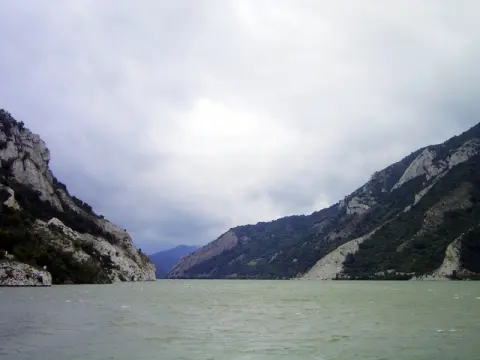
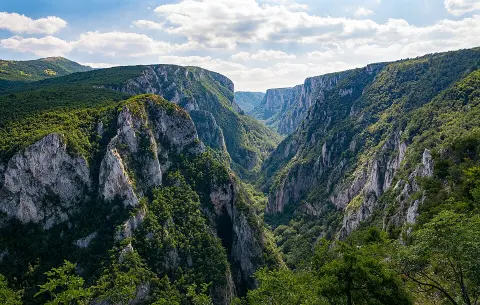
7 national parks in Serbia
- 1,725 km² protected
- oldest from 1960
Largest: Đerdap National Park · Kučaj-Beljanica National Park · Fruška Gora National Park
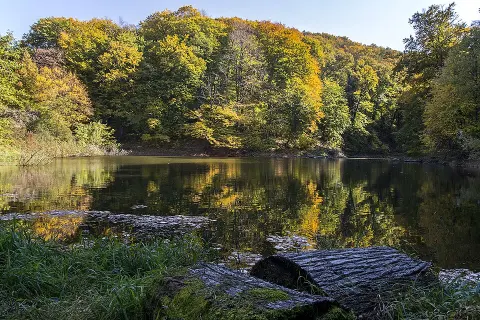
Currency · 26 October 2026
Serbian dinar exchange rates today
Serbia uses the Serbian dinar (RSD, дин.). One US dollar buys 104.7794 RSD; over the last 30 days the RSD has lost 1.7% against the dollar.
What other currencies cost in RSD
Currency converter
Daily reference rates from the open-source currency-api (CC0), 26 Oct 2026. Banks and exchange offices add a margin.
World rankings
Where Serbia ranks
How Serbia compares with the rest of the world — open any card for the full ranking.
Airports
Airports in Serbia
57 airports and airfields — 2 large, 3 medium and 41 small, plus 11 heliports. 3 have scheduled passenger flights.
Borders
Neighbouring countries
Serbia borders 8 countries along 2,322 km of land borders. It is landlocked.


Military
Serbian armed forces
Serbia ranks #58 of 145 in the Global Firepower military strength ranking, with a defence budget of $2.8 billion (2025).
People
Population & society
Religion
Largest cities: Belgrade (1.4 million)
Economy
Economy
Main industries
automobiles, base metals, furniture, food processing, machinery, chemicals, sugar, tires, clothes, pharmaceuticals
Export partners
Germany 15%, Hungary 7%, Bosnia & Herzegovina 5%, Italy 5%, Romania 5% (2023)
Top exports
insulated wire, electricity, copper ore, plastic products, electric motors (2023)
Travel tools
Handy before every trip to Serbia
Next public holiday
Armistice Day — Wednesday, 11 November 2026. Then New Year's Day (1 Jan).

Serbian passport
Ranked #71: 86 countries visa-free, 34 with visa on arrival, 4 with an eTA and 33 with an eVisa.
Serbian passport photo
Exact size, head position and background for Serbia's passport and visa photos — make one free with AI checks.
Calling Serbia
Dial +381 before the local number. Internet domain .rs.
Climate footprint
42.0 million tonnes of CO₂ in 2024 — 6.24 t per person.
Entry requirements
Visa rules for every passport visiting Serbia: visa-free stays, eVisas, visas on arrival and documents to bring.
News
Latest travel news about Serbia
Russian water polo team plans camps in visa-free Serbia and Montenegro
Russia's men's water polo coach says his squad can travel visa-free only to Serbia and Montenegro, while Hungary, Italy, Spain, France and the Nether…
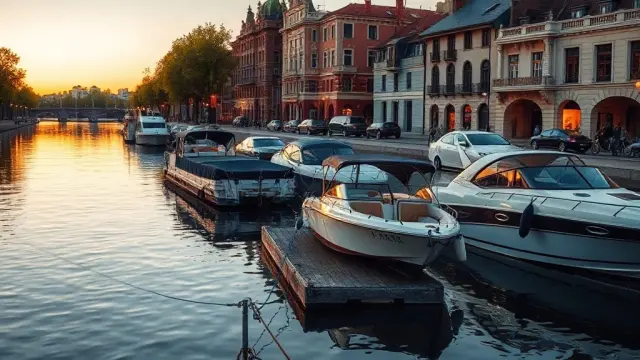
Serbian crews sail to Timișoara as Bega Canal regatta tests new moorings
Recreational boats from Serbia reached central Timișoara in September 2026 for the fourth Regata Bega, using temporary moorings set up for the event.…
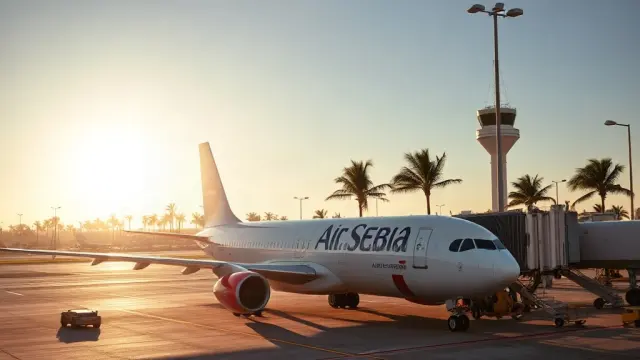
Air Serbia to Fly Belgrade–Miami From May 2027, Twice a Week
Air Serbia will launch its first Florida service, linking Belgrade with Miami from 20 May 2027 on a twice-weekly basis. The airline is also adding fi…
Frequently asked questions about Serbia
What do I need to travel to Serbia?
How long must my passport be valid for Serbia?
Where is Serbia?
What is Serbia known for?
What is the capital of Serbia?
What language is spoken in Serbia?
What currency does Serbia use?
What is the calling code of Serbia?
Which countries border Serbia?
How strong is the Serbian passport?
What is the speed limit in Serbia?
Is Serbia safe to visit?
When is the best time to visit Serbia?
What plug type does Serbia use?
How many airports does Serbia have?
Sources: CIA World Factbook (public domain); World Bank Open Data (CC BY 4.0); names, languages and currencies: mledoze/countries (ODbL); flag: flag-icons (MIT); coat of arms: Wikimedia Commons (file page); exchange rates: Daily reference rates from the open-source currency-api (CC0); airports: OurAirports.