
Western Asia · UN member

Lebanon: Travel Guide & Requirements
Lebanese Republic · الجمهورية اللبنانية · République libanaise
Lebanon is a country in Western Asia with its capital in Beirut. It has a population of 5.8 million (#115 in the world) and covers 10,400 km². The official languages are Arabic and French. The currency is the Lebanese pound (LBP, ل.ل).
Where is Lebanon? Map of Lebanon
Middle East, bordering the Mediterranean Sea, between Israel and Syria.
- Region
- Western Asia
- Coordinates
- 33.8333° N, 35.8333° E
- Neighbours
- 2 — see list
- Coastline
- 225 km
- Lebanon
- Neighbours
- Capital
- Largest cities
Map of Lebanon showing Beirut (capital) and the largest cities: Tripoli, Tyre, Baalbek and El Hermel.
Travel requirements
What you need to travel to Lebanon
- Passport
General Security asks applicants for a visa through an embassy for a copy of a passport valid for at least six months from the date of application, and Canada's travel advice says 6 months beyond the date you leave.
- Visa or eTA
Depends on your passport: of 198 passports, 7 need no visa, 90 get a visa on arrival, 100 need a visa from an embassy. Check yours or see Lebanon entry requirements for every passport.
- Return or onward ticket
General Security asks applicants for a visa through an embassy for a round-trip airline ticket reservation, and requires a round-trip airline ticket of the nationalities given a one-month visa under its Eighth Article (…
- Proof of funds
Nationalities given a one-month visa under General Security's Eighth Article (Algeria, Egypt, Morocco, Tunisia and others) must have a sum equivalent to USD 2,000, or a cheque for the same amount certified by the bank c…
- Travel insurance
General Security does not list insurance among the documents for the cost-free visa granted on arrival or for a visa through an embassy.
- Customs allowance
Lebanese Customs says anyone physically carrying cash or other negotiable instruments worth more than USD 15,000 (or the equivalent in other currencies) must declare them to the customs authorities on a declaration form…
- Travel advice
Avoid travel — US and UK advice.
Entry rules: TravelRequirements.info — Entry Requirements Dataset (CC BY 4.0), each rule cited to an official government source. Always confirm with the airline and the official source before you travel.
Before you go
10 things to know before you travel to Lebanon
- Safety: Governments advise against travel to Lebanon: the US State Department rates Lebanon Level 4 (“Do Not Travel”), and the UK Foreign Office advises against all travel to parts of the country.
- Best time to go: May to June and October — when daytime highs in Beirut are around 25–28°C.
- Money: the Lebanese pound (LBP) — 1 US dollar is about 89,660.0 LBP.
- Plugs: type A, B, C, D and G, 220 V, 50 Hz — standard 220–240 V: devices from the US or Japan (110–120 V) need a converter unless they are dual voltage (100–240 V).
- Emergency numbers: Police 999 / 112, Ambulance 140, Fire 175.
- Language: Arabic and French are official; English is also spoken.
- Driving: on the right — speed limits are 50 km/h in built-up areas and 70 km/h outside built-up areas.
- Time zone: UTC+2 in Beirut.
- Capital: Beirut. About 5.8 million people live in Lebanon.
- Outdoors: 5 ski areas.
Key facts
Lebanon at a glance
Languages spoken: Arabic (official), French, English, Armenian
Geography & history
About Lebanon
As a result of its location at the crossroads of three continents, the area that is modern-day Lebanon is rich in cultural and religious diversity. This region was subject to various foreign conquerors for much of its history, including the Romans, Arabs, and Ottomans. Following World War I, France acquired a mandate over the northern portion of the former Ottoman Empire province of Syria. From it the French demarcated the region of Lebanon in 1920, and it gained independence in 1943. Lebanon subsequently experienced periods of political turmoil interspersed with prosperity built on its position as a regional center for finance and trade. The country's 1975-90 civil war, which resulted in a…
Read the full history
As a result of its location at the crossroads of three continents, the area that is modern-day Lebanon is rich in cultural and religious diversity. This region was subject to various foreign conquerors for much of its history, including the Romans, Arabs, and Ottomans. Following World War I, France acquired a mandate over the northern portion of the former Ottoman Empire province of Syria. From it the French demarcated the region of Lebanon in 1920, and it gained independence in 1943. Lebanon subsequently experienced periods of political turmoil interspersed with prosperity built on its position as a regional center for finance and trade. The country's 1975-90 civil war, which resulted in an estimated 120,000 fatalities, was followed by years of social and political instability, and sectarianism remains a key element of Lebanese political life. The Israeli defense forces, which occupied parts of Lebanon during the civil war, did not completely withdraw until 2000. Neighboring Syria influenced Lebanon's foreign and domestic policies while its military occupied Lebanon from 1976 until 2005, but its influence diminished significantly after 2005. Over 1.5 million Syrian refugees fled to Lebanon after the start of the Syrian conflict in 2011. Hizballah -- a major Lebanese political party, militia, and US-designated foreign terrorist organization -- and Israel continued attacks and counterattacks against each other after Syria's withdrawal and fought a brief war in 2006. After HAMAS attacked Israel on 7 October 2023, the intensity and frequency of these cross-border attacks increased substantially into a cycle of hostilities, mostly limited to the border areas as of January 2024. Lebanon's borders with Syria and Israel remain unresolved. Lebanon's prosperity has significantly diminished since the beginning of the country's economic crisis in 2019, which has crippled its economy, shut down its previously lucrative banking sector, reduced the value of its currency, and caused many Lebanese to emigrate in search of better prospects.
Location
Middle East, bordering the Mediterranean Sea, between Israel and Syria
Climate
Mediterranean; mild to cool, wet winters with hot, dry summers; the Lebanon Mountains experience heavy winter snows
Terrain
narrow coastal plain; El Beqaa (Bekaa Valley) separates Lebanon and Anti-Lebanon Mountains
Highest point
Qornet es Saouda 3,088 m
Natural resources
limestone, iron ore, salt, water-surplus state in a water-deficit region, arable land
Natural hazards
earthquakes; dust storms, sandstorms
National symbols
cedar tree
Driving
Speed limits & road rules in Lebanon
The default speed limits in Lebanon are 50 km/h in built-up areas and 70 km/h outside built-up areas. The legal alcohol limit for drivers is 0.5‰. Posted signs always take priority over these defaults.
- 5050 km/hBuilt-up areasTowns and citiesWHO data (2017)
- 7070 km/hOutside built-up areasCountry roadsWHO data (2017)
- International Driving PermitRecognised: 1949 GenevaCarry the IDP together with your national licence
- Driving sideDrive on the rightOvertake on the left
- Alcohol limit0.5‰ blood alcohol (0.05% BAC)Zero tolerance for young / novice drivers
- Seat beltsRequired by law
- Child seatsRequired by law
- Motorcycle helmetsRequired for riders
- Road deaths (2021)9.7 per 100,000 peopleSafer than most countries (median 12.4)
Speed limits: OpenStreetMap wiki — Default speed limits (CC BY-SA 2.0) and WHO. Road-safety laws: WHO Global Health Observatory. Compare speed limits and alcohol limits by country. Defaults for cars; local signs, weather and vehicle type can lower them.
Safety
Is Lebanon safe to visit?
Governments advise against travel to Lebanon: the US State Department rates Lebanon Level 4 (“Do Not Travel”), and the UK Foreign Office advises against all travel to parts of the country.
 US State Department
 UK Foreign Office (FCDO)
Latest update: FCDO has changed the areas of Lebanon where it advises against all travel or all but essential travel. FCDO no longer advises against all travel or all but essential travel to some parts of Lebanon. FCDO continues to advise against all travel and all but essential travel to other areas of Lebanon.
Updated 10 Aug 2026 · Full travel advice
Sources: US Department of State travel advisories (public domain) and UK FCDO foreign travel advice (contains public sector information licensed under the Open Government Licence v3.0). Checked daily. Advice can change quickly — always read the official page before you travel.
Weather
Best time to visit Lebanon
The best time to visit Lebanon is May to June and October, when daytime highs in Beirut are around 25–28°C. July to September are also a good time to go. August is the warmest month (30°C by day), January the coldest (9°C at night), and January the wettest with about 115 mm of rain.
- Jan14°C9°C
- Feb15°C9°C
- Mar17°C11°C
- Apr20°C13°C
- May25°C17°C
- Jun28°C20°C
- Jul30°C22°C
- Aug30°C23°C
- Sep28°C21°C
- Oct25°C19°C
- Nov20°C15°C
- Dec16°C11°C
Best time Good Less ideal
Before you go
Plugs, voltage & emergency numbers in Lebanon
Plugs & sockets
- Type Atwo flat parallel pins
- Type Btwo flat parallel pins and a round earth pin
- Type C (Europlug)two round pins
- Type Dthree large round pins in a triangle
- Type Gthree rectangular pins in a triangle
220 V, 50 Hz · Standard 220–240 V: devices from the US or Japan (110–120 V) need a converter unless they are dual voltage (100–240 V).
Emergency numbers
112 works from any mobile phone, even without a SIM card in most networks. All countries →
Sources: Wikipedia — Mains electricity by country and List of emergency telephone numbers (CC BY-SA 4.0).
Ski resorts
5 ski resorts in Lebanon
- 47 km of slopes
- 39 lifts
- up to 2,817 m
Biggest: منطقة للتزلج مزار كفردبيان · Qanât Bakîch · The Cedars Resort
Currency · 26 October 2026
Lebanese pound exchange rates today
Lebanon uses the Lebanese pound (LBP, ل.ل). One US dollar buys 89,660.0 LBP; over the last 30 days the LBP has lost 0.2% against the dollar.
What other currencies cost in LBP
Currency converter
Daily reference rates from the open-source currency-api (CC0), 26 Oct 2026. Banks and exchange offices add a margin.
World rankings
Where Lebanon ranks
How Lebanon compares with the rest of the world — open any card for the full ranking.
Airports
Airports in Lebanon
35 airports and airfields — 1 large, 3 medium and 3 small, plus 28 heliports. 1 have scheduled passenger flights.
Borders
Neighbouring countries
Lebanon borders 2 countries along 484 km of land borders. Coastline: 225 km.


Military
Lebanese armed forces
Lebanon ranks #111 of 145 in the Global Firepower military strength ranking, with a defence budget of $828 million (2025).
People
Population & society
Religion
Largest cities: Beirut (2.4 million)
Economy
Economy
Main industries
banking, tourism, real estate and construction, food processing, wine, jewelry, cement, textiles, mineral and chemical products, wood and furniture products, oil refining, metal fabricating
Export partners
UAE 26%, Egypt 7%, Turkey 5%, Iraq 5%, USA 4% (2023)
Top exports
jewelry, cars, diamonds, scrap iron, gold (2023)
Travel tools
Handy before every trip to Lebanon
Next public holiday
Independence Day — Sunday, 22 November 2026. Then Christmas Day (25 Dec).

Lebanese passport
Ranked #182: 15 countries visa-free, 27 with visa on arrival, 3 with an eTA and 43 with an eVisa.
Lebanese passport photo
Exact size, head position and background for Lebanon's passport and visa photos — make one free with AI checks.
Calling Lebanon
Dial +961 before the local number. Internet domain .lb.
Climate footprint
15.7 million tonnes of CO₂ in 2024 — 2.70 t per person.
Entry requirements
Visa rules for every passport visiting Lebanon: visa-free stays, eVisas, visas on arrival and documents to bring.
News
Latest travel news about Lebanon
Trips to Lebanon Remain at Highest U.S. Risk Level Amid Houthi Escalation
The U.S. travel advisory for Lebanon was updated on 23 October 2026 to reflect the threat of increased Iranian-supported Houthi regional aggression. …
US visa refusals keep Zimbabwe, Nepal and Pakistan fellows out of Utah event
Visa applications from religious freedom fellows in Nepal, Pakistan, Kenya, Nigeria and Zimbabwe were turned down by US officials, leaving only nine …
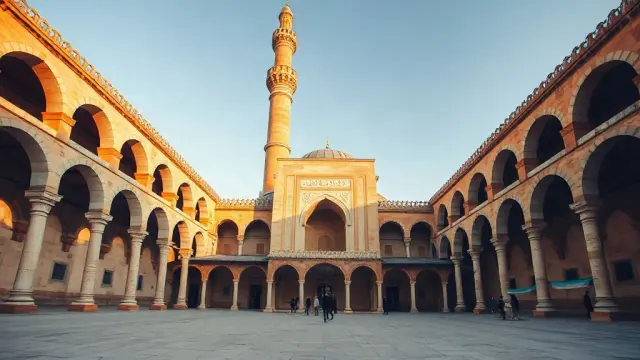
Before flying to Syria, confirm entry approval if your passport is on the restricted list
Most travellers can get a Syrian visa on arrival for USD 25 to 400 in cash, under Decision No. 128. Passports including Afghan, Chinese, Russian, Yem…
Frequently asked questions about Lebanon
What do I need to travel to Lebanon?
How long must my passport be valid for Lebanon?
Where is Lebanon?
What is the capital of Lebanon?
What language is spoken in Lebanon?
What currency does Lebanon use?
What is the calling code of Lebanon?
Which countries border Lebanon?
How strong is the Lebanese passport?
What is the speed limit in Lebanon?
Is Lebanon safe to visit?
When is the best time to visit Lebanon?
What plug type does Lebanon use?
How many airports does Lebanon have?
Sources: CIA World Factbook (public domain); World Bank Open Data (CC BY 4.0); names, languages and currencies: mledoze/countries (ODbL); flag: flag-icons (MIT); coat of arms: Wikimedia Commons (file page); exchange rates: Daily reference rates from the open-source currency-api (CC0); airports: OurAirports.