
Central Europe · UN member

Hungary: Travel Guide & Requirements
· Magyarország
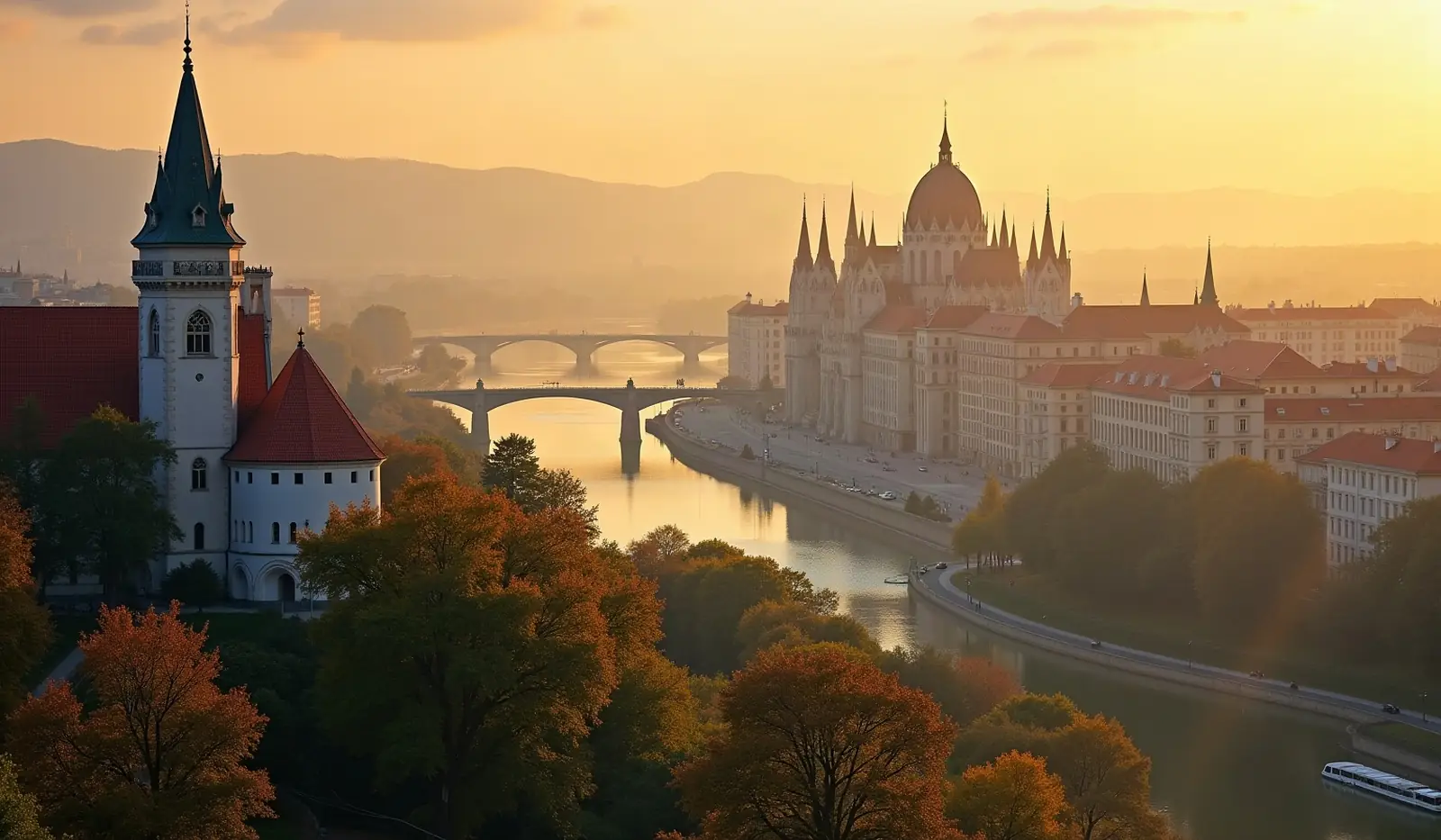
Hungary is a country in Central Europe with its capital in Budapest. It has a population of 9.5 million (#96 in the world) and covers 93,028 km². The official language is Hungarian. The currency is the Hungarian forint (HUF, Ft).
Where is Hungary? Map of Hungary
Central Europe, northwest of Romania.
- Region
- Central Europe
- Coordinates
- 47° N, 20° E
- Neighbours
- 7 — see list
- Coastline
- Landlocked
- Hungary
- Neighbours
- Capital
- Largest cities
Map of Hungary showing Budapest (capital) and the largest cities: Debrecen, Szeged, Miskolc, Pécs, Győr, Nyíregyháza, Kecskemét and Székesfehérvár.
Travel requirements
What you need to travel to Hungary
- Passport
The UK government says Hungary follows Schengen area rules: your passport must have a date of issue less than 10 years before the date you arrive and an expiry date at least 3 months after the day you plan to leave the …
- Visa or eTA
Depends on your passport: of 198 passports, 93 need no visa, 105 need a visa from an embassy. Check yours or see Hungary entry requirements for every passport.
- Return or onward ticket
No official requirement. Under the Schengen Borders Code (Annex I), the supporting documents for journeys for tourism or private reasons include, as regards return, a return or round-trip ticket, and as regards lodging, a document indicating th…
- Proof of funds
The European Commission’s table of reference amounts required for the crossing of the external border, fixed by national authorities, lists EUR 40 per day and per person for Hungary.
- Travel insurance
The EU Visa Code requires Schengen visa applicants to hold travel medical insurance valid throughout the Member States for the entire intended stay, with minimum coverage of EUR 30,000.
- Arrival card
The UK government says that when you travel into the Schengen area for short stays you may need to register biometric details such as fingerprints and a photo, and that there is no cost for EES registration.
- Customs allowance
Your Europe (EU) says that if you plan to enter or leave the EU with €10,000 in cash (or its equivalent in other currencies), you must declare it to the customs authorities in the EU country you are entering or leaving.
- Travel advice
Safe to visit — US and UK advice.
Entry rules: TravelRequirements.info — Entry Requirements Dataset (CC BY 4.0), each rule cited to an official government source. Always confirm with the airline and the official source before you travel.
Before you go
10 things to know before you travel to Hungary
- Safety: Yes — Hungary is generally safe to visit: the US State Department rates Hungary Level 1 (“Exercise Normal Precautions”), and the UK Foreign Office has no warnings against travel there.
- Best time to go: May to September — when daytime highs in Budapest are around 23–29°C.
- Money: the Hungarian forint (HUF) — 1 US dollar is about 326.7593 HUF.
- Plugs: type C and F, 230 V, 50 Hz — standard 220–240 V: devices from the US or Japan (110–120 V) need a converter unless they are dual voltage (100–240 V).
- Emergency numbers: Police 112 / 107, Ambulance 112 / 104, Fire 112 / 105.
- Language: Hungarian is official; English is also spoken.
- Driving: on the right — speed limits are 50 km/h in built-up areas, 90 km/h outside built-up areas, 110 km/h on expressways and 130 km/h on motorways.
- Time zone: UTC+1 in Budapest.
- Capital: Budapest. About 9.5 million people live in Hungary.
- Outdoors: 10 national parks and 11 ski areas.
Key facts
Hungary at a glance
Languages spoken: Hungarian (official) 98.8%, English 25.3%, German 12.6%, Russian 2.1%, French 1.5%, Romanian 1.4%, other 5.1% (2022 est.)
Geography & history
About Hungary
Hungary became a Christian kingdom in A.D. 1000 and for many centuries served as a bulwark against Ottoman Turkish expansion in Europe. The kingdom eventually became part of the Austro-Hungarian Empire, which collapsed during World War I. The country fell under communist rule after World War II. In 1956, Moscow responded to a Hungarian revolt and announcement of its withdrawal from the Warsaw Pact with a massive military intervention. Under the leadership of Janos KADAR in 1968, Hungary began liberalizing its economy, introducing so-called "Goulash Communism." Hungary held its first multiparty elections in 1990 and initiated a free market economy. It joined NATO in 1999 and the EU five year…
Read the full history
Hungary became a Christian kingdom in A.D. 1000 and for many centuries served as a bulwark against Ottoman Turkish expansion in Europe. The kingdom eventually became part of the Austro-Hungarian Empire, which collapsed during World War I. The country fell under communist rule after World War II. In 1956, Moscow responded to a Hungarian revolt and announcement of its withdrawal from the Warsaw Pact with a massive military intervention. Under the leadership of Janos KADAR in 1968, Hungary began liberalizing its economy, introducing so-called "Goulash Communism." Hungary held its first multiparty elections in 1990 and initiated a free market economy. It joined NATO in 1999 and the EU five years later.
Location
Central Europe, northwest of Romania
Climate
temperate; cold, cloudy, humid winters; warm summers
Terrain
mostly flat to rolling plains; hills and low mountains on the Slovakian border
Highest point
Kekes 1,014 m
Natural resources
bauxite, coal, natural gas, fertile soils, arable land
National symbols
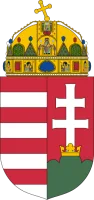
Holy Crown of Hungary (Crown of Saint Stephen)
Driving
Speed limits & road rules in Hungary
The default speed limits in Hungary are 50 km/h in built-up areas, 90 km/h outside built-up areas, 110 km/h on expressways and 130 km/h on motorways. The legal alcohol limit for drivers is zero. Posted signs always take priority over these defaults.
- 2020 km/hResidential zonesLiving streets & residential areas
- 5050 km/hBuilt-up areasTowns and cities
- 9090 km/hOutside built-up areasCountry roadsWith a trailer: 70 km/h
- 110110 km/hExpresswaysDual carriageways & expresswaysWith a trailer: 70 km/h
- 130130 km/hMotorwaysMotorways / freewaysWith a trailer: 80 km/h
- International Driving PermitRecognised: 1968 Vienna, 1949 Geneva, 1926 ParisCarry the IDP together with your national licence
- Driving sideDrive on the rightOvertake on the left
- Alcohol limitZero tolerance (0.0‰)
- Seat beltsRequired by law
- Child seatsRequired by law
- Motorcycle helmetsRequired for riders
- Road deaths (2021)7.4 per 100,000 peopleSafer than most countries (median 12.4)
Speed limits: OpenStreetMap wiki — Default speed limits (CC BY-SA 2.0). Road-safety laws: WHO Global Health Observatory. Compare speed limits and alcohol limits by country. Defaults for cars; local signs, weather and vehicle type can lower them.
Safety
Is Hungary safe to visit?
Yes — Hungary is generally safe to visit: the US State Department rates Hungary Level 1 (“Exercise Normal Precautions”), and the UK Foreign Office has no warnings against travel there.
 US State Department
 UK Foreign Office (FCDO)
Latest update: Removal of information about restrictions to LGBT+ marches and events ('Safety and security' page).
Updated 23 Sep 2026 · Full travel advice
Sources: US Department of State travel advisories (public domain) and UK FCDO foreign travel advice (contains public sector information licensed under the Open Government Licence v3.0). Checked daily. Advice can change quickly — always read the official page before you travel.
Weather
Best time to visit Hungary
The best time to visit Hungary is May to September, when daytime highs in Budapest are around 23–29°C. July is the warmest month (29°C by day), January the coldest (-5°C at night), and June the wettest with about 76 mm of rain.
- Jan2°C-5°C
- Feb4°C-4°C
- Mar11°C0°C
- Apr18°C6°C
- May23°C11°C
- Jun27°C15°C
- Jul29°C17°C
- Aug29°C16°C
- Sep23°C11°C
- Oct16°C6°C
- Nov9°C1°C
- Dec3°C-3°C
Best time Good Less ideal
Before you go
Plugs, voltage & emergency numbers in Hungary
Plugs & sockets
230 V, 50 Hz · Standard 220–240 V: devices from the US or Japan (110–120 V) need a converter unless they are dual voltage (100–240 V).
Sources: Wikipedia — Mains electricity by country and List of emergency telephone numbers (CC BY-SA 4.0).
Ski resorts
11 ski resorts in Hungary
- 18 km of slopes
- 49 lifts
- up to 1,016 m
Biggest: Síaréna Vibe Park · Sípark Mátraszentistván · Bánkút síklub
National parks
10 national parks in Hungary
- 4,802 km² protected
- oldest from 1973
Largest: Hortobágy National Park · Danube-Ipoly National Park · Balaton Uplands National Park
Currency · 26 October 2026
Hungarian forint exchange rates today
Hungary uses the Hungarian forint (HUF, Ft). One US dollar buys 326.7593 HUF; over the last 30 days the HUF has lost 1.9% against the dollar.
What other currencies cost in HUF
Currency converter
Daily reference rates from the open-source currency-api (CC0), 26 Oct 2026. Banks and exchange offices add a margin.
World rankings
Where Hungary ranks
How Hungary compares with the rest of the world — open any card for the full ranking.
Airports
Airports in Hungary
128 airports and airfields — 3 large, 7 medium and 101 small, plus 17 heliports. 5 have scheduled passenger flights.


Military
Hungarian armed forces
Hungary ranks #54 of 145 in the Global Firepower military strength ranking, with a defence budget of $5.0 billion (2025).
People
Population & society
Religion
Largest cities: Budapest (1.8 million)
Economy
Economy
Main industries
mining, metallurgy, construction materials, processed foods, textiles, chemicals (especially pharmaceuticals), motor vehicles
Export partners
Germany 25%, Italy 6%, Romania 6%, USA 5%, Slovakia 4% (2023)
Top exports
cars, vehicle parts/accessories, electric batteries, packaged medicine, computers (2023)
Travel tools
Handy before every trip to Hungary
Next public holiday
All Saints Day — Sunday, 1 November 2026. Then Christmas Day (25 Dec).
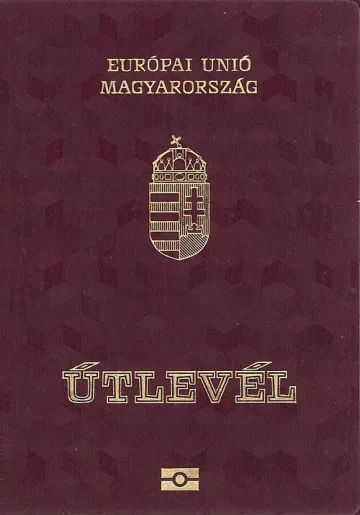
Hungarian passport
Ranked #21: 121 countries visa-free, 34 with visa on arrival, 8 with an eTA and 20 with an eVisa.
Hungarian passport photo
Exact size, head position and background for Hungary's passport and visa photos — make one free with AI checks.
Calling Hungary
Dial +36 before the local number. Internet domain .hu.
Climate footprint
40.0 million tonnes of CO₂ in 2024 — 4.14 t per person.
Entry requirements
Visa rules for every passport visiting Hungary: visa-free stays, eVisas, visas on arrival and documents to bring.
News
Latest travel news about Hungary

Russian water polo team plans camps in visa-free Serbia and Montenegro
Russia's men's water polo coach says his squad can travel visa-free only to Serbia and Montenegro, while Hungary, Italy, Spain, France and the Nether…

Switzerland Handles Most Indian Schengen Visa Requests; Over 15% Refused
European Commission data for 2025 shows Belgium and Denmark had the highest Schengen visa approval rates for Indian applicants, while Switzerland han…

Croatian Citizenship by Descent: Old 'Austrian' Papers Do Not Rule It Out
Descendants of Croatian emigrants may still qualify for citizenship even when family records list an ancestor as Austrian, Hungarian or Italian. Croa…
Frequently asked questions about Hungary
What do I need to travel to Hungary?
How long must my passport be valid for Hungary?
Where is Hungary?
What is Hungary known for?
What is the capital of Hungary?
What language is spoken in Hungary?
What currency does Hungary use?
What is the calling code of Hungary?
Which countries border Hungary?
How strong is the Hungarian passport?
What is the speed limit in Hungary?
Is Hungary safe to visit?
When is the best time to visit Hungary?
What plug type does Hungary use?
How many airports does Hungary have?
Sources: CIA World Factbook (public domain); World Bank Open Data (CC BY 4.0); names, languages and currencies: mledoze/countries (ODbL); flag: flag-icons (MIT); coat of arms: Wikimedia Commons (file page); exchange rates: Daily reference rates from the open-source currency-api (CC0); airports: OurAirports.