
Eastern Africa · UN member

Ethiopia: Travel Guide & Requirements
Federal Democratic Republic of Ethiopia · የኢትዮጵያ ፌዴራላዊ ዲሞክራሲያዊ ሪፐብሊክ
Ethiopia is a country in Eastern Africa with its capital in Addis Ababa. It has a population of 135.5 million (#10 in the world) and covers 1,104,300 km². The official language is Amharic. The currency is the Ethiopian birr (ETB, Br).
Where is Ethiopia? Map of Ethiopia
Eastern Africa, west of Somalia.
- Region
- Eastern Africa
- Coordinates
- 8° N, 38° E
- Neighbours
- 6 — see list
- Coastline
- Landlocked
- Ethiopia
- Neighbours
- Capital
- Largest cities
Map of Ethiopia showing Addis Ababa (capital) and the largest cities: Jijiga, Gonder, Mek'ele, Nazrēt, Awasa, Bahir Dar, Dire Dawa and Dessie.
Travel requirements
What you need to travel to Ethiopia
- Passport
Ethiopia's eVisa site asks for a passport valid for at least 6 months from the intended date of entry to Ethiopia, and the UK government says your passport must be valid for at least 6 months after the date you arrive a…
- Visa or eTA
Depends on your passport: of 198 passports, 2 need no visa, 196 need an eVisa. Check yours or see Ethiopia entry requirements for every passport.
- Return or onward ticket
No official requirement.
- Proof of funds
No official requirement.
- Travel insurance
No official requirement. The UK Foreign Office advises checking before you travel that you have appropriate travel insurance for local treatment or unexpected medical evacuation.
- Vaccinations
WHO lists Ethiopia as requiring proof of yellow fever vaccination from travellers aged 9 months or over arriving from countries at risk of yellow fever transmission.
- Customs allowance
The UK government says you must declare any cash over 10,000 US dollars (or the equivalent) when you enter or leave Ethiopia, or over 500 US dollars when entering through a land border, and that to leave with cash above…
- Travel advice
High risk — US and UK advice.
Entry rules: TravelRequirements.info — Entry Requirements Dataset (CC BY 4.0), each rule cited to an official government source. Always confirm with the airline and the official source before you travel.
Before you go
10 things to know before you travel to Ethiopia
- Safety: Travel to Ethiopia carries a high risk: the US State Department rates Ethiopia Level 3 (“Reconsider Travel”), and the UK Foreign Office advises against all travel to parts of the country.
- Best time to go: January to March — when daytime highs in Addis Ababa are around 24–25°C.
- Money: the Ethiopian birr (ETB) — 1 US dollar is about 161.9419 ETB.
- Plugs: type C, E, F and L, 220 V, 50 Hz — standard 220–240 V: devices from the US or Japan (110–120 V) need a converter unless they are dual voltage (100–240 V).
- Emergency numbers: Police 911, Ambulance 911, Fire 911.
- Language: Amharic is official; English is also spoken.
- Driving: on the right — speed limits are 60 km/h in built-up areas and 70 km/h outside built-up areas.
- Time zone: UTC+3 in Addis Ababa.
- Capital: Addis Ababa. About 135.5 million people live in Ethiopia.
- Ethiopia is the 27th largest country in the world by area.
Key facts
Ethiopia at a glance
Languages spoken: Oromo (official regional working language) 33.8%, Amharic (official national language) 29.3%, Somali (official regional working language) 6.2%, Tigrigna (Tigrinya) (official regional working language) 5.9%, Sidamo 4%, Wolaytta 2.2%, Gurage 2%, Afar (official regional working language) 1.7%, Hadiyya 1.7%, Gamo 1.5%, Gedeo 1.3%, Opuuo 1.2%, Kafa 1.1%, other 8.1%, English (2007 est.)
Geography & history
About Ethiopia
The area that is modern-day Ethiopia is rich in cultural and religious diversity with more than 80 ethnic groups. The oldest hominid yet found comes from Ethiopia, and Ethiopia was the second country to officially adopt Christianity in the 4th century A.D. A series of monarchies ruled the area that is now Ethiopia from 980 B.C. to 1855, when the Amhara kingdoms of northern Ethiopia united in an empire under Tewodros II. Many Ethiopians still speak reverently about the Battle of Adwa in 1896, when they defeated Italian forces and won their freedom from colonial rule. Emperor Haile SELASSIE became an internationally renowned figure in 1935, when he unsuccessfully appealed to the League of Nat…
Read the full history
The area that is modern-day Ethiopia is rich in cultural and religious diversity with more than 80 ethnic groups. The oldest hominid yet found comes from Ethiopia, and Ethiopia was the second country to officially adopt Christianity in the 4th century A.D. A series of monarchies ruled the area that is now Ethiopia from 980 B.C. to 1855, when the Amhara kingdoms of northern Ethiopia united in an empire under Tewodros II. Many Ethiopians still speak reverently about the Battle of Adwa in 1896, when they defeated Italian forces and won their freedom from colonial rule. Emperor Haile SELASSIE became an internationally renowned figure in 1935, when he unsuccessfully appealed to the League of Nations to prevent Italy from occupying Ethiopia from 1936 to 1941. SELASSIE survived an attempted coup in 1960, annexed modern-day Eritrea in 1962, and played a leading role in establishing the Organization of African Unity in 1963. However, in 1974, a military junta called the Derg deposed him and established a socialist state. Torn by bloody coups, uprisings, drought, and massive displacement, the Derg regime was toppled in 1991 by a coalition of opposing forces, the Ethiopian People's Revolutionary Democratic Front (EPRDF). The EPRDF became an ethno-federalist political coalition that ruled Ethiopia from 1991 until its dissolution in 2019. Ethiopia adopted its constitution in 1994 and held its first multiparty elections in 1995. A two-and-a-half-year border war with Eritrea in the late 1990s ended with a peace treaty in 2000. Ethiopia subsequently rejected the 2007 Eritrea-Ethiopia Boundary Commission demarcation. This resulted in more than a decade of a tense “no peace, no war” stalemate between the two countries. In 2012, longtime Prime Minister MELES Zenawi died in office and was replaced by his Deputy Prime Minister HAILEMARIAM Desalegn, marking the first peaceful transition of power in decades. Following a wave of popular dissent and anti-government protest that began in 2015, HAILEMARIAM resigned in 2018, and ABIY Ahmed Ali took office the same year as Ethiopia's first ethnic Oromo prime minister. In 2018, ABIY promoted a rapprochement between Ethiopia and Eritrea that was marked with a peace agreement and a reopening of their shared border. In 2019, Ethiopia's nearly 30-year ethnic-based ruling coalition, the EPRDF, merged into a single unity party called the Prosperity Party; however, the lead coalition party, the Tigray People’s Liberation Front (TPLF), declined to join. In 2020, a military conflict erupted between forces aligned with the TPLF and the Ethiopian military. The conflict -- which was marked by atrocities committed by all parties -- ended in 2022 with a cessation of hostilities agreement between the TPLF and the Ethiopian Government. However, Ethiopia continues to experience ethnic-based violence as other groups -- including the Oromo Liberation Army (OLA) and Amhara militia Fano -- seek concessions from the Ethiopian Government.
Location
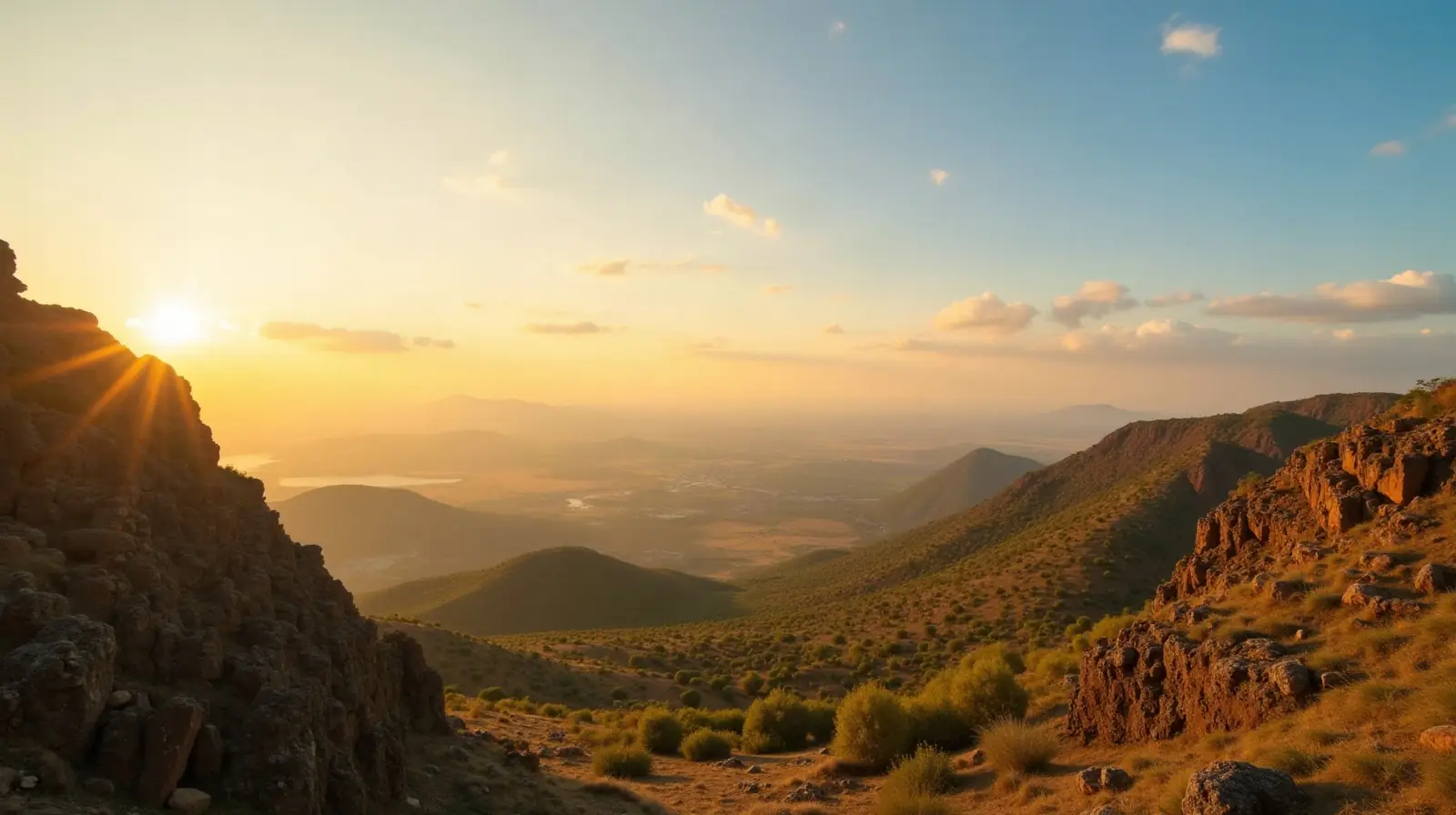
Eastern Africa, west of Somalia
Climate
tropical monsoon with wide topographic-induced variation
Terrain
high plateau with central mountain range divided by Great Rift Valley
Highest point
Ras Dejen 4,550 m
Natural resources
small reserves of gold, platinum, copper, potash, natural gas, hydropower
Natural hazards
geologically active Great Rift Valley susceptible to earthquakes, volcanic eruptions; frequent droughts volcanism: volcanic activity in the Great Rift Valley; Erta Ale (613 m) is the country's most active volcano; Dabbahu became active in 2005, forcing evacua…
National symbols
Abyssinian lion (traditional), yellow pentagram with five rays of light on a blue field (promoted by government)
Driving
Speed limits & road rules in Ethiopia
The default speed limits in Ethiopia are 60 km/h in built-up areas and 70 km/h outside built-up areas. The legal alcohol limit for drivers is 0.8‰. Posted signs always take priority over these defaults.
- 6060 km/hBuilt-up areasTowns and citiesWHO data (2017)
- 7070 km/hOutside built-up areasCountry roadsWHO data (2017)
- International Driving PermitRecognised: 1949 GenevaCarry the IDP together with your national licence
- Driving sideDrive on the rightOvertake on the left
- Alcohol limit0.8‰ blood alcohol (0.08% BAC)
- Seat beltsRequired by law
- Child seatsNo national child-restraint law
- Motorcycle helmetsRequired for riders
- Road deaths (2021)17.7 per 100,000 peopleHigher than most countries (median 12.4)
Speed limits: OpenStreetMap wiki — Default speed limits (CC BY-SA 2.0) and WHO. Road-safety laws: WHO Global Health Observatory. Compare speed limits and alcohol limits by country. Defaults for cars; local signs, weather and vehicle type can lower them.
Safety
Is Ethiopia safe to visit?
Travel to Ethiopia carries a high risk: the US State Department rates Ethiopia Level 3 (“Reconsider Travel”), and the UK Foreign Office advises against all travel to parts of the country.
 US State Department
 UK Foreign Office (FCDO)
Latest update: New information about conflict within northern Ethiopia, including the Tigray region (‘Warnings and insurance’ and ‘Regional risks’ pages).
Updated 21 Oct 2026 · Full travel advice
Sources: US Department of State travel advisories (public domain) and UK FCDO foreign travel advice (contains public sector information licensed under the Open Government Licence v3.0). Checked daily. Advice can change quickly — always read the official page before you travel.
Weather
Best time to visit Ethiopia
The best time to visit Ethiopia is January to March, when daytime highs in Addis Ababa are around 24–25°C. April to May and October to December are also a good time to go. March is the warmest month (25°C by day), December the coldest (6°C at night), and August the wettest with about 246 mm of rain.
- Jan24°C7°C
- Feb25°C9°C
- Mar25°C10°C
- Apr24°C11°C
- May25°C12°C
- Jun24°C12°C
- Jul20°C11°C
- Aug20°C11°C
- Sep20°C11°C
- Oct21°C7°C
- Nov22°C6°C
- Dec22°C6°C
Best time Good Less ideal
Before you go
Plugs, voltage & emergency numbers in Ethiopia
Plugs & sockets
- Type C (Europlug)two round pins
- Type Etwo round pins and a hole for the socket's earth pin
- Type F (Schuko)two round pins with earth clips on the sides
- Type Lthree round pins in a row
220 V, 50 Hz · Standard 220–240 V: devices from the US or Japan (110–120 V) need a converter unless they are dual voltage (100–240 V).
Emergency numbers
Save the local numbers before you travel — 112 or 911 may not connect here. All countries →
Sources: Wikipedia — Mains electricity by country and List of emergency telephone numbers (CC BY-SA 4.0).
National parks
18 national parks in Ethiopia
- 91,349 km² protected
- oldest from 1959
Largest: Borena National Park · Arsi Mountains National Park · Kafta Sheraro National Park
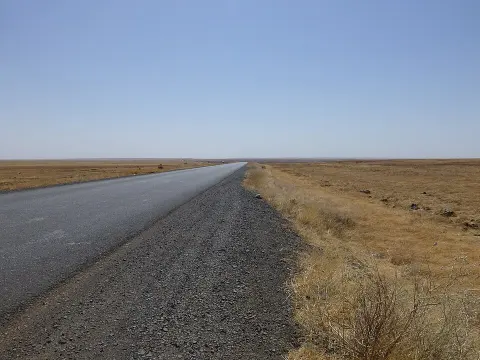
Currency · 26 October 2026
Ethiopian birr exchange rates today
Ethiopia uses the Ethiopian birr (ETB, Br). One US dollar buys 161.9419 ETB; over the last 30 days the ETB has gained 0.0% against the dollar.
What other currencies cost in ETB
Currency converter
Daily reference rates from the open-source currency-api (CC0), 26 Oct 2026. Banks and exchange offices add a margin.
World rankings
Where Ethiopia ranks
How Ethiopia compares with the rest of the world — open any card for the full ranking.
Airports
Airports in Ethiopia
59 airports and airfields — 4 large, 12 medium and 42 small, plus 1 heliports. 24 have scheduled passenger flights.
Borders
Neighbouring countries
Ethiopia borders 6 countries along 5,925 km of land borders. It is landlocked.


Military
Ethiopian armed forces
Ethiopia ranks #49 of 145 in the Global Firepower military strength ranking, with a defence budget of $528 million (2025).
People
Population & society
Religion
Largest cities: Addis Ababa (5.5 million)
Economy
Economy
Main industries
food processing, beverages, textiles, leather, garments, chemicals, metals processing, cement
Export partners
USA 12%, China 10%, UAE 8%, Saudi Arabia 8%, Netherlands 5% (2023)
Top exports
coffee, garments, dried legumes, cut flowers, oil seeds (2023)
Travel tools
Handy before every trip to Ethiopia
Next public holiday
Christmas Day (Orthodox) — Thursday, 7 January 2027. Then Epiphany (Orthodox) (19 Jan).

Ethiopian passport
Ranked #189: 12 countries visa-free, 30 with visa on arrival, 3 with an eTA and 45 with an eVisa.
Ethiopian passport photo
Exact size, head position and background for Ethiopia's passport and visa photos — make one free with AI checks.
Calling Ethiopia
Dial +251 before the local number. Internet domain .et.
Climate footprint
17.8 million tonnes of CO₂ in 2024 — 0.14 t per person.
Entry requirements
Visa rules for every passport visiting Ethiopia: visa-free stays, eVisas, visas on arrival and documents to bring.
News
Latest travel news about Ethiopia
Ethiopian passport places 169th worldwide in Passport Reports mobility index
Passport Reports' 18 October 2026 update ranks the Ethiopian passport 169th globally, with a mobility score of 39. Ethiopia places 50th of 199 destin…
Ethiopia Migration Route Under Scrutiny as 3 Kidnapped Indians Return Home
Three Gujarat residents who were allegedly kidnapped in Ethiopia while trying to reach the United States on an illegal route have returned to India a…
Armed Clashes and Drone Strikes Return to Ethiopia's Tigray Region
Tigrayan authorities declared the 2022 Pretoria peace agreement collapsed on 11 July, and clashes and drone strikes have been reported in Tigray sinc…
Frequently asked questions about Ethiopia
What do I need to travel to Ethiopia?
How long must my passport be valid for Ethiopia?
Where is Ethiopia?
What is Ethiopia known for?
What is the capital of Ethiopia?
What language is spoken in Ethiopia?
What currency does Ethiopia use?
What is the calling code of Ethiopia?
Which countries border Ethiopia?
How strong is the Ethiopian passport?
What is the speed limit in Ethiopia?
Is Ethiopia safe to visit?
When is the best time to visit Ethiopia?
What plug type does Ethiopia use?
How many airports does Ethiopia have?
Sources: CIA World Factbook (public domain); World Bank Open Data (CC BY 4.0); names, languages and currencies: mledoze/countries (ODbL); flag: flag-icons (MIT); coat of arms: Wikimedia Commons (file page); exchange rates: Daily reference rates from the open-source currency-api (CC0); airports: OurAirports.