
Southern Europe · UN member

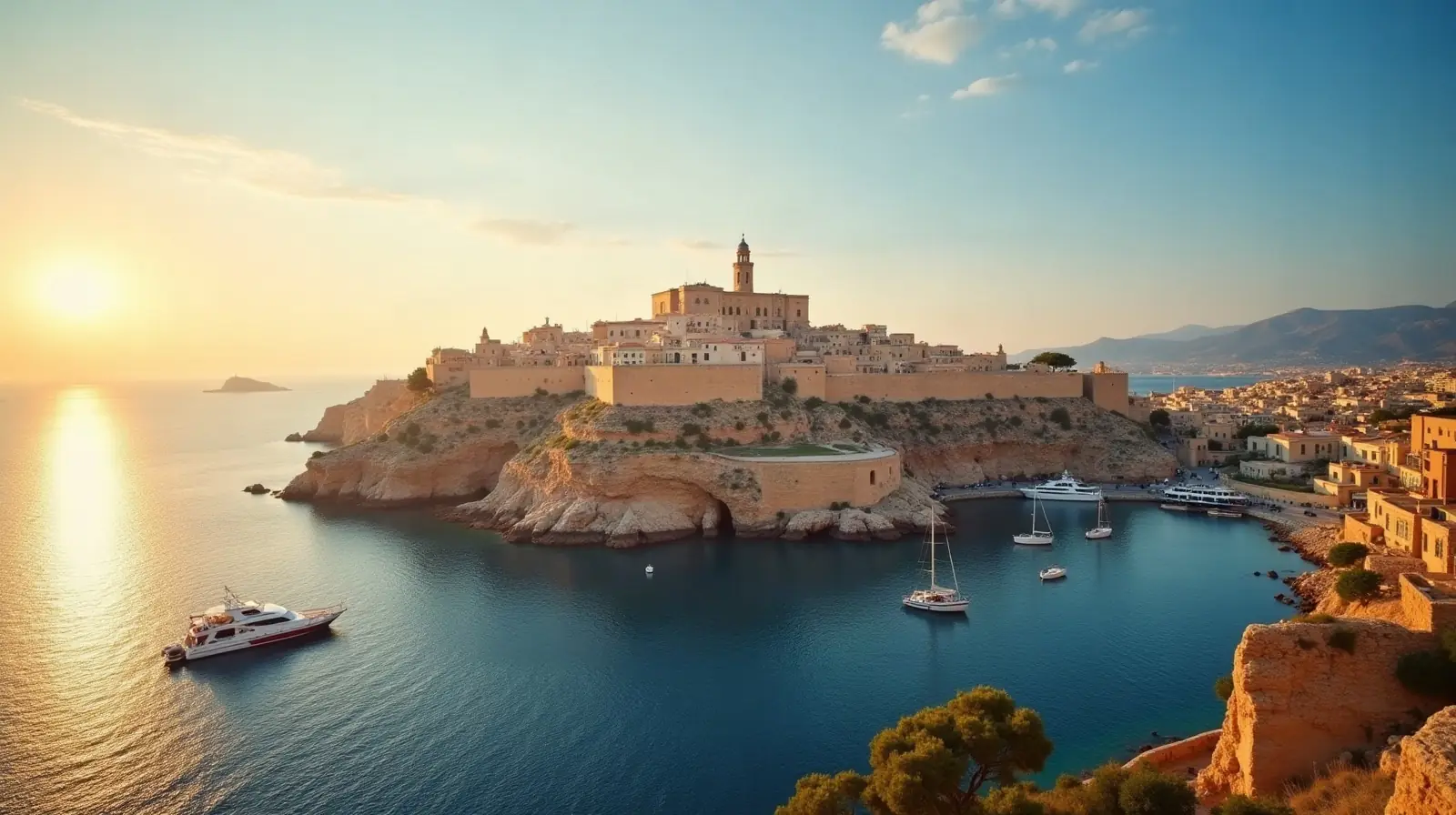
Malta: Travel Guide & Requirements
Republic of Malta
Malta is a country in Southern Europe with its capital in Valletta. It has a population of 579,704 (#170 in the world) and covers 316 km². The official languages are English and Maltese. The currency is the Euro (EUR, €).
Where is Malta? Map of Malta
Southern Europe, islands in the Mediterranean Sea, south of Sicily (Italy).
- Region
- Southern Europe
- Coordinates
- 35.8333° N, 14.5833° E
- Neighbours
- none (no land borders)
- Coastline
- 197 km
- Malta
- Capital
Travel requirements
What you need to travel to Malta
- Passport
Under the Schengen Borders Code (Article 6(1)(a)), a third-country national's travel document must be valid for at least three months after the intended date of departure from the Schengen Area (this may be waived in a …
- Visa or eTA
Depends on your passport: of 198 passports, 93 need no visa, 105 need a visa from an embassy. Check yours or see Malta entry requirements for every passport.
- Return or onward ticket
No official requirement. The UK government tells British travellers that at Maltese border control they may also need to show a return or onward ticket.
- Proof of funds
The European Commission's table of reference amounts fixed by national authorities for crossing the external border gives Malta's minimum amount per day and per person as EUR 48.
- Travel insurance
Schengen visa applicants must prove they hold adequate and valid travel medical insurance, valid throughout the Schengen Area for the whole intended stay, with minimum coverage of €30,000.
- Vaccinations
WHO lists Malta as requiring proof of yellow fever vaccination from travellers aged nine months and over arriving from countries determined by WHO to be at risk for yellow fever transmission, including travellers who tr…
- Arrival card
On a first crossing since the EU Entry/Exit System started, passport control officers take a photo of your face and/or scan your fingerprints, and your passport is not stamped.
- Customs allowance
Cash of €10,000 or more (or its equivalent in other currencies) must be declared to customs when entering or leaving the EU.
- Travel advice
Safe to visit — US and UK advice.
Entry rules: TravelRequirements.info — Entry Requirements Dataset (CC BY 4.0), each rule cited to an official government source. Always confirm with the airline and the official source before you travel.
Before you go
9 things to know before you travel to Malta
- Safety: Yes — Malta is generally safe to visit: the US State Department rates Malta Level 1 (“Exercise Normal Precautions”), and the UK Foreign Office has no warnings against travel there.
- Best time to go: June to September — when daytime highs in Valletta are around 24–28°C.
- Money: the Euro (EUR) — 1 US dollar is about 0.8911 EUR.
- Plugs: type G, 230 V, 50 Hz — standard 220–240 V: devices from the US or Japan (110–120 V) need a converter unless they are dual voltage (100–240 V).
- Emergency numbers: Police 112, Ambulance 112, Fire 112.
- Language: English and Maltese are official.
- Driving: on the left — speed limits are 50 km/h in built-up areas and 80 km/h outside built-up areas.
- Time zone: UTC+1 in Valletta.
- Capital: Valletta. About 579,704 people live in Malta.
Key facts
Malta at a glance
Languages spoken: Maltese (official) 90.1%, English (official) 6%, multilingual 3%, other 0.9% (2005 est.)
Geography & history
About Malta
With a civilization that dates back thousands of years, Malta boasts some of the oldest megalithic sites in the world. Situated in the center of the Mediterranean, Malta's islands have long served as a strategic military asset, with the islands at various times falling under the control of the Phoenicians, Carthaginians, Greeks, Romans, Byzantines, Moors, Normans, Sicilians, Spanish, Knights of St. John, and French. Most recently a British colony (since 1814), Malta gained its independence in 1964 and declared itself a republic 10 years later. While under British rule, the island staunchly supported the UK through both world wars. Since the mid-1980s, the island has transformed itself into …
Read the full history
With a civilization that dates back thousands of years, Malta boasts some of the oldest megalithic sites in the world. Situated in the center of the Mediterranean, Malta's islands have long served as a strategic military asset, with the islands at various times falling under the control of the Phoenicians, Carthaginians, Greeks, Romans, Byzantines, Moors, Normans, Sicilians, Spanish, Knights of St. John, and French. Most recently a British colony (since 1814), Malta gained its independence in 1964 and declared itself a republic 10 years later. While under British rule, the island staunchly supported the UK through both world wars. Since the mid-1980s, the island has transformed itself into a freight transshipment point, a financial center, and a tourist destination, as its key industries moved toward more service-oriented activities. Malta became an EU member in 2004 and joined the eurozone in 2008.
Location
Southern Europe, islands in the Mediterranean Sea, south of Sicily (Italy)
Climate
Mediterranean; mild, rainy winters; hot, dry summers
Terrain
mostly low, rocky, flat to dissected plains; many coastal cliffs
Highest point
Ta'Dmejrek on Dingli Cliffs 253 m
Natural resources
limestone, salt, arable land
Natural hazards
occasional droughts
National symbols
Maltese eight-pointed cross
Driving
Speed limits & road rules in Malta
The default speed limits in Malta are 50 km/h in built-up areas and 80 km/h outside built-up areas. The legal alcohol limit for drivers is 0.5‰. Posted signs always take priority over these defaults.
- 5050 km/hBuilt-up areasTowns and cities
- 8080 km/hOutside built-up areasCountry roads
- International Driving PermitRecognised: 1949 GenevaCarry the IDP together with your national licence
- Driving sideDrive on the leftOvertake on the right
- Alcohol limit0.5‰ blood alcohol (0.05% BAC)0.2‰ for young / novice drivers
- Seat beltsRequired by law
- Child seatsRequired by law
- Motorcycle helmetsRequired for riders
- Road deaths (2021)1.9 per 100,000 peopleSafer than most countries (median 12.4)
Speed limits: OpenStreetMap wiki — Default speed limits (CC BY-SA 2.0). Road-safety laws: WHO Global Health Observatory. Compare speed limits and alcohol limits by country. Defaults for cars; local signs, weather and vehicle type can lower them.
Safety
Is Malta safe to visit?
Yes — Malta is generally safe to visit: the US State Department rates Malta Level 1 (“Exercise Normal Precautions”), and the UK Foreign Office has no warnings against travel there.
 US State Department
 UK Foreign Office (FCDO)
Latest update: Updated information on European Entry-Exit System (EES) (‘Entry requirements’ page).
Updated 11 Aug 2026 · Full travel advice
Sources: US Department of State travel advisories (public domain) and UK FCDO foreign travel advice (contains public sector information licensed under the Open Government Licence v3.0). Checked daily. Advice can change quickly — always read the official page before you travel.
Weather
Best time to visit Malta
The best time to visit Malta is June to September, when daytime highs in Valletta are around 24–28°C. May and October are also a good time to go. August is the warmest month (28°C by day), February the coldest (13°C at night), and November the wettest with about 95 mm of rain.
- Jan15°C14°C
- Feb15°C13°C
- Mar15°C14°C
- Apr17°C16°C
- May20°C18°C
- Jun24°C22°C
- Jul27°C25°C
- Aug28°C26°C
- Sep26°C25°C
- Oct24°C22°C
- Nov20°C19°C
- Dec17°C16°C
Best time Good Less ideal
Before you go
Plugs, voltage & emergency numbers in Malta
Plugs & sockets
230 V, 50 Hz · Standard 220–240 V: devices from the US or Japan (110–120 V) need a converter unless they are dual voltage (100–240 V).
Emergency numbers
112 works from any mobile phone, even without a SIM card in most networks. All countries →
Sources: Wikipedia — Mains electricity by country and List of emergency telephone numbers (CC BY-SA 4.0).
Currency · 26 October 2026
Euro exchange rates today
Malta uses the Euro (EUR, €). One US dollar buys 0.8911 EUR; over the last 30 days the EUR has lost 1.5% against the dollar.
What other currencies cost in EUR
Currency converter
Daily reference rates from the open-source currency-api (CC0), 26 Oct 2026. Banks and exchange offices add a margin.
World rankings
Where Malta ranks
How Malta compares with the rest of the world — open any card for the full ranking.
Airports
Airports in Malta
3 airports and airfields — 1 large, 0 medium and 0 small, plus 2 heliports. 2 have scheduled passenger flights.
Borders
No land borders
Malta has no land borders with other countries. Coastline: 197 km.
People
Population & society
Religion
Largest cities: Valletta (213,000)
Economy
Economy
Main industries
tourism, electronics, ship building and repair, construction, food and beverages, pharmaceuticals, footwear, clothing, tobacco, aviation services, financial services, information technology services
Export partners
Nigeria 28%, Germany 10%, China 6%, Singapore 5%, Hong Kong 4% (2023)
Top exports
refined petroleum, integrated circuits, packaged medicine, ships, postage stamps/documents (2023)
Travel tools
Handy before every trip to Malta
Next public holiday
Feast of the Immaculate Conception — Tuesday, 8 December 2026. Then Republic Day (13 Dec).

Maltese passport
Ranked #14: 123 countries visa-free, 30 with visa on arrival, 9 with an eTA and 18 with an eVisa.
Maltese passport photo
Exact size, head position and background for Malta's passport and visa photos — make one free with AI checks.
Calling Malta
Dial +356 before the local number. Internet domain .mt.
Climate footprint
1.7 million tonnes of CO₂ in 2024 — 3.20 t per person.
Entry requirements
Visa rules for every passport visiting Malta: visa-free stays, eVisas, visas on arrival and documents to bring.
News
Latest travel news about Malta
Maltese Residents in Portugal Now Face 7-Year Wait Before Applying for Citizenship
Portugal's nationality law amendment of 19 May 2026 extends the residency period before most non-EU residents can apply for citizenship from five to …
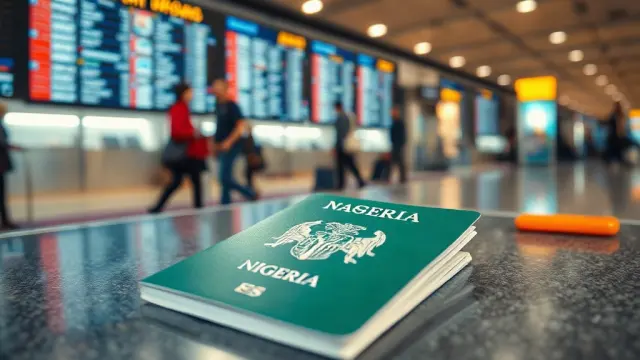
Travellers from Nigeria can enter only 24 countries visa-free, index shows
The IziVisa Passport Ranking Index places the Nigerian passport 181st of 196, with holders able to visit 24 destinations without a visa in advance. T…
Kiribati joins 24 visa-free destinations for Nigerian travellers under new index
Kiribati is one of 24 destinations Nigerian passport holders can enter without a visa in advance, with stays of up to one month, according to the lat…
Frequently asked questions about Malta
What do I need to travel to Malta?
How long must my passport be valid for Malta?
Where is Malta?
What is the capital of Malta?
What language is spoken in Malta?
What currency does Malta use?
What is the calling code of Malta?
Does Malta have land borders?
How strong is the Maltese passport?
What is the speed limit in Malta?
Is Malta safe to visit?
When is the best time to visit Malta?
What plug type does Malta use?
How many airports does Malta have?
Sources: CIA World Factbook (public domain); World Bank Open Data (CC BY 4.0); names, languages and currencies: mledoze/countries (ODbL); flag: flag-icons (MIT); coat of arms: Wikimedia Commons (file page); exchange rates: Daily reference rates from the open-source currency-api (CC0); airports: OurAirports.