
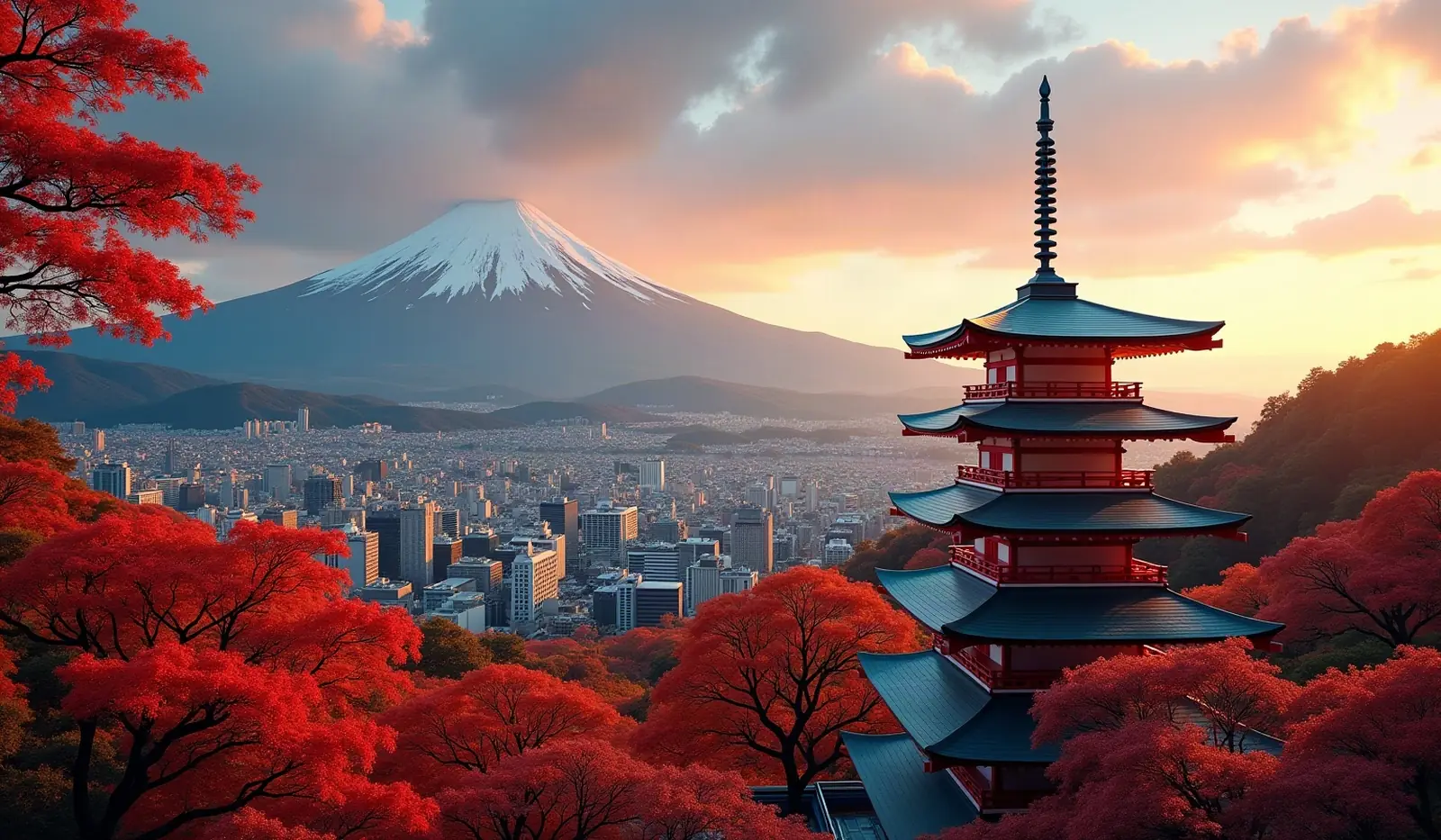
Eastern Asia · UN member

Japan: Travel Guide & Requirements
· 日本
Japan is a country in Eastern Asia with its capital in Tokyo. It has a population of 123.4 million (#12 in the world) and covers 377,915 km². The official language is Japanese. The currency is the Japanese yen (JPY, ¥).
Where is Japan? Map of Japan
Eastern Asia, island chain between the North Pacific Ocean and the Sea of Japan, east of the Korean Peninsula.
- Region
- Eastern Asia
- Coordinates
- 36° N, 138° E
- Neighbours
- none (no land borders)
- Coastline
- 29,751 km
- Japan
- Capital
- Largest cities
Map of Japan showing Tokyo (capital) and the largest cities: Osaka, Nagoya, Sapporo, Fukuoka, Hiroshima, Sendai, Kitakyushu and Niigata.
Travel requirements
What you need to travel to Japan
- Passport
The UK government tells British visitors their passport must be valid for the length of their stay, that no additional period of validity is required, and that they need a blank page for the visa stamp.
- Visa or eTA
Depends on your passport: of 198 passports, 74 need no visa, 3 need an eVisa, 120 need a visa from an embassy. Check yours or see Japan entry requirements for every passport.
- Return or onward ticket
No official requirement. The Government of Canada's travel advice says customs officials may ask you to show a return or onward ticket, confirmed accommodation arrangements and proof of sufficient funds to cover your stay.
- Proof of funds
No official requirement. The Government of Canada’s travel advice says customs officials may ask you to show proof of sufficient funds to cover your stay, along with a return or onward ticket and confirmed accommodation arrangements.
- Travel insurance
No official requirement. Japan's Ministry of Foreign Affairs says it is highly recommended to purchase international travel medical insurance for your trip to Japan.
- Arrival card
A Digital Agency web service for immigration procedures (immigration clearance, customs declaration): you register the information in advance and present its 2D code at the time of the procedures.
- Customs allowance
Japan Customs says that when entering or departing Japan with means of payment — cash, checks, promissory notes or securities — exceeding ¥1,000,000 in total or its equivalent (¥100,000 if you are bound for North Korea)…
- Travel advice
Safe to visit — US and UK advice.
Entry rules: TravelRequirements.info — Entry Requirements Dataset (CC BY 4.0), each rule cited to an official government source. Always confirm with the airline and the official source before you travel.
Before you go
10 things to know before you travel to Japan
- Safety: Yes — Japan is generally safe to visit: the US State Department rates Japan Level 1 (“Exercise Normal Precautions”), and the UK Foreign Office has no warnings against travel there.
- Best time to go: May to June — when daytime highs in Tokyo are around 23–26°C.
- Money: the Japanese yen (JPY) — 1 US dollar is about 156.8596 JPY.
- Plugs: type A and B, 100 V / 200 V / 210 V, 50 Hz / 60 Hz — mixed voltage: check the socket before you plug in. Dual-voltage chargers (100–240 V) work everywhere.
- Emergency numbers: Police 110, Ambulance 119, Fire 119.
- Language: Japanese is official.
- Driving: on the left — speed limits are 60 km/h in built-up areas, 60 km/h outside built-up areas and 100 km/h on motorways.
- Time zone: UTC+9 in Tokyo.
- Capital: Tokyo. About 123.4 million people live in Japan.
- Outdoors: 40 national parks and 516 ski areas.
Key facts
Japan at a glance
Languages spoken: Japanese
Geography & history
About Japan
In 1603, after decades of civil warfare, the Tokugawa shogunate (a military-led, dynastic government) ushered in a long period of relative political stability and isolation from foreign influence. For more than two centuries, this policy enabled Japan to enjoy a flowering of its indigenous culture. Japan opened its ports after signing the Treaty of Kanagawa with the US in 1854 and began to intensively modernize and industrialize. During the late 19th and early 20th centuries, Japan became a regional power that was able to defeat the forces of both China and Russia. It occupied Korea, Formosa (Taiwan), and southern Sakhalin Island. In 1931-32, Japan occupied Manchuria, and in 1937, it launch…
Read the full history
In 1603, after decades of civil warfare, the Tokugawa shogunate (a military-led, dynastic government) ushered in a long period of relative political stability and isolation from foreign influence. For more than two centuries, this policy enabled Japan to enjoy a flowering of its indigenous culture. Japan opened its ports after signing the Treaty of Kanagawa with the US in 1854 and began to intensively modernize and industrialize. During the late 19th and early 20th centuries, Japan became a regional power that was able to defeat the forces of both China and Russia. It occupied Korea, Formosa (Taiwan), and southern Sakhalin Island. In 1931-32, Japan occupied Manchuria, and in 1937, it launched a full-scale invasion of China. Japan attacked US forces at Pearl Harbor, Hawaii, in 1941, triggering America's entry into World War II, and Japan soon occupied much of East and Southeast Asia. After its defeat in World War II, the country recovered to become an economic power and a US ally. While the emperor retains his throne as a symbol of national unity, elected politicians hold the decision-making power. After three decades of unprecedented growth, Japan's economy experienced a major slowdown starting in the 1990s, but the country remains an economic power. In 2011, Japan's strongest-ever earthquake and an accompanying tsunami devastated the northeast part of Honshu, killed thousands, and damaged several nuclear power plants. ABE Shinzo was reelected as prime minister in 2012, and he embarked on ambitious economic and security reforms to improve Japan's economy and bolster the country's international standing. In 2019, ABE became Japan's longest-serving post-war prime minister; he resigned in 2020 and was succeeded by SUGA Yoshihide. KISHIDA Fumio became prime minister in 2021.
Location
Eastern Asia, island chain between the North Pacific Ocean and the Sea of Japan, east of the Korean Peninsula
Climate
varies from tropical in south to cool temperate in north
Terrain
mostly rugged and mountainous
Highest point
Mount Fuji 3,776 m
Natural resources
negligible mineral resources, fish
Natural hazards
many dormant and some active volcanoes; about 1,500 seismic occurrences (mostly tremors but occasional severe earthquakes) every year; tsunamis; typhoons volcanism: both Unzen (1,500 m) and Sakura-jima (1,117 m), which lies near the densely populated city of …
National symbols
red sun disc, chrysanthemum
Driving
Speed limits & road rules in Japan
The default speed limits in Japan are 60 km/h in built-up areas, 60 km/h outside built-up areas and 100 km/h on motorways. The legal alcohol limit for drivers is 0.3‰. Posted signs always take priority over these defaults.
- 6060 km/hBuilt-up areasTowns and citiesWHO data (2017)
- 6060 km/hOutside built-up areasCountry roads
- 100100 km/hMotorwaysMotorways / freeways
- International Driving PermitRecognised: 1949 GenevaCarry the IDP together with your national licence
- Driving sideDrive on the leftOvertake on the right
- Alcohol limit0.3‰ blood alcohol (0.03% BAC)
- Seat beltsRequired by law
- Child seatsRequired by law
- Motorcycle helmetsRequired for riders
- Road deaths (2021)2.7 per 100,000 peopleSafer than most countries (median 12.4)
Speed limits: OpenStreetMap wiki — Default speed limits (CC BY-SA 2.0) and WHO. Road-safety laws: WHO Global Health Observatory. Compare speed limits and alcohol limits by country. Defaults for cars; local signs, weather and vehicle type can lower them.
Safety
Is Japan safe to visit?
Yes — Japan is generally safe to visit: the US State Department rates Japan Level 1 (“Exercise Normal Precautions”), and the UK Foreign Office has no warnings against travel there.
 US State Department
 UK Foreign Office (FCDO)
Latest update: Addition of information about flooding and heavy rain ('Safety and security' page).
Updated 28 Aug 2026 · Full travel advice
Sources: US Department of State travel advisories (public domain) and UK FCDO foreign travel advice (contains public sector information licensed under the Open Government Licence v3.0). Checked daily. Advice can change quickly — always read the official page before you travel.
Weather
Best time to visit Japan
The best time to visit Japan is May to June, when daytime highs in Tokyo are around 23–26°C. July to October are also a good time to go. August is the warmest month (31°C by day), January the coldest (1°C at night), and October the wettest with about 246 mm of rain.
- Jan9°C1°C
- Feb10°C1°C
- Mar13°C4°C
- Apr18°C9°C
- May23°C14°C
- Jun26°C18°C
- Jul29°C22°C
- Aug31°C23°C
- Sep27°C20°C
- Oct22°C15°C
- Nov17°C9°C
- Dec11°C3°C
Best time Good Less ideal
Before you go
Plugs, voltage & emergency numbers in Japan
Plugs & sockets
100 V / 200 V / 210 V, 50 Hz / 60 Hz · Mixed voltage: check the socket before you plug in. Dual-voltage chargers (100–240 V) work everywhere.
Emergency numbers
Save the local numbers before you travel — 112 or 911 may not connect here. All countries →
Sources: Wikipedia — Mains electricity by country and List of emergency telephone numbers (CC BY-SA 4.0).
Ski resorts
516 ski resorts in Japan
- 2,460 km of slopes
- 1,772 lifts
- up to 2,642 m
Biggest: ニセコユナイテッド · 野沢温泉スキー場 · 蔵王温泉スキー場
National parks
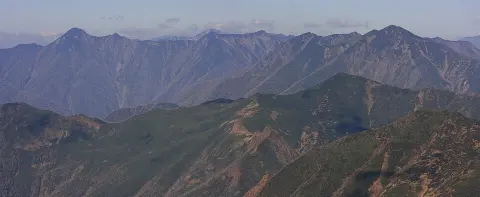
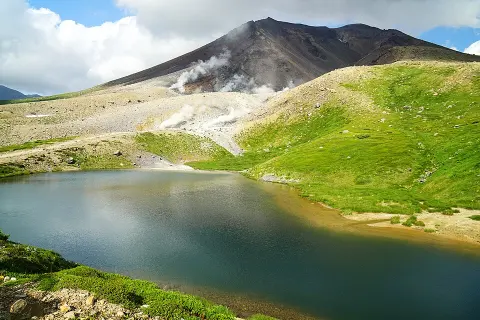
40 national parks in Japan
- 27,095 km² protected
- oldest from 1934
Largest: Hidakasanmyaku-Erimo-Tokachi National Park · Daisetsuzan National Park · Jōshin'etsu-kōgen National Park
Currency · 26 October 2026
Japanese yen exchange rates today
Japan uses the Japanese yen (JPY, ¥). One US dollar buys 156.8596 JPY; over the last 30 days the JPY has gained 0.3% against the dollar.
What other currencies cost in JPY
Currency converter
Daily reference rates from the open-source currency-api (CC0), 26 Oct 2026. Banks and exchange offices add a margin.
World rankings
Where Japan ranks
How Japan compares with the rest of the world — open any card for the full ranking.
Airports
Airports in Japan
3,328 airports and airfields — 29 large, 79 medium and 171 small, plus 3040 heliports. 85 have scheduled passenger flights.
Borders
No land borders
Japan has no land borders with other countries. Coastline: 29,751 km.
Military
Japanese armed forces
Japan ranks #8 of 145 in the Global Firepower military strength ranking, with a defence budget of $62.2 billion (2025).
People
Population & society
Religion
Largest cities: Tokyo (37.2 million), Osaka (19.0 million), Nagoya (9.6 million), Kitakyushu-Fukuoka (5.5 million), Shizuoka-Hamamatsu (2.9 million)
Economy
Economy
Main industries
motor vehicles, electronic equipment, machine tools, steel and nonferrous metals, ships, chemicals, textiles, processed foods
Export partners
USA 19%, China 18%, Taiwan 6%, S. Korea 6%, Hong Kong 4% (2023)
Top exports
cars, integrated circuits, machinery, vehicle parts/accessories, construction vehicles (2023)
Travel tools
Handy before every trip to Japan
Next public holiday
Culture Day — Tuesday, 3 November 2026. Then Labour Thanksgiving Day (23 Nov).

Japanese passport
Ranked #34: 116 countries visa-free, 39 with visa on arrival, 10 with an eTA and 18 with an eVisa.
Japanese passport photo
Exact size, head position and background for Japan's passport and visa photos — make one free with AI checks.
Calling Japan
Dial +81 before the local number. Internet domain .jp.
Climate footprint
961.9 million tonnes of CO₂ in 2024 — 7.77 t per person.
Entry requirements
Visa rules for every passport visiting Japan: visa-free stays, eVisas, visas on arrival and documents to bring.
News
Latest travel news about Japan
South Koreans Face the Highest U.S. Visitor Visa Refusal Rate Among Allies
One in four South Korean applications for U.S. B1/B2 visitor visas was refused in 2025, a rate of 24.73% that is higher than those of Japan, Germany,…
Azerbaijani passport ranks 76th for visa-free travel worldwide
Azerbaijan shares 76th place with the Philippines in a global passport ranking by Swiss company Henley & Partners, with Azerbaijani citizens able to …
Myanmar Keeps Visa on Arrival for Chinese, Indian, Japanese and Korean Tourists
Myanmar has extended its trial visa-on-arrival scheme for tourists flying in from China, India, Japan, South Korea and Macau by another year. The ext…
Frequently asked questions about Japan
What do I need to travel to Japan?
How long must my passport be valid for Japan?
Where is Japan?
What is Japan known for?
What is the capital of Japan?
What language is spoken in Japan?
What currency does Japan use?
What is the calling code of Japan?
Does Japan have land borders?
How strong is the Japanese passport?
What is the speed limit in Japan?
Is Japan safe to visit?
When is the best time to visit Japan?
What plug type does Japan use?
How many airports does Japan have?
Sources: CIA World Factbook (public domain); World Bank Open Data (CC BY 4.0); names, languages and currencies: mledoze/countries (ODbL); flag: flag-icons (MIT); coat of arms: Wikimedia Commons (file page); exchange rates: Daily reference rates from the open-source currency-api (CC0); airports: OurAirports.