
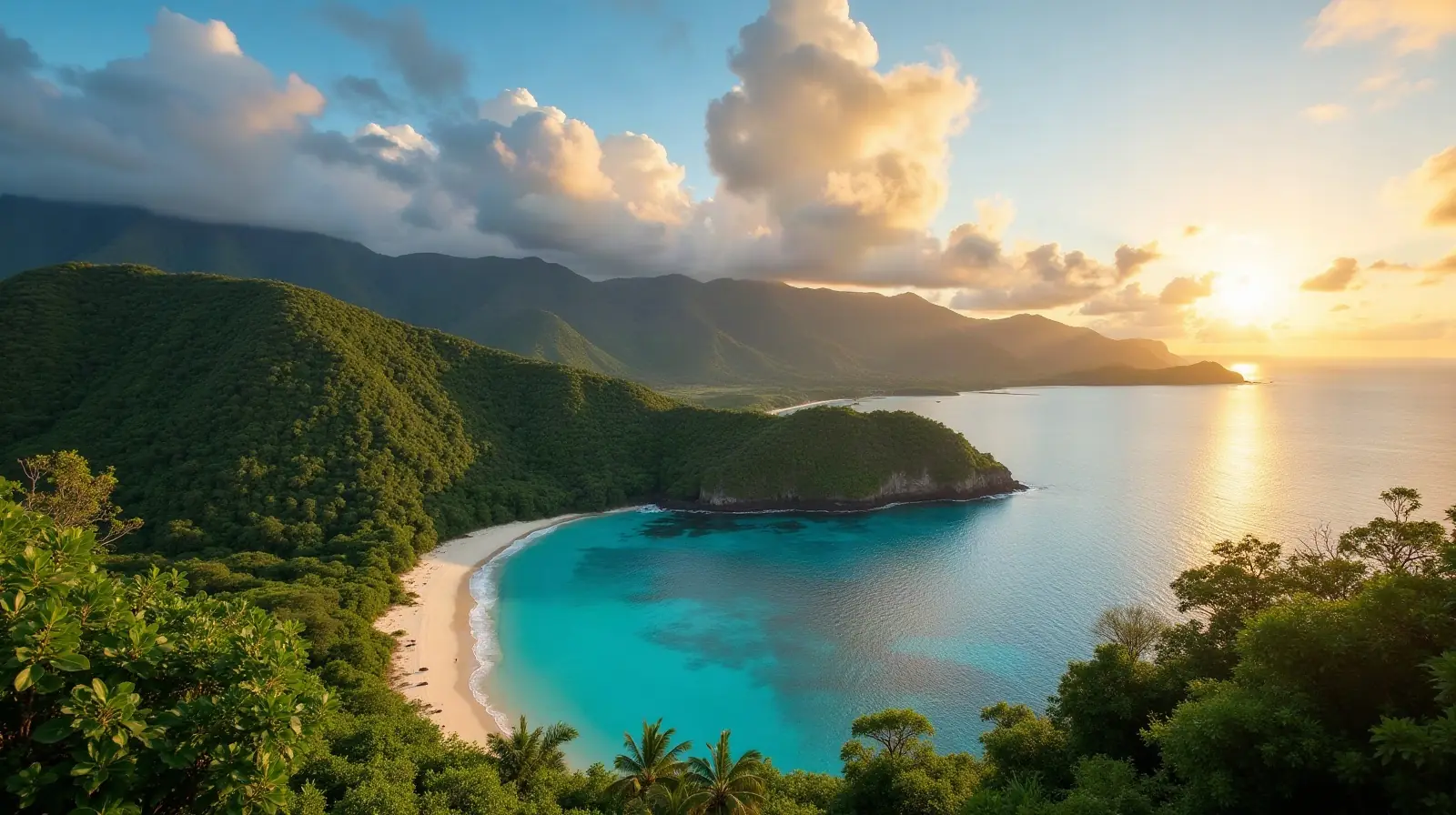
Micronesia · UN member

Micronesia: Travel Guide & Requirements
Federated States of Micronesia
Micronesia is a country in Micronesia with its capital in Palikir. It has a population of 113,683 (#189 in the world) and covers 702 km². The official language is English.
Where is Micronesia? Map of Micronesia
Oceania, island group in the North Pacific Ocean, about three-quarters of the way from Hawaii to Indonesia.
- Region
- Micronesia
- Coordinates
- 6.9167° N, 158.25° E
- Neighbours
- none (no land borders)
- Coastline
- 6,112 km
- Micronesia
- Capital
Travel requirements
What you need to travel to Micronesia
- Passport
The UK government says that to enter the Federated States of Micronesia your passport must have an expiry date at least 120 days after the date you arrive.
- Visa or eTA
Depends on your passport: of 198 passports, 198 need no visa. Check yours or see Micronesia entry requirements for every passport.
- Return or onward ticket
No official requirement. The UK government says that at the FSM's border control you may need to show a return or onward ticket, and Canada's travel advice says customs officials may ask you to show one.
- Proof of funds
No FSM official source we could read states a funds requirement or amount.
- Travel insurance
No official requirement. The UK Foreign Office advises checking before you travel that you have appropriate travel insurance for local treatment or unexpected medical evacuation.
- Arrival card
The UK government's travel advice says that if you do not hold a valid entry permit you must complete a Customs, Immigration & Quarantine Form (CIQ Form) on arrival.
- Customs allowance
No official requirement.
- Travel advice
Safe to visit — US and UK advice.
Entry rules: TravelRequirements.info — Entry Requirements Dataset (CC BY 4.0), each rule cited to an official government source. Always confirm with the airline and the official source before you travel.
Before you go
8 things to know before you travel to Micronesia
- Safety: Yes — Micronesia is generally safe to visit: the US State Department rates Micronesia Level 1 (“Exercise Normal Precautions”), and the UK Foreign Office has no warnings against travel there.
- Best time to go: January to March and July to October — when daytime highs in Palikir are around 28–29°C.
- Plugs: type A and B, 120 V, 60 Hz — low-voltage country: devices made only for 220–240 V need a voltage converter. Phone and laptop chargers (100–240 V) only need a plug adapter.
- Emergency numbers: Police 911, Ambulance 911, Fire 911.
- Language: English is official.
- Driving: on the right — speed limits are 20 mph in built-up areas and 25 mph outside built-up areas.
- Time zone: UTC+11 in Palikir.
- Capital: Palikir. About 113,683 people live in Micronesia.
Key facts
Micronesia at a glance
Languages spoken: English (official and common language), Chuukese, Kosrean, Pohnpeian, Yapese, Ulithian, Woleaian, Nukuoro, Kapingamarangi
Geography & history
About Micronesia
Each of the four states that compose the Federated States of Micronesia (FSM) -- Chuuk, Kosrae, Pohnpei, and Yap -- has its own unique history and cultural traditions. The first humans arrived in what is now the FSM in the second millennium B.C. In the 800s A.D., construction of the artificial islets at the Nan Madol complex in Pohnpei began, with the main architecture being built around 1200. At its height, Nan Madol united the approximately 25,000 people of Pohnpei under the Saudeleur Dynasty. By 1250, Kosrae was united in a kingdom centered in Leluh. Yap’s society became strictly hierarchical, with chiefs receiving tributes from islands up to 1,100 km (700 mi) away. Widespread human sett…
Read the full history
Each of the four states that compose the Federated States of Micronesia (FSM) -- Chuuk, Kosrae, Pohnpei, and Yap -- has its own unique history and cultural traditions. The first humans arrived in what is now the FSM in the second millennium B.C. In the 800s A.D., construction of the artificial islets at the Nan Madol complex in Pohnpei began, with the main architecture being built around 1200. At its height, Nan Madol united the approximately 25,000 people of Pohnpei under the Saudeleur Dynasty. By 1250, Kosrae was united in a kingdom centered in Leluh. Yap’s society became strictly hierarchical, with chiefs receiving tributes from islands up to 1,100 km (700 mi) away. Widespread human settlement in Chuuk began in the 1300s, and the different islands in the Chuuk Lagoon were frequently at war with one another. Portuguese and Spanish explorers visited a few of the islands in the 1500s, and Spain began exerting nominal, but not day-to-day, control over some of the islands -- which they named the Caroline Islands -- in the 1600s. In 1899, Spain sold all of the FSM to Germany. Japan seized the islands in 1914 and was granted a League of Nations mandate to administer them in 1920. During WWII, Japan built military bases across most of the islands and headquartered their Pacific naval operations in Chuuk. The US bombed Chuuk in 1944 but largely bypassed the other islands in its leapfrog campaign across the Pacific. In 1947, the FSM came under US administration as part of the Trust Territory of the Pacific Islands, which comprised six districts: Chuuk, the Marshall Islands, the Northern Mariana Islands, Palau, Pohnpei, and Yap; Kosrae was separated from Pohnpei into a separate district in 1977. In 1979, Chuuk, Kosrae, Pohnpei, and Yap ratified the FSM Constitution and declared independence while the other three districts opted to pursue separate political status. There are significant inter-island rivalries stemming from their different histories and cultures. Chuuk, the most populous but poorest state, has pushed for secession, but an independence referendum has been repeatedly postponed.
Location
Oceania, island group in the North Pacific Ocean, about three-quarters of the way from Hawaii to Indonesia
Climate
tropical; heavy year-round rainfall, especially in the eastern islands; located on southern edge of the typhoon belt with occasionally severe damage
Terrain
islands vary geologically from high mountainous islands to low, coral atolls; volcanic outcroppings on Pohnpei, Kosrae, and Chuuk
Highest point
Nanlaud on Pohnpei 782 m
Natural resources
timber, marine products, deep-seabed minerals, phosphate
Natural hazards
typhoons (June to December)
National symbols
four five-pointed white stars on a light blue field, hibiscus flower
Driving
Speed limits & road rules in Micronesia
The default speed limits in Micronesia are 20 mph in built-up areas and 25 mph outside built-up areas. Posted signs always take priority over these defaults.
- SPEED
LIMIT2020 mphBuilt-up areasTowns and cities - SPEED
LIMIT2525 mphOutside built-up areasCountry roads
- International Driving PermitNot a party to the IDP conventionsCheck with the embassy whether your licence is accepted
- Driving sideDrive on the rightOvertake on the left
- Seat beltsNo national seat-belt law
- Child seatsNo national child-restraint law
- Motorcycle helmetsRequired for riders
- Road deaths (2021)14.1 per 100,000 peopleClose to the world median (12.4)
Speed limits: OpenStreetMap wiki — Default speed limits (CC BY-SA 2.0). Road-safety laws: WHO Global Health Observatory. Compare speed limits and alcohol limits by country. Defaults for cars; local signs, weather and vehicle type can lower them.
Safety
Is Micronesia safe to visit?
Yes — Micronesia is generally safe to visit: the US State Department rates Micronesia Level 1 (“Exercise Normal Precautions”), and the UK Foreign Office has no warnings against travel there.
 US State Department
 UK Foreign Office (FCDO)
Latest update: Updated information about global travel impacts due to escalation in the Middle East (‘Warnings and insurance’ page).
Updated 19 Mar 2026 · Full travel advice
Sources: US Department of State travel advisories (public domain) and UK FCDO foreign travel advice (contains public sector information licensed under the Open Government Licence v3.0). Checked daily. Advice can change quickly — always read the official page before you travel.
Weather
Best time to visit Micronesia
The best time to visit Micronesia is January to March and July to October, when daytime highs in Palikir are around 28–29°C. November is the warmest month (29°C by day), February the coldest (28°C at night), and May the wettest with about 290 mm of rain.
- Jan29°C28°C
- Feb28°C28°C
- Mar29°C28°C
- Apr29°C28°C
- May29°C28°C
- Jun29°C28°C
- Jul28°C28°C
- Aug28°C28°C
- Sep29°C28°C
- Oct29°C28°C
- Nov29°C28°C
- Dec29°C28°C
Best time Good Less ideal
Before you go
Plugs, voltage & emergency numbers in Micronesia
Plugs & sockets
120 V, 60 Hz · Low-voltage country: devices made only for 220–240 V need a voltage converter. Phone and laptop chargers (100–240 V) only need a plug adapter.
Emergency numbers
Save the local numbers before you travel — 112 or 911 may not connect here. All countries →
Sources: Wikipedia — Mains electricity by country and List of emergency telephone numbers (CC BY-SA 4.0).
World rankings
Where Micronesia ranks
How Micronesia compares with the rest of the world — open any card for the full ranking.
Airports
Airports in Micronesia
7 airports and airfields — 3 large, 1 medium and 3 small, plus 0 heliports. 4 have scheduled passenger flights.
Borders
No land borders
Micronesia has no land borders with other countries. Coastline: 6,112 km.
People
Population & society
Religion
Largest cities: Palikir (7,000)
Economy
Economy
Main industries
tourism, construction; specialized aquaculture, craft items (shell and wood)
Export partners
Thailand 64%, China 16%, Philippines 11%, Japan 5%, Ecuador 1% (2023)
Top exports
fish, diamonds, garments (2023)
Travel tools
Handy before every trip to Micronesia
Next public holiday
Independence Day — Tuesday, 3 November 2026. Then Veterans Day (11 Nov).

Micronesian passport
Ranked #94: 69 countries visa-free, 34 with visa on arrival, 4 with an eTA and 44 with an eVisa.
Micronesian passport photo
Exact size, head position and background for Micronesia's passport and visa photos — make one free with AI checks.
Calling Micronesia
Dial +691 before the local number. Internet domain .fm.
Climate footprint
0.2 million tonnes of CO₂ in 2024 — 1.33 t per person.
Entry requirements
Visa rules for every passport visiting Micronesia: visa-free stays, eVisas, visas on arrival and documents to bring.
News
Latest travel news about Micronesia
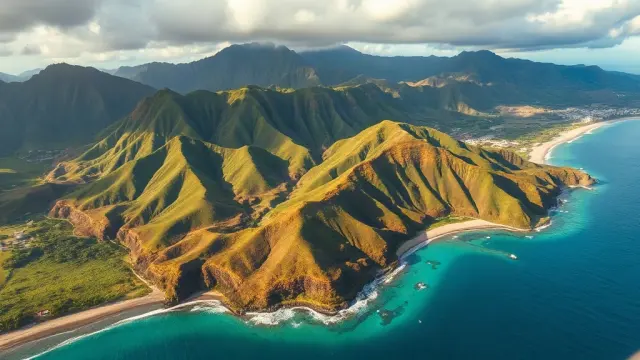
Travellers to Pacific islands urged to avoid mosquito bites after Maui dengue case
Hawaii's Department of Health has confirmed a tenth travel-related dengue case of 2026, on Maui. All 10 cases this year involved travel to Pacific Is…
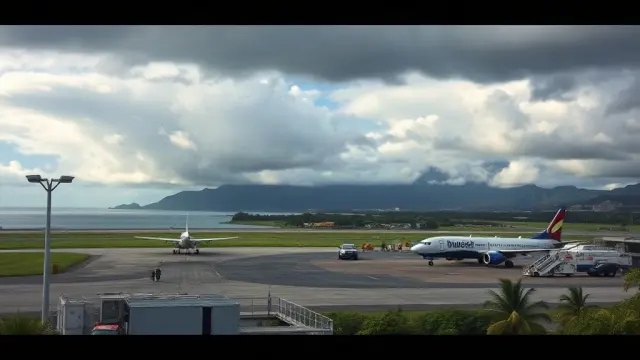
United Airlines Issues Travel Advisory for Pacific Airports Amid Storm Threat
United Airlines has announced a travel advisory affecting seven Pacific airports due to Tropical Storm Champi, offering flexibility for rebooking fli…
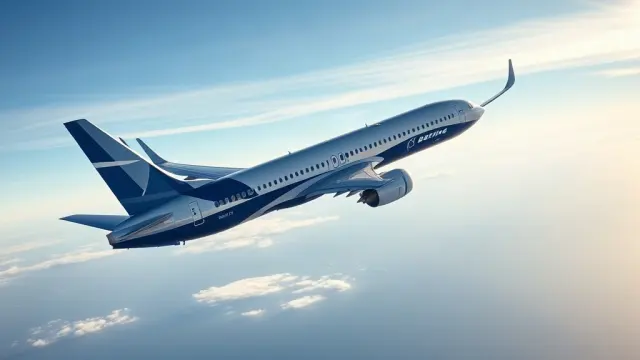
United Airlines Introduces Starlink Wi-Fi on Guam-Based 737 MAX 8s
United Airlines has begun equipping its Boeing 737 MAX 8 aircraft based in Guam with complimentary Starlink Wi-Fi, enhancing connectivity for flights…
Frequently asked questions about Micronesia
What do I need to travel to Micronesia?
How long must my passport be valid for Micronesia?
Where is Micronesia?
What is the capital of Micronesia?
What language is spoken in Micronesia?
What is the calling code of Micronesia?
Does Micronesia have land borders?
How strong is the Micronesian passport?
What is the speed limit in Micronesia?
Is Micronesia safe to visit?
When is the best time to visit Micronesia?
What plug type does Micronesia use?
How many airports does Micronesia have?
Sources: CIA World Factbook (public domain); World Bank Open Data (CC BY 4.0); names, languages and currencies: mledoze/countries (ODbL); flag: flag-icons (MIT); coat of arms: Wikimedia Commons (file page); exchange rates: Daily reference rates from the open-source currency-api (CC0); airports: OurAirports.