
Southeast Europe · UN member

North Macedonia: Travel Guide & Requirements
Republic of North Macedonia · Република Северна Македонија
North Macedonia is a country in Southeast Europe with its capital in Skopje. It has a population of 1.8 million (#151 in the world) and covers 25,713 km². The official language is Macedonian. The currency is the denar (MKD, den).
Where is North Macedonia? Map of North Macedonia
Southeastern Europe, north of Greece.
- Region
- Southeast Europe
- Coordinates
- 41.8333° N, 22° E
- Neighbours
- 5 — see list
- Coastline
- Landlocked
- North Macedonia
- Neighbours
- Capital
- Largest cities
Map of North Macedonia showing Skopje (capital) and the largest cities: Prilep, Gostivar, Shtip, Centar Župa, Strumica and Kriva Palanka.
Travel requirements
What you need to travel to North Macedonia
- Passport
North Macedonia's Law on Foreigners says a foreigner's travel document must be valid for at least three months after the planned date of departure from North Macedonia (an obligation that may be waived in justified case…
- Visa or eTA
Depends on your passport: of 198 passports, 80 need no visa, 118 need a visa from an embassy. Check yours or see North Macedonia entry requirements for every passport.
- Return or onward ticket
North Macedonia's Foreign Ministry says a visa applicant encloses documents that prove the purpose of the visit, secured accommodation, means of subsistence for the stay and for repatriation or travel to a third country…
- Proof of funds
No official requirement. North Macedonia's Law on Foreigners says a foreigner intending to stay no longer than 90 days in any 180-day period is admitted if, among other conditions, they justify the purpose and conditions of the stay and have me…
- Travel insurance
North Macedonia's Foreign Ministry says a visa applicant must provide proof of travel medical insurance for the entire duration of the stay.
- Arrival card
The UK government tells British travellers they must register with the local police in the town or city where they are staying within 48 hours of arrival; hotel staff register guests at check-in.
- Customs allowance
The UK government tells British travellers to declare foreign currency worth 10,000 euros or more when entering North Macedonia.
- Travel advice
Safe to visit — US and UK advice.
Entry rules: TravelRequirements.info — Entry Requirements Dataset (CC BY 4.0), each rule cited to an official government source. Always confirm with the airline and the official source before you travel.
Before you go
10 things to know before you travel to North Macedonia
- Safety: Yes — North Macedonia is generally safe to visit: the US State Department rates North Macedonia Level 1 (“Exercise Normal Precautions”), and the UK Foreign Office has no warnings against travel there.
- Best time to go: June and September — when daytime highs in Skopje are around 24–25°C.
- Money: the denar (MKD) — 1 US dollar is about 54.8928 MKD.
- Plugs: type C and F, 230 V, 50 Hz — standard 220–240 V: devices from the US or Japan (110–120 V) need a converter unless they are dual voltage (100–240 V).
- Emergency numbers: Police 192 / 112, Ambulance 194 / 112, Fire 193 / 112.
- Language: Macedonian is official.
- Driving: on the right — speed limits are 50 km/h in built-up areas, 90 km/h outside built-up areas, 110 km/h on expressways and 130 km/h on motorways.
- Time zone: UTC+1 in Skopje.
- Capital: Skopje. About 1.8 million people live in North Macedonia.
- Outdoors: 4 national parks and 7 ski areas.
Key facts
North Macedonia at a glance
Languages spoken: Macedonian (official) 61.4%, Albanian (official) 24.3%, Turkish 3.4%, Romani 1.7%, other (includes Aromanian (Vlach) and Bosnian) 2%, unspecified 7.2% (2021 est.)
Geography & history
About North Macedonia
North Macedonia gained its independence peacefully from Yugoslavia in 1991 under the name of "Macedonia." Greece objected to the new country’s name, insisting it implied territorial pretensions to the northern Greek province of Macedonia, and democratic backsliding for several years stalled North Macedonia's movement toward Euro-Atlantic integration. Immediately after Macedonia declared independence, Greece sought to block its efforts to gain UN membership if the name "Macedonia" was used. The country was eventually admitted to the UN in 1993 as "The former Yugoslav Republic of Macedonia," and at the same time it agreed to UN-sponsored negotiations on the name dispute. In 1995, Greece lifte…
Read the full history
North Macedonia gained its independence peacefully from Yugoslavia in 1991 under the name of "Macedonia." Greece objected to the new country’s name, insisting it implied territorial pretensions to the northern Greek province of Macedonia, and democratic backsliding for several years stalled North Macedonia's movement toward Euro-Atlantic integration. Immediately after Macedonia declared independence, Greece sought to block its efforts to gain UN membership if the name "Macedonia" was used. The country was eventually admitted to the UN in 1993 as "The former Yugoslav Republic of Macedonia," and at the same time it agreed to UN-sponsored negotiations on the name dispute. In 1995, Greece lifted a 20-month trade embargo and the two countries agreed to normalize relations, but the issue of the name remained unresolved amid ongoing negotiations. As an interim measure, the US and over 130 other nations recognized Macedonia by its constitutional name, Republic of Macedonia. Ethnic Albanian grievances over perceived political and economic inequities escalated into an armed conflict in 2001 that eventually led to the internationally brokered Ohrid Framework Agreement, which ended the fighting and established guidelines for constitutional amendments and new laws that enhanced the rights of minorities. In 2018, the government adopted a new law on languages, which elevated the Albanian language to an official language at the national level and kept the Macedonian language as the sole official language in international relations, but ties between ethnic Macedonians and ethnic Albanians remain complicated. In 2018, Macedonia and Greece signed the Prespa Agreement whereby Macedonia agreed to change its name to North Macedonia, and the agreement went in to force on 12 February 2019. North Macedonia joined NATO in 2020 after amending its constitution as agreed and opened EU accession talks in 2022 after a two-year veto by Bulgaria over identity, language, and historical disputes. The 2014 legislative and presidential election triggered a political crisis that lasted almost three years and escalated in 2015 when the opposition party began releasing wiretapped material revealing alleged widespread government corruption and abuse. The country still faces challenges, including fully implementing reforms to overcome years of democratic backsliding, stimulating economic growth and development, and fighting organized crime and corruption.
Location
Southeastern Europe, north of Greece
Climate
warm, dry summers and autumns; relatively cold winters with heavy snowfall
Terrain
mountainous with deep basins and valleys; three large lakes, each divided by a frontier line; country bisected by the Vardar River
Highest point
Golem Korab (Maja e Korabit) 2,764 m
Natural resources
low-grade iron ore, copper, lead, zinc, chromite, manganese, nickel, tungsten, gold, silver, asbestos, gypsum, timber, arable land
Natural hazards
high seismic risks
National symbols
eight-rayed sun
Driving
Speed limits & road rules in North Macedonia
The default speed limits in North Macedonia are 50 km/h in built-up areas, 90 km/h outside built-up areas, 110 km/h on expressways and 130 km/h on motorways. The legal alcohol limit for drivers is 0.5‰. Posted signs always take priority over these defaults.
- 5050 km/hBuilt-up areasTowns and cities
- 9090 km/hOutside built-up areasCountry roadsWith a trailer: 80 km/h
- 110110 km/hExpresswaysDual carriageways & expresswaysWith a trailer: 80 km/h
- 130130 km/hMotorwaysMotorways / freewaysWith a trailer: 80 km/h
- International Driving PermitRecognised: 1968 ViennaCarry the IDP together with your national licence
- Driving sideDrive on the rightOvertake on the left
- Alcohol limit0.5‰ blood alcohol (0.05% BAC)0.1‰ for young / novice drivers
- Seat beltsRequired by law
- Child seatsRequired by law
- Motorcycle helmetsRequired for riders
- Road deaths (2021)5.7 per 100,000 peopleSafer than most countries (median 12.4)
Speed limits: OpenStreetMap wiki — Default speed limits (CC BY-SA 2.0). Road-safety laws: WHO Global Health Observatory. Compare speed limits and alcohol limits by country. Defaults for cars; local signs, weather and vehicle type can lower them.
Safety
Is North Macedonia safe to visit?
Yes — North Macedonia is generally safe to visit: the US State Department rates North Macedonia Level 1 (“Exercise Normal Precautions”), and the UK Foreign Office has no warnings against travel there.
 US State Department
 UK Foreign Office (FCDO)
Latest update: New information on wait times if travelling to and from the Schengen area from North Macedonia ('Warnings and insurance' page).
Updated 13 Aug 2026 · Full travel advice
Sources: US Department of State travel advisories (public domain) and UK FCDO foreign travel advice (contains public sector information licensed under the Open Government Licence v3.0). Checked daily. Advice can change quickly — always read the official page before you travel.
Weather
Best time to visit North Macedonia
The best time to visit North Macedonia is June and September, when daytime highs in Skopje are around 24–25°C. July to August are also a good time to go. August is the warmest month (30°C by day), January the coldest (-5°C at night), and November the wettest with about 97 mm of rain.
- Jan3°C-5°C
- Feb5°C-4°C
- Mar10°C-1°C
- Apr15°C4°C
- May20°C9°C
- Jun25°C13°C
- Jul29°C16°C
- Aug30°C16°C
- Sep24°C11°C
- Oct18°C6°C
- Nov11°C1°C
- Dec4°C-4°C
Best time Good Less ideal
Before you go
Plugs, voltage & emergency numbers in North Macedonia
Plugs & sockets
230 V, 50 Hz · Standard 220–240 V: devices from the US or Japan (110–120 V) need a converter unless they are dual voltage (100–240 V).
Sources: Wikipedia — Mains electricity by country and List of emergency telephone numbers (CC BY-SA 4.0).
Ski resorts
7 ski resorts in North Macedonia
- 37 km of slopes
- 33 lifts
- up to 2,375 m
Biggest: Скијачки центар Попова шапка · Mavrovo · Ponikva
National parks
4 national parks in North Macedonia
- 1,748 km² protected
- oldest from 1948
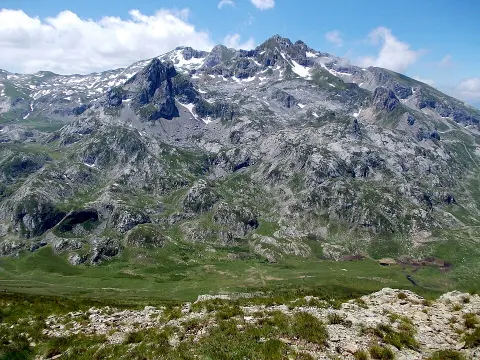
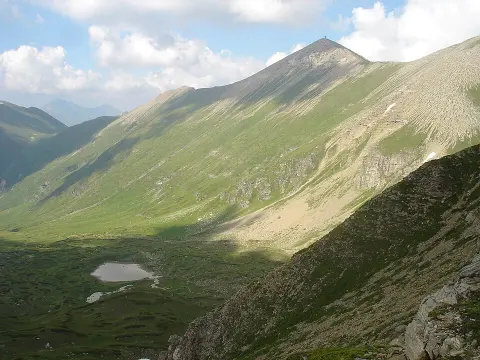
Largest: Mavrovo National Park · National park Šar Planina · Galičica National Park
Currency · 26 October 2026
denar exchange rates today
North Macedonia uses the denar (MKD, den). One US dollar buys 54.8928 MKD; over the last 30 days the MKD has lost 1.6% against the dollar.
What other currencies cost in MKD
Currency converter
Daily reference rates from the open-source currency-api (CC0), 26 Oct 2026. Banks and exchange offices add a margin.
World rankings
Where North Macedonia ranks
How North Macedonia compares with the rest of the world — open any card for the full ranking.
Airports
Airports in North Macedonia
27 airports and airfields — 2 large, 0 medium and 11 small, plus 14 heliports. 2 have scheduled passenger flights.


Military
Macedonian armed forces
North Macedonia ranks #108 of 145 in the Global Firepower military strength ranking, with a defence budget of $375 million (2025).
People
Population & society
Religion
Largest cities: Skopje (611,000)
Economy
Economy
Main industries
food processing, beverages, textiles, chemicals, iron, steel, cement, energy, pharmaceuticals, automotive parts
Export partners
Germany 39%, Serbia 8%, Bulgaria 6%, Greece 5%, Czechia 3% (2023)
Top exports
reaction and catalytic products, insulated wire, electricity, garments, seats (2023)
Travel tools
Handy before every trip to North Macedonia
Next public holiday
Saint Clement of Ohrid Day — Tuesday, 8 December 2026. Then New Year's Day (1 Jan).

Macedonian passport
Ranked #81: 80 countries visa-free, 35 with visa on arrival, 3 with an eTA and 35 with an eVisa.
Macedonian passport photo
Exact size, head position and background for North Macedonia's passport and visa photos — make one free with AI checks.
Calling North Macedonia
Dial +389 before the local number. Internet domain .mk.
Climate footprint
6.6 million tonnes of CO₂ in 2024 — 3.63 t per person.
Entry requirements
Visa rules for every passport visiting North Macedonia: visa-free stays, eVisas, visas on arrival and documents to bring.
News
Latest travel news about North Macedonia
Bosnia and Herzegovina workers: Czech work visa route stays open through 2028
The Czech government has extended its special work visa scheme for workers from Ukraine, Georgia, Bosnia and Herzegovina, Moldova and North Macedonia…

Germany to Halve Western Balkans Work Quota to 25,000 From 2027
Germany will cut its annual quota for workers from the Western Balkans from 50,000 to 25,000 from 1 January 2027. The Western Balkans Regulation cove…
Denmark Grants Visa-Free Entry to Citizens with Biometric Passports
Denmark has announced visa-free entry for citizens of nine countries holding biometric passports, streamlining travel for these nationalities.
Frequently asked questions about North Macedonia
What do I need to travel to North Macedonia?
How long must my passport be valid for North Macedonia?
Where is North Macedonia?
What is North Macedonia known for?
What is the capital of North Macedonia?
What language is spoken in North Macedonia?
What currency does North Macedonia use?
What is the calling code of North Macedonia?
Which countries border North Macedonia?
How strong is the Macedonian passport?
What is the speed limit in North Macedonia?
Is North Macedonia safe to visit?
When is the best time to visit North Macedonia?
What plug type does North Macedonia use?
How many airports does North Macedonia have?
Sources: CIA World Factbook (public domain); World Bank Open Data (CC BY 4.0); names, languages and currencies: mledoze/countries (ODbL); flag: flag-icons (MIT); coat of arms: Wikimedia Commons (file page); exchange rates: Daily reference rates from the open-source currency-api (CC0); airports: OurAirports.