

South America · UN member


Uruguay: Travel Guide & Requirements
Oriental Republic of Uruguay
Uruguay is a country in South America with its capital in Montevideo. It has a population of 3.4 million (#133 in the world) and covers 176,215 km². The official language is Spanish. The currency is the Uruguayan peso (UYU, $).
Where is Uruguay? Map of Uruguay
Southern South America, bordering the South Atlantic Ocean, between Argentina and Brazil.
- Region
- South America
- Coordinates
- 33° S, 56° W
- Neighbours
- 2 — see list
- Coastline
- 660 km
- Uruguay
- Neighbours
- Capital
- Largest cities
Map of Uruguay showing Montevideo (capital) and the largest cities: Salto, Maldonado, Rivera, Paysandú, Tacuarembó, Melo, Artigas and Mercedes.
Travel requirements
What you need to travel to Uruguay
- Passport
The UK government says your passport must be valid for the duration of your stay and have at least one blank page for an entry stamp.
- Visa or eTA
Depends on your passport: of 198 passports, 85 need no visa, 113 need a visa from an embassy. Check yours or see Uruguay entry requirements for every passport.
- Return or onward ticket
Uruguay's Foreign Ministry lists a travel booking (reserva de viaje) among the requirements for a visa application.
- Proof of funds
Uruguay's Foreign Ministry lists an invitation letter or hotel booking and economic solvency among the requirements for a visa application.
- Travel insurance
No official requirement.
- Vaccinations
The US CDC says Uruguay's country entry requirements do not require the yellow fever vaccine.
- Customs allowance
Uruguay's customs service (Dirección Nacional de Aduanas) says anyone not under Central Bank control must declare to it the transport across the border of cash, precious metals or other monetary instruments worth USD 10…
- Travel advice
Some caution needed — US and UK advice.
Entry rules: TravelRequirements.info — Entry Requirements Dataset (CC BY 4.0), each rule cited to an official government source. Always confirm with the airline and the official source before you travel.
Before you go
10 things to know before you travel to Uruguay
- Safety: Uruguay is generally safe for travellers, but some caution is needed: the US State Department rates Uruguay Level 2 (“Exercise Increased Caution”), and the UK Foreign Office has no warnings against travel there.
- Best time to go: December to February — when daytime highs in Montevideo are around 25–26°C.
- Money: the Uruguayan peso (UYU) — 1 US dollar is about 40.0118 UYU.
- Plugs: type C, F, I and L, 230 V, 50 Hz — standard 220–240 V: devices from the US or Japan (110–120 V) need a converter unless they are dual voltage (100–240 V).
- Emergency numbers: Police 911, Ambulance 911, Fire 911.
- Language: Spanish is official.
- Driving: on the right — speed limits are 45 km/h in built-up areas and 90 km/h outside built-up areas.
- Time zone: UTC-3 in Montevideo.
- Capital: Montevideo. About 3.4 million people live in Uruguay.
- Outdoors: 8 national parks.
Key facts
Uruguay at a glance
Languages spoken: Spanish (official, Rioplatense is the most widely spoken dialect)
Geography & history
About Uruguay
The Spanish founded the city of Montevideo in modern-day Uruguay in 1726 as a military stronghold, and it soon became an important commercial center due to its natural harbor. Argentina initially claimed Uruguay, but Brazil annexed the country in 1821. Uruguay declared its independence in 1825 and secured its freedom in 1828 after a three-year struggle. The administrations of President Jose BATLLE in the early 20th century launched widespread political, social, and economic reforms that established a statist tradition. A violent Marxist urban guerrilla movement named the Tupamaros (or Movimiento de Liberación Nacional-Tupamaros) launched in the late 1960s and pushed Uruguay's president to c…
Read the full history
The Spanish founded the city of Montevideo in modern-day Uruguay in 1726 as a military stronghold, and it soon became an important commercial center due to its natural harbor. Argentina initially claimed Uruguay, but Brazil annexed the country in 1821. Uruguay declared its independence in 1825 and secured its freedom in 1828 after a three-year struggle. The administrations of President Jose BATLLE in the early 20th century launched widespread political, social, and economic reforms that established a statist tradition. A violent Marxist urban guerrilla movement named the Tupamaros (or Movimiento de Liberación Nacional-Tupamaros) launched in the late 1960s and pushed Uruguay's president to cede control of the government to the military in 1973. By year-end, the rebels had been crushed, but the military continued to expand its hold over the government. Civilian rule was restored in 1985. In 2004, the left-of-center Frente Amplio (FA) Coalition won national elections that effectively ended 170 years of political control by the Colorado and National (Blanco) parties. The left-of-center coalition retained the presidency and control of both chambers of congress until 2019. Uruguay's political and labor conditions are among the freest on the South American continent.
Location
Southern South America, bordering the South Atlantic Ocean, between Argentina and Brazil
Climate
warm temperate; freezing temperatures almost unknown
Terrain
mostly rolling plains and low hills; fertile coastal lowland
Highest point
Cerro Catedral 514 m
Natural resources
arable land, hydropower, minor minerals, fish
Natural hazards
seasonally high winds (the pampero is a chilly and occasional violent wind that blows north from the Argentine pampas), droughts, floods; because of the absence of mountains, which act as weather barriers, all locations are particularly vulnerable to rapid ch…
National symbols
Sun of May (a sun-with-face symbol)
Driving
Speed limits & road rules in Uruguay
The default speed limits in Uruguay are 45 km/h in built-up areas and 90 km/h outside built-up areas. The legal alcohol limit for drivers is zero. Posted signs always take priority over these defaults.
- 4545 km/hBuilt-up areasTowns and cities
- 9090 km/hOutside built-up areasCountry roadsWith a trailer: 80 km/h
- International Driving PermitRecognised: 1968 Vienna, 1926 ParisCarry the IDP together with your national licence
- Driving sideDrive on the rightOvertake on the left
- Alcohol limitZero tolerance (0.0‰)
- Seat beltsRequired by law
- Child seatsRequired by law
- Motorcycle helmetsRequired for riders
- Road deaths (2021)13.0 per 100,000 peopleClose to the world median (12.4)
Speed limits: OpenStreetMap wiki — Default speed limits (CC BY-SA 2.0). Road-safety laws: WHO Global Health Observatory. Compare speed limits and alcohol limits by country. Defaults for cars; local signs, weather and vehicle type can lower them.
Safety
Is Uruguay safe to visit?
Uruguay is generally safe for travellers, but some caution is needed: the US State Department rates Uruguay Level 2 (“Exercise Increased Caution”), and the UK Foreign Office has no warnings against travel there.
 US State Department
 UK Foreign Office (FCDO)
Latest update: New information about dual nationals returning to the UK (‘Entry requirements’ page).
Updated 10 Dec 2025 · Full travel advice
Sources: US Department of State travel advisories (public domain) and UK FCDO foreign travel advice (contains public sector information licensed under the Open Government Licence v3.0). Checked daily. Advice can change quickly — always read the official page before you travel.
Weather
Best time to visit Uruguay
The best time to visit Uruguay is December to February, when daytime highs in Montevideo are around 25–26°C. March and November are also a good time to go. January is the warmest month (26°C by day), July the coldest (8°C at night), and March the wettest with about 118 mm of rain.
- Jan26°C20°C
- Feb26°C20°C
- Mar24°C19°C
- Apr20°C16°C
- May17°C13°C
- Jun14°C10°C
- Jul12°C8°C
- Aug14°C9°C
- Sep16°C11°C
- Oct19°C13°C
- Nov22°C16°C
- Dec25°C18°C
Best time Good Less ideal
Before you go
Plugs, voltage & emergency numbers in Uruguay
Plugs & sockets
- Type C (Europlug)two round pins
- Type F (Schuko)two round pins with earth clips on the sides
- Type Itwo flat pins in a V shape, often with an earth pin
- Type Lthree round pins in a row
230 V, 50 Hz · Standard 220–240 V: devices from the US or Japan (110–120 V) need a converter unless they are dual voltage (100–240 V).
Emergency numbers
Save the local numbers before you travel — 112 or 911 may not connect here. All countries →
Sources: Wikipedia — Mains electricity by country and List of emergency telephone numbers (CC BY-SA 4.0).
National parks
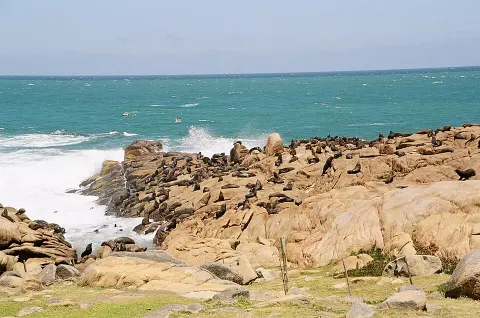
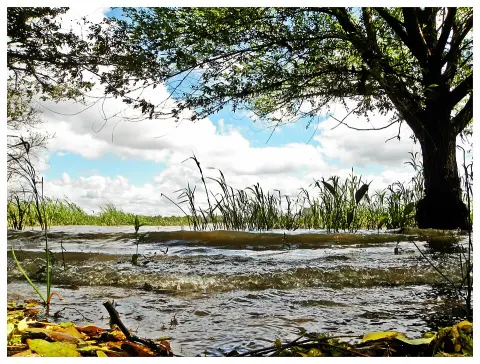
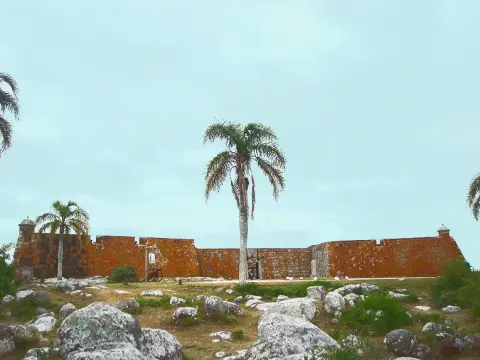
8 national parks in Uruguay
- 472 km² protected
- oldest from 1908
Largest: Parque nacional Cabo Polonio · Esteros de Farrapos e Islas del Río Uruguay National Park · San Miguel national park
Currency · 26 October 2026
Uruguayan peso exchange rates today
Uruguay uses the Uruguayan peso (UYU, $). One US dollar buys 40.0118 UYU; over the last 30 days the UYU has gained 0.1% against the dollar.
What other currencies cost in UYU
Currency converter
Daily reference rates from the open-source currency-api (CC0), 26 Oct 2026. Banks and exchange offices add a margin.
World rankings
Where Uruguay ranks
How Uruguay compares with the rest of the world — open any card for the full ranking.
Airports
Airports in Uruguay
69 airports and airfields — 1 large, 6 medium and 58 small, plus 4 heliports. 3 have scheduled passenger flights.
Borders
Neighbouring countries
Uruguay borders 2 countries along 1,591 km of land borders. Coastline: 660 km.


Military
Uruguayan armed forces
Uruguay ranks #96 of 145 in the Global Firepower military strength ranking, with a defence budget of $2.0 billion (2025).
People
Population & society
Religion
Largest cities: Montevideo (1.8 million)
Economy
Economy
Main industries
food processing, electrical machinery, transportation equipment, petroleum products, textiles, chemicals, beverages
Export partners
China 21%, Brazil 17%, USA 8%, Argentina 5%, Netherlands 5% (2023)
Top exports
wood pulp, beef, milk, rice, wood (2023)
Travel tools
Handy before every trip to Uruguay
Next public holiday
Deceased ones day — Monday, 2 November 2026. Then Christmas Day (25 Dec).
Uruguayan passport
Ranked #56: 98 countries visa-free, 34 with visa on arrival, 7 with an eTA and 32 with an eVisa.
Uruguayan passport photo
Exact size, head position and background for Uruguay's passport and visa photos — make one free with AI checks.
Calling Uruguay
Dial +598 before the local number. Internet domain .uy.
Climate footprint
8.0 million tonnes of CO₂ in 2024 — 2.35 t per person.
Entry requirements
Visa rules for every passport visiting Uruguay: visa-free stays, eVisas, visas on arrival and documents to bring.
News
Latest travel news about Uruguay
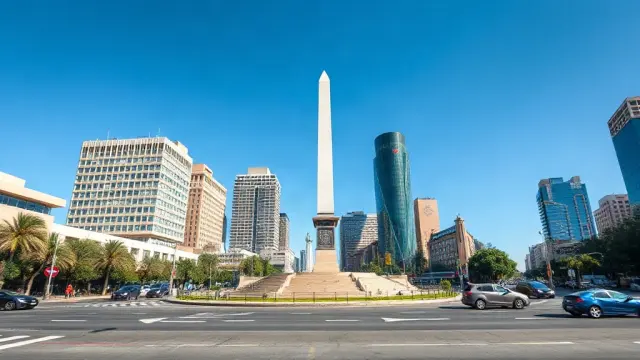
Travellers eyeing Argentine passport: USD 350,000 route planned, details pending
Argentina has announced plans for a citizenship by investment programme offering a route to an Argentine passport through a USD 350,000 contribution …
Uruguay Offers Permanent Residence Without Years of Temporary Visa Renewals
Uruguay stands out in a 2026 ranking of accessible relocation destinations because permanent residence can be available without first completing seve…

Uruguay set for 17.9% more international flights in winter 2026-27
Uruguay's Tourism Ministry and airport operator Aeropuertos Uruguay have set up an air connectivity fund worth up to US$2.5 million a year, paying ai…
Frequently asked questions about Uruguay
What do I need to travel to Uruguay?
How long must my passport be valid for Uruguay?
Where is Uruguay?
What is Uruguay known for?
What is the capital of Uruguay?
What language is spoken in Uruguay?
What currency does Uruguay use?
What is the calling code of Uruguay?
Which countries border Uruguay?
How strong is the Uruguayan passport?
What is the speed limit in Uruguay?
Is Uruguay safe to visit?
When is the best time to visit Uruguay?
What plug type does Uruguay use?
How many airports does Uruguay have?
Sources: CIA World Factbook (public domain); World Bank Open Data (CC BY 4.0); names, languages and currencies: mledoze/countries (ODbL); flag: flag-icons (MIT); coat of arms: Wikimedia Commons (file page); exchange rates: Daily reference rates from the open-source currency-api (CC0); airports: OurAirports.