
Northern Africa · UN member

Egypt: Travel Guide & Requirements
Arab Republic of Egypt · جمهورية مصر العربية
Egypt is a country in Northern Africa with its capital in Cairo. It has a population of 118.4 million (#13 in the world) and covers 1,001,450 km². The official language is Arabic. The currency is the Egyptian pound (EGP, £).
Where is Egypt? Map of Egypt
Northern Africa, bordering the Mediterranean Sea, between Libya and the Gaza Strip, and the Red Sea north of Sudan, and includes the Asian Sinai Peninsula.
- Region
- Northern Africa
- Coordinates
- 27° N, 30° E
- Neighbours
- 4 — see list
- Coastline
- 2,450 km
- Egypt
- Neighbours
- Capital
- Largest cities
Map of Egypt showing Cairo (capital) and the largest cities: Alexandria, Port Said, Suez, Al Mansurah, Tanta, Assiut, Al Fayyum and Esna.
Travel requirements
What you need to travel to Egypt
- Passport
Egypt's e-Visa portal says your passport must be valid for at least 6 months from the date of arrival.
- Visa or eTA
Depends on your passport: of 198 passports, 3 need no visa, 78 need an eVisa, 44 get a visa on arrival, 73 need a visa from an embassy. Check yours or see Egypt entry requirements for every passport.
- Return or onward ticket
No official requirement. The eVisa portal lists a travel itinerary and hotel bookings or details of the places you will visit among the documents to show on arrival, and the Egyptian Consulate in Washington asks visa applicants for a copy of a …
- Proof of funds
No official requirement.
- Travel insurance
No official requirement. The UK Foreign Office advises checking before you travel that you have appropriate travel insurance for local treatment or unexpected medical evacuation.
- Vaccinations
WHO's country list says Egypt requires proof of yellow fever vaccination from travellers aged 9 months or over arriving from a country with risk of yellow fever transmission, or who transited for more than 12 hours thro…
- Customs allowance
The UK government's travel advice says foreign currency worth more than 10,000 USD must be declared on arrival and that there is no limit on the amount of foreign currency you can bring.
- Travel advice
High risk — US and UK advice.
Entry rules: TravelRequirements.info — Entry Requirements Dataset (CC BY 4.0), each rule cited to an official government source. Always confirm with the airline and the official source before you travel.
Before you go
10 things to know before you travel to Egypt
- Safety: Travel to Egypt carries a high risk: the US State Department rates Egypt Level 2 (“Exercise Increased Caution”), and the UK Foreign Office advises against all travel to parts of the country.
- Best time to go: March and November — when daytime highs in Cairo are around 25°C.
- Money: the Egyptian pound (EGP) — 1 US dollar is about 54.9893 EGP.
- Plugs: type C and F, 220 V, 50 Hz — standard 220–240 V: devices from the US or Japan (110–120 V) need a converter unless they are dual voltage (100–240 V).
- Emergency numbers: Police 112 / 122, Ambulance 123, Fire 180.
- Language: Arabic is official; English is also spoken.
- Driving: on the right — speed limits are 60 km/h in built-up areas and 90 km/h outside built-up areas.
- Time zone: UTC+2 in Cairo.
- Capital: Cairo. About 118.4 million people live in Egypt.
- Egypt is the 30th largest country in the world by area.
Key facts
Egypt at a glance
Languages spoken: Arabic (official); English and French widely understood by educated classes
Geography & history
About Egypt
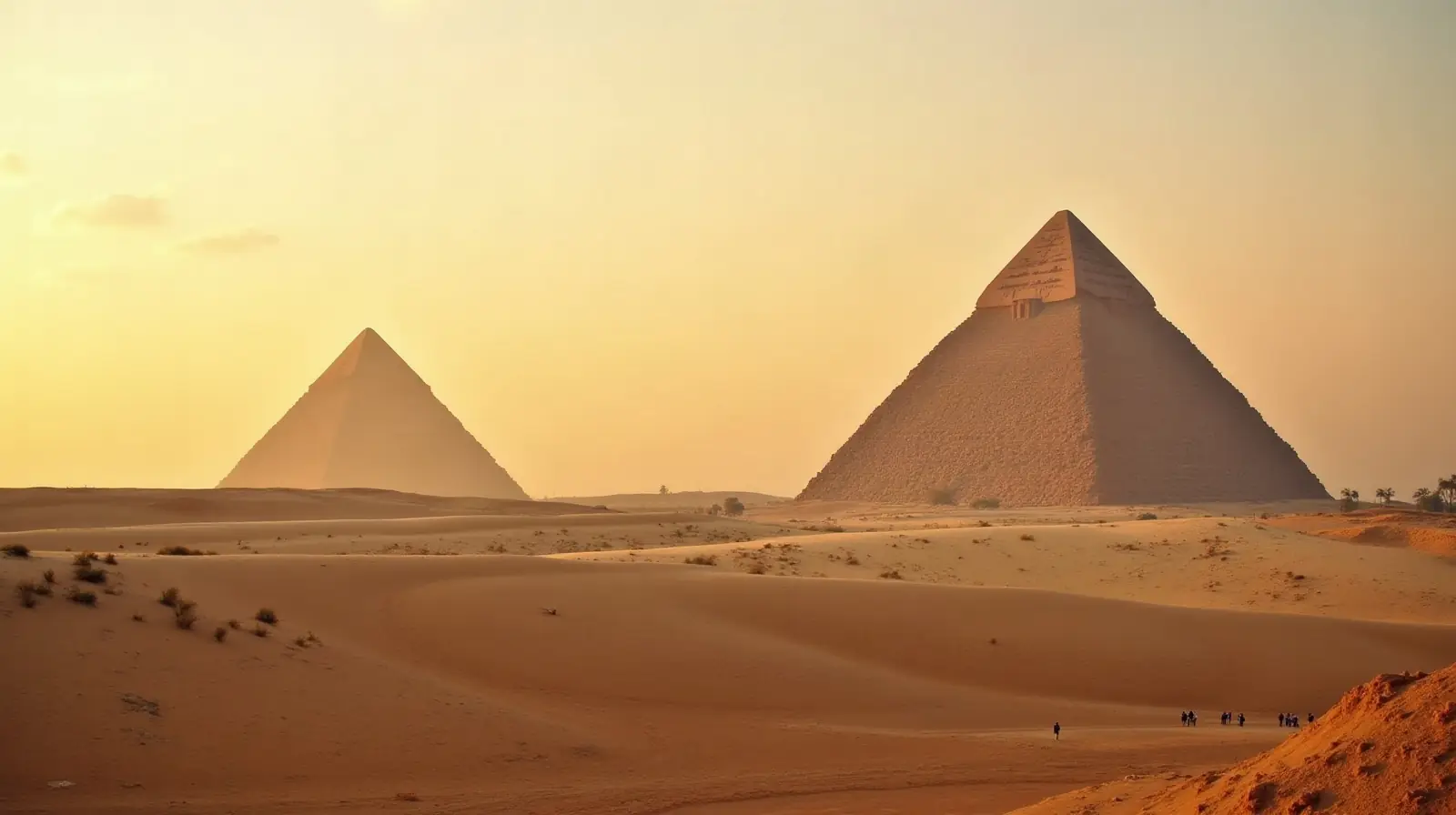
The regularity and richness of the annual Nile River flood, coupled with semi-isolation provided by deserts to the east and west, allowed for the development of one of the world's great civilizations in Egypt. A unified kingdom arose circa 3200 B.C., and a series of dynasties ruled in Egypt for the next three millennia. The last native dynasty fell to the Persians in 341 B.C., who in turn were replaced by the Greeks, Romans, and Byzantines. Arab conquerors introduced Islam and the Arabic language in the 7th century and ruled for the next six centuries. The Mamluks, a local military caste, took control around 1250 and continued to govern after the Ottoman Turks conquered Egypt in 1517. Compl…
Read the full history
The regularity and richness of the annual Nile River flood, coupled with semi-isolation provided by deserts to the east and west, allowed for the development of one of the world's great civilizations in Egypt. A unified kingdom arose circa 3200 B.C., and a series of dynasties ruled in Egypt for the next three millennia. The last native dynasty fell to the Persians in 341 B.C., who in turn were replaced by the Greeks, Romans, and Byzantines. Arab conquerors introduced Islam and the Arabic language in the 7th century and ruled for the next six centuries. The Mamluks, a local military caste, took control around 1250 and continued to govern after the Ottoman Turks conquered Egypt in 1517. Completion of the Suez Canal in 1869 elevated Egypt as an important world transportation hub. Ostensibly to protect its investments, Britain seized control of Egypt's government in 1882, but the country's nominal allegiance to the Ottoman Empire continued until 1914. Egypt gained partial independence from the UK in 1922 and full sovereignty in 1952. British forces evacuated the Suez Canal Zone in 1956. The completion of the Aswan High Dam in 1971 and the resultant Lake Nasser have reaffirmed the time-honored place of the Nile River in the agriculture and ecology of Egypt. A rapidly growing population (the largest in the Arab world), limited arable land, and dependence on the Nile all continue to overtax resources and stress society. The government has struggled to meet the demands of Egypt's fast-growing population as it implements large-scale infrastructure projects, energy cooperation, and foreign direct investment appeals. Inspired by the 2010 Tunisian revolution, Egyptian opposition groups led demonstrations and labor strikes countrywide, culminating in President Hosni MUBARAK's ouster in 2011. Egypt's military assumed national leadership until a new legislature was in place in early 2012; later that same year, Muslim Brotherhood candidate Mohamed MORSI won the presidential election. Following protests throughout the spring of 2013 against MORSI's government and the Muslim Brotherhood, the Egyptian Armed Forces intervened and removed MORSI from power in July 2013 and replaced him with interim president Adly MANSOUR. Simultaneously, the government began enacting laws to limit freedoms of assembly and expression. In 2014, voters approved a new constitution by referendum and then elected former defense minister Abdel Fattah EL-SISI president. EL-SISI was reelected to a second four-year term in 2018 and a third term in December 2023.
Location
Northern Africa, bordering the Mediterranean Sea, between Libya and the Gaza Strip, and the Red Sea north of Sudan, and includes the Asian Sinai Peninsula
Climate
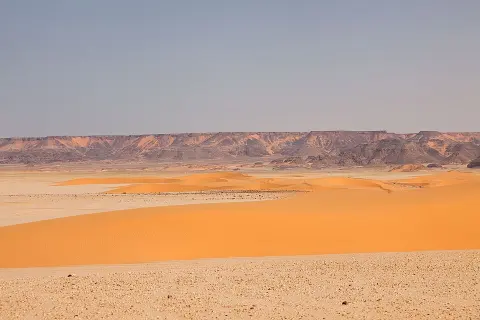
desert; hot, dry summers with moderate winters
Terrain
vast desert plateau interrupted by Nile valley and delta
Highest point
Mount Catherine 2,629 m
Natural resources
petroleum, natural gas, iron ore, phosphates, manganese, limestone, gypsum, talc, asbestos, lead, rare earth elements, zinc
Natural hazards
periodic droughts; frequent earthquakes; flash floods; landslides; hot, driving windstorms called khamsin occur in spring; dust storms; sandstorms
National symbols
golden eagle, white lotus
Driving
Speed limits & road rules in Egypt
The default speed limits in Egypt are 60 km/h in built-up areas and 90 km/h outside built-up areas. Posted signs always take priority over these defaults.
- 4040 km/hResidential zonesLiving streets & residential areas
- 6060 km/hBuilt-up areasTowns and cities
- 9090 km/hOutside built-up areasCountry roadsWith a trailer: 60 km/h
- International Driving PermitRecognised: 1949 Geneva, 1926 ParisCarry the IDP together with your national licence
- Driving sideDrive on the rightOvertake on the left
- Seat beltsRequired by law
- Child seatsNo national child-restraint law
- Motorcycle helmetsRequired for riders
- Road deaths (2021)9.4 per 100,000 peopleSafer than most countries (median 12.4)
Speed limits: OpenStreetMap wiki — Default speed limits (CC BY-SA 2.0). Road-safety laws: WHO Global Health Observatory. Compare speed limits and alcohol limits by country. Defaults for cars; local signs, weather and vehicle type can lower them.
Safety
Is Egypt safe to visit?
Travel to Egypt carries a high risk: the US State Department rates Egypt Level 2 (“Exercise Increased Caution”), and the UK Foreign Office advises against all travel to parts of the country.
 US State Department
 UK Foreign Office (FCDO)
Latest update: Updated information about entry requirements and regional tensions ('Warnings and insurance' and 'Entry requirements' pages).
Updated 4 Aug 2026 · Full travel advice
Sources: US Department of State travel advisories (public domain) and UK FCDO foreign travel advice (contains public sector information licensed under the Open Government Licence v3.0). Checked daily. Advice can change quickly — always read the official page before you travel.
Weather
Best time to visit Egypt
The best time to visit Egypt is March and November, when daytime highs in Cairo are around 25°C. February and April are also a good time to go. July is the warmest month (39°C by day), January the coldest (6°C at night).
- Jan18°C6°C
- Feb20°C7°C
- Mar25°C9°C
- Apr29°C13°C
- May34°C17°C
- Jun37°C20°C
- Jul39°C21°C
- Aug38°C22°C
- Sep35°C20°C
- Oct31°C17°C
- Nov25°C12°C
- Dec20°C8°C
Best time Good Less ideal
Before you go
Plugs, voltage & emergency numbers in Egypt
Plugs & sockets
220 V, 50 Hz · Standard 220–240 V: devices from the US or Japan (110–120 V) need a converter unless they are dual voltage (100–240 V).
Emergency numbers
112 works from any mobile phone, even without a SIM card in most networks. All countries →
Sources: Wikipedia — Mains electricity by country and List of emergency telephone numbers (CC BY-SA 4.0).
Ski resorts
1 ski resort in Egypt
Biggest: Ski Egypt
National parks
10 national parks in Egypt
- 94,429 km² protected
- oldest from 1983
Largest: Gilf Kebir National Park · Gabal Elba National Park · Wadi el Gamal National Park
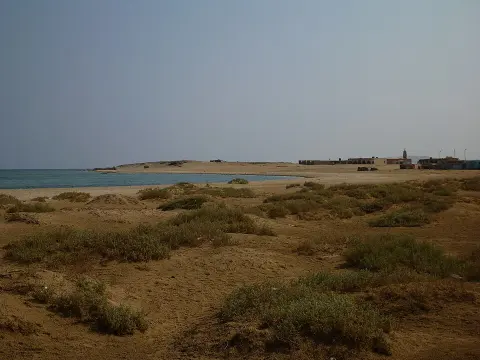
Currency · 26 October 2026
Egyptian pound exchange rates today
Egypt uses the Egyptian pound (EGP, £). One US dollar buys 54.9893 EGP; over the last 30 days the EGP has lost 5.8% against the dollar.
What other currencies cost in EGP
Currency converter
Daily reference rates from the open-source currency-api (CC0), 26 Oct 2026. Banks and exchange offices add a margin.
World rankings
Where Egypt ranks
How Egypt compares with the rest of the world — open any card for the full ranking.
Airports
Airports in Egypt
134 airports and airfields — 15 large, 18 medium and 39 small, plus 62 heliports. 17 have scheduled passenger flights.
Borders
Neighbouring countries
Egypt borders 4 countries along 2,612 km of land borders. Coastline: 2,450 km.


Military
Egyptian armed forces
Egypt ranks #14 of 145 in the Global Firepower military strength ranking, with a defence budget of $2.5 billion (2025).
People
Population & society
Religion
Largest cities: Cairo (22.2 million), Alexandria (5.6 million), Bur Sa'id (778,000)
Economy
Economy
Main industries
textiles, food processing, tourism, chemicals, pharmaceuticals, hydrocarbons, construction, cement, metals, light manufactures
Export partners
Saudi Arabia 10%, Turkey 9%, Italy 6%, USA 5%, UAE 5% (2023)
Top exports
refined petroleum, natural gas, fertilizers, garments, crude petroleum (2023)
Travel tools
Handy before every trip to Egypt
Next public holiday
Christmas Day (Orthodox) — Thursday, 7 January 2027. Then Revolution Day 2011 / National Police Day (25 Jan).

Egyptian passport
Ranked #170: 20 countries visa-free, 29 with visa on arrival, 2 with an eTA and 44 with an eVisa.
Egyptian passport photo
Exact size, head position and background for Egypt's passport and visa photos — make one free with AI checks.
Calling Egypt
Dial +20 before the local number. Internet domain .eg.
Climate footprint
258.4 million tonnes of CO₂ in 2024 — 2.22 t per person.
Entry requirements
Visa rules for every passport visiting Egypt: visa-free stays, eVisas, visas on arrival and documents to bring.
News
Latest travel news about Egypt

Moroccans Won the Most Italian Residence Permits in 2025, Data Shows
Italy issued 44,549 first residence permits to Moroccan nationals in 2025, the highest of any non-EU nationality, according to ISTAT. Moroccans also …
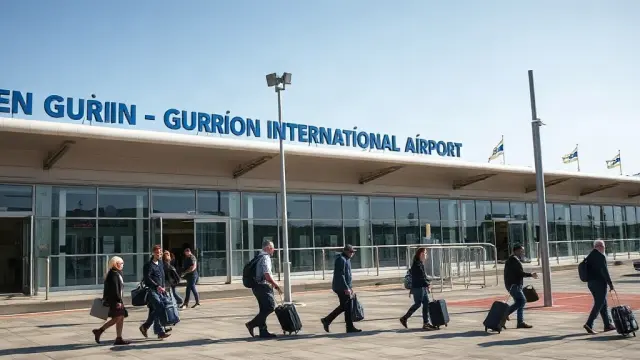
Israel trips: US adds Houthi risk, keeps Level 3 rating and border no-go areas
The US State Department updated its Israel travel advisory on 23 October 2026, warning of a growing threat from Iran-backed Houthis. Israel stays at …
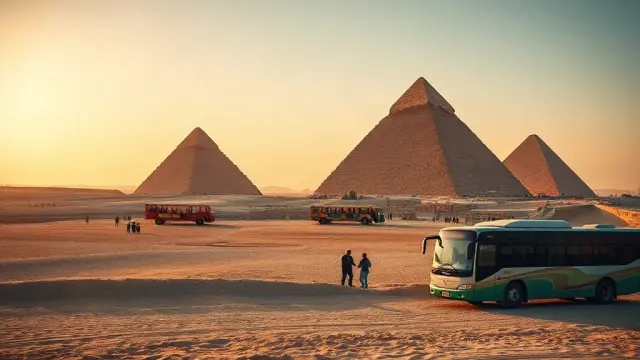
Egypt Cuts Extra Entry Checks for Kazakh Visitors; Launch Date Unannounced
Egypt agreed to drop Kazakhstan from the list of Central Asian countries whose citizens face extra entry requirements for tourism. The deal was reach…
Frequently asked questions about Egypt
What do I need to travel to Egypt?
How long must my passport be valid for Egypt?
Where is Egypt?
What is Egypt known for?
What is the capital of Egypt?
What language is spoken in Egypt?
What currency does Egypt use?
What is the calling code of Egypt?
Which countries border Egypt?
How strong is the Egyptian passport?
What is the speed limit in Egypt?
Is Egypt safe to visit?
When is the best time to visit Egypt?
What plug type does Egypt use?
How many airports does Egypt have?
Sources: CIA World Factbook (public domain); World Bank Open Data (CC BY 4.0); names, languages and currencies: mledoze/countries (ODbL); flag: flag-icons (MIT); coat of arms: Wikimedia Commons (file page); exchange rates: Daily reference rates from the open-source currency-api (CC0); airports: OurAirports.