
South America · UN member

Peru: Travel Guide & Requirements
Republic of Peru · Piruw Suyu · Piruw Ripuwlika
Peru is a country in South America with its capital in Lima. It has a population of 34.6 million (#48 in the world) and covers 1,285,216 km². The official languages are Aymara, Quechua and Spanish. The currency is the Peruvian sol (PEN, S/.).
Where is Peru? Map of Peru
Western South America, bordering the South Pacific Ocean, between Chile and Ecuador.
- Region
- South America
- Coordinates
- 10° S, 76° W
- Neighbours
- 5 — see list
- Coastline
- 2,414 km
- Peru
- Neighbours
- Capital
- Largest cities
Map of Peru showing Lima (capital) and the largest cities: Arequipa, Trujillo, Piura, Chiclayo, Huancayo, Cusco, Iquitos and Pucallpa.
Travel requirements
What you need to travel to Peru
- Passport
Migraciones says a passport valid for at least six months is mandatory, and that without it you cannot enter Peru.
- Visa or eTA
Depends on your passport: of 198 passports, 104 need no visa, 94 need a visa from an embassy. Check yours or see Peru entry requirements for every passport.
- Return or onward ticket
No official requirement. Canada's travel advice says customs officials may ask you to show a return or onward ticket.
- Proof of funds
No official requirement. Canada's travel advice says customs officials may ask you to show proof that you have a place to stay and proof of sufficient funds for the duration of your stay.
- Travel insurance
No official requirement.
- Vaccinations
WHO lists no yellow fever requirement at entry to Peru.
- Customs allowance
Peru's tax and customs authority (SUNAT) says travellers entering or leaving the country must declare cash and/or negotiable financial instruments of more than US$10,000 or the equivalent, and that entering or leaving w…
- Travel advice
Some caution needed — US and UK advice.
Entry rules: TravelRequirements.info — Entry Requirements Dataset (CC BY 4.0), each rule cited to an official government source. Always confirm with the airline and the official source before you travel.
Before you go
10 things to know before you travel to Peru
- Safety: Peru is generally safe for travellers, but some caution is needed: the US State Department rates Peru Level 2 (“Exercise Increased Caution”), and the UK Foreign Office advises against all but essential travel to parts of the country.
- Best time to go: January to December — when daytime highs in Lima are around 21–23°C.
- Money: the Peruvian sol (PEN) — 1 US dollar is about 3.4322 PEN.
- Plugs: type A, B and C, 220 V, 60 Hz — standard 220–240 V: devices from the US or Japan (110–120 V) need a converter unless they are dual voltage (100–240 V).
- Emergency numbers: Police 911, Ambulance 911, Fire 911.
- Language: Aymara, Quechua and Spanish are official.
- Driving: on the right — speed limits are 40 km/h in built-up areas and 60 km/h outside built-up areas.
- Time zone: UTC-5 in Lima.
- Capital: Lima. About 34.6 million people live in Peru.
- Peru is the 20th largest country in the world by area.
Key facts
Peru at a glance
Languages spoken: Spanish (official) 82.9%, Quechua (official) 13.6%, Aymara (official) 1.6%, Ashaninka 0.3%, other native languages (includes many minor Amazonian languages) 0.8%, other 0.2%, none 0.1%, unspecified 0.7% (2017 est.)
Geography & history
About Peru
Ancient Peru was the seat of several prominent Andean civilizations, most notably that of the Incas whose empire was captured by Spanish conquistadors in 1533. Peru declared its independence in 1821, and remaining Spanish forces were defeated in 1824. After a dozen years of military rule, Peru returned to democratic leadership in 1980 but experienced economic problems and the growth of a violent insurgency. President Alberto FUJIMORI's election in 1990 ushered in a decade that saw a dramatic turnaround in the economy and significant progress in curtailing guerrilla activity. Nevertheless, an economic slump and the president's increasing reliance on authoritarian measures in the late 1990s g…
Read the full history
Ancient Peru was the seat of several prominent Andean civilizations, most notably that of the Incas whose empire was captured by Spanish conquistadors in 1533. Peru declared its independence in 1821, and remaining Spanish forces were defeated in 1824. After a dozen years of military rule, Peru returned to democratic leadership in 1980 but experienced economic problems and the growth of a violent insurgency. President Alberto FUJIMORI's election in 1990 ushered in a decade that saw a dramatic turnaround in the economy and significant progress in curtailing guerrilla activity. Nevertheless, an economic slump and the president's increasing reliance on authoritarian measures in the late 1990s generated mounting dissatisfaction with his regime, which led to his resignation in 2000. A caretaker government oversaw a new election in 2001 that installed Alejandro TOLEDO Manrique as the new head of government - Peru's first democratically elected president of indigenous ethnicity. The presidential election of 2006 saw the return of Alan GARCIA Perez who, after a disappointing presidential term from 1985 to 1990, presided over a robust economic rebound. Former army officer Ollanta HUMALA Tasso was elected president in 2011 and carried on the market-oriented economic policies of the three preceding administrations. Pedro Pablo KUCZYNSKI Godard won a very narrow runoff in the 2016 presidential election. Facing impeachment after evidence surfaced of his involvement in a vote-buying scandal, KUCZYNSKI offered his resignation in 2018, and First Vice President Martin Alberto VIZCARRA Cornejo was sworn in as president. In 2019, VIZCARRA invoked his constitutional authority to dissolve Peru's Congress after months of battling with the body over anticorruption reforms. New congressional elections in 2020 resulted in an opposition-led legislature. The Congress impeached VIZCARRA for a second time and removed him from office after accusations of corruption and mishandling of the COVID-19 pandemic. Because of vacancies in the vice-presidential positions, the President of the Peruvian Congress, Manuel MERINO, became the next president. His ascension to office was not well received, and large protests forced his resignation later in 2020. Francisco SAGASTI assumed the position of President of Peru after being appointed President of the Congress the previous day. Jose Pedro CASTILLO Terrones won presidential election in 2021 but was impeached and ousted the following year; his vice president, Dina BOLUARTE, assumed the presidency by constitutional succession in 2022.
Location
Western South America, bordering the South Pacific Ocean, between Chile and Ecuador
Climate
varies from tropical in east to dry desert in west; temperate to frigid in Andes
Terrain
western coastal plain (costa), high and rugged Andes in center (sierra), eastern lowland jungle of Amazon Basin (selva)
Highest point
Nevado Huascaran 6,746 m
Natural resources
copper, silver, gold, petroleum, timber, fish, iron ore, coal, phosphate, potash, hydropower, natural gas
Natural hazards
earthquakes, tsunamis, flooding, landslides, mild volcanic activity volcanism: volcanic activity in the Andes Mountains; Ubinas (5,672 m) is the country's most active volcano; other historically active volcanoes include El Misti, Huaynaputina, Sabancaya, and …
National symbols
vicuna (a camelid related to the llama)
Driving
Speed limits & road rules in Peru
The default speed limits in Peru are 40 km/h in built-up areas and 60 km/h outside built-up areas. The legal alcohol limit for drivers is 0.5‰. Posted signs always take priority over these defaults.
- 4040 km/hBuilt-up areasTowns and cities
- 6060 km/hOutside built-up areasCountry roads
- International Driving PermitRecognised: 1968 Vienna, 1949 Geneva, 1926 ParisCarry the IDP together with your national licence
- Driving sideDrive on the rightOvertake on the left
- Alcohol limit0.5‰ blood alcohol (0.05% BAC)
- Seat beltsRequired by law
- Child seatsRequired by law
- Motorcycle helmetsRequired for riders
- Road deaths (2021)12.7 per 100,000 peopleClose to the world median (12.4)
Speed limits: OpenStreetMap wiki — Default speed limits (CC BY-SA 2.0). Road-safety laws: WHO Global Health Observatory. Compare speed limits and alcohol limits by country. Defaults for cars; local signs, weather and vehicle type can lower them.
Safety
Is Peru safe to visit?
Peru is generally safe for travellers, but some caution is needed: the US State Department rates Peru Level 2 (“Exercise Increased Caution”), and the UK Foreign Office advises against all but essential travel to parts of the country.
 US State Department
 UK Foreign Office (FCDO)
Latest update: Removal of information about local elections ('Warnings and insurance' page).
Updated 9 Oct 2026 · Full travel advice
Sources: US Department of State travel advisories (public domain) and UK FCDO foreign travel advice (contains public sector information licensed under the Open Government Licence v3.0). Checked daily. Advice can change quickly — always read the official page before you travel.
Weather
Best time to visit Peru
The best time to visit Peru is January to December, when daytime highs in Lima are around 21–23°C. March is the warmest month (23°C by day), July the coldest (12°C at night).
- Jan23°C16°C
- Feb23°C17°C
- Mar23°C17°C
- Apr23°C16°C
- May22°C14°C
- Jun22°C13°C
- Jul21°C12°C
- Aug21°C13°C
- Sep22°C13°C
- Oct21°C14°C
- Nov22°C14°C
- Dec22°C15°C
Best time Good Less ideal
Before you go
Plugs, voltage & emergency numbers in Peru
Plugs & sockets
- Type Atwo flat parallel pins
- Type Btwo flat parallel pins and a round earth pin
- Type C (Europlug)two round pins
220 V, 60 Hz · Standard 220–240 V: devices from the US or Japan (110–120 V) need a converter unless they are dual voltage (100–240 V).
Emergency numbers
Save the local numbers before you travel — 112 or 911 may not connect here. All countries →
Sources: Wikipedia — Mains electricity by country and List of emergency telephone numbers (CC BY-SA 4.0).
National parks
16 national parks in Peru
- 95,256 km² protected
- oldest from 1961
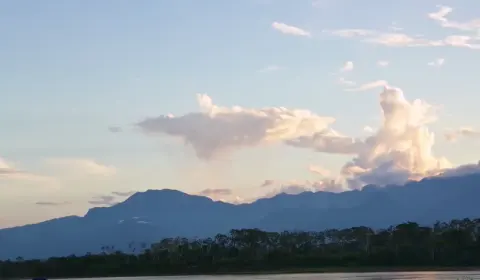
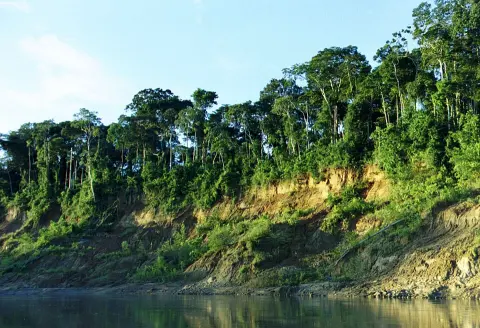
Largest: Alto Purús National Park · Manu National Park · Sierra del Divisor National Park
Currency · 26 October 2026
Peruvian sol exchange rates today
Peru uses the Peruvian sol (PEN, S/.). One US dollar buys 3.4322 PEN; over the last 30 days the PEN has lost 1.3% against the dollar.
What other currencies cost in PEN
Currency converter
Daily reference rates from the open-source currency-api (CC0), 26 Oct 2026. Banks and exchange offices add a margin.
World rankings
Where Peru ranks
How Peru compares with the rest of the world — open any card for the full ranking.
Airports
Airports in Peru
183 airports and airfields — 9 large, 22 medium and 143 small, plus 9 heliports. 25 have scheduled passenger flights.


Military
Peruvian armed forces
Peru ranks #53 of 145 in the Global Firepower military strength ranking, with a defence budget of $2.6 billion (2025).
People
Population & society
Religion
Largest cities: Lima (11.2 million), Arequipa (959,000), Trujillo (904,000)
Economy
Economy
Main industries
mining and refining of minerals; steel, metal fabrication; petroleum extraction and refining, natural gas and natural gas liquefaction; fishing and fish processing, cement, glass, textiles, clothing, food processing, be…
Export partners
China 34%, USA 14%, Canada 5%, India 4%, Switzerland 4% (2023)
Top exports
copper ore, gold, refined copper, refined petroleum, grapes (2023)
Travel tools
Handy before every trip to Peru
Next public holiday
All Saints Day — Sunday, 1 November 2026. Then Immaculate Conception (8 Dec).
Peruvian passport
Ranked #63: 93 countries visa-free, 35 with visa on arrival, 6 with an eTA and 33 with an eVisa.
Peruvian passport photo
Exact size, head position and background for Peru's passport and visa photos — make one free with AI checks.
Calling Peru
Dial +51 before the local number. Internet domain .pe.
Climate footprint
70.2 million tonnes of CO₂ in 2024 — 2.05 t per person.
Entry requirements
Visa rules for every passport visiting Peru: visa-free stays, eVisas, visas on arrival and documents to bring.
News
Latest travel news about Peru
U.S. bars 21 Colombian nationals and their families from entry
The United States imposed visa restrictions on 21 Colombian nationals on 22 October 2026, including seven named former and current officials, as part…
Ecuador homicides fall in 2026 but violence clusters on the coast
Ecuador recorded 4,882 homicides between January and July 2026, down from 5,295 a year earlier, yet murders rose in 79 cities. The IMF estimates abou…
Yellow Fever Vaccination Advised for Travellers to Brazil From Age 9 Months
The US Centers for Disease Control and Prevention (CDC) recommends yellow fever vaccination for most travellers aged 9 months and older visiting at-r…
Frequently asked questions about Peru
What do I need to travel to Peru?
How long must my passport be valid for Peru?
Where is Peru?
What is Peru known for?
What is the capital of Peru?
What language is spoken in Peru?
What currency does Peru use?
What is the calling code of Peru?
Which countries border Peru?
How strong is the Peruvian passport?
What is the speed limit in Peru?
Is Peru safe to visit?
When is the best time to visit Peru?
What plug type does Peru use?
How many airports does Peru have?
Sources: CIA World Factbook (public domain); World Bank Open Data (CC BY 4.0); names, languages and currencies: mledoze/countries (ODbL); flag: flag-icons (MIT); coat of arms: Wikimedia Commons (file page); exchange rates: Daily reference rates from the open-source currency-api (CC0); airports: OurAirports.