
Western Africa · UN member

Guinea: Travel Guide & Requirements
Republic of Guinea · République de Guinée
Guinea is a country in Western Africa with its capital in Conakry. It has a population of 15.1 million (#74 in the world) and covers 245,857 km². The official language is French. The currency is the Guinean franc (GNF, Fr).
Where is Guinea? Map of Guinea
Western Africa, bordering the North Atlantic Ocean, between Guinea-Bissau and Sierra Leone.
- Region
- Western Africa
- Coordinates
- 11° N, 10° W
- Neighbours
- 6 — see list
- Coastline
- 320 km
- Guinea
- Neighbours
- Capital
- Largest cities
Map of Guinea showing Conakry (capital) and the largest cities: Nzérékoré, Kankan, Kindia, Siguiri, Kamsar, Kissidougou, Labé and Gueckedou.
Travel requirements
What you need to travel to Guinea
- Passport
Guinea's border police list a valid passport 'with validity more than 6 months' among the documents needed at Guinean entry checkpoints.
- Visa or eTA
Depends on your passport: of 198 passports, 21 need no visa, 177 need an eVisa. Check yours or see Guinea entry requirements for every passport.
- Return or onward ticket
Guinea's border police list a valid return ticket among the conditions for the visa and among the documents needed upon arrival at Guinean entry checkpoints.
- Proof of funds
Guinea's border police list sufficient funds (cash, travellers cheque, debit or credit cards) to cover expenses during your stay among the documents needed upon arrival at Guinean entry checkpoints.
- Travel insurance
No official requirement.
- Vaccinations
Guinea's border police list a yellow fever certificate among the conditions for the eVisa.
- Customs allowance
The UK government says there is no limit on cash you can bring into Guinea, and that when you leave you cannot take more than 100,000 Guinean francs, or USD 5,000 or the equivalent in euros.
- Travel advice
Some caution needed — US and UK advice.
Entry rules: TravelRequirements.info — Entry Requirements Dataset (CC BY 4.0), each rule cited to an official government source. Always confirm with the airline and the official source before you travel.
Before you go
10 things to know before you travel to Guinea
- Safety: Guinea is generally safe for travellers, but some caution is needed: the US State Department rates Guinea Level 2 (“Exercise Increased Caution”), and the UK Foreign Office has no warnings against travel there.
- Best time to go: November to April — when daytime highs in Conakry are around 29–30°C.
- Money: the Guinean franc (GNF) — 1 US dollar is about 8,838.8 GNF.
- Plugs: type C, F and K, 220 V, 50 Hz — standard 220–240 V: devices from the US or Japan (110–120 V) need a converter unless they are dual voltage (100–240 V).
- Emergency numbers: Police 117, Ambulance 18, Fire 442 / 020.
- Language: French is official.
- Driving: on the right.
- Time zone: UTC0 in Conakry.
- Capital: Conakry. About 15.1 million people live in Guinea.
- Outdoors: 4 national parks.
Key facts
Guinea at a glance
Languages spoken: French (official), Pular, Maninka, Susu, other native languages
Geography & history
About Guinea
Guinea's deep Muslim heritage arrived via the neighboring Almoravid Empire in the 11th century. Following Almoravid decline, Guinea existed on the fringe of several African kingdoms, all competing for regional dominance. In the 13th century, the Mali Empire took control of Guinea and encouraged its already growing Muslim faith. After the fall of the West African empires, various smaller kingdoms controlled Guinea. In the 18th century, Fulani Muslims established an Islamic state in central Guinea that provided one of the earliest examples of a written constitution and alternating leadership. European traders first arrived in the 16th century, and the French secured colonial rule in the 19th …
Read the full history
Guinea's deep Muslim heritage arrived via the neighboring Almoravid Empire in the 11th century. Following Almoravid decline, Guinea existed on the fringe of several African kingdoms, all competing for regional dominance. In the 13th century, the Mali Empire took control of Guinea and encouraged its already growing Muslim faith. After the fall of the West African empires, various smaller kingdoms controlled Guinea. In the 18th century, Fulani Muslims established an Islamic state in central Guinea that provided one of the earliest examples of a written constitution and alternating leadership. European traders first arrived in the 16th century, and the French secured colonial rule in the 19th century. In 1958, Guinea achieved independence from France. Sekou TOURE became Guinea’s first post-independence president; he established a dictatorial regime and ruled until his death in 1984, after which General Lansana CONTE staged a coup and seized the government. He too established an authoritarian regime and manipulated presidential elections until his death in 2008, when Captain Moussa Dadis CAMARA led a military coup, seized power, and suspended the constitution. In 2009, CAMARA was wounded in an assassination attempt and was exiled to Burkina Faso. In 2010 and 2013 respectively, the country held its first free and fair presidential and legislative elections. Alpha CONDE won the 2010 and 2015 presidential elections, and his first cabinet was the first all-civilian government in Guinean history. CONDE won a third term in 2020 after a constitutional change to term limits. In 2021, Col Mamady DOUMBOUYA led another successful military coup, establishing the National Committee for Reconciliation and Development (CNRD), suspending the constitution, and dissolving the government and the legislature. DOUMBOUYA was sworn in as transition president and appointed Mohamed BEAVOGUI as transition prime minister. The National Transition Council (CNT), which acts as the legislative body for the transition, was formed in 2022 and consists of appointed members representing a broad swath of Guinean society.
Location
Western Africa, bordering the North Atlantic Ocean, between Guinea-Bissau and Sierra Leone
Climate
generally hot and humid; monsoonal-type rainy season (June to November) with southwesterly winds; dry season (December to May) with northeasterly harmattan winds
Terrain
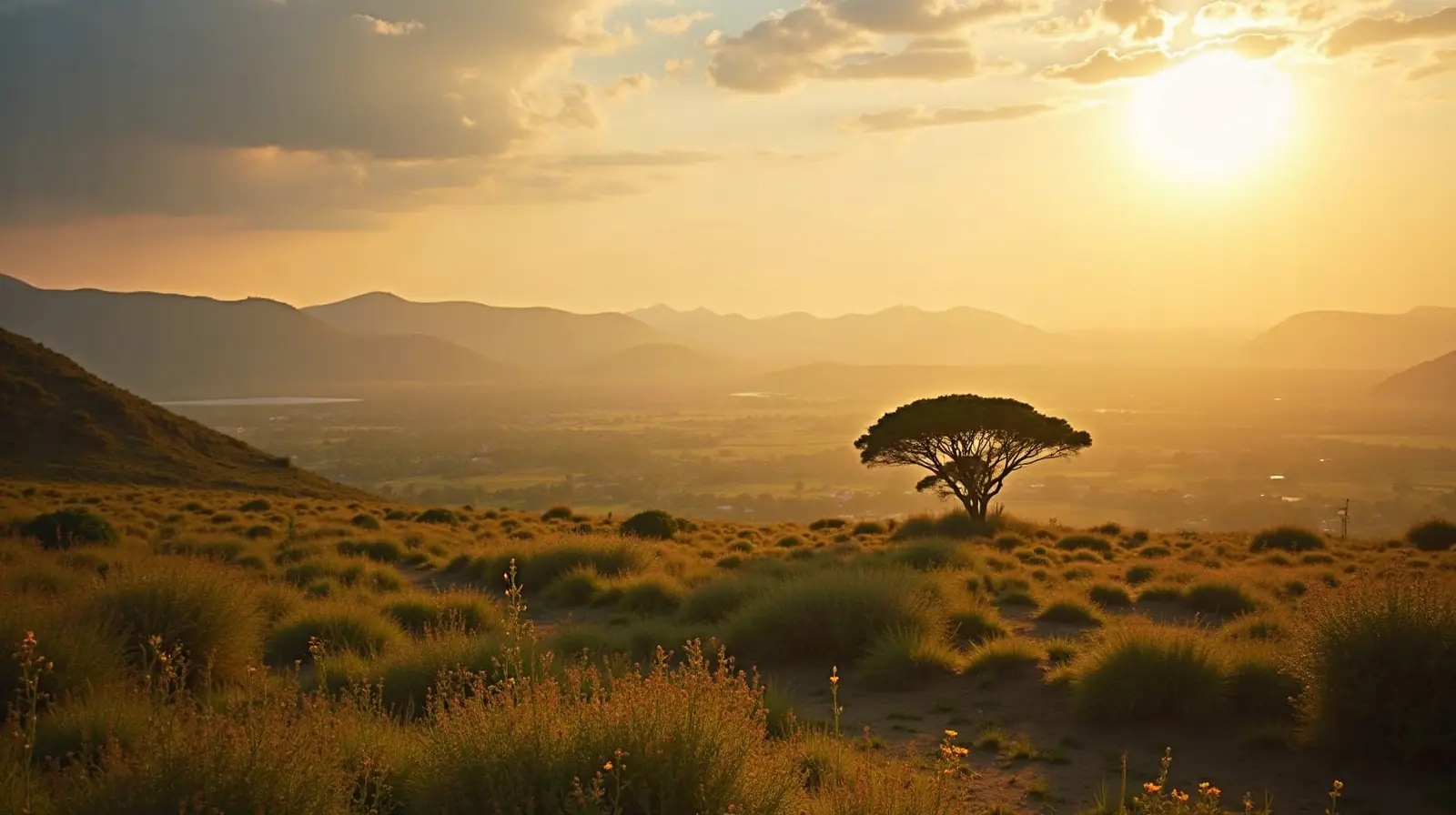
generally flat coastal plain, hilly to mountainous interior
Highest point
Mont Nimba 1,752 m
Natural resources
bauxite, iron ore, diamonds, gold, uranium, hydropower, fish, salt
Natural hazards
hot, dry, dusty harmattan haze may reduce visibility during dry season
National symbols
elephant
Safety
Is Guinea safe to visit?
Guinea is generally safe for travellers, but some caution is needed: the US State Department rates Guinea Level 2 (“Exercise Increased Caution”), and the UK Foreign Office has no warnings against travel there.
 US State Department
 UK Foreign Office (FCDO)
Latest update: Updated information about health risks you’ll face in Guinea (‘Health’ page).
Updated 12 Aug 2026 · Full travel advice
Sources: US Department of State travel advisories (public domain) and UK FCDO foreign travel advice (contains public sector information licensed under the Open Government Licence v3.0). Checked daily. Advice can change quickly — always read the official page before you travel.
Weather
Best time to visit Guinea
The best time to visit Guinea is November to April, when daytime highs in Conakry are around 29–30°C. May and October are also a good time to go. January is the warmest month (30°C by day), January the coldest (25°C at night), and August the wettest with about 943 mm of rain.
- Jan30°C25°C
- Feb30°C25°C
- Mar30°C25°C
- Apr30°C25°C
- May29°C26°C
- Jun28°C26°C
- Jul27°C26°C
- Aug27°C25°C
- Sep27°C25°C
- Oct28°C26°C
- Nov29°C26°C
- Dec30°C25°C
Best time Good Less ideal
Before you go
Plugs, voltage & emergency numbers in Guinea
Plugs & sockets
- Type C (Europlug)two round pins
- Type F (Schuko)two round pins with earth clips on the sides
- Type Ktwo round pins and a half-round earth pin
220 V, 50 Hz · Standard 220–240 V: devices from the US or Japan (110–120 V) need a converter unless they are dual voltage (100–240 V).
Emergency numbers
Save the local numbers before you travel — 112 or 911 may not connect here. All countries →
Sources: Wikipedia — Mains electricity by country and List of emergency telephone numbers (CC BY-SA 4.0).
National parks
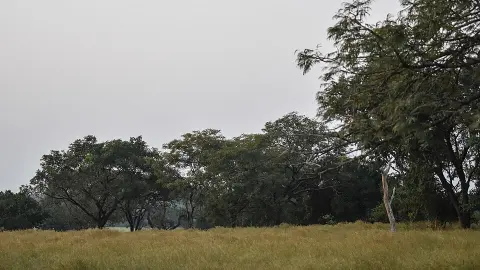
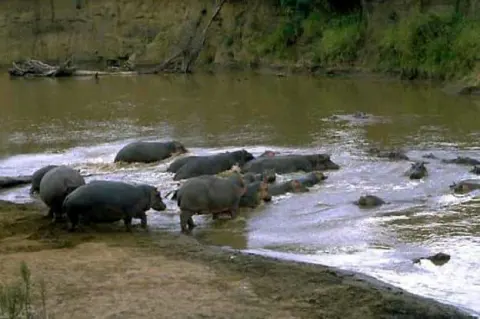
4 national parks in Guinea
- 14,072 km² protected
- oldest from 1
Largest: National Park of Upper Niger · parc national du Moyen-Bafing · Previously called Mafou Classified Forest National Park
Currency · 26 October 2026
Guinean franc exchange rates today
Guinea uses the Guinean franc (GNF, Fr). One US dollar buys 8,838.8 GNF; over the last 30 days the GNF has lost 0.5% against the dollar.
What other currencies cost in GNF
Currency converter
Daily reference rates from the open-source currency-api (CC0), 26 Oct 2026. Banks and exchange offices add a margin.
World rankings
Where Guinea ranks
How Guinea compares with the rest of the world — open any card for the full ranking.
Airports
Airports in Guinea
18 airports and airfields — 1 large, 0 medium and 16 small, plus 1 heliports. 1 have scheduled passenger flights.
Borders
Neighbouring countries
Guinea borders 6 countries along 4,046 km of land borders. Coastline: 320 km.


People
Population & society
Religion
Largest cities: Conakry (2.1 million)
Economy
Economy
Main industries
bauxite, gold, diamonds, iron ore; light manufacturing, agricultural processing
Export partners
UAE 50%, China 36%, India 8%, Switzerland 1%, Spain 1% (2023)
Top exports
gold, aluminum ore, cocoa beans, crude petroleum, coconuts/brazil nuts/cashews (2023)
Travel tools
Handy before every trip to Guinea
Next public holiday
Christmas Day — Friday, 25 December 2026. Then New Year's Day (1 Jan).
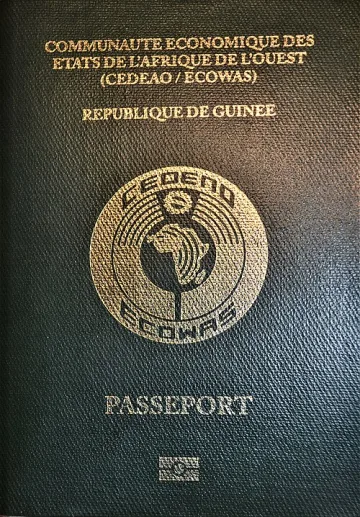
Guinean passport
Ranked #152: 27 countries visa-free, 25 with visa on arrival, 3 with an eTA and 43 with an eVisa.
Guinean passport photo
Exact size, head position and background for Guinea's passport and visa photos — make one free with AI checks.
Calling Guinea
Dial +224 before the local number. Internet domain .gn.
Climate footprint
4.0 million tonnes of CO₂ in 2024 — 0.27 t per person.
Entry requirements
Visa rules for every passport visiting Guinea: visa-free stays, eVisas, visas on arrival and documents to bring.
News
Latest travel news about Guinea
Guinea-Bissau police free 71 people from fake jobs and visas scam
Guinea-Bissau's judicial police freed 71 people and arrested four suspects after raiding two houses in Bissau, targeting a network that promised jobs…
Significant Decrease in Sea Arrivals from West Africa to Europe
Sea arrivals from Mali, Senegal, Guinea, and The Gambia to Europe have dropped by 59%, indicating a shift in migration patterns amid tighter border c…
New Visa Bond Requirement for Citizens of West African Countries
The US has introduced a visa bond requirement for citizens of several West African nations, including Sao Tome and Principe, who apply for B1/B2 visa…
Frequently asked questions about Guinea
What do I need to travel to Guinea?
How long must my passport be valid for Guinea?
Where is Guinea?
What is Guinea known for?
What is the capital of Guinea?
What language is spoken in Guinea?
What currency does Guinea use?
What is the calling code of Guinea?
Which countries border Guinea?
How strong is the Guinean passport?
Is Guinea safe to visit?
When is the best time to visit Guinea?
What plug type does Guinea use?
How many airports does Guinea have?
Sources: CIA World Factbook (public domain); World Bank Open Data (CC BY 4.0); names, languages and currencies: mledoze/countries (ODbL); flag: flag-icons (MIT); coat of arms: Wikimedia Commons (file page); exchange rates: Daily reference rates from the open-source currency-api (CC0); airports: OurAirports.