
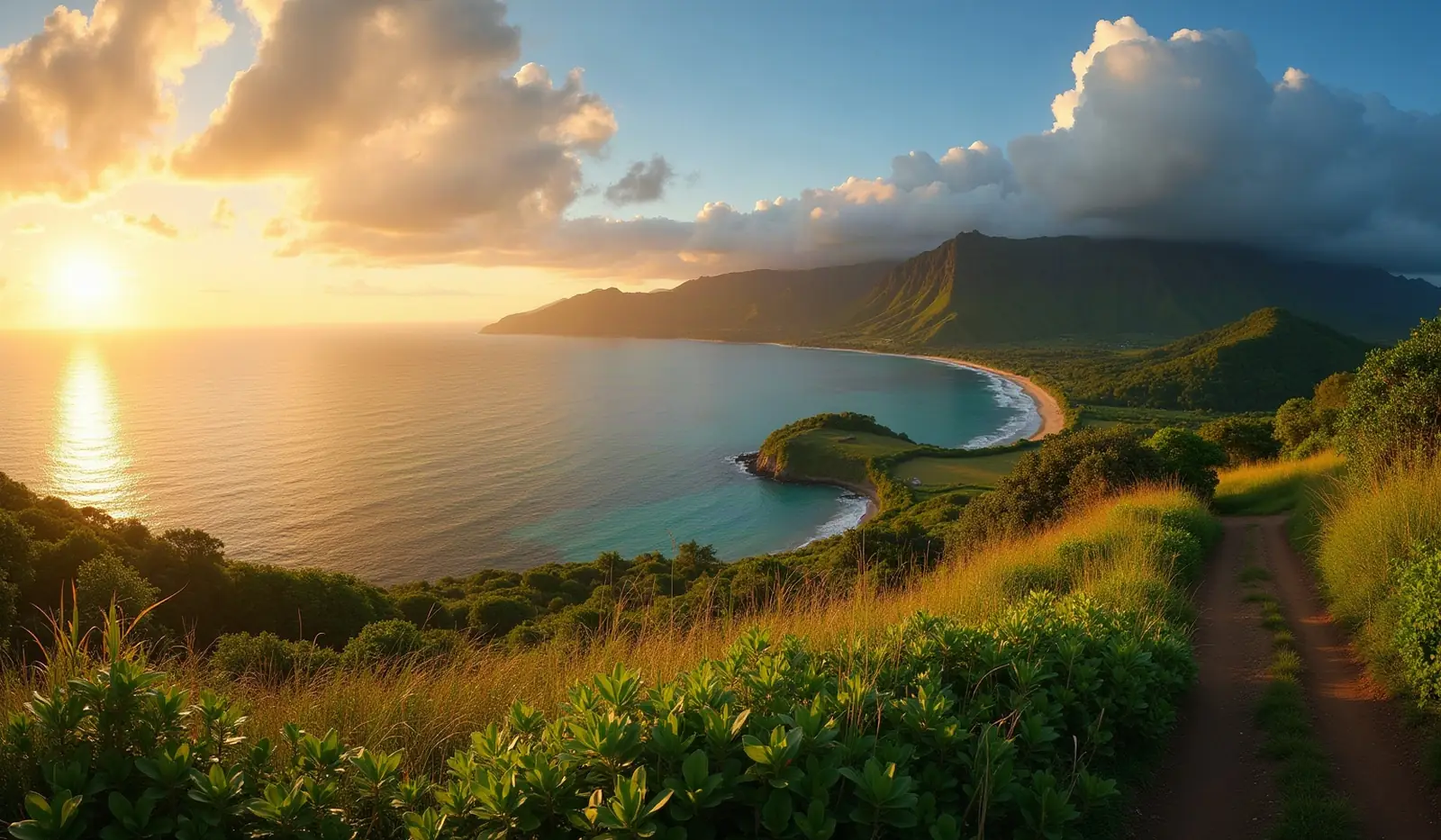
Melanesia · UN member

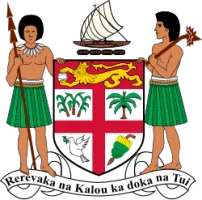
Fiji: Travel Guide & Requirements
Republic of Fiji · Matanitu Tugalala o Viti · रिपब्लिक ऑफ फीजी
Fiji is a country in Melanesia with its capital in Suva. It has a population of 933,154 (#161 in the world) and covers 18,274 km². The official languages are English, Fijian and Fiji Hindi. The currency is the Fijian dollar (FJD, $).
Where is Fiji? Map of Fiji
Oceania, island group in the South Pacific Ocean, about two-thirds of the way from Hawaii to New Zealand.
- Region
- Melanesia
- Coordinates
- 18° S, 175° E
- Neighbours
- none (no land borders)
- Coastline
- 1,129 km
- Fiji
- Capital
- Largest cities
Map of Fiji showing Suva (capital) and the largest cities: Lautoka, Labasa and Sigatoka.
Travel requirements
What you need to travel to Fiji
- Passport
Fiji's Ministry of Immigration asks for a passport that is valid for at least six months beyond the intended period of stay in Fiji.
- Visa or eTA
Depends on your passport: of 198 passports, 111 need no visa, 87 need an eVisa. Check yours or see Fiji entry requirements for every passport.
- Return or onward ticket
Fiji's Ministry of Immigration asks for a confirmed return ticket or applicable onward travel ticket.
- Proof of funds
Fiji's Ministry of Immigration asks for funds sufficient to cover the duration of stay.
- Travel insurance
No official requirement. Canada's travel advice tells travellers to make sure they get travel insurance that includes coverage for medical evacuation and hospital stays.
- Vaccinations
The UK government says that to enter Fiji you must have a certificate proving yellow fever vaccination if you are coming from a country listed as a transmission risk.
- Arrival card
The Biosecurity Authority of Fiji says you will be given a passenger arrival card when arriving, a legal document required by law, on which you must also state any items that need to be declared.
- Customs allowance
Canada's travel advice says you must make a customs declaration when in possession of currency equivalent to more than FJD 5,000 when entering Fiji and more than FJD 10,000 when exiting, and that undeclared money can le…
- Travel advice
Safe to visit — US and UK advice.
Entry rules: TravelRequirements.info — Entry Requirements Dataset (CC BY 4.0), each rule cited to an official government source. Always confirm with the airline and the official source before you travel.
Before you go
10 things to know before you travel to Fiji
- Safety: Yes — Fiji is generally safe to visit: the US State Department rates Fiji Level 1 (“Exercise Normal Precautions”), and the UK Foreign Office has no warnings against travel there.
- Best time to go: June to September — when daytime highs in Suva are around 25–26°C.
- Money: the Fijian dollar (FJD) — 1 US dollar is about 2.2376 FJD.
- Plugs: type I, 240 V, 50 Hz — standard 220–240 V: devices from the US or Japan (110–120 V) need a converter unless they are dual voltage (100–240 V).
- Emergency numbers: Police 911, Ambulance 911, Fire 911.
- Language: English, Fijian and Fiji Hindi are official.
- Driving: on the left — speed limits are 50 km/h in built-up areas and 80 km/h outside built-up areas.
- Time zone: UTC+12 in Suva.
- Capital: Suva. About 933,154 people live in Fiji.
- Outdoors: 1 national park.
Key facts
Fiji at a glance
Languages spoken: English (official), iTaukei (official), Fiji Hindi (official)
Geography & history
About Fiji
Austronesians settled Fiji around 1000 B.C., followed by successive waves of Melanesians starting around the first century A.D. Fijians traded with Polynesian groups in Samoa and Tonga, and by about 900, much of Fiji was in the Tu’i Tongan Empire’s sphere of influence. The Tongan influence declined significantly by 1200, while Melanesian seafarers continued to periodically arrive in Fiji, further mixing Melanesian and Polynesian cultural traditions. The first European spotted Fiji in 1643 and by the 1800s, European merchants, missionaries, traders, and whalers frequented the islands. Rival kings and chiefs competed for power, at times aided by Europeans, and in 1865, Seru Epenisa CAKOBAU un…
Read the full history
Austronesians settled Fiji around 1000 B.C., followed by successive waves of Melanesians starting around the first century A.D. Fijians traded with Polynesian groups in Samoa and Tonga, and by about 900, much of Fiji was in the Tu’i Tongan Empire’s sphere of influence. The Tongan influence declined significantly by 1200, while Melanesian seafarers continued to periodically arrive in Fiji, further mixing Melanesian and Polynesian cultural traditions. The first European spotted Fiji in 1643 and by the 1800s, European merchants, missionaries, traders, and whalers frequented the islands. Rival kings and chiefs competed for power, at times aided by Europeans, and in 1865, Seru Epenisa CAKOBAU united many groups into the Confederacy of Independent Kingdoms of Viti. The arrangement proved weak, however, and in 1871 CAKOBAU formed the Kingdom of Fiji in an attempt to centralize power. Fearing a hostile takeover by a foreign power as the kingdom’s economy began to falter, CAKOBAU ceded Fiji to the UK in 1874. The first British governor set up a plantation-style economy and brought in more than 60,000 Indians as indentured laborers, most of whom chose to stay in Fiji rather than return to India when their contracts expired. In the early 1900s, society was divided along ethnic lines, with iTaukei (indigenous Fijians), Europeans, and Indo-Fijians living in separate areas and maintaining their own languages and traditions. ITaukei fears of an Indo-Fijian takeover of government delayed independence through the 1960s; Fiji achieved independence in 1970 with agreements to allocate parliamentary seats by ethnic groups. After two coups in 1987, a new constitution in 1990 cemented iTaukei control of politics, leading thousands of Indo-Fijians to leave. A reformed constitution in 1997 was more equitable and led to the election of an Indo-Fijian prime minister in 1999, who was ousted in a coup the following year. In 2005, the new prime minister put forward a bill that would grant pardons to the coup perpetrators, leading Josaia Voreqe "Frank" BAINIMARAMA to launch a coup in 2006. BAINIMARAMA appointed himself prime minister in 2007 and retained the position after elections in 2014 and 2018 that international observers deemed credible. BAINIMARAMA's party lost control of the prime minister position after elections in 2022 with former opposition leader Sitiveni Ligamamada RABUKA winning the office by a narrow margin.
Location
Oceania, island group in the South Pacific Ocean, about two-thirds of the way from Hawaii to New Zealand
Climate
tropical marine; only slight seasonal temperature variation
Terrain
mostly mountains of volcanic origin
Highest point
Tomanivi 1,324 m
Natural resources
timber, fish, gold, copper, offshore oil potential, hydropower
Natural hazards
cyclonic storms can occur from November to January
National symbols
Fijian canoe
Driving
Speed limits & road rules in Fiji
The default speed limits in Fiji are 50 km/h in built-up areas and 80 km/h outside built-up areas. The legal alcohol limit for drivers is 0.8‰. Posted signs always take priority over these defaults.
- 5050 km/hBuilt-up areasTowns and citiesWith a trailer: 60 km/h
- 8080 km/hOutside built-up areasCountry roadsWith a trailer: 60 km/h
- International Driving PermitRecognised: 1949 GenevaCarry the IDP together with your national licence
- Driving sideDrive on the leftOvertake on the right
- Alcohol limit0.8‰ blood alcohol (0.08% BAC)Zero tolerance for young / novice drivers
- Seat beltsRequired by law
- Child seatsRequired by law
- Motorcycle helmetsRequired for riders
- Road deaths (2021)5.3 per 100,000 peopleSafer than most countries (median 12.4)
Speed limits: OpenStreetMap wiki — Default speed limits (CC BY-SA 2.0). Road-safety laws: WHO Global Health Observatory. Compare speed limits and alcohol limits by country. Defaults for cars; local signs, weather and vehicle type can lower them.
Safety
Is Fiji safe to visit?
Yes — Fiji is generally safe to visit: the US State Department rates Fiji Level 1 (“Exercise Normal Precautions”), and the UK Foreign Office has no warnings against travel there.
 US State Department
 UK Foreign Office (FCDO)
Latest update: Removal of information about Tropical Cyclone Vaianu (‘Warnings and Insurance’ page).
Updated 10 Aug 2026 · Full travel advice
Sources: US Department of State travel advisories (public domain) and UK FCDO foreign travel advice (contains public sector information licensed under the Open Government Licence v3.0). Checked daily. Advice can change quickly — always read the official page before you travel.
Weather
Best time to visit Fiji
The best time to visit Fiji is June to September, when daytime highs in Suva are around 25–26°C. May is also a good time to go. February is the warmest month (29°C by day), August the coldest (20°C at night), and March the wettest with about 342 mm of rain.
- Jan28°C24°C
- Feb29°C24°C
- Mar28°C24°C
- Apr27°C23°C
- May26°C22°C
- Jun25°C21°C
- Jul25°C20°C
- Aug25°C20°C
- Sep26°C21°C
- Oct27°C21°C
- Nov27°C22°C
- Dec28°C23°C
Best time Good Less ideal
Before you go
Plugs, voltage & emergency numbers in Fiji
Plugs & sockets
240 V, 50 Hz · Standard 220–240 V: devices from the US or Japan (110–120 V) need a converter unless they are dual voltage (100–240 V).
Emergency numbers
Save the local numbers before you travel — 112 or 911 may not connect here. All countries →
Sources: Wikipedia — Mains electricity by country and List of emergency telephone numbers (CC BY-SA 4.0).
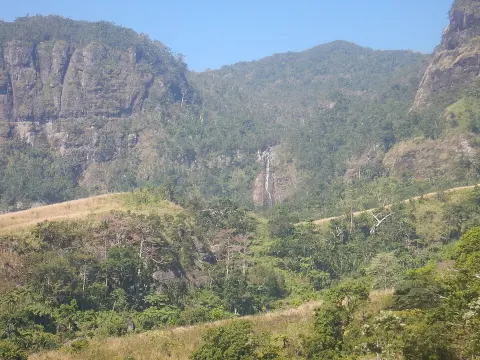
National parks
1 national park in Fiji
- 35 km² protected
- oldest from 1989
Largest: Koroyanitu National Park
Currency · 26 October 2026
Fijian dollar exchange rates today
Fiji uses the Fijian dollar (FJD, $). One US dollar buys 2.2376 FJD; over the last 30 days the FJD has gained 0.4% against the dollar.
What other currencies cost in FJD
Currency converter
Daily reference rates from the open-source currency-api (CC0), 26 Oct 2026. Banks and exchange offices add a margin.
World rankings
Where Fiji ranks
How Fiji compares with the rest of the world — open any card for the full ranking.
Airports
Airports in Fiji
33 airports and airfields — 2 large, 1 medium and 23 small, plus 2 heliports. 17 have scheduled passenger flights.
Borders
No land borders
Fiji has no land borders with other countries. Coastline: 1,129 km.
People
Population & society
Religion
Largest cities: Suva (178,000)
Economy
Economy
Main industries
tourism, sugar processing, clothing, copra, gold, silver, lumber
Export partners
USA 32%, Australia 12%, Tonga 6%, NZ 6%, Samoa 4% (2023)
Top exports
water, fish, raw sugar, refined petroleum, garments (2023)
Travel tools
Handy before every trip to Fiji
Next public holiday
Diwali — Sunday, 8 November 2026. Then Diwali (observed, estimated) (9 Nov).
Fijian passport
Ranked #105: 49 countries visa-free, 30 with visa on arrival, 4 with an eTA and 39 with an eVisa.
Fijian passport photo
Exact size, head position and background for Fiji's passport and visa photos — make one free with AI checks.
Calling Fiji
Dial +679 before the local number. Internet domain .fj.
Climate footprint
1.4 million tonnes of CO₂ in 2024 — 1.56 t per person.
Entry requirements
Visa rules for every passport visiting Fiji: visa-free stays, eVisas, visas on arrival and documents to bring.
News
Latest travel news about Fiji

Nauruans Applying to Study in Australia Now Pay Less for Student Visas
Australia's Department of Home Affairs has confirmed a reduced Student visa (subclass 500) application charge for eligible citizens of 23 Pacific Isl…
Nauru passport holders cut Student visa cost if they apply using their Nauru document
Australia's Department of Home Affairs says citizens of 23 Pacific Island, Timor-Leste and ASEAN countries can pay a reduced Student visa (subclass 5…
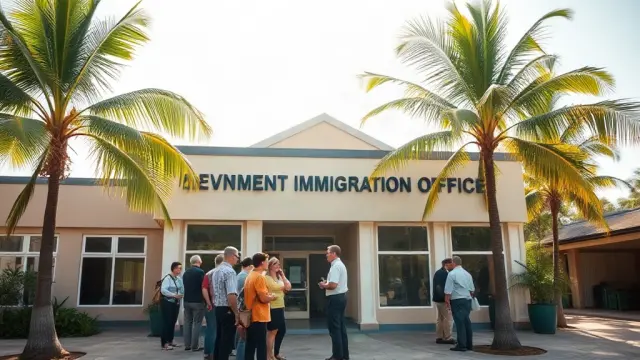
Fiji passport collection dates may shift as printing backlog clears
Fiji's Department of Immigration says passport printing is back to normal after a system outage, but collection dates may still change while delayed …
Frequently asked questions about Fiji
What do I need to travel to Fiji?
How long must my passport be valid for Fiji?
Where is Fiji?
What is Fiji known for?
What is the capital of Fiji?
What language is spoken in Fiji?
What currency does Fiji use?
What is the calling code of Fiji?
Does Fiji have land borders?
How strong is the Fijian passport?
What is the speed limit in Fiji?
Is Fiji safe to visit?
When is the best time to visit Fiji?
What plug type does Fiji use?
How many airports does Fiji have?
Sources: CIA World Factbook (public domain); World Bank Open Data (CC BY 4.0); names, languages and currencies: mledoze/countries (ODbL); flag: flag-icons (MIT); coat of arms: Wikimedia Commons (file page); exchange rates: Daily reference rates from the open-source currency-api (CC0); airports: OurAirports.