
Caribbean · UN member

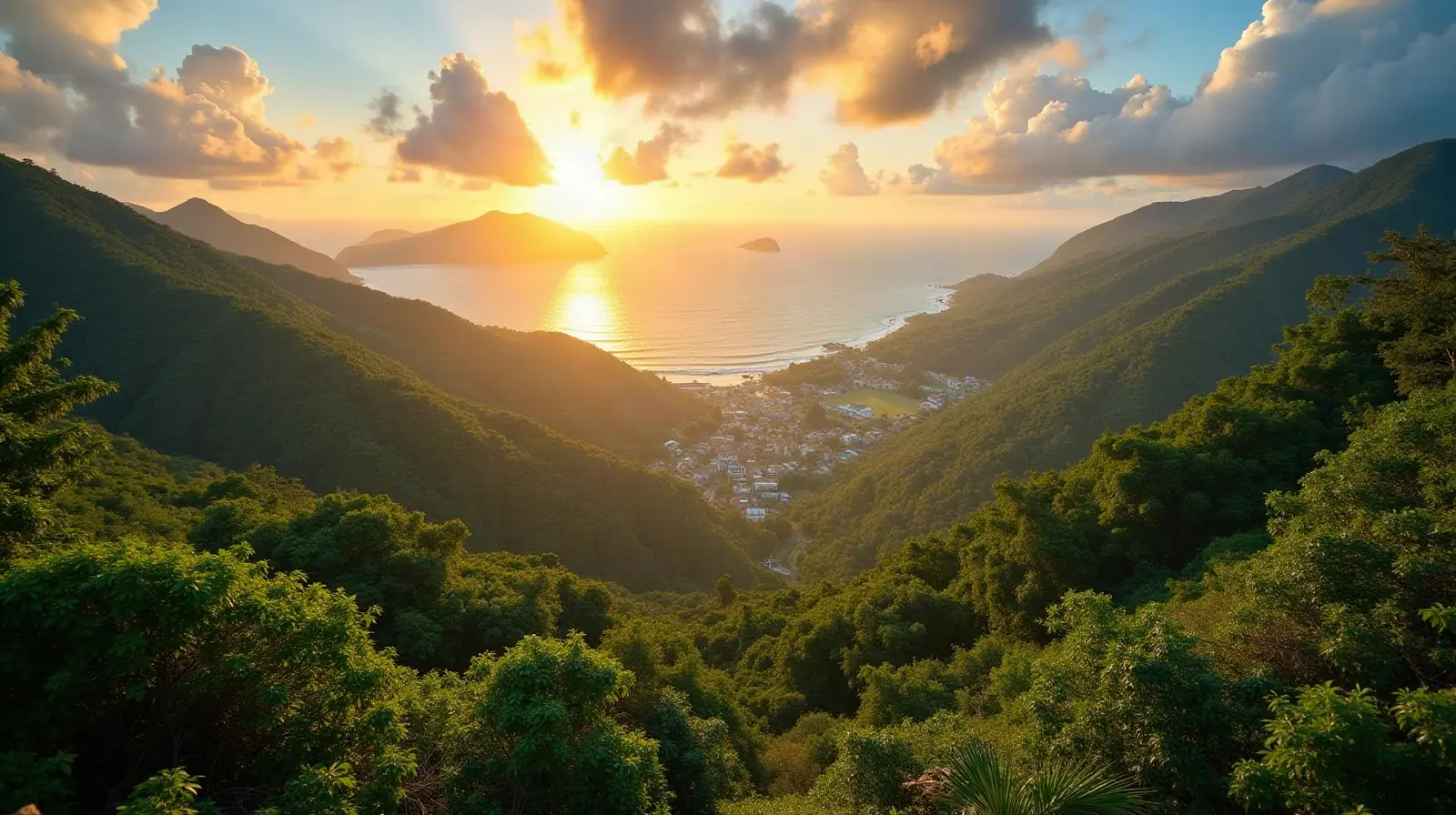
Jamaica: Travel Guide & Requirements
Jamaica is a country in Caribbean with its capital in Kingston. It has a population of 2.8 million (#140 in the world) and covers 10,991 km². The official languages are English and Jamaican Patois. The currency is the Jamaican dollar (JMD, $).
Where is Jamaica? Map of Jamaica
Caribbean, island in the Caribbean Sea, south of Cuba.
- Region
- Caribbean
- Coordinates
- 18.25° N, 77.5° W
- Neighbours
- none (no land borders)
- Coastline
- 1,022 km
- Jamaica
- Capital
- Largest cities
Map of Jamaica showing Kingston (capital) and the largest cities: Montego Bay, Mandeville and Ocho Rios.
Travel requirements
What you need to travel to Jamaica
- Passport
Jamaica's Embassy in Washington says the travel document should have at least six months' validity.
- Visa or eTA
Depends on your passport: of 198 passports, 102 need no visa, 9 get a visa on arrival, 87 need a visa from an embassy. Check yours or see Jamaica entry requirements for every passport.
- Return or onward ticket
Jamaica's Embassy in Washington says visitors must be in possession of a return or round-trip ticket to another country to which they are admissible.
- Proof of funds
Jamaica's Embassy in Washington says visitors are required to show evidence of sufficient funds to support themselves during their stay.
- Travel insurance
No official requirement. The UK Foreign Office advises checking before you travel that you have appropriate travel insurance for local treatment or unexpected medical evacuation.
- Vaccinations
The UK Foreign Office says you must have a certificate proving yellow fever vaccination if you are coming from a country listed as a transmission risk.
- Arrival card
PICA says all arriving travellers must present a completed and signed Immigration/Customs C5 form, either online or a physical form.
- Customs allowance
The UK Foreign Office says cash or travellers cheques worth 10,000 US dollars or more must be declared on your C5 form, and that you will also have to complete the Financial Investigation Division Cross Border Form.
- Travel advice
Some caution needed — US and UK advice.
Entry rules: TravelRequirements.info — Entry Requirements Dataset (CC BY 4.0), each rule cited to an official government source. Always confirm with the airline and the official source before you travel.
Before you go
10 things to know before you travel to Jamaica
- Safety: Jamaica is generally safe for travellers, but some caution is needed: the US State Department rates Jamaica Level 2 (“Exercise Increased Caution”), and the UK Foreign Office has no warnings against travel there.
- Best time to go: December to March — when daytime highs in Kingston are around 27–28°C.
- Money: the Jamaican dollar (JMD) — 1 US dollar is about 158.4807 JMD.
- Plugs: type A and B, 110 V, 50 Hz — low-voltage country: devices made only for 220–240 V need a voltage converter. Phone and laptop chargers (100–240 V) only need a plug adapter.
- Emergency numbers: Police 119, Ambulance 110, Fire 110.
- Language: English and Jamaican Patois are official.
- Driving: on the left — speed limits are 48 km/h in built-up areas and 80 km/h outside built-up areas.
- Time zone: UTC-5 in Kingston.
- Capital: Kingston. About 2.8 million people live in Jamaica.
- Outdoors: 2 national parks.
Key facts
Jamaica at a glance
Languages spoken: English, Jamaican patois
Geography & history
About Jamaica
Europeans first saw Jamaica when Christopher COLUMBUS arrived in 1494, and the Spanish settled the island early in the 16th century. The Native Taino, who had inhabited Jamaica for centuries, were gradually exterminated and replaced with African slaves. England seized the island in 1655 and established a plantation economy based on sugar, cocoa, and coffee. The abolition of slavery in 1834 freed a quarter-million slaves, many of whom became small farmers. Jamaica gradually increased its independence from Britain. In 1958, it joined other British Caribbean colonies in forming the Federation of the West Indies. Jamaica withdrew from the Federation in 1961 and gained full independence in 1962.…
Read the full history
Europeans first saw Jamaica when Christopher COLUMBUS arrived in 1494, and the Spanish settled the island early in the 16th century. The Native Taino, who had inhabited Jamaica for centuries, were gradually exterminated and replaced with African slaves. England seized the island in 1655 and established a plantation economy based on sugar, cocoa, and coffee. The abolition of slavery in 1834 freed a quarter-million slaves, many of whom became small farmers. Jamaica gradually increased its independence from Britain. In 1958, it joined other British Caribbean colonies in forming the Federation of the West Indies. Jamaica withdrew from the Federation in 1961 and gained full independence in 1962. Deteriorating economic conditions during the 1970s led to recurring violence as rival gangs affiliated with the major political parties evolved into powerful organized crime networks involved in international drug smuggling and money laundering. Violent crime, drug trafficking, corruption, and poverty pose significant challenges to the government today. Nonetheless, many rural and resort areas remain relatively safe and contribute substantially to the economy.
Location
Caribbean, island in the Caribbean Sea, south of Cuba
Climate
tropical; hot, humid; temperate interior
Terrain
mostly mountains, with narrow, discontinuous coastal plain
Highest point
Blue Mountain Peak 2,256 m
Natural resources
bauxite, alumina, gypsum, limestone
Natural hazards
hurricanes (especially July to November)
National symbols
green-and-black streamertail (bird), guaiacwood (Guiacum officinale)
Driving
Speed limits & road rules in Jamaica
The default speed limits in Jamaica are 48 km/h in built-up areas and 80 km/h outside built-up areas. The legal alcohol limit for drivers is 0.8‰. Posted signs always take priority over these defaults.
- 4848 km/hBuilt-up areasTowns and citiesWHO data (2017)
- 8080 km/hOutside built-up areasCountry roadsWHO data (2017)
- International Driving PermitRecognised: 1949 GenevaCarry the IDP together with your national licence
- Driving sideDrive on the leftOvertake on the right
- Alcohol limit0.8‰ blood alcohol (0.08% BAC)
- Seat beltsRequired by law
- Child seatsRequired by law
- Motorcycle helmetsRequired for riders
- Road deaths (2021)17.8 per 100,000 peopleHigher than most countries (median 12.4)
Speed limits: OpenStreetMap wiki — Default speed limits (CC BY-SA 2.0) and WHO. Road-safety laws: WHO Global Health Observatory. Compare speed limits and alcohol limits by country. Defaults for cars; local signs, weather and vehicle type can lower them.
Safety
Is Jamaica safe to visit?
Jamaica is generally safe for travellers, but some caution is needed: the US State Department rates Jamaica Level 2 (“Exercise Increased Caution”), and the UK Foreign Office has no warnings against travel there.
 US State Department
 UK Foreign Office (FCDO)
Latest update: New information on incidents of sexual assault in tourist areas and advice on personal safety measures ('Safety and security' page).
Updated 6 May 2026 · Full travel advice
Sources: US Department of State travel advisories (public domain) and UK FCDO foreign travel advice (contains public sector information licensed under the Open Government Licence v3.0). Checked daily. Advice can change quickly — always read the official page before you travel.
Weather
Best time to visit Jamaica
The best time to visit Jamaica is December to March, when daytime highs in Kingston are around 27–28°C. April to July and November are also a good time to go. August is the warmest month (30°C by day), February the coldest (24°C at night), and October the wettest with about 170 mm of rain.
- Jan27°C24°C
- Feb28°C24°C
- Mar28°C24°C
- Apr29°C25°C
- May29°C26°C
- Jun29°C26°C
- Jul29°C26°C
- Aug30°C27°C
- Sep30°C26°C
- Oct29°C26°C
- Nov28°C25°C
- Dec28°C24°C
Best time Good Less ideal
Before you go
Plugs, voltage & emergency numbers in Jamaica
Plugs & sockets
110 V, 50 Hz · Low-voltage country: devices made only for 220–240 V need a voltage converter. Phone and laptop chargers (100–240 V) only need a plug adapter.
Emergency numbers
Save the local numbers before you travel — 112 or 911 may not connect here. All countries →
Sources: Wikipedia — Mains electricity by country and List of emergency telephone numbers (CC BY-SA 4.0).
National parks
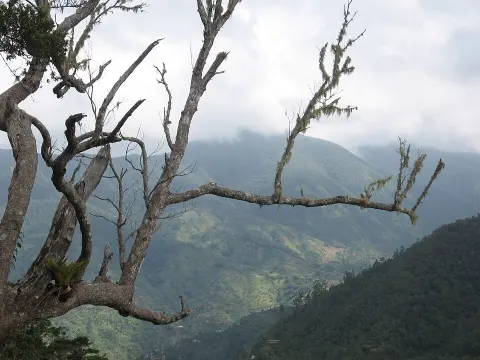
2 national parks in Jamaica
- oldest from 1993
Largest: Blue and John Crow Mountains National Park · Blue and John Crow Mountains National Park
Currency · 26 October 2026
Jamaican dollar exchange rates today
Jamaica uses the Jamaican dollar (JMD, $). One US dollar buys 158.4807 JMD; over the last 30 days the JMD has lost 0.2% against the dollar.
What other currencies cost in JMD
Currency converter
Daily reference rates from the open-source currency-api (CC0), 26 Oct 2026. Banks and exchange offices add a margin.
World rankings
Where Jamaica ranks
How Jamaica compares with the rest of the world — open any card for the full ranking.
Airports
Airports in Jamaica
22 airports and airfields — 2 large, 3 medium and 15 small, plus 2 heliports. 4 have scheduled passenger flights.
Borders
No land borders
Jamaica has no land borders with other countries. Coastline: 1,022 km.
People
Population & society
Religion
Largest cities: Kingston (597,000)
Economy
Economy
Main industries
agriculture, mining, manufacture, construction, financial and insurance services, tourism, telecommunications
Export partners
USA 37%, Russia 7%, Latvia 7%, Iceland 7%, UK 5% (2023)
Top exports
aluminum oxide, refined petroleum, natural gas, liquor, processed fruits and nuts (2023)
Travel tools
Handy before every trip to Jamaica
Next public holiday
Christmas Day — Friday, 25 December 2026. Then St. Stephen's Day (26 Dec).
Jamaican passport
Ranked #99: 56 countries visa-free, 25 with visa on arrival, 4 with an eTA and 37 with an eVisa.
Jamaican passport photo
Exact size, head position and background for Jamaica's passport and visa photos — make one free with AI checks.
Calling Jamaica
Dial +1-876 before the local number. Internet domain .jm.
Climate footprint
8.4 million tonnes of CO₂ in 2024 — 2.96 t per person.
Entry requirements
Visa rules for every passport visiting Jamaica: visa-free stays, eVisas, visas on arrival and documents to bring.
News
Latest travel news about Jamaica
Baby born on Caribbean Airlines Jamaica–New York flight: what rules apply
A passenger gave birth aboard a Caribbean Airlines flight from Kingston, Jamaica, to New York as the plane landed. The airline sets pregnancy limits:…
Caribbean retirement permits and income rules island by island
A comparison of eight Caribbean retirement destinations sets out the permits and income thresholds facing foreign retirees, from the Dominican Republ…
Travel to Suriname unchanged as new France safety pact adds no routes or flights
Suriname's aviation authority and France's civil aviation directorate have signed a letter of intent on technical safety cooperation. The deal does n…
Frequently asked questions about Jamaica
What do I need to travel to Jamaica?
How long must my passport be valid for Jamaica?
Where is Jamaica?
What is Jamaica known for?
What is the capital of Jamaica?
What language is spoken in Jamaica?
What currency does Jamaica use?
What is the calling code of Jamaica?
Does Jamaica have land borders?
How strong is the Jamaican passport?
What is the speed limit in Jamaica?
Is Jamaica safe to visit?
When is the best time to visit Jamaica?
What plug type does Jamaica use?
How many airports does Jamaica have?
Sources: CIA World Factbook (public domain); World Bank Open Data (CC BY 4.0); names, languages and currencies: mledoze/countries (ODbL); flag: flag-icons (MIT); coat of arms: Wikimedia Commons (file page); exchange rates: Daily reference rates from the open-source currency-api (CC0); airports: OurAirports.