
Northern Africa · UN member

Tunisia: Travel Guide & Requirements
Tunisian Republic · الجمهورية التونسية
Tunisia is a country in Northern Africa with its capital in Tunis. It has a population of 12.3 million (#79 in the world) and covers 163,610 km². The official language is Arabic. The currency is the Tunisian dinar (TND, د.ت).
Where is Tunisia? Map of Tunisia
Northern Africa, bordering the Mediterranean Sea, between Algeria and Libya.
- Region
- Northern Africa
- Coordinates
- 34° N, 9° E
- Neighbours
- 2 — see list
- Coastline
- 1,148 km
- Tunisia
- Neighbours
- Capital
- Largest cities
Map of Tunisia showing Tunis (capital) and the largest cities: Sfax, Sousse, Kairouan, Bizerte, Gabès, Hammamet, Gafsa and Houmt Souk.
Travel requirements
What you need to travel to Tunisia
- Passport
The UK FCDO says your passport should be valid for the duration of your stay and in good condition: travellers who enter with a damaged or torn passport may have difficulty leaving.
- Visa or eTA
Depends on your passport: of 198 passports, 95 need no visa, 103 need a visa from an embassy. Check yours or see Tunisia entry requirements for every passport.
- Return or onward ticket
No official requirement. The UK FCDO says border officials have the right to ask on arrival for your onward or return travel tickets, and that a small number of visitors have been denied entry or delayed for not being able to provide sufficient…
- Proof of funds
No official requirement. The UK Foreign Office lists what border officials have the right to ask for on arrival, including proof of a hotel booking or other accommodation details; funds are not on its list.
- Travel insurance
No official requirement. The UK government advises travel insurance for local treatment or unexpected medical evacuation: there is no free medical attention for foreign nationals, and doctors' fees, medication and treatment in private clinics m…
- Customs allowance
Tunisian Customs says any import or export of foreign currency worth 20,000 Tunisian dinars or more must be declared to Customs on entry, on exit and in transit.
- Travel advice
High risk — US and UK advice.
Entry rules: TravelRequirements.info — Entry Requirements Dataset (CC BY 4.0), each rule cited to an official government source. Always confirm with the airline and the official source before you travel.
Before you go
10 things to know before you travel to Tunisia
- Safety: Travel to Tunisia carries a high risk: the US State Department rates Tunisia Level 2 (“Exercise Increased Caution”), and the UK Foreign Office advises against all travel to parts of the country.
- Best time to go: May and October — when daytime highs in Tunis are around 25–26°C.
- Money: the Tunisian dinar (TND) — 1 US dollar is about 3.0005 TND.
- Plugs: type C and E, 230 V, 50 Hz — standard 220–240 V: devices from the US or Japan (110–120 V) need a converter unless they are dual voltage (100–240 V).
- Emergency numbers: Police 197, Ambulance 190, Fire 198.
- Language: Arabic is official.
- Driving: on the right — speed limits are 50 km/h in built-up areas, 90 km/h outside built-up areas and 110 km/h on motorways.
- Time zone: UTC+1 in Tunis.
- Capital: Tunis. About 12.3 million people live in Tunisia.
- Outdoors: 17 national parks.
Key facts
Tunisia at a glance
Languages spoken: Arabic (official, one of the languages of commerce), French (commerce), Tamazight
Geography & history
About Tunisia
Many empires have controlled Tunisia, including the Phoenicians (as early as the 12 century B.C.), Carthaginians, Romans, Vandals, Byzantines, various Arab and Berber kingdoms, and Ottomans (16th to late-19th centuries). Rivalry between French and Italian interests in Tunisia culminated in a French invasion in 1881 and the creation of a protectorate. Agitation for independence in the decades after World War I finally convinced the French to recognize Tunisia as an independent state in 1956. The country's first president, Habib BOURGUIBA, established a strict one-party state. He dominated the country for 31 years, repressing Islamic fundamentalism and establishing rights for women. In 1987, …
Read the full history
Many empires have controlled Tunisia, including the Phoenicians (as early as the 12 century B.C.), Carthaginians, Romans, Vandals, Byzantines, various Arab and Berber kingdoms, and Ottomans (16th to late-19th centuries). Rivalry between French and Italian interests in Tunisia culminated in a French invasion in 1881 and the creation of a protectorate. Agitation for independence in the decades after World War I finally convinced the French to recognize Tunisia as an independent state in 1956. The country's first president, Habib BOURGUIBA, established a strict one-party state. He dominated the country for 31 years, repressing Islamic fundamentalism and establishing rights for women. In 1987, Zine el Abidine BEN ALI replaced BOURGUIBA in a bloodless coup. Street protests that began in Tunis in 2010 over high unemployment, corruption, widespread poverty, and high food prices escalated in 2011, culminating in rioting that led to hundreds of deaths and later became known as the start of the regional Arab Spring uprising. BEN ALI dismissed the government and fled the country, and a "national unity government" was formed. Elections for the new Constituent Assembly were held later that year, and human rights activist Moncef MARZOUKI was elected as interim president. The Assembly began drafting a new constitution in 2012 and, after several iterations and a months-long political crisis that stalled the transition, ratified the document in 2014. Parliamentary and presidential elections for a permanent government were held at the end of 2014. Beji CAID ESSEBSI was elected as the first president under the country's new constitution. After ESSEBSI’s death in office in 2019, Kais SAIED was elected. SAIED's term, as well as that of Tunisia's 217-member parliament, was set to expire in 2024. However, in 2021, SAIED used the exceptional powers allowed under Tunisia's constitution to dismiss the prime minister and suspend the legislature. Tunisians approved a new constitution through public referendum in 2022, expanding presidential powers and creating a new bicameral legislature.
Location
Northern Africa, bordering the Mediterranean Sea, between Algeria and Libya
Climate
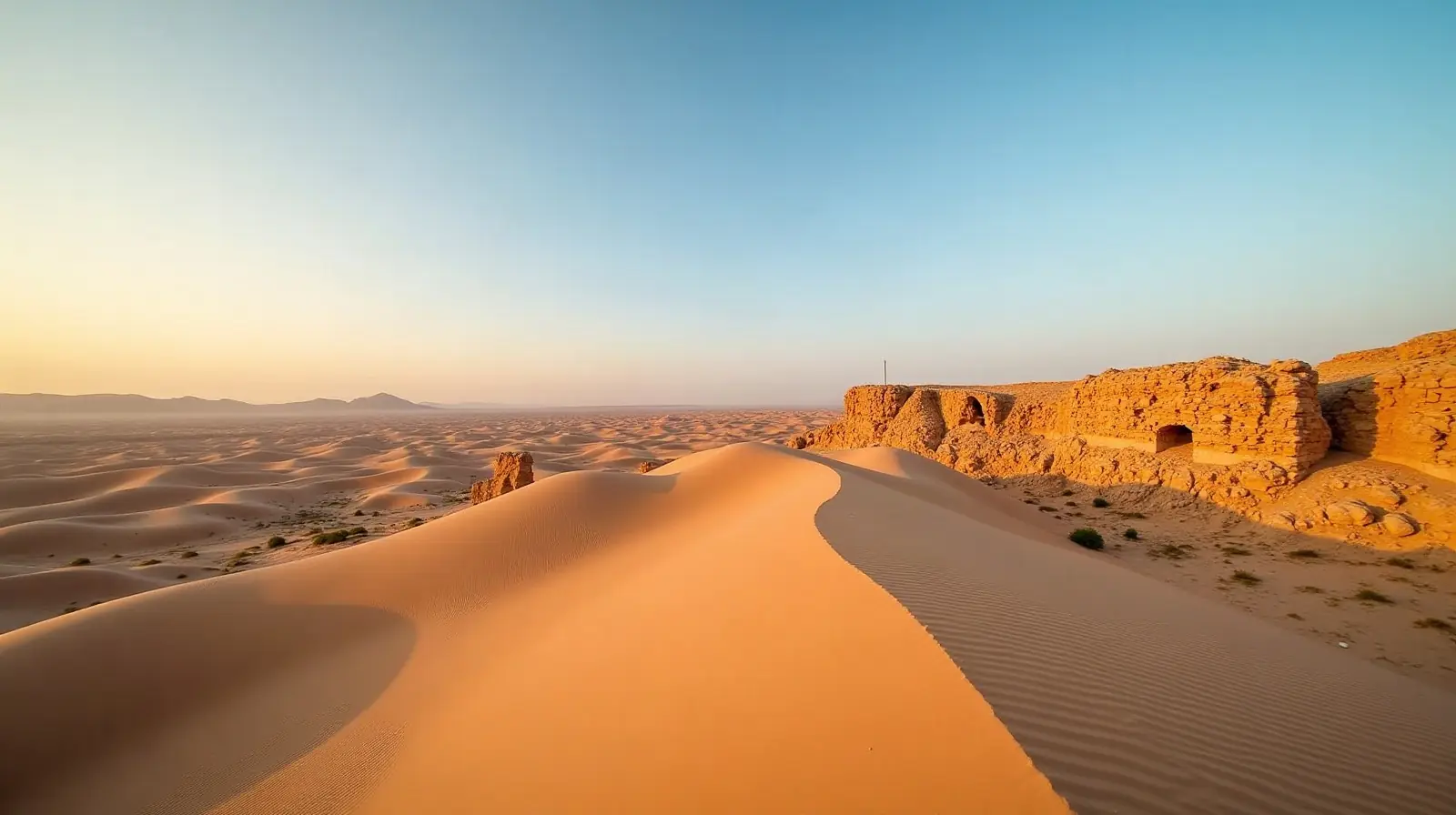
temperate in north with mild, rainy winters and hot, dry summers; desert in south
Terrain
mountains in north; hot, dry central plain; semiarid south merges into the Sahara
Highest point
Jebel ech Chambi 1,544 m
Natural resources
petroleum, phosphates, iron ore, lead, zinc, salt
Natural hazards
flooding; earthquakes; droughts
National symbols
red crescent moon and five-pointed star in a white circle
Driving
Speed limits & road rules in Tunisia
The default speed limits in Tunisia are 50 km/h in built-up areas, 90 km/h outside built-up areas and 110 km/h on motorways. The legal alcohol limit for drivers is 0.3‰. Posted signs always take priority over these defaults.
- 5050 km/hBuilt-up areasTowns and cities
- 9090 km/hOutside built-up areasCountry roads
- 110110 km/hMotorwaysMotorways / freeways
- International Driving PermitRecognised: 1968 Vienna, 1949 Geneva, 1926 ParisCarry the IDP together with your national licence
- Driving sideDrive on the rightOvertake on the left
- Alcohol limit0.3‰ blood alcohol (0.03% BAC)Zero tolerance for young / novice drivers
- Seat beltsRequired by law
- Child seatsNo national child-restraint law
- Motorcycle helmetsRequired for riders
- Road deaths (2021)16.3 per 100,000 peopleHigher than most countries (median 12.4)
Speed limits: OpenStreetMap wiki — Default speed limits (CC BY-SA 2.0). Road-safety laws: WHO Global Health Observatory. Compare speed limits and alcohol limits by country. Defaults for cars; local signs, weather and vehicle type can lower them.
Safety
Is Tunisia safe to visit?
Travel to Tunisia carries a high risk: the US State Department rates Tunisia Level 2 (“Exercise Increased Caution”), and the UK Foreign Office advises against all travel to parts of the country.
 US State Department
 UK Foreign Office (FCDO)
Latest update: This travel advice has been reviewed for accuracy with changes made throughout, including visa requirements, taking money into and out of Tunisia, electronic devices, drugs and illegal substances and power supply in summer months ('Entry requirements' and 'Safety and security') pages.
Updated 24 Jul 2026 · Full travel advice
Sources: US Department of State travel advisories (public domain) and UK FCDO foreign travel advice (contains public sector information licensed under the Open Government Licence v3.0). Checked daily. Advice can change quickly — always read the official page before you travel.
Weather
Best time to visit Tunisia
The best time to visit Tunisia is May and October, when daytime highs in Tunis are around 25–26°C. June is also a good time to go. July is the warmest month (34°C by day), February the coldest (7°C at night), and December the wettest with about 66 mm of rain.
- Jan15°C8°C
- Feb15°C7°C
- Mar18°C9°C
- Apr21°C11°C
- May25°C14°C
- Jun30°C18°C
- Jul34°C22°C
- Aug34°C22°C
- Sep29°C20°C
- Oct26°C17°C
- Nov20°C12°C
- Dec16°C9°C
Best time Good Less ideal
Before you go
Plugs, voltage & emergency numbers in Tunisia
Plugs & sockets
230 V, 50 Hz · Standard 220–240 V: devices from the US or Japan (110–120 V) need a converter unless they are dual voltage (100–240 V).
Emergency numbers
Save the local numbers before you travel — 112 or 911 may not connect here. All countries →
Sources: Wikipedia — Mains electricity by country and List of emergency telephone numbers (CC BY-SA 4.0).
National parks
17 national parks in Tunisia
- 8,208 km² protected
- oldest from 1977
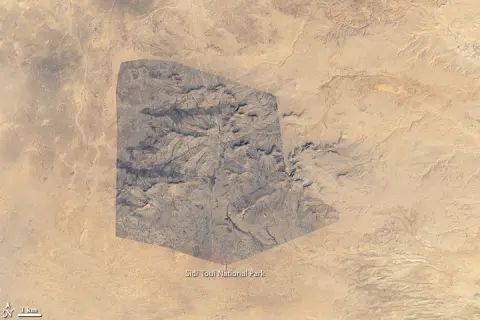
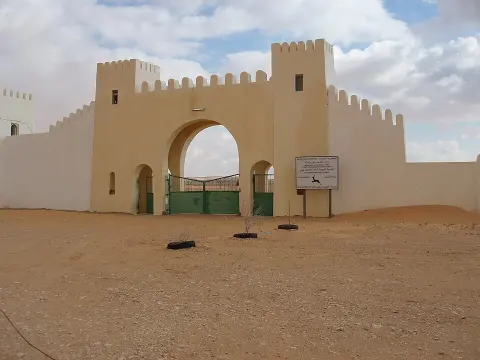
Largest: Sidi Toui National Park · Jebil National Park · Ichkeul National Park
Currency · 26 October 2026
Tunisian dinar exchange rates today
Tunisia uses the Tunisian dinar (TND, د.ت). One US dollar buys 3.0005 TND; over the last 30 days the TND has lost 1.4% against the dollar.
What other currencies cost in TND
Currency converter
Daily reference rates from the open-source currency-api (CC0), 26 Oct 2026. Banks and exchange offices add a margin.
World rankings
Where Tunisia ranks
How Tunisia compares with the rest of the world — open any card for the full ranking.
Airports
Airports in Tunisia
25 airports and airfields — 2 large, 10 medium and 2 small, plus 11 heliports. 7 have scheduled passenger flights.
Borders
Neighbouring countries
Tunisia borders 2 countries along 1,495 km of land borders. Coastline: 1,148 km.


Military
Tunisian armed forces
Tunisia ranks #73 of 145 in the Global Firepower military strength ranking, with a defence budget of $1.5 billion (2025).
People
Population & society
Religion
Largest cities: Tunis (2.5 million)
Economy
Economy
Main industries
petroleum, mining (particularly phosphate, iron ore), tourism, textiles, footwear, agribusiness, beverages
Export partners
France 22%, Italy 17%, Germany 13%, USA 4%, Libya 4% (2023)
Top exports
garments, insulated wire, olive oil, refined petroleum, crude petroleum (2023)
Travel tools
Handy before every trip to Tunisia
Next public holiday
Revolution Day — Thursday, 17 December 2026. Then New Year's Day (1 Jan).

Tunisian passport
Ranked #132: 36 countries visa-free, 30 with visa on arrival, 3 with an eTA and 36 with an eVisa.
Tunisian passport photo
Exact size, head position and background for Tunisia's passport and visa photos — make one free with AI checks.
Calling Tunisia
Dial +216 before the local number. Internet domain .tn.
Climate footprint
32.7 million tonnes of CO₂ in 2024 — 2.66 t per person.
Entry requirements
Visa rules for every passport visiting Tunisia: visa-free stays, eVisas, visas on arrival and documents to bring.
News
Latest travel news about Tunisia
Tunisia drops visas for Iranian travellers as land borders stay tough
Tunisia lifted visa requirements for Iranians entering the country after President Kais Saied's May 2024 visit to Tehran. Its land borders with Alger…
Comoros travellers: Kuwait passport holds 3rd Arab League, 85th global in ranking
Kuwait's passport places third among the 22 Arab League states and 85th globally in a Passport Reports ranking dated 13 October 2026. The United Arab…
Tunisia's Tourism Industry Experiences Significant Growth
Tunisia's tourism sector is witnessing a resurgence as travelers seek new destinations beyond traditional hubs. Increased stability and affordability…
Frequently asked questions about Tunisia
What do I need to travel to Tunisia?
How long must my passport be valid for Tunisia?
Where is Tunisia?
What is Tunisia known for?
What is the capital of Tunisia?
What language is spoken in Tunisia?
What currency does Tunisia use?
What is the calling code of Tunisia?
Which countries border Tunisia?
How strong is the Tunisian passport?
What is the speed limit in Tunisia?
Is Tunisia safe to visit?
When is the best time to visit Tunisia?
What plug type does Tunisia use?
How many airports does Tunisia have?
Sources: CIA World Factbook (public domain); World Bank Open Data (CC BY 4.0); names, languages and currencies: mledoze/countries (ODbL); flag: flag-icons (MIT); coat of arms: Wikimedia Commons (file page); exchange rates: Daily reference rates from the open-source currency-api (CC0); airports: OurAirports.