
Western Asia · UN member

Oman: Travel Guide & Requirements
Sultanate of Oman · سلطنة عمان
Oman is a country in Western Asia with its capital in Muscat. It has a population of 5.5 million (#120 in the world) and covers 309,500 km². The official language is Arabic. The currency is the Omani rial (OMR, ر.ع.).
Where is Oman? Map of Oman
Middle East, bordering the Arabian Sea, Gulf of Oman, and Persian Gulf, between Yemen and the UAE.
- Region
- Western Asia
- Coordinates
- 21° N, 57° E
- Neighbours
- 3 — see list
- Coastline
- 2,092 km
- Oman
- Neighbours
- Capital
- Largest cities
Map of Oman showing Muscat (capital) and the largest cities: ‘Ibrī, Şalālah, Şaḩam, Rustaq, As Suwayq, Al Buraymī, Nizwá and Sur.
Travel requirements
What you need to travel to Oman
- Passport
The Royal Oman Police says a normal passport should be valid for at least 6 months before entering Oman.
- Visa or eTA
Depends on your passport: of 198 passports, 84 need no visa, 114 need an eVisa. Check yours or see Oman entry requirements for every passport.
- Return or onward ticket
Oman's Foreign Ministry says visitors entering without a visa must have a return ticket and a confirmed hotel reservation.
- Proof of funds
Oman's Foreign Ministry says visitors entering without a visa must have a sum of money that will enable them to bear their living costs during the stay.
- Travel insurance
Oman's Foreign Ministry says visitors entering without a visa must have health insurance, as well as a return ticket, a confirmed hotel reservation and enough money for their stay.
- Vaccinations
WHO's list says Oman requires proof of yellow fever vaccination from travellers aged 9 months or over arriving from countries with risk of yellow fever transmission, including those who have transited more than 12 hours…
- Customs allowance
Oman's Directorate General of Customs says travellers arriving and departing should declare currencies, bearer securities, banknotes, precious metals or gemstones convertible into cash exceeding OMR 6,000, and that unde…
- Travel advice
High risk — US and UK advice.
Entry rules: TravelRequirements.info — Entry Requirements Dataset (CC BY 4.0), each rule cited to an official government source. Always confirm with the airline and the official source before you travel.
Before you go
10 things to know before you travel to Oman
- Safety: Travel to Oman carries a high risk: the US State Department rates Oman Level 3 (“Reconsider Travel”), and the UK Foreign Office has no warnings against travel there.
- Best time to go: December to February — when daytime highs in Muscat are around 24–26°C.
- Money: the Omani rial (OMR) — 1 US dollar is about 0.3850 OMR.
- Plugs: type G, 240 V, 50 Hz — standard 220–240 V: devices from the US or Japan (110–120 V) need a converter unless they are dual voltage (100–240 V).
- Emergency numbers: Police 9999, Ambulance 9999, Fire 9999.
- Language: Arabic is official; English is also spoken.
- Driving: on the right.
- Time zone: UTC+4 in Muscat.
- Capital: Muscat. About 5.5 million people live in Oman.
- Outdoors: 1 national park.
Key facts
Oman at a glance
Languages spoken: Arabic (official), English, Baluchi, Swahili, Urdu, Indian dialects
Geography & history
About Oman
The inhabitants of the area of present-day Oman have long prospered from Indian Ocean trade. In the late 18th century, the nascent sultanate in Muscat signed the first in a series of friendship treaties with Britain. Over time, Oman's dependence on British political and military advisors increased, although the sultanate never became a British colony. In 1970, QABOOS bin Said Al Said overthrew his father and ruled as sultan for the next five decades. His extensive modernization program opened the country to the outside world. He prioritized strategic ties to the UK and US, and his moderate, independent foreign policy allowed Oman to maintain good relations with its neighbors and avoid exter…
Read the full history
The inhabitants of the area of present-day Oman have long prospered from Indian Ocean trade. In the late 18th century, the nascent sultanate in Muscat signed the first in a series of friendship treaties with Britain. Over time, Oman's dependence on British political and military advisors increased, although the sultanate never became a British colony. In 1970, QABOOS bin Said Al Said overthrew his father and ruled as sultan for the next five decades. His extensive modernization program opened the country to the outside world. He prioritized strategic ties to the UK and US, and his moderate, independent foreign policy allowed Oman to maintain good relations with its neighbors and avoid external entanglements. In 2011, the popular uprisings that swept the Middle East and North Africa inspired demonstrations in Oman that called for more jobs and economic benefits and an end to corruption. In response, QABOOS implemented economic and political reforms such as granting Oman’s legislative body more power and authorizing direct elections for its lower house. Additionally, the sultan increased unemployment benefits and issued a royal directive mandating a national public- and private-sector job creation plan. As part of the government's efforts to decentralize authority and allow greater citizen participation in local governance, Oman successfully conducted its first municipal council elections in 2012. QABOOS, Oman's longest reigning monarch, died in 2020. His cousin, HAYTHAM bin Tariq Al Said, former Minister of Heritage and Culture, was sworn in as Oman's new sultan the same day.
Location
Middle East, bordering the Arabian Sea, Gulf of Oman, and Persian Gulf, between Yemen and the UAE
Climate
dry desert; hot, humid along coast; hot, dry interior; strong southwest summer monsoon (May to September) in far south
Terrain
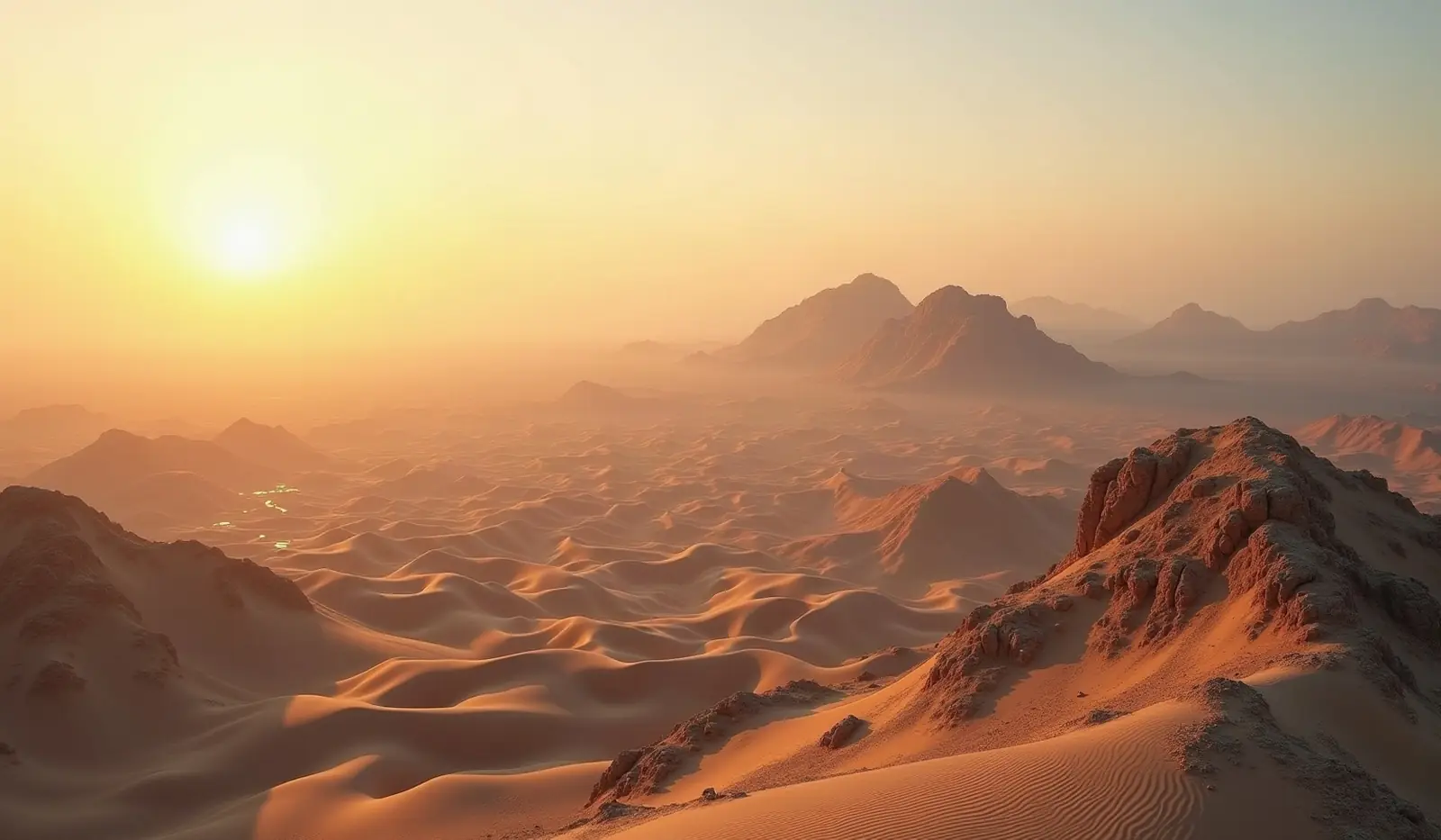
central desert plain, rugged mountains in north and south
Highest point
Jabal Shams 3,004 m
Natural resources
petroleum, copper, asbestos, some marble, limestone, chromium, gypsum, natural gas
Natural hazards
summer winds often raise large sandstorms and dust storms in interior; periodic droughts
National symbols
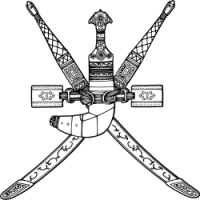
khanjar dagger on top of two crossed swords
Safety
Is Oman safe to visit?
Travel to Oman carries a high risk: the US State Department rates Oman Level 3 (“Reconsider Travel”), and the UK Foreign Office has no warnings against travel there.
 US State Department
 UK Foreign Office (FCDO)
Latest update: Updated information about regional tensions following recent strikes and retaliatory attacks by Iran ('Warnings and insurance' page).
Updated 22 Jul 2026 · Full travel advice
Sources: US Department of State travel advisories (public domain) and UK FCDO foreign travel advice (contains public sector information licensed under the Open Government Licence v3.0). Checked daily. Advice can change quickly — always read the official page before you travel.
Weather
Best time to visit Oman
The best time to visit Oman is December to February, when daytime highs in Muscat are around 24–26°C. March and November are also a good time to go. June is the warmest month (38°C by day), January the coldest (18°C at night).
- Jan24°C18°C
- Feb26°C18°C
- Mar29°C21°C
- Apr33°C25°C
- May37°C29°C
- Jun38°C31°C
- Jul37°C31°C
- Aug36°C30°C
- Sep35°C28°C
- Oct33°C26°C
- Nov29°C23°C
- Dec25°C20°C
Best time Good Less ideal
Before you go
Plugs, voltage & emergency numbers in Oman
Plugs & sockets
240 V, 50 Hz · Standard 220–240 V: devices from the US or Japan (110–120 V) need a converter unless they are dual voltage (100–240 V).
Emergency numbers
Save the local numbers before you travel — 112 or 911 may not connect here. All countries →
Sources: Wikipedia — Mains electricity by country and List of emergency telephone numbers (CC BY-SA 4.0).
National parks
1 national park in Oman
- 220 km² protected
- oldest from 1997
Largest: Al Saleel National Park
Currency · 26 October 2026
Omani rial exchange rates today
Oman uses the Omani rial (OMR, ر.ع.). One US dollar buys 0.3850 OMR; over the last 30 days the OMR has gained 0.0% against the dollar.
What other currencies cost in OMR
Currency converter
Daily reference rates from the open-source currency-api (CC0), 26 Oct 2026. Banks and exchange offices add a margin.
World rankings
Where Oman ranks
How Oman compares with the rest of the world — open any card for the full ranking.
Airports
Airports in Oman
59 airports and airfields — 4 large, 5 medium and 28 small, plus 22 heliports. 5 have scheduled passenger flights.
Borders
Neighbouring countries
Oman borders 3 countries along 1,561 km of land borders. Coastline: 2,092 km.


Military
Omani armed forces
Oman ranks #76 of 145 in the Global Firepower military strength ranking, with a defence budget of $6.0 billion (2025).
People
Population & society
Religion
Largest cities: Muscat (1.7 million)
Economy
Economy
Main industries
crude oil production and refining, natural and liquefied natural gas production; construction, cement, copper, steel, chemicals, optic fiber
Export partners
China 43%, India 6%, Saudi Arabia 5%, UAE 5%, South Africa 4% (2023)
Top exports
crude petroleum, refined petroleum, natural gas, semi-finished iron, fertilizers (2023)
Travel tools
Handy before every trip to Oman
Next public holiday
National Day — Friday, 20 November 2026. Then National Day (21 Nov).
Omani passport
Ranked #110: 46 countries visa-free, 34 with visa on arrival, 5 with an eTA and 29 with an eVisa.
Omani passport photo
Exact size, head position and background for Oman's passport and visa photos — make one free with AI checks.
Calling Oman
Dial +968 before the local number. Internet domain .om.
Climate footprint
82.7 million tonnes of CO₂ in 2024 — 15.65 t per person.
Entry requirements
Visa rules for every passport visiting Oman: visa-free stays, eVisas, visas on arrival and documents to bring.
News
Latest travel news about Oman
Kuwaiti Passport Holders May Join Gulf States With Visa-Free Russia Entry
Russia is negotiating visa-free entry with Kuwait and Bahrain, Deputy Foreign Minister Georgy Borisenko said. Visa-free travel for ordinary passport …
Bosnian Travellers to Azerbaijan No Longer Need Visas, 30-Day Stays Allowed
Azerbaijan's Ministry of Foreign Affairs has published a list of nine countries whose ordinary passport holders can enter visa-free, staying up to 30…
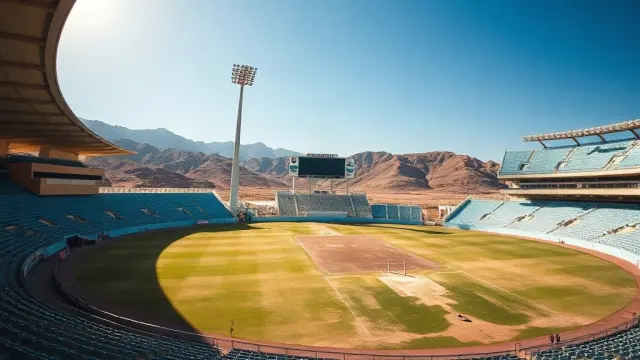
Oman loses Oct 13 Youth ODI series after Bangladesh U-19 visas go unissued
Bangladesh's Under-19 cricket team did not travel to Oman because its visas had not been issued. The five-match Youth ODI series against Afghanistan …
Frequently asked questions about Oman
What do I need to travel to Oman?
How long must my passport be valid for Oman?
Where is Oman?
What is Oman known for?
What is the capital of Oman?
What language is spoken in Oman?
What currency does Oman use?
What is the calling code of Oman?
Which countries border Oman?
How strong is the Omani passport?
Is Oman safe to visit?
When is the best time to visit Oman?
What plug type does Oman use?
How many airports does Oman have?
Sources: CIA World Factbook (public domain); World Bank Open Data (CC BY 4.0); names, languages and currencies: mledoze/countries (ODbL); flag: flag-icons (MIT); coat of arms: Wikimedia Commons (file page); exchange rates: Daily reference rates from the open-source currency-api (CC0); airports: OurAirports.